Jump to content
Seriously No Politics ×

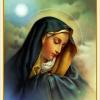
The Blessed Virgin Mary In The Lds Church


Recommended Posts

Posted

This is similar to the Catholic idea of the Communion of Saints and the Mystical Body of Christ, of which we are all members.

Uh that's what I was saying. ;)  

Posted

I agree it is a similar idea. The differences make a difference. :) We are sealed to Christ. There is no need to be sealed to each other, and seems superfluous to Catholic ears. If I'm sealed to Jesus, and my family is sealed to Jesus, what more do we need?

If a=b and b=c then a=c.


It seems superfluous to Mormon ears to pray people out of purgatory.


Yes if we are all sealed to God we are all sealed to each other


But in both cases it is a one by one process of progression.  If a soul gets out of purgatory it goes from state 1 to state 2.


Both concepts are that the living can do something to help the dead progress.  You are arguing for its own a

sake.

Posted

To pray, means to ask someone to do something. "Pray tell", can be addressed to anyone, not just God. We are in fact praying to the Saints, in the form of asking the Saints to do something for us, which is, to pray to God for/with us.


I guess my references are wrong.  The second one seemed questionable as it is more anti, yet it seems that if an anti-Catholic wanted to attack the church, they wouldn't defend the position that they don't pray to saints...if that makes sense.  That's why I thought that I could trust it.  The first one, seemed more legit to me.


“We pray with saints, not to them”
 
 
“It is the official position of the Roman Catholic Church that Catholics do not pray TO saints or Mary, but rather that Catholics can ask saints or Mary to pray FOR them. The official position of the Roman Catholic Church is that asking saints for their prayers is no different than asking someone here on earth to pray for us.”
 
Posted

This has already been explained more than once.  In Catholic/Orthodox theology, the belief in the communion of saints, as well as the belief that those in Heaven participate in the life that God lives, leads to the belief that those in Heaven can still pray for us, just as the earthly saints can pray for each other. 


Catholics/Orthodox believe that God is ultimately the one who answers all prayers, and that members of the Church, whether on earth or in Heaven, can pray for each other.


I thought that I understood intercession, but now I am confused after doing a little research.  I keep hearing from you guys that you only ask saints to pray for you (intercession rather than intervention) and that only God intervenes by answering your prayers, but then I come across things like this:


“Let us turn in prayer to Mary, Mother of the Church and Mother of our faith."
 
"Mother, help our faith! 
Open our ears to hear God’s word and to recognize his voice and call. 
Awaken in us a desire to follow in his footsteps, to go forth from our own land and to receive his promise. 
Help us to be touched by his love, that we may touch him in faith. 
Help us to entrust ourselves fully to him and to believe in his love, especially at times of trial, beneath the shadow of the cross, when our faith is called to mature. 
Sow in our faith the joy of the Risen One. 
Remind us that those who believe are never alone. 
Teach us to see all things with the eyes of Jesus, that he may be light for our path. And may this light of faith always increase in us, until the dawn of that undying day which is Christ himself, your Son, our Lord!”
 
 
Instead of asking Mary to pray for you, you really are praying to her.  It doesn't sound like you are asking her to pray for you or to intercede either, but rather to intervene as if she was God.  
 
Can you help me out here?  This type of prayer seems much more appropriately addressed to Father, rather than Mother Mary.  I could understand a little better if he said "Mother, pray for us to increase our faith..."
Posted

Uh that's what I was saying. ;)


Yeah, I was agreeing with it.  Sorry if that wasn't clear.


It seems superfluous to Mormon ears to pray people out of purgatory.

But in both cases it is a one by one process of progression.  If a soul gets out of purgatory it goes from state 1 to state 2.


Both concepts are that the living can do something to help the dead progress.  You are arguing for its own a

sake.


Yup.


It seems that there is similarity in the idea of praying people out of purgatory (which is very important for Catholics... we're trying to help our deceased friends and relatives) to the idea of LDS doing proxy temple work for their deceased friends and relatives.


Of course, in any religious dialogue, we have to keep in mind that there are similarities AND differences.  I think we are doing a good thing finding the similar principles behind beliefs and practices in both of our religions.  But of course there are glaring differences, too.  I know we know this, but it's good to say it, too, so that we keep things real :)

Posted

It seems that there is similarity in the idea of praying people out of purgatory (which is very important for Catholics... we're trying to help our deceased friends and relatives) to the idea of LDS doing proxy temple work for their deceased friends and relatives.


There are some Catholics who keep on paying (donating) for masses for decades to

be performed for their relatives whom they believe are still in purgatory not realizing

that they may have been released from purgatory only a few days after their death.

Others may want to stop donating after a year, figuring the relative is already out of

purgatory, when they may still be there for decades to come.  Since you never really

know, the smart  (?) action is to pay (donate) until you yourself die.  This is similar to

the LDS proxy work. While it is not a paid for service, they perform the work for the

deceased person whether that person wants it performed for them for not. In the

record book, it goes down as a sealing in the temple performed and accepted. But

in the spirit world it may go down as a sealing performed but rejected.


As for prayer, no one prayed for Mary to help before she died and no one prayed to

her after she died.  But somehow this arose in tradition because it was thought a kind

Mary could appease an angry Jesus.


The focus for the Christian should only be on God.  My Catholic parents for instance

only see Jesus as a baby in Mary's arms.  They don't know him as the Lord and Savior.  

Mary takes more importance as seen in the number of prayers to her over the Father

in the rosary.  If you go to some Central and South American countries, you would

think Mary was a god.  But then again, from an LDS perspective, she already is a god

in embryo.


Regards,

Jim

Posted

"In the

record book, it goes down as a sealing in the temple performed and accepted."

No, it doesn't. Nothing is recorded as "accepted"

Posted (edited)

If a=b and b=c then a=c.

It seems superfluous to Mormon ears to pray people out of purgatory.

Yes if we are all sealed to God we are all sealed to each other

But in both cases it is a one by one process of progression. If a soul gets out of purgatory it goes from state 1 to state 2.

Both concepts are that the living can do something to help the dead progress. You are arguing for its own a

sake.

There isn't any idea of progression involved in the doctrines of purgatory. Souls in purgatory have already been judged to be with God, in heaven. Purgatory is where the temporal effects of sin are cleansed. Nothing unclean can be in the presence of God. No progression from state to state.

Theologically, purgatory is described as a place or a state. No one knows an amount of time that a soul is in purgatory, because, time does not exist in purgatory. Theological speculation is wide, from a moment to a long amount of "time". Since we don't know, we assume it is ok to pray for the souls in purgatory, but we are praying for their quick healing, not for their progression to becoming gods.

Edited by saemo
Posted

I guess my references are wrong.  The second one seemed questionable as it is more anti, yet it seems that if an anti-Catholic wanted to attack the church, they wouldn't defend the position that they don't pray to saints...if that makes sense.  That's why I thought that I could trust it.  The first one, seemed more legit to me.


“We pray with saints, not to them”


http://www.catholic.org/saints/faq.php#do-catholics-pray-to-saints


“It is the official position of the Roman Catholic Church that Catholics do not pray TO saints or Mary, but rather that Catholics can ask saints or Mary to pray FOR them. The official position of the Roman Catholic Church is that asking saints for their prayers is no different than asking someone here on earth to pray for us.”


http://www.gotquestions.org/prayer-saints-Mary.html

I think it would help to understand the concept of adoration for Catholics, which we define in three ways or tiers, if you will. Latria, which is the adoration, worship, veneration, given only to God.

Dulia, which is a much lower form of the same. And hyper-Dulia which is given only to Mary.

Dulia and hyper dulia are more like way points, to dulia, by that I mean, our adoration of Mary and the Saints doesn't end at them, as a source, but points to God alone. My favorite analogy for this is one of Mary's titles, Star of the Sea, in that we see her as a guiding light to her Son, never to herself.

Our Marian prayers are understood in this way, even the ones where non Catholics think or believe they stop at Mary in a literal sense based on what the words of the prayers say. They do not for us because our understanding is rooted in Jesus Christ.

Posted

So much for missionary work in the spirit world then.

But this is also free choice. I am not asking them to do it in the eternity. I am not praying to them to do it. Do you think that I should pray to my earthly father who is now dead to do missionary work?

Posted (edited)

No one asked you to.


This has already been explained more than once.  In Catholic/Orthodox theology, the belief in the communion of saints, as well as the belief that those in Heaven participate in the life that God lives, leads to the belief that those in Heaven can still pray for us, just as the earthly saints can pray for each other. 


Catholics/Orthodox believe that God is ultimately the one who answers all prayers, and that members of the Church, whether on earth or in Heaven, can pray for each other.


Thanks for your personal belief.  However both Catholics and Latter-day Saints believe that the deceased saints have "work" to do (whether it's intercessory prayer, missionary work, etc), and even that they are somehow involved in the lives of the earthly saints.


I understand the logic. But I don't know if it is correct to pray to the saints. I would rather pray to god in the name of his son for favors, advice, for help, etc. Why would I need a saint to speak up for me? The work that the lds are told that needs to done by celestial spirits is missionary work. But that is also free choice. I am not praying to them to be successful. They have their work to do and god and jesus have their work to do. But intercessory prayer? I know the logic and the belief. But the reasons for it are what is mind boggling. Everything can be taken to the father.

Edited by why me
Posted

There isn't any idea of progression involved in the doctrines of purgatory.

Fine.

Then you are saying it's not better to be in heaven than purgatory.

You are so intent on disagreeing no matter what that you are not even making sense.

Posted

"but I really disagree with "we do it right but those other guys do it wrong""


I have been thinking about this and actually I respectfully disagree. Not that I would go to a Catholic home, board, or church and point this out (I would consider that rude) but yes we do consider that we do it right and they do it wrong, just as they must consider that they do it right and we do it wrong.


Catholic and Mormon theology differ greatly both in the structure of the church, the authority of the preisthood, and the nature of God. I mean no disrespect to them to state that I think their theology is wrong, their preists have no authority from God to act, and the Pope is not God's representative on earth. If I didn't believe that then I would instead believe as they do and become Catholic.


I think we (socety) have carried tolerence too far into meanng we must agree with the other person. Tolerence means I respect your opinion to believe and practice what you will, even defend your right to do so, but can still disagree with it.


If you don't believe "we do it right but those other guys do it wrong" what then do you believe? That both mutually exclusive options are right?

Posted

"but I really disagree with "we do it right but those other guys do it wrong""


I have been thinking about this and actually I respectfully disagree. Not that I would go to a Catholic home, board, or church and point this out (I would consider that rude) but yes we do consider that we do it right and they do it wrong, just as they must consider that they do it right and we do it wrong.


Catholic and Mormon theology differ greatly both in the structure of the church, the authority of the preisthood, and the nature of God. I mean no disrespect to them to state that I think their theology is wrong, their preists have no authority from God to act, and the Pope is not God's representative on earth. If I didn't believe that then I would instead believe as they do and become Catholic.


I think we (socety) have carried tolerence too far into meanng we must agree with the other person. Tolerence means I respect your opinion to believe and practice what you will, even defend your right to do so, but can still disagree with it.


If you don't believe "we do it right but those other guys do it wrong" what then do you believe? That both mutually exclusive options are right?

LDS ask people to pray for them, Catholics ask people to pray for them they're both doing the same thing.

Posted

"LDS ask people to pray for them, Catholics ask people to pray for them they're both doing the same thing"


Understood I was adressing it as a larger issue. If Catholics don't believe their Church has the authority they claim, from Christ through Peter, why be Catholic? If we don't believe the LDS Church has it, then why be LDS? By it's very nature religion does lead to "my way is right your wrong" as it is the root of many beliefs.


In other words if you are LDS and believe the Catholic Church has the authority they claim then you disbelieve Joseph Smith as he claims the authority was taken from the earth and restored through him. Both can't be true. We can still find common ground, we can still treat each other as brothers, we can still respect the others commitment to their own faith, but we can't claim both are true.


Sorry if this sounds harsh but such is the way things are.

Posted

"LDS ask people to pray for them, Catholics ask people to pray for them they're both doing the same thing"


Understood I was adressing it as a larger issue. If Catholics don't believe their Church has the authority they claim, from Christ through Peter, why be Catholic? If we don't believe the LDS Church has it, then why be LDS? By it's very nature religion does lead to "my way is right your wrong" as it is the root of many beliefs.


In other words if you are LDS and believe the Catholic Church has the authority they claim then you disbelieve Joseph Smith as he claims the authority was taken from the earth and restored through him. Both can't be true. We can still find common ground, we can still treat each other as brothers, we can still respect the others commitment to their own faith, but we can't claim both are true.


Sorry if this sounds harsh but such is the way things are.

This whole praying thing looks like a common ground issue to me but some here don't seem to want to treat the other as brothers and respect their commitment they want to argue the difference in and superiority of their method.

Posted

If we don't start by respecting another's commitment to their belief how could we ever expect them to respect our own? I expect Catholics to be firm in the defense of what they believe and admire and respect many of them for their commitment to their faith

Posted

If we don't start by respecting another's commitment to their belief how could we ever expect them to respect our own? I expect Catholics to be firm in the defense of what they believe and admire and respect many of them for their commitment to their faith

I really don't see what this has to do with my point??

Posted

Fine.

Then you are saying it's not better to be in heaven than purgatory.

You are so intent on disagreeing no matter what that you are not even making sense.

Not my point, so you must be intent on seeing me as disagreeable. fine. Being the only Catholic in my family, I'm certain no one will be paying for a mass for me for years after.my death. That's ok, if I'm in purgatory I'll be happy as I could be because I know heaven is close. That you can't see that as very different to LDS progression, just says to me you are dissembling the teachings of both churches.

Posted

Not my point, so you must be intent on seeing me as disagreeable. fine. Being the only Catholic in my family, I'm certain no one will be paying for a mass for me for years after.my death. That's ok, if I'm in purgatory I'll be happy as I could be because I know heaven is close. That you can't see that as very different to LDS progression, just says to me you are dissembling the teachings of both churches.

Oh no! Not that!

I find deconstruction to be a good thing.

It helps one understand the universe and how we know what we know

Posted


I guess my references are wrong.  The second one seemed questionable as it is more anti, yet it seems that if an anti-Catholic wanted to attack the church, they wouldn't defend the position that they don't pray to saints...if that makes sense.  That's why I thought that I could trust it.  The first one, seemed more legit to me.


“We pray with saints, not to them”
 
 
“It is the official position of the Roman Catholic Church that Catholics do not pray TO saints or Mary, but rather that Catholics can ask saints or Mary to pray FOR them. The official position of the Roman Catholic Church is that asking saints for their prayers is no different than asking someone here on earth to pray for us.”


No, your references are not wrong.  The point is that for many non-Catholics, to hear that Catholic pray "to" Mary and the Heavenly saints is to hear that they interact with them in the same way they interact with God, which seems idolatrous.  For Catholics, it is understood that asking a saint for intercession ultimately results in God answering prayers (much the same way that we believe that asking a neighbor to pray for us means that God is ultimately the one who "makes things happen", or not, as it were).  It is therefore easier sometimes for Catholics to simplify the matter for non-Catholics and say, rightly, that they ask the saints and Mary to pray for them.  It is fine to say that Catholics pray "to" Mary and the saints, only when it is correctly understood what is meant by that (and that it is distinct from the worship/prayer afforded to God alone). 


Posted


I thought that I understood intercession, but now I am confused after doing a little research.  I keep hearing from you guys that you only ask saints to pray for you (intercession rather than intervention) and that only God intervenes by answering your prayers, but then I come across things like this:


“Let us turn in prayer to Mary, Mother of the Church and Mother of our faith."
 
"Mother, help our faith! 
Open our ears to hear God’s word and to recognize his voice and call. 
Awaken in us a desire to follow in his footsteps, to go forth from our own land and to receive his promise. 
Help us to be touched by his love, that we may touch him in faith. 
Help us to entrust ourselves fully to him and to believe in his love, especially at times of trial, beneath the shadow of the cross, when our faith is called to mature. 
Sow in our faith the joy of the Risen One. 
Remind us that those who believe are never alone. 
Teach us to see all things with the eyes of Jesus, that he may be light for our path. And may this light of faith always increase in us, until the dawn of that undying day which is Christ himself, your Son, our Lord!”
 
 
Instead of asking Mary to pray for you, you really are praying to her.  It doesn't sound like you are asking her to pray for you or to intercede either, but rather to intervene as if she was God.  
 
Can you help me out here?  This type of prayer seems much more appropriately addressed to Father, rather than Mother Mary.  I could understand a little better if he said "Mother, pray for us to increase our faith..."


Perhaps it's always best not to tell people what they "really" believe and do.  ;)


See my previous post.  Such prayers in Catholicism are understood in the context of Jesus Christ, as well as what Heaven really is, namely, eternal life in the presence of God, sharing in His divinity, His very life.  When a Catholic says such a prayer to Mary, it is understood that God ultimately is the responder, and that it is only because of God (and not an inherent divinity in Mary or the other saints) that she can hear such requests, and respond to them.  Again, it is understood that Mary prays for all, as mother of the Church (Catholics believe in Mary as Queen Mother, mother of Christ the King, believing this devotion to be in continuity with ancient Jewish thoughts on that matter).  That is how Catholics understand devotions to Mary and saints (some can correct me if I'm wrong).  Mary has no power in and of herself to do any of those things.  Only God does.


Perhaps these quotes from the Catechism of the Catholic Church will be helpful:


2634 Intercession is a prayer of petition which leads us to pray as Jesus did. He is the one intercessor with the Father on behalf of all men, especially sinners.112 He is "able for all time to save those who draw near to God through him, since he always lives to make intercession for them."113 The Holy Spirit "himself intercedes for us . . . and intercedes for the saints according to the will of God."114


2635 Since Abraham, intercession - asking on behalf of another has been characteristic of a heart attuned to God's mercy. In the age of the Church, Christian intercession participates in Christ's, as an expression of the communion of saints. In intercession, he who prays looks "not only to his own interests, but also to the interests of others," even to the point of praying for those who do him harm.115


2636 The first Christian communities lived this form of fellowship intensely.116 Thus the Apostle Paul gives them a share in his ministry of preaching the Gospel117 but also intercedes for them.118 The intercession of Christians recognizes no boundaries: "for all men, for kings and all who are in high positions," for persecutors, for the salvation of those who reject the Gospel.119


957 Communion with the saints. "It is not merely by the title of example that we cherish the memory of those in heaven; we seek, rather, that by this devotion to the exercise of fraternal charity the union of the whole Church in the Spirit may be strengthened. Exactly as Christian communion among our fellow pilgrims brings us closer to Christ, so our communion with the saints joins us to Christ, from whom as from its fountain and head issues all grace, and the life of the People of God itself"498:


We worship Christ as God's Son; we love the martyrs as the Lord's disciples and imitators, and rightly so because of their matchless devotion towards their king and master. May we also be their companions and fellow disciples!499

964 Mary's role in the Church is inseparable from her union with Christ and flows directly from it. "This union of the mother with the Son in the work of salvation is made manifest from the time of Christ's virginal conception up to his death";504 it is made manifest above all at the hour of his Passion:


Thus the Blessed Virgin advanced in her pilgrimage of faith, and faithfully persevered in her union with her Son unto the cross. There she stood, in keeping with the divine plan, enduring with her only begotten Son the intensity of his suffering, joining herself with his sacrifice in her mother's heart, and lovingly consenting to the immolation of this victim, born of her: to be given, by the same Christ Jesus dying on the cross, as a mother to his disciple, with these words: "Woman, behold your son."505

965 After her Son's Ascension, Mary "aided the beginnings of the Church by her prayers."506 In her association with the apostles and several women, "we also see Mary by her prayers imploring the gift of the Spirit, who had already overshadowed her in the Annunciation."507


970 "Mary's function as mother of men in no way obscures or diminishes this unique mediation of Christ, but rather shows its power. But the Blessed Virgin's salutary influence on men . . . flows forth from the superabundance of the merits of Christ, rests on his mediation, depends entirely on it, and draws all its power from it."513 "No creature could ever be counted along with the Incarnate Word and Redeemer; but just as the priesthood of Christ is shared in various ways both by his ministers and the faithful, and as the one goodness of God is radiated in different ways among his creatures, so also the unique mediation of the Redeemer does not exclude but rather gives rise to a manifold cooperation which is but a sharing in this one source."514


* II. DEVOTION TO THE BLESSED VIRGIN


971 "All generations will call me blessed": "The Church's devotion to the Blessed Virgin is intrinsic to Christian worship."515 The Church rightly honors "the Blessed Virgin with special devotion. From the most ancient times the Blessed Virgin has been honored with the title of 'Mother of God,' to whose protection the faithful fly in all their dangers and needs. . . . This very special devotion . . . differs essentially from the adoration which is given to the incarnate Word and equally to the Father and the Holy Spirit, and greatly fosters this adoration."516 The liturgical feasts dedicated to the Mother of God and Marian prayer, such as the rosary, an "epitome of the whole Gospel," express this devotion to the Virgin Mary.517


956 The intercession of the saints. "Being more closely united to Christ, those who dwell in heaven fix the whole Church more firmly in holiness. . . . They do not cease to intercede with the Father for us, as they proffer the merits which they acquired on earth through the one mediator between God and men, Christ Jesus . . . . So by their fraternal concern is our weakness greatly helped."495


Do not weep, for I shall be more useful to you after my death and I shall help you then more effectively than during my life.496

I want to spend my heaven in doing good on earth.497


Posted

I understand the logic. But I don't know if it is correct to pray to the saints. I would rather pray to god in the name of his son for favors, advice, for help, etc. Why would I need a saint to speak up for me? The work that the lds are told that needs to done by celestial spirits is missionary work. But that is also free choice. I am not praying to them to be successful. They have their work to do and god and jesus have their work to do. But intercessory prayer? I know the logic and the belief. But the reasons for it are what is mind boggling. Everything can be taken to the father.


Again (and I understand you generally tend to be contrary when it comes to the Catholic Church ;) ), I am not asking you to do anything.  The point is that for Catholics, there is no difference between intercessory prayer on earth and intercessory prayer in Heaven.  For a Catholic, when you say "I would rather pray to god in the name of his son for favors, advice, for help, etc. Why would I need a saint to speak up for me?", they would rightly ask, "Why would you ask your friend to pray for you, or put the name of your sick mother on the temple prayer roll for temple patrons to pray for her?  Why do you need them to speak up for you?".  Once you understand that, you'll understand how Catholics view the matter.  Yes, everything can be taken to the Father, but Latter-day Saints most certainly do not reject earthly Saints praying for each other.  Catholics expand that and say that the Heavenly Saints, due to their partaking of the divine nature and living in God's eternal presence, can hear our requests and pray for us, just as if they were still here on earth.

Posted

Since we don't know, we assume it is ok to pray for the souls in purgatory, but we are praying for their quick healing, not for their progression to becoming gods.

I believe that catholics pray to saint gertrude for help with a relative's soul that may be in purgatory.


http://www.catholic.org/saints/saint.php?saint_id=424


Veneration

Gertrude was never formally canonized, but a liturgical office of prayer, readings, and hymns in her honor was approved by Rome in 1606. The Feast of St. Gertrude was extended to the universal Church by Clement XII in 1738 and today is celebrated on November 16, the date of her death. Pope Benedict XIV gave her the title "the Great" to distinguish her from Abbess Gertrude of Hackeborn and to recognize the depth of her spiritual and theological insight.[14]

Gertrude showed "tender sympathy towards the souls in purgatory" and urged prayers for them.[16] She is therefore invoked for suffering souls in purgatory. The following prayer is attributed to St. Gertrude :

Eternal Father, I offer You the most precious blood of thy Divine Son, Jesus, in union with the Masses said throughout the world today, for all the Holy Souls in Purgatory, for sinners everywhere, for sinners in the universal church, for those in my own home and in my family. Amen.


Perhaps for that reason, her name has been attached to a prayer that, according to a legend of uncertain origin and date (neither are found in the Revelations of Saint Gertrude the Great), Christ promised to release a thousand souls from purgatory each time it was said; despite the fact that practices relative to alleged promises to free one or more souls from purgatory by the recitation of some prayer were prohibited by Pope Leo XIII.[17]


http://en.wikipedia.org/wiki/Gertrude_the_Great

Posted (edited)

Again (and I understand you generally tend to be contrary when it comes to the Catholic Church ;) ),

Well, actually this is not true. But some of the catholics here also post on their own board and usually what they are posting about mormonism on that board is not very flattering. However, they seem to be on their best  behavior here. And so, I tend to give them a hard time here. I know that they are trying to do their own missionary work on this board. Something that mormons cannot do on their site without getting mocked.


Be that as it may, I have a prayer card to saint gertrude on my writing desk with a portrait of my first love who died in 2007. She had saint gertrude in the hospital with her with a small crucifix that I gave her when she died. She was catholic. .


Not to mention, a statue of the virgin mary, and the child of prague in my living room which were my mother's.


So, I am not so contrary. :acute:

Edited by why me
Guest
This topic is now closed to further replies.
×
×
  • Create New...