Jump to content
Seriously No Politics ×

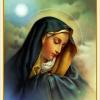
The Blessed Virgin Mary In The Lds Church


Recommended Posts

Posted

In the book, "The God of Jesus Christ", then Cardinal Ratzinger teaches that the Trinity exists in a life of prayer. Jesus, lived a life of unceasing prayer.

I don't know about this. Let me put it this way. If the trinity exists in a life of prayer, they would be resembling life in a monastery where monks are praying for most of the day. I have no problem with this vision of a monastery for monks. However, for the trinity, they seem to be needed to guide this earth in the right direction. The holy spirit testifies to certain truths and the father and jesus are playing an active role in making sure that the spiritual life is still present as they fight off the spirit of evil, initiated by satan. To have the trinity in unceasing prayer while satan is wrecking havoc on earth is a vision I hope not to have. It seems too passive for me.

Posted (edited)

I don't know about this. Let me put it this way. If the trinity exists in a life of prayer, they would be resembling life in a monastery where monks are praying for most of the day. I have no problem with this vision of a monastery for monks. However, for the trinity, they seem to be needed to guide this earth in the right direction. The holy spirit testifies to certain truths and the father and jesus are playing an active role in making sure that the spiritual life is still present as they fight off the spirit of evil, initiated by satan.


I think it would be helpful to understand Catholic ideas of prayer.  There is petitionary prayer, which is asking God for something.  This is not the life of prayer of the Holy Trinity.  It is, in fact, considered the lowest type of prayer.  As you point out, one cannot be asking God for something all day long, because that means you cannot do anything else.  A true life of prayer is much higher something that you can literally do without ceasing, as counseled by St. Paul (1 Thess 5:17).  The deepest meaning of prayer for Catholics is more like deep meditation than any vocal or petitionary prayer.


Here are some quotes from the Catechism about prayer:


2564 Christian prayer is a covenant relationship between God and man in Christ.

It is the action of God and of man, springing forth from both the Holy Spirit and ourselves, wholly directed to the Father, in union with the human will of the Son of God made man.


2565 In the New Covenant, prayer is the living relationship of the children of God with their Father who is good beyond measure, with his Son Jesus Christ and with the Holy Spirit.

The grace of the Kingdom is "the union of the entire holy and royal Trinity . . . with the whole human spirit.

Thus, the life of prayer is the habit of being in the presence of the thrice-holy God and in communion with him.

This communion of life is always possible because, through Baptism, we have already been united with Christ.

Prayer is Christian insofar as it is communion with Christ and extends throughout the Church, which is his Body.

Its dimensions are those of Christ's love.


2710 The choice of the time and duration of the prayer arises from a determined will, revealing the secrets of the heart. One does not undertake contemplative prayer only when one has the time: one makes time for the Lord, with the firm determination not to give up, no matter what trials and dryness one may encounter. One cannot always meditate, but one can always enter into inner prayer, independently of the conditions of health, work, or emotional state. The heart is the place of this quest and encounter, in poverty ant in faith.


Here is an interesting anthology on Christian prayer (from many Christian traditions -- Catholic, Orthodox, Anglican, Protestant, etc).  If you "look inside" and check out the first pages you'll get some interesting information on what deep prayer is for Christians.


To have the trinity in unceasing prayer while satan is wrecking havoc on earth is a vision I hope not to have. It seems too passive for me.


True prayer is anything but passive.  In fact, prayer is best way to "fight" Satan, as prayer is living our deepest and truest reality.  The Trinity is in unceasing prayer because God is absolute reality, complete and full and conscious.  That is a life of prayer, and that is what God is doing, and that is what we are called to do.  The Beatific Vision, the ultimate experience of Heaven, is this unceasing prayer, this unceasing communion with God and our true reality.

Edited by MiserereNobis
Posted

True prayer is anything but passive.  In fact, prayer is best way to "fight" Satan, as prayer is living our deepest and truest reality.  The Trinity is in unceasing prayer because God is absolute reality, complete and full and conscious.  That is a life of prayer, and that is what God is doing, and that is what we are called to do.  The Beatific Vision, the ultimate experience of Heaven, is this unceasing prayer, this unceasing communion with God and our true reality.

Actually what it says in the catechism is what the lds also believe. For the lds heavenly father is a personal father who one can go to in prayer. One can have a good personal conversation with him. I don't see any mysticism in such prayer. But I do see a close relationship as one who is a spirit child of him.


The idea of 'true prayer' in your last paragraph seems to be very figurative. For example, if the trinity is in unceasing prayer, who exactly are they praying to? And if god is in prayer, how can he listen to us and help us? Not to mention, listen to the saints who are interceding on our behalf? And overseeing the spirits who have passed on.

Posted

Actually what it says in the catechism is what the lds also believe. For the lds heavenly father is a personal father who one can go to in prayer. One can have a good personal conversation with him. I don't see any mysticism in such prayer. But I do see a close relationship as one who is a spirit child of him.


The idea of 'true prayer' in your last paragraph seems to be very figurative. For example, if the trinity is in unceasing prayer, who exactly are they praying to? And if god is in prayer, how can he listen to us and help us? Not to mention, listen to the saints who are interceding on our behalf? And overseeing the spirits who have passed on.


Yes, in traditional Christianity prayer means so much more than a conversation.  Like I said, the deepest prayer is beyond words, beyond petitions, beyond talking to someone.  It is communing with God at the deepest level of our being.  It is mystical, through and through.


Additionally, I'll point out that God is the ultimate multi-tasker.  He can do an infinite number of things at the same time.  So, yes, the Trinity can have perfect communion and prayer while at the same time doing everything else.  Surely LDS believe this, yes?

Posted (edited)

And if god is in prayer, how can he listen to us and help us? Not to mention, listen to the saints who are interceding on our behalf? And overseeing the spirits who have passed on.


Are we not commanded to pray always?  Have you ever considered how one is to pray always, while overseeing all of our earthly duties and communicating with others at the same time?  If we can do it, why not God?  


When we are living in, and responding to the spiritual environment which is constantly present, our life becomes a prayer to Him and with Him


When one studies the likes of St. Teresa of Avila and more recently, John Main and Lawrence Freeman, you will start to see the depth of light and truth that exists in the Catholic understanding and practice of prayer.  Every Mormon would do good to study the wealth of knowledge and truth that exists in the Catholic faith.

Edited by pogi
Posted

Thomas Merton, among others of course, makes the point that if prayer becomes just one more thing we have to do in addition to the other 10,000 things, then we'll never do it right.  Prayer must be the ONLY thing we do, and all of the other 10,000 things become part of our prayer.  Cooking is prayer, reading is prayer, sleeping is prayer, scrubbing the toilets is prayer, email is prayer, vomiting from the stomach flu is prayer, going on a date is prayer, etc, etc.  A true life of prayer finds God everywhere and communes with Him in whatever situation or circumstance we find ourselves in.


Merton's book New Seeds of Contemplation really helped me understand prayer, meditation, and contemplation in Catholicism when I was converting.  It also pointed me towards the great Catholic mystics, such as St. Teresa of Avila and St. John of the Cross.

Posted

Yes, in traditional Christianity prayer means so much more than a conversation.  Like I said, the deepest prayer is beyond words, beyond petitions, beyond talking to someone.  It is communing with God at the deepest level of our being.  It is mystical, through and through.


This is not prayer but meditation. For most of us mere mortals prayer is bowing our heads to speak with god. We thank him, we ask him, we converse with him, and we seek comfort with him. And in this way we have a conversation with him. And if he thinks it necessary, he answers our prayers.


Most of us mortals are working, having leisure, enjoying life, experiencing sadness and having various tides of feelings influencing our emotions. And through it all, we can pray.


My point is that in the afterlife, I don't think that Mary is in constant prayer. But I do believe that she is with her husband as an eternal unit enjoying her place as the mother of jesus.

Posted (edited)

"To pray is not to step outside history and withdraw to our own private corner of happiness. When we pray properly we undergo a process of inner purification which opens us up to God and thus to our fellow human beings as well. In prayer we must learn what we can truly ask of God—what is worthy of God. We must learn that we cannot pray against others. We must learn that we cannot ask for the superficial and comfortable things that we desire at this moment—that meagre, misplaced hope that leads us away from God. We must learn to purify our desires and our hopes. We must free ourselves from the hidden lies with which we deceive ourselves. God sees through them, and when we come before God, we too are forced to recognize them. “But who can discern his errors? Clear me from hidden faults” prays the Psalmist (Ps 19:12 [18:13]). Failure to recognize my guilt, the illusion of my innocence, does not justify me and does not save me, because I am culpable for the numbness of my conscience and my incapacity to recognize the evil in me for what it is. If God does not exist, perhaps I have to seek refuge in these lies, because there is no one who can forgive me; no one who is the true criterion. Yet my encounter with God awakens my conscience in such a way that it no longer aims at self-justification, and is no longer a mere reflection of me and those of my contemporaries who shape my thinking, but it becomes a capacity for listening to the Good itself." ("Spe Salvi", p.33)


I like the word "encounter" as the descriptor for our relationship with God.

Edited by saemo
Posted

Merton's book New Seeds of Contemplation really helped me understand prayer, meditation, and contemplation in Catholicism when I was converting.  It also pointed me towards the great Catholic mystics, such as St. Teresa of Avila and St. John of the Cross.

Merton was a monk who certainly had time to meditate and contemplate. He lived in a monastary. But he also wrote books and kept a journal. And he also embraced life. However, monks certainly can spend their time in silence and contemplation and in prayer. This can be their vocation. But we on the outside have own vocations. And like the founder of Opus Dei, we can bring holiness into our work vocations through our daily interactions with our workmates and with our neighbors. And we can pray to god because he is our father and experience a closeness with him through our simple prayers.

Posted (edited)

"To pray is not to step outside history and withdraw to our own private corner of happiness. When we pray properly we undergo a process of inner purification which opens us up to God and thus to our fellow human beings as well. In prayer we must learn what we can truly ask of God—what is worthy of God. We must learn that we cannot pray against others. We must learn that we cannot ask for the superficial and comfortable things that we desire at this moment—that meagre, misplaced hope that leads us away from God. We must learn to purify our desires and our hopes. We must free ourselves from the hidden lies with which we deceive ourselves. God sees through them, and when we come before God, we too are forced to recognize them. “But who can discern his errors? Clear me from hidden faults” prays the Psalmist (Ps 19:12 [18:13]). Failure to recognize my guilt, the illusion of my innocence, does not justify me and does not save me, because I am culpable for the numbness of my conscience and my incapacity to recognize the evil in me for what it is. If God does not exist, perhaps I have to seek refuge in these lies, because there is no one who can forgive me; no one who is the true criterion. Yet my encounter with God awakens my conscience in such a way that it no longer aims at self-justification, and is no longer a mere reflection of me and those of my contemporaries who shape my thinking, but it becomes a capacity for listening to the Good itself." ("Spe Salvi", p.33)


I like the word "encounter" as the descriptor for our relationship with God.

This is well written. And very nice. However, we can really keep it simple: we pray to encounter god in the various areas of our existence. We pray as a family in the morning and in the evening. We pray over our food to give thanks. We pray during our times of need and in times of joy. And we see Heavenly Father as a loving father who looks upon us all as is children. And we take comfort in our heavenly mother who is our mother and understand that she also loves us. And so when we pray, we pray to our heavenly parents as human beings embracing our spiritual parents.


We keep it simple because we are human. And this is how I would see mary praying when she was alive: to experience not only the presence of her earthly son, but also her heavenly father as christ did when he prayed.

Edited by why me
Posted

And so when we pray, we pray to our heavenly parents as human beings embracing our spiritual parents.


Do you pray to heavenly mother?  I thought such things were forbidden in Mormonism.

Posted

This is well written. And very nice. However, we can really keep it simple: we pray to encounter god in the various areas of our existence. We pray as a family in the morning and in the evening. We pray over our food to give thanks. We pray during our times of need and in times of joy. And we see Heavenly Father as a loving father who looks upon us all as is children. And we take comfort in our heavenly mother who is our mother and understand that she also loves us. And so when we pray, we pray to our heavenly parents as human beings embracing our spiritual parents.


We keep it simple because we are human. And this is how I would see mary praying when she was alive: to experience not only the presence of her earthly son, but also her heavenly father as christ did when he prayed.

This appears rather paganized, but other than that, seems like a nice way to pray.

Posted

Merton's book New Seeds of Contemplation really helped me understand prayer, meditation, and contemplation in Catholicism when I was converting.  It also pointed me towards the great Catholic mystics, such as St. Teresa of Avila and St. John of the Cross.

Verily, verily and again I say unto thee, thou shalt read this book:

http://www.amazon.com/The-Return-Mystical-Wittgenstein-Christian/dp/1441104445


For yea, if thou ponderest these matters in thy heart, thou shalt discover we are on the same page.  ;)


But NO Neoplatonism allowed!  ;)

Posted

Verily, verily and again I say unto thee, thou shalt read this book:

http://www.amazon.com/The-Return-Mystical-Wittgenstein-Christian/dp/1441104445


For yea, if thou ponderest these matters in thy heart, thou shalt discover we are on the same page.  ;)


But NO Neoplatonism allowed!  ;)


Oooo, that actually looks really interesting.  I'll put it on the wish list.  Thanks!


In one of my previous posts on this thread, I wrote about God being absolute complete reality, and as I was typing I could hear you whispering, "what does that even mean?"  Ha!  I almost put a little note at the end of the post that no philosophical discussions concerning language are allowed to derail my post about contemplative prayer in Catholicism ;)


It's always nice to have a gadfly around... and I promise I won't offer you any hemlock!

Posted

This is not prayer but meditation. For most of us mere mortals prayer is bowing our heads to speak with god. We thank him, we ask him, we converse with him, and we seek comfort with him. And in this way we have a conversation with him. And if he thinks it necessary, he answers our prayers.


Most of us mortals are working, having leisure, enjoying life, experiencing sadness and having various tides of feelings influencing our emotions. And through it all, we can pray.


My point is that in the afterlife, I don't think that Mary is in constant prayer. But I do believe that she is with her husband as an eternal unit enjoying her place as the mother of jesus.

The ATTITUDE of prayer itself, elevating one's consciousness to another level to speak to God is itself an act of meditation.  One must be meditative to pray deeply.  You cannot separate them- they are two sides of the same coin.


It took me a while to understand that- for some time I felt guilty about using "prayer" time for "meditation" until I learned that opening my mind with meditation was actually opening my mind to receive answers.

Posted (edited)

Do you pray to heavenly mother?  I thought such things were forbidden in Mormonism.

In vocal prayers one does not address anyone but the Father.


But in one's heart, at least for me, I connect, I believe, to all who are One with the Father.- see John 17


For us, "God" is a collective noun, like "congress".   The Godhead is essentially a family. 


We often get mail addressed to "The Bukowskis".  That is MY personal last name, as the father of the family, but it includes all of us as one.


That's the way I see it anyway.


So in a very real way, we are including what the Catholics would call "The Communion of the Saints", and our temple work for the dead is also specifically designed to seal all humanity into one huge family.  The ceremonies remind us that we are one with them and they are one with us-  THAT is really what the ceremonies are for.  THAT is why we do "work for the dead" in temples- that we will be one in the "unity of the faith".

John 17, KJV


I pray for them: I pray not for the world, but for them which thou hast given me; for they are thine.

10 And all mine are thine, and thine are mine; and I am glorified in them.

11 And now I am no more in the world, but these are in the world, and I come to thee. Holy Father, keep through thine own name those whom thou hast given me, that they may be one, as we are....


20 Neither pray I for these alone, but for them also which shall believe on me through their word;

21 That they all may be one; as thou, Father, art in me, and I in thee, that they also may be one in us: that the world may believe that thou hast sent me.

22 And the glory which thou gavest me I have given them; that they may be one, even as we are one:

23 I in them, and thou in me, that they may be made perfect in one; and that the world may know that thou hast sent me, and hast loved them, as thou hast loved me.

24 Father, I will that they also, whom thou hast given me, be with me where I am; that they may behold my glory, which thou hast given me: for thou lovedst me before the foundation of the world.

25 O righteous Father, the world hath not known thee: but I have known thee, and these have known that thou hast sent me.

26 And I have declared unto them thy name, and will declare it: that the love wherewith thou hast loved me may be in them, and I in them.


Edited by mfbukowski
Posted

Oooo, that actually looks really interesting.  I'll put it on the wish list.  Thanks!


In one of my previous posts on this thread, I wrote about God being absolute complete reality, and as I was typing I could hear you whispering, "what does that even mean?"  Ha!  I almost put a little note at the end of the post that no philosophical discussions concerning language are allowed to derail my post about contemplative prayer in Catholicism ;)


It's always nice to have a gadfly around... and I promise I won't offer you any hemlock!

No actually I can switch into Mystic mode and get that instantly.  The trick is to keep mysticspeak in the same category as other mysticspeak and not think it is "philosophy" or "logical" because it is not meant to be either of those.  Poetry is poetry and metaphor is metaphor.  But poetry is not science and is not supposed to be.


But let me take it another step forward since we have decided to speak mysticspeak.


I agree that God is complete reality- or more precisely probably that seeing the world as God sees it IS complete reality, because God is a Human- exalted and infinitely above us, but still Human.


Perhaps it would be easier to see this for a Catholic by considering the perspective of Christ - and what it would be like to be Him.  Does the Person Christ "know all reality"?


Since he is the Word, by which all things were created, and since He knows all things, REALITY IS WHAT CHRIST PERCEIVES AND KNOWS, so yes, in that sense He IS "all reality" or at least ALL THAT CAN BE KNOWN about it.  Is there a "reality" Christ cannot know about?  No.


So for Christ, there is no difference between what can be KNOWN by him and "reality".  For Christ, reality and appearance are the same thing.


But Christ has a human nature.  I will promise not to get into that one- defining "nature"-  but yes, he still has his body- Catholics believe that.


We believe that humans and Christ have the same nature.


Pragmatism was about eliminating the reality appearance distinction, because there is no sense in which there is a "reality" which humans can talk about which cannot be experienced by humans.


Yes we can experience God and have spiritual experiences- that is part of "reality" because we can experience it.  We can dream dreams and have visions and experience what God tells us.   That is not scientific "reality" but it is still just as real as anything.  Love is real, courage is real, reverence for nature is real, our very perceptions of nature and all that is in it is "real"


What we call "reality" is what we experience.


So now we bring this into a Mormon context- where we postulate that God (think of the physical Person Christ to make it easier) IS Human.


Surely God experiences things mortal humans cannot, but we can "grow up" to be like him, because we share his Divine Nature.   We are mini gods in embryo, just as children do not understand what adults understand, we do not know what God knows, but in principle, we can "grow up" to know what he knows.


Human experience literally defines- puts into language- all of reality, and is "for all practical purposes" "reality itself". Human experience is reality itself.  And since God is a Human, all of reality is God's experience.


God is the culmination of all his experience- what He has become over eternities upon eternities.


So God= all he has experienced= all which can be experienced= all of "reality".


See?  I told you we were on the same page!


(And I didn't use the word "substance" anywhere!)  ;)

Posted

So I guess one could say in summation that for us the Social Trinity extends into all of us as the Communion of Saints.  Since we are all Human with the same divine nature, what God experiences is what we CAN in principle at least experience when we "grow up" to do so.


So yes, God is all of humanity and all of what humanity knows and can know= all of reality.


That's the short form of it all  ;)

Posted

Do you pray to heavenly mother?  I thought such things were forbidden in Mormonism.

I am under the impression that Heavenly father would tell our heavenly mother. Why keep it a secret? I am sure that she is also concerned about her children.

Posted (edited)

This appears rather paganized, but other than that, seems like a nice way to pray.

I would call it rather humanized. We are who we are: spirit beings on a human journey.

Edited by why me
Posted (edited)

The ATTITUDE of prayer itself, elevating one's consciousness to another level to speak to God is itself an act of meditation.  One must be meditative to pray deeply.  You cannot separate them- they are two sides of the same coin.


It took me a while to understand that- for some time I felt guilty about using "prayer" time for "meditation" until I learned that opening my mind with meditation was actually opening my mind to receive answers.

I think that for many of us, prayer is done in very informal ways. Meditating certainly takes time and is usually done alone when one has silence. One can even say that it seems more like yoga. But a simple on the bus or in the car or even in a classroom is how most lds are doing prayer.

Edited by why me
Posted (edited)

I think that for many of us, prayer is done in very informal ways. Meditating certainly takes time and is usually done alone when one has silence. One can even say that it seems more like yoga. But a simple on the bus or in the car or even in a classroom is how most lds are doing prayer.


Informal prayer, as you say, is certainly an appropriate form of prayer, but it should not be the only form of prayer if we desire to know and connect with the mind and will of God.  If most members are not taking time daily for this deeper connection, then we are missing the point and are not heeding the words of our prophets and leaders.


Here is what Chauncey C. Riddle said on the subject:


"Praying is more than “saying prayers.” True prayer is an experience that takes place under the guidance of the Holy Spirit.
 
The transformation from a natural man to a saint is marked by the ability to recognize and to respond to spiritual environment. 
 
The helpmate of mighty prayer is meditation...
 
To pray is often like asking for food and then being blessed with a sumptuous meal. What would you think of a person who, when thus honored, merely took a sniff, then put the meal on a shelf and left it? Though greatly blessed, he would not be nourished. 
 
So it may be with those who pray and do not meditate. They may have much but may be little edified. 
 
Now mighty prayer is so rich an experience that he can hardly contain it. Ideas, hopes, and feelings tumble into his mind, then are carefully fit together under spiritual guidance, into the fabric of his new life. They become part of his robe of righteousness as he prepares to meet the Bridegroom." 
 

David O McKay taught much about a deeper form of meditative prayer that allows us to enter into his presence.  He said:


"Meditation is one of the most secret, most sacred doors through which we pass into the presence of the Lord. Jesus set the example for us. As soon as he was baptized and received the Father’s approval, “This is my Beloved Son, in whom I am well pleased,” [Matthew 3:17] Jesus [went] to what is now known as the mount of temptation. I like to think of it as the mount of meditation where, during the forty days of fasting, he communed with himself and his Father, and contemplated upon the responsibility of his great mission. One result of this spiritual communion was such strength as enabled him to say to the tempter:
 
“… Get thee hence, Satan: for it is written, Thou shalt worship the Lord thy God, and him only shalt thou serve.” (Matt. 4:10.)
 
Before he gave … the beautiful sermon on the mount, he was in solitude, in communion. He did the same thing after that busy Sabbath day, when he arose early in the morning, after having been the guest of Peter. Peter undoubtedly found the guest chamber empty, and when they sought [Jesus] they found him alone. It was on that morning that Peter said:
 
“… All men seek for thee.” (Mark 1:37.)
 
Again, after Jesus had fed the five thousand he told the Twelve to dismiss the multitude, but Jesus went to the mountain for solitude. The historian says, “when the evening was come, he was there alone.” (Matt. 14:23.) Meditation! Prayer! 
 
Let us make God the center of our lives. … To have communion with God, through his Holy Spirit, is one of the noblest aspirations of life. It is when the peace and love of God have entered the soul, when serving him becomes the motivating factor in one’s life and existence."
 
He also said:
 
"Strive in your homes, and teach others, to take some time of each day to have a quiet hour, meditation [reminds me of an nice little LDS tune I know that nobody really practices]. Let there be study of the scriptures at least thirty minutes of each day. At an early morning hour, or at late night, as best suits your schedule, allow yourself an hour of prayerful meditation where you can tune in with God..."
 
Here is some more from McKay:
 
"We don't take sufficient time to meditate." I get up early in the morning . . . , five o'clock, when my mind and spirit are clear and rested. Then I meditate. You can come closer to the Lord than you imagine when you learn to meditate. Let your spirits be taught by the Spirit.
 
The Twelve will not soon forget President David O. McKay's admonition in our council meeting one morning when he impressed the vital importance of taking time to meditate in order to keep spiritually attuned. . . . "It's a great thing to be responsive to the whisperings of the Spirit and we know that when these whisperings come it is a gift and our privilege to have them. They come when we are relaxed and not under pressure of appointments."
 
And this:
 
"Don't get so busy that you don't have time to meditate. Take the time. The most important testimony does not come by sight, but by the inner witness. Christ may be nearer than we have knowledge. "I am in your midst, but you do not see me. The Holy Ghost bears the sure witness. Mine eyes are upon you. The day cometh when ye shall know that I am." [see D&C 38:7--8.]10
Edited by pogi
Posted

Paul lays it out very clearly, Romans 5:12-19, verses 18-19 in particular...

In conclusion, just as through one transgression

condemnation came upon all,

so, through one righteous act,

acquittal and life came to all.

For just as through the disobedience of the one man

the many were made sinners,

so, through the obedience of the one,

the many will be made righteous.

Cool, thanks. Always makes me wonder why Calvinists believe that all men and women are totally depraved. I was talking with someone who was telling how his two month old had already broken ever commandment. I just felt bad for the child, that his father believed such horrible things about his baby.
Posted

The whole concept of intercession baffles me. First it's not like we are in some earth bound courtroom trying to arrive at the truth we know Christ knows the truth of all things. Second we know our forgiveness depends on our repentance for sins and our obedience to Christs commandments and our works in demonstrating that understanding and obedience. And third it's not like Christ is going to judge you different from me for the same sin because his mother asked him to as it contravenes all the doctrine he has laid out for us to follow.

Posted

The whole concept of intercession baffles me. First it's not like we are in some earth bound courtroom trying to arrive at the truth we know Christ knows the truth of all things. Second we know our forgiveness depends on our repentance for sins and our obedience to Christs commandments and our works in demonstrating that understanding and obedience. And third it's not like Christ is going to judge you different from me for the same sin because his mother asked him to as it contravenes all the doctrine he has laid out for us to follow.

Rule-bound administrative form is pervasive in a lot of religious thought, including for Catholics. Dehumanization is the risk of this view. Why not ask people to pray for you?

Guest
This topic is now closed to further replies.
×
×
  • Create New...