Jump to content
Seriously No Politics ×

A Mormon Says Sorry


Recommended Posts

Posted

Maybe I should have been more specific. I can't say I am sorry for something that I thought was true ...


Sure, you can.  We do that all of the time.  "I thought it was true that the iPad was mine, I was WRONG."  "I thought you were going to stop at the intersection, I was WRONG."


I also can't say sorry because I am not likely to cross paths with those people in this life.


Isn't that the beauty of the Internet?  You can communicate with people that you will never meet (sort of like we are communicating now, brother).  And certainly in trying to communicate to large groups, it's about the only feasible way.  Which is why politicians and celebrities hold press conferences or post on Twitter when they want to apologize for saying something offensive, rather than trying to track all of us down individually.


If I was teaching something and I taught something wrong and then realized it on my own I would probably offer up an apology.


So are we agreed?  We apologize when we make errors that harm others.


It should be noted that I have never taught poeple on my mission that people of African descent were cursed.


Duly noted.  No apology necessary from you.

Posted

Maybe I should have been more specific. I can't say I am sorry for something that I thought was true, I also can't say sorry because I am not likely to cross paths with those people in this life. That was some time ago in a different state. We are not talking about an I pad that I thought was mine that I mistakenly took. We are talking about teaching something that you thought was right. In most cases an apology is not needed. I also would not excpet an apology to those that taught what I taught to other people. I think the dude in the youtube just wants attention. IOW an apology is just not something needed in this regard. No one does it years after the matter. If I was teaching something and I taught something wrong and then realized it on my own I would probably offer up an apology. It should be noted that I have never taught poeple on my mission that people of African descent were cursed.

I think I have a better anaology. I am a teacher teaching a college coarse. I have been instructed to teach on subject X. I am not familiar with subject X so a collegue of mine teaches me about Subject X. In discussing subject X he tells me that it is green in color. The next day some students ask me about subject X and I tell them it is green. 15 years later I learn that it really was yellow in color. Should I offer up an apology because what I really thought it was at the time I taught. But later learned it was something else?


I mean for me I just don't think apology is warrented. I am more than willing to admit that I had indeed taught something wrong because that was what I was taught. But here is the new truth I learned. Now if I had taught someting wrong that I knew was wrong then I would apologize for that. For me an apologize signifies ownership. You can't apologize for something that you didn't fully own. I could apologize that I thought I knew what was the truth but later learned that I was wrong.


Any way carry on.

Posted


So are we agreed?  We apologize when we make errors that harm others.


Maybe I am just making more out of this than need be. I think we probably do agree and probably on every point you bring up. 

Posted

Maybe I am just making more out of this than need be. I think we probably do agree and probably on every point you bring up. 


I TOTALLY understand.  Being part of a traditionally-disadvantaged group makes it difficult to see ourselves as anything but the victim.   For example, I imagine that if I was asked to apologize for some hurtful remark (say, the fence sitting jab earlier in this thread), my initial reaction would be, "Why should I apologize?  Do you know what I suffered through?"  It would probably take me a little while to reflect upon it and realize that I was wrong.  It would take even longer to extend the apology that I owe to mfbukowski and why me for such a low blow.


I'm sorry, Brothers!  THAT remark was uncalled for and far more hostile than is acceptable in civil discourse about an issue upon which reasonable people can differ.  I stepped WAY over the line and I hope you accept my apology.


As I get older (and mostly, WIDER), I'm learning to be a LITTLE more self-critical.  And when I do, I seldom (if ever) find myself totally blameless in any situation.  That's why I'm learning (begrudgingly) to simply apologize for my errors and TRY to correct them going forward.  Trying to figure out who was MORE wrong or who SHOULD have done something different is simply far more effort than to just own up to my part.

Posted

 But be that as it may, such titles customarily carry disclaimers that the author alone is responsible for the content.


I think you are right. I remember this being taught to me by a ZL. That just because BRM taught it in MD does not make it inspired, authoritive or doctrine. Since then I have had very little interest in reading commentary on doctrine that we believe, even if it is from the prophet. I just don't want to get the wrong idea on things. Now non doctrinal things like discussing the EAG, then I don't mind additional commentary.

Posted

I TOTALLY understand.  Being part of a traditionally-disadvantaged group makes it difficult to see ourselves as anything but the victim.   For example, I imagine that if I was asked to apologize for some hurtful remark (say, the fence sitting jab earlier in this thread), my initial reaction would be, "Why should I apologize?  Do you know what I suffered through?"  It would probably take me a little while to reflect upon it and realize that I was wrong.  It would take even longer to extend the apology that I owe to mfbukowski and why me for such a low blow.


I'm sorry, Brothers!  THAT remark was uncalled for and far more hostile than is acceptable in civil discourse about an issue upon which reasonable people can differ.  I stepped WAY over the line and I hope you accept my apology.


As I get older (and mostly, WIDER), I'm learning to be a LITTLE more self-critical.  And when I do, I seldom (if ever) find myself totally blameless in any situation.  That's why I'm learning (begrudgingly) to simply apologize for my errors and TRY to correct them going forward.  Trying to figure out who was MORE wrong or who SHOULD have done something different is simply far more effort than to just own up to my part.

That is a very interesting perspective and I agree with it. How old are you if you don't mind me asking. I am 35.

Posted

I think I have a better anaology. I am a teacher teaching a college coarse. I have been instructed to teach on subject X. I am not familiar with subject X so a collegue of mine teaches me about Subject X. In discussing subject X he tells me that it is green in color. The next day some students ask me about subject X and I tell them it is green. 15 years later I learn that it really was yellow in color. Should I offer up an apology because what I really thought it was at the time I taught. But later learned it was something else?


I mean for me I just don't think apology is warrented. I am more than willing to admit that I had indeed taught something wrong because that was what I was taught. But here is the new truth I learned. Now if I had taught someting wrong that I knew was wrong then I would apologize for that. For me an apologize signifies ownership. You can't apologize for something that you didn't fully own. I could apologize that I thought I knew what was the truth but later learned that I was wrong.


Any way carry on.

You could apologize for leading someone astray even if you didn't know you had given them some false information.  I mean, you were the one who told them something, and what you told them was WRONG.  Maybe you could just apologize for being the vessel of false information to that student, even though you had the best of intentions.  Like some Christians teach things that aren't true because they don't know they're not true and they're just repeating what someone told them was true, when it wasn't.


Or you could just say something like: I'm sorry you believed me when what I told you was wrong.  After all, they were the one who believed you, and they were WRONG to believe you when you were not telling the truth.

Posted (edited)

The Church is the collectiive body of members, and each member has his or her own views on each issue with some members who do not agree with some other members.  How can the collective body be responsible for the errors of an individual person?


Sounds like you don't know what the Church is.


And FYI, the President of the Church doesn't speak for all of the members, either, because there are some members who do not agree with what the President of the Church has to say which means that he is not speaking for them.  He does speak for God, though, when he is speaking as a prophet.  But even when he speaks for God to share God's message to us he is still not speaking for all of the members of the Church as if what he says is what each and every member would say.


When I said "church" I was referring to those who are the presiding authorities who govern the affairs of the church and are ultimately responsible for the teaching of sound doctrines and for the correcting of false doctrines.  They are the ones who speak authoritatively for the church. 


Upon them rests the responsibility of directing the kingdom of God on the earth (see D&C 90:12–16). [And are therefore responsible for teaching us awry and for correcting past mistakes]


“And after this decision it shall be had in remembrance no more before the Lord; for this is the highest council of the church of God,and a final decision upon controversies in spiritual matters” (D&C 107:78–80; emphasis added).


“The First Presidency have the ultimate responsibility for the affairs of the kingdom of God on the earth. "


http://www.lds.org/manual/teachings-of-the-living-prophets-student-manual/chapter-4-the-quorum-of-the-first-presidency?lang=eng

Edited by pogi
Posted

46 going on 23.

Oh good there is hope for me still. Lol.

Posted

You could apologize for leading someone astray even if you didn't know you had given them some false information. 

I have changed my position some what. If an apology will help some one then offer it.

Posted

I'm really starting to think that Brother Burton may have stumbled upon something BIG. For various reasons, the Church can't apologize for the past, but what if THOUSANDS of saints began posting short videos apologizing for the part they played in the matter? What would the rest of the world think about a church whose members are so pure of heart that they voluntarily apologize for past mistakes? What better example can we give of repentance, which I believe stands as the first pillar of our gospel? Perhaps then, when people think of blacks and Mormons, they'll have a more recent impression than from 1978.

As I write this out it seems naively idealistic, and it probably is. However, the reality is this: If ANY group of Christians are capable of extraordinary compassion and empathy, it's the members of this wonderful church. Just a thought ...

Posted

When I said "church" I was referring to those who are the presiding authorities over the affairs of the church and are ultimately responsible for the teaching of sound doctrines and for the correcting of false doctrines.  They are the ones who speak authoritatively for the church. 


Upon them rests the responsibility of directing the kingdom of God on the earth (see D&C 90:12–16). [And are therefore responsible for teaching us awry and for correcting past mistakes]


“And after this decision it shall be had in remembrance no more before the Lord; for this is the highest council of the church of God,and a final decision upon controversies in spiritual matters” (D&C 107:78–80; emphasis added).


“The First Presidency have the ultimate responsibility for the affairs of the kingdom of God on the earth. "


http://www.lds.org/manual/teachings-of-the-living-prophets-student-manual/chapter-4-the-quorum-of-the-first-presidency?lang=eng


I was talking about what you said about how you think the church should apologize for the errors of an individual person, and I still don't think you understand what I was saying.


Even if an authorized representative of the Church (an individual) said something to the collective body of the church which was not true, why should the church (the audience) apologize for what that authorized representative said?  It wasn't the church that was in error.  It was the authorized representative of the Church, and if anyone should be apologizing, it should be that person.

Posted

I'm really starting to think that Brother Burton may have stumbled upon something BIG. For various reasons, the Church can't apologize for the past, but what if THOUSANDS of saints began posting short videos apologizing for the part they played in the matter? What would the rest of the world think about a church whose members are so pure of heart that they voluntarily apologize for past mistakes? What better example can we give of repentance, which I believe stands as the first pillar of our gospel? Perhaps then, when people think of blacks and Mormons, they'll have a more recent impression than from 1978.

As I write this out it seems naively idealistic, and it probably is. However, the reality is this: If ANY group of Christians are capable of extraordinary compassion and empathy, it's the members of this wonderful church. Just a thought ...

Okay.  Fine.  I apologize for what he said.  It's not really a heartfelt apology, since I wasn't the one in error, but I'll apologize anyway, just in case it might help.


And while I'm at it, I'll apologize for the state of the whole world, too.  After all, I am a citizen of this planet.  Go ahead and blame me for everything that is wrong if that helps you to feel any better.

Posted

While I personally think that the church should apologize (and ultimately will), I find it curious that there is pressing desire to find "fault" in the situation.  Is that what we've been taught?  That, unless you were "at fault," you should never apologize?  Because this is just the opposite of what I've observed among the saints.

I think this defensiveness comes a lot from being told we are at fault in conjunction with demanding apologies....at least that has been my experience.


I tend to say more along the lines of "I feel saddened by" when there are things I've done wrong through no fault of my own.


This is not one of those things, I don't know how I managed to escape what appears from here to be a common experience, but I never felt the need to offer any explanation of the ban...I always just said "I don't know why".

Posted

Okay.  Fine.  I apologize for what he said.  It's not really a heartfelt apology, since I wasn't the one in error, but I'll apologize anyway, just in case it might help.


And while I'm at it, I'll apologize for the state of the whole world, too.  After all, I am a citizen of this planet.  Go ahead and blame me for everything that is wrong if that helps you to feel any better.

Okay. Let's try this. You are given directions to the scouting campsite. You hand them out for the ward camp outing, but they turn out to be incorrect. One family follows these directions and ends up lost in the woods.

Would you not be among the first people out searching for them? Or would you say, "Hey, it wasn't my fault, Brother So-and-So drew the map. I just did what I was told. I'm not in error, so I could care less. I'm going to bed."

I'm betting you wouldn't rest until you found your lost ward family members. Not only that, but I'd be willing to wager (if it were allowed) that you would even ... Gasp ... apologize. What for? I don't know. How about for not double-checking the direction? Or maybe, for not providing an emergency cell phone number to call. Or maybe just because people that you love got lost.

Is this any different? Many of us (white and black) got lost as a result of these defunct teachings. For those of us who gave out "bad directions," is it really so outlandish to express regret?

Posted

I TOTALLY understand.  Being part of a traditionally-disadvantaged group makes it difficult to see ourselves as anything but the victim.   For example, I imagine that if I was asked to apologize for some hurtful remark (say, the fence sitting jab earlier in this thread), my initial reaction would be, "Why should I apologize?  Do you know what I suffered through?"  It would probably take me a little while to reflect upon it and realize that I was wrong.  It would take even longer to extend the apology that I owe to mfbukowski and why me for such a low blow.


I'm sorry, Brothers!  THAT remark was uncalled for and far more hostile than is acceptable in civil discourse about an issue upon which reasonable people can differ.  I stepped WAY over the line and I hope you accept my apology.


As I get older (and mostly, WIDER), I'm learning to be a LITTLE more self-critical.  And when I do, I seldom (if ever) find myself totally blameless in any situation.  That's why I'm learning (begrudgingly) to simply apologize for my errors and TRY to correct them going forward.  Trying to figure out who was MORE wrong or who SHOULD have done something different is simply far more effort than to just own up to my part.

No problem, and of course it takes two to "tangle" and so I apologize as well for being touchy.


Everyone here knows I am a very sedate individual who never gets mad. - NOT!


But an interesting question is- do Americans in general- me for example as a Polish American who's ancestors were oppressed in Poland, who came here in the 1870's, were obviously not slave owners, who came here to escape oppression, and nearly were slaves themselves, working in coal mines and conscripted into foreign armies they did not support, owe African Americans in general an apology for the atrocities committed against them in this country?


I am reminded of the Rolling Stones song which says "I shouted out 'Who killed the Kennedys?' when after all it was you and me!"


Was it really "you and me" who killed the Kennedys?


At what time are we personally responsible for bad things which happen in one's culture when we personally had no individual responsibility whatsoever for what happened?


We as a church do not believe that we are personally responsible for Adam's transgression- and in general that guilt is not "inherited". 


On the other hand of course, as in the case of Adam, we do inherit the consequences of that sin- theologically we are talking about sin and death, on a cultural level it can obviously be said that America as a nation has inherited the effects of the curse of slavery- and there is ample evidence of course that this curse is still with all of us on a daily basis.


And as a church, how am I personally responsible for teachings I never taught, and never believed, and as I have stated before here, would not have joined the church if those beliefs were still in place when I joined the church?


I am sorry for all you and African Americans in general have gone through, and I know I cannot fathom what it means to be black in this country.  If there was something I could do to change it, I would.


But I cannot change it.  We all have to live with the consequences.  Maybe eventually it will get better.


But the question is- why am I personally to blame for it?  Why should I apologize?

Posted

I was talking about what you said about how you think the church should apologize for the errors of an individual person, and I still don't think you understand what I was saying.


First of all, I never said that.  I said the church (referring to the governing body) does have responsibility for correcting mistakes of previous general authorities.  My previous link demonstrates that.


Even if an authorized representative of the Church (an individual) said something to the collective body of the church which was not true, why should the church (the audience) apologize for what that authorized representative said?  It wasn't the church that was in error.  It was the authorized representative of the Church, and if anyone should be apologizing, it should be that person.


I agree with you, but if the church (body of believers) propagates these false teachings without praying about it first, they are also responsible and accountable for it. 


Maybe you missed this:
 

When I said "church" I was referring to those who are the presiding authorities who govern the affairs of the church

Posted

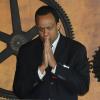
In this video, a saint apologizes for his role in teaching the now-repudiated justifications for the priesthood/temple ban.


Which one of you is next?   :P

I was never a part of it, I joined in 1979. Had the Priesthood ban still been in effect I probably would not have joined. I saw enough of that living here in Georgia in the 50's, 60's and 70's.
Posted

For various reasons, the Church can't apologize for the past, but what if THOUSANDS of saints began posting short videos apologizing for the part they played in the matter?

What part, precisely was that?


What part did you play in the Aurora Colorado murders?  How are those similar or different?

Posted

But an interesting question is- do Americans in general- me for example as a Polish American who's ancestors were oppressed in Poland, who came here in the 1870's, were obviously not slave owners, who came here to escape oppression, and nearly were slaves themselves, working in coal mines and conscripted into foreign armies they did not support, owe African Americans in general an apology for the atrocities committed against them in this country?

No. Congress and the President on the other hand absolutely should have apologized on behalf of the country to those wronged by unjust laws that allowed slavery.

Posted

Okay. Let's try this. You are given directions to the scouting campsite. You hand them out for the ward camp outing, but they turn out to be incorrect. One family follows these directions and ends up lost in the woods.

Would you not be among the first people out searching for them? Or would you say, "Hey, it wasn't my fault, Brother So-and-So drew the map. I just did what I was told. I'm not in error, so I could care less. I'm going to bed."

I'm betting you wouldn't rest until you found your lost ward family members. Not only that, but I'd be willing to wager (if it were allowed) that you would even ... Gasp ... apologize. What for? I don't know. How about for not double-checking the direction? Or maybe, for not providing an emergency cell phone number to call. Or maybe just because people that you love got lost.

Is this any different? Many of us (white and black) got lost as a result of these defunct teachings. For those of us who gave out "bad directions," is it really so outlandish to express regret?

You're mixing up apples with oranges.  There are 2 different types of situations here. 


There is what you have done, on one hand.  And on the other hand there is what some other person has done.


If I were you, I'd focus on what I have done while trying to live the best kind of life I know how to live.  If for you that involves trying to influence how other people live their own lives while you do what you can to try to help them live the best kind of life you know they can live, FINE, but If I were you I'd still focus mainly on what I have done and am doing while trying to live the best kind of life I can live.  You can't really make someone else do something or even believe something they don't want to do or believe, but you can do all you can do to live the best kind of life you can live, and if that involves apologizing when you feel the need to apologize for any error you have made, go for it.  I won't fault you for apologizing when you feel the urge to apologize for something.

Posted

I'm betting you wouldn't rest until you found your lost ward family members. Not only that, but I'd be willing to wager (if it were allowed) that you would even ... Gasp ... apologize. What for? I don't know.

That makes a few of us.

Posted (edited)

No. Congress and the President on the other hand absolutely should have apologized on behalf of the country to those wronged by unjust laws that allowed slavery.

I actually have no problem with that if they decided to do so- it might be a nice gesture.


But should I apologize for Adam's transgression?  How is this different?


I hereby apologize to everyone on this board for Adam's transgression.


Do we feel better now?


Sin is sin.  Apologies are for when you did something wrong.  Consequences are not taken away by an apology.

Edited by mfbukowski
Posted

I'm really starting to think that Brother Burton may have stumbled upon something BIG. For various reasons, the Church can't apologize for the past, but what if THOUSANDS of saints began posting short videos apologizing for the part they played in the matter? What would the rest of the world think about a church whose members are so pure of heart that they voluntarily apologize for past mistakes? What better example can we give of repentance, which I believe stands as the first pillar of our gospel? Perhaps then, when people think of blacks and Mormons, they'll have a more recent impression than from 1978.

As I write this out it seems naively idealistic, and it probably is. However, the reality is this: If ANY group of Christians are capable of extraordinary compassion and empathy, it's the members of this wonderful church. Just a thought ...

Serious question...


Do you really think this would be taken as a sincere apology and not just seen as a superficial attempt to make themselves feel better about themselves or make themselves look good?


I have seen a number of people blow off apologies if they feel negative about the individual to begin with.  I am wondering if this would only help with individuals who already feel positive towards the Church and its members and for those who don't, they will just see it as a big PR move and use it to justify trashing LDS even more.


I am afraid that my years have made me cynical to a certain extent...I would be all for apologizing if the end result was positive for all involved, if it instead leads some to feel like those apologizing are trivializing the harm or something else...well, then I get cautious...so often when we want to do good, we do harm instead and I can see this happening even when we are apologizing for the unintended harm of our original attempts to do good.

Guest
This topic is now closed to further replies.
×
×
  • Create New...