Jump to content
Seriously No Politics ×

Lds.Org And Orthodox Christianity


Recommended Posts

Posted (edited)

Members of the Church of Jesus Christ of Latter-day Saints often complain about evangelical Christians, and especially evangelical Christian ministries such as IRR, criticizing their religion. To put this matter into perspective, I will document the fact that a significant part of what the LDS Church does is publicly criticizing evangelical and other traditional forms of Christianity. In fact, to make this documentation as pertinent as possible, all examples will come directly from the LDS Church’s own official website, lds.org.

Please note that it is not my contention that there is anything wrong with the LDS Church publishing its criticisms of orthodox or evangelical Christian churches and beliefs. To the contrary, they should say what they sincerely think about other beliefs.

Due to the length of this material, I will break it up into two posts.

The LDS Church intentionally sends missionaries to convert Christians

“By divine commandment we are a proselyting church. More than 23,000 missionaries are abroad in the world today, unselfishly giving of their time, means, and talents to spread this message of the Restoration. They are in most nations of the free world. Their message is to all mankind everywhere—to the world of the Catholic, the Protestant, all the so-called Christian world; to the world of the Hindu, the Buddhist, the Muslim, the Jew, the Shintoist, the follower of Confucius—to all people of all races and all creeds.” President Spencer W. Kimball, “The Stone Cut without Hands,” Ensign, May 1976.

“The Church of Jesus Christ of Latter-day Saints has many beliefs in common with other Christian churches. But we have differences, and those differences explain why we send missionaries to other Christians….” Dallin H. Oaks, “Apostasy and Restoration,” Ensign, May 1995.

Comment: From what I can tell—precise statistics are unavailable—the vast majority of those converted through the LDS Church’s missionaries come from traditional Christian families. This appears to be true even in such places as Africa.

People are ignorant of their own churches’ teachings

“Most Christian and Jewish sects believe in a God who is a spirit, devoid of passions and without form or body, who fills the universe and yet is not a part of it. Yet despite these official beliefs, our missionaries sometimes find that the ‘difficulty’ in discussing the Godhead with other people is that they often agree so readily with the Latter-day Saint concept of God. Frequently, they are totally ignorant of their own churches’ teachings about God, and therefore do not see the necessity of the discussion.” John A. Tvedtnes, “Children of the Most High,” Liahona, July 1984.

Comment: Mormons are constantly complaining to me on this forum that critics like me think we know Mormon beliefs better than they do. I certainly don’t claim to know what any individual Mormon believes better than he does. However, if there is nothing presumptuous or arrogant about Tvedtnes claiming to be more knowledgeable about the teachings of other churches than their members, then there is nothing presumptuous or arrogant about critics of Mormonism expressing their understanding of what Mormon doctrine is. Besides, as has been illustrated on this very forum, Mormons disagree among themselves about many doctrinal issues. Bottom line: Mormons do sometimes claim to be able to instruct people of other churches regarding what those churches teach.

The Apostle Paul constantly fought against false doctrine

“Throughout Paul’s ministry, he waged a constant fight against false doctrine.” Robert E. Parsons, “I Have a Question,” Ensign, April 1986.

Comment: I assume if Paul throughout his ministry was constantly fighting against false doctrine, God might call some people to do the same today.

The First Vision story, the foundational story of Mormonism, condemns all Christian churches in general and Presbyterianism in particular

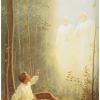
“The Presbyterians were most decided against the Baptists and Methodists, and used all the powers of both reason and sophistry to prove their errors, or, at least, to make the people think they were in error. On the other hand, the Baptists and Methodists in their turn were equally zealous in endeavoring to establish their own tenets and disprove all others…. My object in going to inquire of the Lord was to know which of all the sects was right, that I might know which to join. No sooner, therefore, did I get possession of myself, so as to be able to speak, than I asked the Personages who stood above me in the light, which of all the sects was right (for at this time it had never entered into my heart that all were wrong)—and which I should join. I was answered that I must join none of them, for they were all wrong; and the Personage who addressed me said that all their creeds were an abomination in his sight; that those professors were all corrupt; that: ‘they draw near to me with their lips, but their hearts are far from me, they teach for doctrines the commandments of men, having a form of godliness, but they deny the power thereof.’ He again forbade me to join with any of them; and many other things did he say unto me, which I cannot write at this time. When I came to myself again, I found myself lying on my back, looking up into heaven. When the light had departed, I had no strength; but soon recovering in some degree, I went home. And as I leaned up to the fireplace, mother inquired what the matter was. I replied, ‘Never mind, all is well—I am well enough off.’ I then said to my mother, ‘I have learned for myself that Presbyterianism is not true.’” Joseph Smith—History 1:9, 18-20.

Comment: It is unnecessary to provide quotations documenting the importance of this story in Mormon teaching. It is part of the first missionary lesson. Mormon authorities routinely cite it as the foundational event of the Restoration. Parse the wording of these denunciations as one will, they explicitly claim that all of the churches were “wrong,” that their creeds were an abomination, etc., and that Presbyterianism in particular was not true. Thus, criticizing other churches is basic to the LDS message.

Christianity, the church, ceased to exist on earth

“That year of grace, 1820, like the 1,400 years which preceded it, was one in which darkness covered the earth and gross darkness the minds of the people. It was a day of spiritual darkness and of gloominess, a day of clouds and thick darkness, as the morning spread upon the mountains…. That gospel preached by Paul, and for which Peter died, was no longer proclaimed from the pulpits of Christendom. In short, apostasy reigned supreme; it was universal, complete, all pervading. The religion of the lowly Nazarene was nowhere to be found. All sects, parties, and denominations had gone astray. Satan rejoiced and his angels laughed. Such were the social and religious conditions of the day.” Bruce R. McConkie, “Once or Twice in a Thousand Years,” Ensign, Nov. 1975.

“Here we learn that the Apostles would be afflicted, hated, and put to death for Christ’s sake. Yet the killing of the Apostles was not the cause of the apostasy. Other references clearly teach that Christianity died from an internal wound, the rejection of true doctrine by the members of the Church. Still, the death of those who alone held the authority to lead the Church could only mean the death of the Church itself…. When John left his public ministry, apostleship ceased. Had it been God’s will, others certainly could have been chosen. But clearly it was not. The apostasy did not happen because the Apostles were gone; the Apostles were taken because the apostasy had occurred.” Kent P. Jackson, “Early Signs of the Apostasy,” Ensign, Dec. 1984.

“The period of time when the true Church no longer existed on earth is called the Great Apostasy. Soon pagan beliefs dominated the thinking of those called Christians. The Roman emperor adopted this false Christianity as the state religion. This church was very different from the church Jesus organized. It taught that God was a being without form or substance. These people lost the understanding of God’s love for us. They did not know that we are His children. They did not understand the purpose of life.” Gospel Principles (2009), 92.

“When faith comes it brings … apostles, prophets, evangelists, pastors, teachers, gifts, wisdom, knowledge, miracles, healings, tongues, interpretation of tongues, etc. All these appear when faith appears on the earth, and disappear when it disappears from the earth; for these are the effects of faith.” Gospel Principles (2009), 105-106, quoting Lectures on Faith.

Comment: Try to read these statements from our point of view. Our Christian faith is characterized as gross spiritual darkness. It is said that our churches do not preach the gospel. Supposedly Christians throughout the centuries before Joseph Smith came along did not understand God’s love for them or the purpose of life. The church did not exist on earth. Faith disappeared from the earth. Satan rejoiced in our false Christianity. Do we find such statements offensive? You bet we do. But you have the right to say them and even the responsibility to say them if you sincerely believe them. And we, for our part, have the right and responsibility to speak our mind about the LDS Church.

So-called Christians, so-called Christianity, vs. true Christians

“Joseph was honest and sincere, devout and intelligent. He had been honestly seeking the true church of God. The large number of so-called Christian sects and the extreme diversity of their teachings demonstrated the confusion that existed in the religious world.” Doyle L. Green, “April 6, 1830: The Day the Church Was Organized,” Ensign, Jan. 1971.

“However, in the centuries past and even now in many so-called Christian communities, a wrong application of this doctrine has led to serious errors and unwittingly to the committing of grievous sins. I refer to the doctrine which proclaims that all who in the flesh have not professed belief in our Lord, or heard of him before death removed them from the earth, are forever damned and without means of escape from the torments of hell. This false conception and application of gospel truth has been a teaching of so-called Christianity from the earliest centuries of our era, but it never was a part of the gospel of Jesus Christ.” President Joseph Fielding Smith, “Justice for the Dead,” Ensign, March 1972.

“‘And this gospel of the kingdom shall be preached in all the world for a witness unto all nations; and then shall the end come.’ (Matt. 24:14.) The only question today is, Where is that gospel of the kingdom amid the hundreds of so-called Christian churches upon the earth today? A thinking person would have to look for a restoration of the gospel rather than a continuation of the gospel or a reformation of the gospel, if he accepts the teachings of the Holy Scriptures.” LeGrand Richards, “The True Church—a Missionary Church,” New Era, June 1973.

“Now it is obvious that the Lord would not need to do a marvelous work and a wonder among the children of men if his gospel had remained upon the earth, but he indicates the reason for establishing this marvelous work and a wonder was because they would be teaching the precepts or doctrines of men. That is what one finds today in all of the so-called Christian churches, and that evidences the need of a restoration.” LeGrand Richards, “Was it necessary to the salvation of man to have a falling away from the Church followed by a restoration?” New Era, Feb. 1974.

“Our position among the Christian denominations of the world is unique. We are not affiliated, either directly or indirectly, with any other so-called Christian or non-Christian church. The Church of Jesus Christ of Latter-day Saints does not have, nor has it ever had, any connection or relation with any other church or religious group…. Some have asked, ‘Is your claim of authority more valid than that of other churches?’ Our answer is, ‘Yes. We possess the same divine priesthood power and authority that was held anciently.’” David B. Haight, “The Keys of the Kingdom,” Ensign, Nov. 1980.

“If being a Christian means believing in Christ and accepting him as the Son of God in the full and complete sense; if it means having the true gospel in its everlasting fulness; if it means believing what Peter and Paul believed and finding fellowship in the same Church to which they belonged; if it means feeding the hungry, and clothing the naked, and loving our fellowmen, and keeping ourselves unspotted from the world (see D&C 59:9)—where else shall we find true Christians except among the Latter-day Saints?” Bruce R. McConkie, “Who Hath Believed Our Report?” General Conference, Oct. 1981.

“Such teachings seemed blasphemous in the days of Joseph Smith. It will help us to appreciate their impact if we remember that the Athanasian Creed was then, and so far as I know still is, the generally accepted concept of God held by the so-called Christian world.” Marion G. Romney, “Jesus—Savior and Redeemer,” New Era, 1984.

“The most fundamental doctrine of true Christianity is the divine birth of the child Jesus. It is a doctrine not comprehended by the world, misinterpreted by the so-called Christian churches, and even misunderstood by some members of the true church…. From the time of His heaven-heralded birth there have crept into the Church heresies which are intended to dilute or undermine the pure doctrines of the gospel. These heresies are, by and large, sponsored by the philosophies of man, and in many instances are advocated by so-called Christian scholars.” President Ezra Taft Benson, “Five Marks of the Divinity of Jesus Christ,” New Era, Dec. 1980; Ensign, Dec. 2001.

Comment: It would appear that in the past 25 years or so the LDS Church leadership has been careful to avoid such language as “so-called Christian churches” (although Benson’s speech using this language was reprinted just 11 years ago). But it is very much a part of the LDS heritage (the rhetoric was even harsher earlier in LDS history).

Apostate Christianity is headed by Satan

“Of historical and theological significance is the fact that in Paul’s prophecy the church structure survives. But God is not at its head, making that church—following the appearance in it of Satan—no longer the church of God. To say that Satan sits in the place of God in Christianity after the time of the Apostles is not to say that all that is in it is satanic. Indeed, Latter-day Saints should rejoice—as the heavens undoubtedly do—at the great works of righteousness and faith, and the leavening influence on the world, of those whose lives are touched in any degree by Him whose gospel the Saints enjoy in its fulness. Still, ‘the power of God unto salvation’ (Rom. 1:16) is absent from all but the Church of Jesus Christ of Latter-day Saints, which the Lord himself has proclaimed to be ‘the only true and living church upon the face of the whole earth’ (D&C 1:30). Satan’s goal of hindering many of God’s children from returning to their Father’s glory is thus realized. How appropriate, therefore, is Paul’s description of him sitting in the place of God in the church of the apostasía.” Kent P. Jackson, “Early Signs of the Apostasy,” Ensign, Dec. 1984.

“Latter-day Saints hardly need to be told that the father of all apostasy is Satan.” Andrew C. Skinner, “Apostasy, Restoration, and Lessons in Faith,” Ensign, Dec. 1995.

Comment: While Jackson is careful to make the qualification that not everything in apostate Christianity is satanic, his language is about as strong as anything “anti-Mormons” say about Mormonism.

Edited by Rob Bowman
Posted (edited)

Criticisms of the God and Christ of orthodox Christianity

“I would like to mention one other thing that I think is a creed that is ‘an abomination in the sight of God,’ and I shall mention it but briefly…. There is not time to go into a lot of detail, but their catechism says that their god has ‘no body; he has no parts; he has no passions.’ That means that he has no eyes; he cannot see. He has no ears; he cannot hear your prayers. He has no voice; he cannot speak a word to the prophets. Some of them even say ‘he sits on the top of a topless throne.’ How absurd! To me it seems that their description of the god that they believe in is about the best description of nothing that can be written…. Moses knew that this condition would prevail, because when he went to lead the children of Israel into the promised land, he told them that they would not remain there long but that they would be scattered among the nations and ‘there ye shall serve gods, the work of men’s hands, wood and stone, which neither see, nor hear, nor eat, nor smell.’ (Deut. 4:28.) That is exactly the kind of a god the whole Christian world was worshiping when Joseph Smith had that glorious vision which revealed the true and living God.” LeGrand Richards, “Strange Creeds of Christendom,” Ensign, Jan. 1973.

“There is only one way provided by the Lord for man to gain salvation and eternal life in the kingdom of God and that is by and through the living, personal Jesus Christ, and by knowing and living his commandments. We cannot obtain salvation and eternal life by worshipping fake Christs or by living the doctrines and commandments of men…. The belief that God has no body, parts, and passions is not a doctrine of Jesus Christ or a doctrine of the holy scriptures but is a doctrine of men, and to worship such a God is in vain.” Bernard P. Brockbank, “The Living Christ,” Ensign, May 1977.

“When Joseph Smith had his marvelous vision and saw the Father and the Son, there was not a church in this world that worshipped the God that made the heavens and the earth and the sea and the fountains of water. They worshipped an essence everywhere present, a god without body, parts, or passions. And if he has no body, that means he has no eyes—he cannot see; he has no ears—he cannot hear; he has no voice—he cannot speak. What is there left to worship when you take all of those qualities away?” LeGrand Richards, “The Scriptures Speak,” Ensign, May 1980, 22.

“Knowledge of God is the greatest truth in all eternity. But there must needs be an opposition in all things, and the opposite of the knowledge of God which has come through Joseph Smith is the greatest heresy in the sectarian world. That heresy is that God is a spirit nothingness which fills the immensity of space, and that creation came through evolutionary processes.” Bruce R. McConkie, “This Generation Shall Have My Word through You,” Ensign, June 1980.

“How belittling it is—it borders on blasphemy—to demean the Lord God Omnipotent by saying he is an idol, or an image, or an animal, or a spirit essence, or that he is ever learning but never able to come to a knowledge of all truth….” Bruce R. McConkie, “The Lord God of the Restoration,” Ensign, Nov. 1980.

There is no salvation in worshiping a false god—neither a cow; nor a crocodile; nor a cedar post; nor even a spirit essence, without body, parts, or passions, that fills the immensity of space.” Bruce R. McConkie, “The Caravan Moves On,” Ensign, Nov. 1984.

“As a child reared in a Protestant home and educated in a parochial grammar school, I vividly recall many occasions when teachers would vainly attempt to explain the mystery of the Trinity. We were told that there were three persons, but not three Gods. The three persons were one spiritual substance, so there could not be three separate beings…. It was hard to fathom a Deity of this nature, let alone love him.” William O. Nelson, “Is the LDS View of God Consistent with the Bible?” Ensign, July 1987.

“The historical abominable church of the devil is that apostate church that replaced true Christianity in the first and second centuries, teaching the philosophies of men mingled with scriptures. It dethroned God in the church and replaced him with man by denying the principle of revelation and turning instead to human intellect. As the product of human agency, its creeds were an abomination to the Lord, for they were idolatry: men worshipping the creations, not of their own hands, but of their own minds.” Stephen E. Robinson, “Warring against the Saints of God,” Ensign, Jan. 1988.

“With the apostasy and the loss of many plain and precious truths that were once part of the gospel (see 1 Ne. 13:26), the true knowledge of God was lost. The surviving fragments of truth were subsequently interpreted into mystery, and those who continued to believe in the basic truths about God were denounced as heretics.” Donald Q. Cannon, Larry E. Dahl, and John W. Welch, “The Restoration of Major Doctrines through Joseph Smith: The Godhead, Mankind, and the Creation,” Ensign, Jan. 1989.

Regarding the First Vision: “In a matter of only a few moments, the damning myth of an impersonal, uncaring, and incomprehensible God was dispelled.” Carlos E. Asay, “One Small Step for a Man; One Giant Leap for Mankind,” Ensign, May 1990.

“Still others searched for Jesus in councils of debate. Such was the historic council held at Nicaea in A.D. 325. There, with the help of the Roman Emperor, the delegates did away in Christendom with the concept of a personal God and a personal Son, the two separate and distinct glorified beings of the scriptures. The creed of Nicaea, the ‘incomprehensible mystery’ of which its originators seemed so proud, precisely because it could not be understood, substituted for the personal God of love and for the Jesus of the New Testament an immaterial abstraction.” President Thomas S. Monson, “The Search for Jesus,” Ensign, Dec. 1990.

“In the process of what we call the Apostasy, the tangible, personal God described in the Old and New Testaments was replaced by the abstract, incomprehensible deity defined by compromise with the speculative principles of Greek philosophy…. In the language of that philosophy, God the Father ceased to be a Father in any but an allegorical sense. He ceased to exist as a comprehensible and compassionate being.” Dallin H. Oaks, “Apostasy and Restoration,” Ensign, May 1995.

That which is without body or parts is nothing. There is no other God in heaven but that God who has flesh and bones.” Joseph Smith [in 1842 or 1843], in Teachings of Presidents of the Church: Joseph Smith (2007), 42.

Comment: The LDS Church has been withering in its scornful denunciation of the God of traditional, orthodox Christian churches. The “whole Christian world” during the Great Apostasy was worshiping a “false god” of man’s invention. No one was worshiping the God who made the world during those centuries. Even “basic truths” about God were denied. Of course, the same is true for churches that retain the same view of God today. The God of orthodox Christianity is “nothing,” a “spirit nothingness.” It is an abstraction, not a real person; it is impersonal, uncaring, and unlovable. The orthodox doctrine demeans God and is idolatry. God was dethroned and replaced with man (a criticism that we orthodox Christians find ironic coming from Mormons). This view of God is “the greatest heresy.” By the way, this is all baloney. Orthodox Christians do not worship nothing; they do not view God as an impersonal abstraction; they very much view God as caring. I cannot think of anything the most ignorant “anti-Mormons” have said about the God of Mormonism that would be worse, and nothing that would be more far off the mark, than these calumnies against the orthodox view of God. Note also the claims that orthodox Christians worship a “fake Christ”; they did away with a personal Son of God and replaced Jesus with an abstraction. These criticisms of the orthodox view of Christ are just as harsh as evangelical criticisms of Mormonism believing in “another Jesus.”

The orthodox view of sin is a false, destructive doctrine

“There is no such thing as original sin as such is defined in the creeds of Christendom. Such a concept denies the efficacy of the atonement.” Bruce R. McConkie, “The Salvation of Little Children,” Liahona, April 1977.

“In many churches of the world, a doctrine is taught that men are basically evil; that they are earthy and carnal and devilish, conceived in sin and possessed of a tendency to be wicked. This doctrine holds that the corrupt and evil nature of man must be conquered. It holds out the meager hope that by an extension of grace man may, on occasion, be lifted from his evil, carnal, and groveling state. In simple terms, it teaches that man is, by his very nature, inclined to be bad. That is false doctrine. I could not accept it to be true and still be a successful teacher. The doctrine is not only false; it is also very destructive.” Boyd K. Packer, “Understanding Students,” Liahona, July 1977.

Comment: There’s nothing wrong with Mormons criticizing what they think is “false doctrine.” Fire away. We orthodox Christians will do the same.

Christianity denied or drastically altered the doctrine of the resurrection

In order to satisfy the Gentiles steeped in Greek philosophy, Christianity had to throw out the doctrines of an anthropomorphic God and the resurrection of the dead, or reinterpret them drastically. Denying or altering the doctrine of the resurrection of the dead is precisely what some Greek Christians at Corinth had done, and Paul responded against them forcefully in 1 Corinthians 15.” Stephen E. Robinson, “Warring against the Saints of God,” Ensign, Jan. 1988.

Comment: Here is more baloney about orthodox Christianity on LDS.org. Orthodox Christianity never threw out the resurrection of the dead, nor did it reinterpret it radically. It has always defended the doctrine that the apostle Paul defended.

Criticisms of salvation by grace alone through faith in Christ alone

“In the few minutes that I have left I would like to mention one or two examples of Satan’s deceptions. We hear constantly that all we have to do is to believe on the Lord Jesus Christ and we will be saved…. At the present time, people are preaching all over the world that all you need to do is to confess that Jesus is the Christ, but that is not what Jesus said.” LeGrand Richards, “Strange Creeds of Christendom,” Ensign, Jan. 1973.

“There is nothing more important to us—having first discovered who God our Father is—than to know about Christ and the salvation that is in him. The heresy and perversion of this truth is the common sectarian concept that people are saved by grace alone, without works.” Bruce R. McConkie, “This Generation Shall Have My Word through You,” Ensign, June 1980.

“Those who quote such scriptures as the three mentioned in the question above usually do so to argue that faith alone is sufficient to save us. All we need do, they explain, is to confess verbally or mentally that we accept Christ as our Savior…. Those who teach that faith or confession is sufficient for salvation usually teach that those who die without hearing of Christ and having an opportunity to confess faith in his name are consigned to an eternal hell. Justice and the whisperings of the Spirit manifest that such doctrine cannot be true or God could not be a God of mercy and love.” Robert E. Parsons, “I Have a Question,” Ensign, April 1986.

“The doctrine of salvation through faith alone, sometimes called solafidianism, is not a biblical doctrine: there are no instances in the New Testament of the phrases ‘grace alone’ or ‘faith alone.’” Daniel C. Peterson and Stephen D. Ricks, “Comparing LDS Beliefs with First-Century Christianity,” Ensign, March 1988.

Comment: In these statements the evangelical doctrine of salvation by grace alone through faith in Christ alone comes under assault. It is called one of Satan’s deceptions, a heresy, and a perversion. The doctrine is misrepresented as teaching that mere lip confession or mental agreement with the idea of Christ as Savior is sufficient to save someone. (Saving faith in evangelical theology means a genuine trust and reliance on Christ from the heart that entails genuine repentance and that results in a changed life.) Note the use of solafidianism, which is strictly a pejorative term used by critics of the evangelical doctrine.

The Calvinist view of predestination is censured

“The gospel of Christ is the gospel of mercy. It is also the gospel of justice. It must be so, for it comes from a God of mercy, not from a cruel monster, as some religionists still believe and declare:
‘By the decree of God, for the manifestation of his glory some men and angels are predestined unto everlasting life, and others fore-ordained to everlasting death. These angels and men, thus predestined and fore-ordained, are particularly and unchangeably designed; and their number is so certain and definite that it cannot be either increased or diminished.’

Is it not horrible to contemplate that gospel truth has been perverted and defiled until it has become such an abomination?” President Joseph Fielding Smith, “Justice for the Dead,” Ensign, March 1972, quoting the Westminster Confession of Faith.

Comment: Here is an example of an attack on a very specific doctrine of a very specific group of Christians, namely, Calvinists.

Articles on other religions

A. Burt Horsley, “Roman Catholicism,” Ensign, April 1971.

Milton V. Backman Jr., “Eastern Orthodoxy,” Ensign, May 1971.

Comment: The above two articles describe Roman Catholicism and Eastern Orthodoxy, stating where the LDS Church views their doctrines as erroneous and contrasting them with LDS beliefs. I have often been told by Mormons that Mormons don’t do this sort of thing.

Conclusion

I offered to present an example of a significant Mormon website that criticizes and attacks other churches. The website in question is lds.org, the official website of the LDS Church. This website makes it clear that the organization (the LDS Church) is targeting Christians for proselytization. It asserts that members of other Christian churches are often ignorant of what their own churches teach. It defends its stance by pointing out that the apostle Paul throughout his ministry was constantly fighting against false doctrine. It quotes the foundational story of the Mormon religious narrative, the First Vision, in which Jesus is quoted as condemning all churches as wrong, as teaching abominations, and as specifically mentioning Presbyterianism as false. It argues that our churches are in spiritual darkness, that we don’t preach the gospel, that we don’t understand God’s love or the purpose of life. It refers to our churches repeatedly as “so-called Christian churches” and asserts that Satan is the real head of apostate Christianity. Our churches deny “basic truths” about God, believe in a god that is really “nothing,” an impersonal abstraction that doesn’t care about us, an idol of man’s imagination that demeans and dethrones God and replaces him with man. We worship a fake Christ who is also an abstraction and not the real Jesus of the New Testament. Orthodox Christianity threw out or radically reinterpreted the resurrection of the dead. It teaches “solafidianism,” the doctrine of salvation by grace alone through faith alone, a Satanic deception and perversion of the gospel that tells people all they need to do is mentally or verbally agree with the doctrine and they are saved. Calvinism comes under specific attack as making God into a cruel monster. (How God can be a cruel monster if he is an abstract nothingness is unclear.) Articles specifically on Roman Catholicism and Eastern Orthodoxy also appear.

Is the above litany a full, complete, or even balanced description of the whole contents of the lds.org website? No, of course not. It singles out those elements of the website that are critical of orthodox Christianity. Some may be surprised, however, to see just how much of the website contains such critical material (and I have not exhausted that material). One should also take account of the fact that lds.org makes quite a number of assertions about orthodox Christian beliefs that are both false and offensive. Furthermore, from an orthodox Christian perspective, the entire website is devoted to promoting a religion that exists on the foundational claim that orthodox Christianity is apostate and is characterized by the negative elements summarized above. Naturally, there is material on the website that has nothing to do with criticizing orthodox Christianity, just as one can find material on irr.org that does not criticize Mormonism or any other religion (for example, my lengthy study on the biblical basis of the doctrine of the Trinity, our articles on evidence for God’s existence, etc.). The “weighting” of these different sorts of materials is different, but then our website is not the official website of a religion with over 10 million members.

My point here is not that IRR’s website is perfect. Nor, again, am I protesting LDS.org or arguing that Mormons shouldn’t express criticisms of orthodox Christianity (though they should try to be accurate about us just as we should try to be accurate about them). My point is that there is nothing wrong with criticizing one another’s beliefs and even having a website that presents many such criticisms. There is nothing wrong with trying to convince people they are in the wrong church or that they have the wrong God or gospel. That is what the LDS Church is trying to do worldwide, especially with regard to people of Christian backgrounds. That is also what we, in a much smaller way, are trying to do with regard to restorationist religious groups that claim to be the only true Christian church, the Jehovah’s Witnesses and Mormons in particular. If we can recognize the similarities (and again, I’m not claiming an exact equivalence) and put these things in context, perhaps we can engage in more civil discussions even as we vigorously disagree with one another’s positions.

Edited by Rob Bowman
Posted

The BIG problem with your analysis, is first that of all your quotes by LDS leaders, you have simple and brief statements generally about other beliefs outside of Mormonism inserted into the bigger teaching of some Gospel Principles being taught. The focus is not against any particular religion. This is for example what the original Apostles did. When Paul was brought up and accused of teaching against the Dianistic Religion not a single witness could be found. That is because he wasn't actually teaching against Diana, but was teaching the Gospel of Christ, and only while in that teaching he would mention some "general" false teaching that was out there to contrast the true teaching to. Yes, some of that false teaching was related to some specific religions, but his focus was not those religions, it was the Gospel.

Second, to equate anything that Mormons and Mormonism does to what you and yours do betrays a serious lack of vision and observation skills. And I'm sure it's some sort of fallacy of equivocation. LDS do nothing close to what you do. More importantly, we do not misrepresent nearly everything you believe in the same way you do to us. Yes, some general simple statement said above may not perfectly reflect "your" version of things, but it's a general statement that certainly applies to some out there as to beliefs outside of Mormonism. But, again, even if there is a small error here or there, it's again still nothing close to what you do, someone who misrepresents nearly everything about Mormons and Mormonism.

So, we appreciate your trying to justify yourself to us, to justify your fruits and actions, but you fall short. Otherwise, you seem a nice fellow. But, as Christ said in Mark 9 & Luke 9, that's not going to help you. If you don't cut off the offending part, your entire body will go to the bad place, no matter how good of a "christian" you are otherwise. I would recommend that instead of trying to justify your actions, and trying to show that see, you're not really that different from us in "attacks", that you instead try to understand what we actually say and believe, and accept it. You don't have to agree or believe, but try taking us for our word. Then, maybe we wouldn't have such a problem with you and those like you.

Take care. :)

Posted (edited)

Yes, the days are long past when the United Presbyterian Church sent some of its finest pastors (with families) out to Utah on a well-organized mission to the Mormons – one of their number was even a distant relative of mine (John A. L. Smith). The still earlier mobbings and murders of the Mormons (with a formal extermination order in force) are now little remembered. In those days even the now well-respected Roman Catholics were held in utter derision by Protestants and considered pawns of the anti-christ in Rome. They were hated and persecuted, even as they each persecuted the Jews. Today the Mormons are as likely to be hated by the extreme left (for support of Proposition 8 in Calif) as by the extreme right (irrational fear of barbaric Mormon religion), yet, like the Catholics, they have achieved some sort of mainstream respectability.

In my own time, the best missionary to the Mormons was my late friend, Presbyterian minister Wesley P. Walters (I saw his papers last year at Covenant Theological Seminary in St. Louis). For him it made no sense to engage in the frothing-at-the-mouth anti-Mormonism of John L. Smith (The Utah Evangel) or of Walter Martin, and he was therefore far more successful than either of them – or others of that ilk – for whose false witnessing evangelical Presbyterian minister Richard Mouw has several times publicly apologized to the Mormons in recent years.

You are to be congratulated, Rob, for consistently raising the bar of civility in communication on such issues and of even dealing directly with some of the crucial matters heretofore ignored – as the evangelical investigators Mosser & Owen had determined in their study, “Mormon Scholarship, Apologetics, and Evangelical Neglect: Losing the Battle and Not Knowing It?" Trinity Journal, 19/2 new series (Fall 1998), 179-205. First delivered on April 25, 1997, at the Evangelical Society Far West Annual Meeting.

You are quite right to emphasize that there is no real equivalence between IRR and LDS.ORG, simply because they are dedicated to very different objectives and represent very different sorts of entities. Still, I am unaware of any LDS website dedicated to the destruction of some branch of normative christianity (or other religion), nor will you find an anti-christian section in any LDS bookstores. Why do evangelicals still behave in that improper and unchristian manner? In any case, what you will find is that local LDS stakes, wards, and branches everywhere actively participate in community action along with other churches and synagogues in order to feed the homeless and clothe the naked, etc.

The picture is not all one-sided: In some areas of Latin America, for example, the evangelical movement has been even more successful that the Mormons in obtaining converts, but both have filled a need among nominal Roman Catholics which has long been neglected. Whether such conversions are based on inculcating hatred for Catholicism in the neglected masses, or whether it is more the kindness and enthusiasm of sincere missionaries remains to be discussed (think it is the latter) . . .

Also, your selections from the virtual library of LDS publications on lds.org represent only a very small fraction of the sort of articles available (everything in LDS church magazines for decades), many of the articles by college professors rather than by authoritative LDS religious figures. Indeed, in some cases you cited professors such as Stephen Robinson, who have made a special effort to understand the evangelical viewpoint and to carry on a forthright and particularly generous conversation in print about it (Blomberg & Robinson, How Wide the Divide? A Mormon & an Evangelical in Conversation, IVP, 1997). Something you ought to have mentioned.

Moreover, Kent Jackson was quite right to emphasize that, despite the Apostasy, we should fully appreciate “the great works of righteousness and faith, and the leavening influence on the world, of those whose lives are touched in any degree by Him whose gospel the Saints enjoy in its fulness.” After all, if such had not been the case, Joseph Smith himself would not have set out to inquire about the truth-claims of the various churches, and he would not have known how to go about making that inquiry.

John Tvedtnes, a convert to Mormonism from the midwest, brought with him an excellent understanding of normative christianity – enabling him to make an authoritative critique as a scholar. Yet very little of his time was ever spent disrespecting other religions. Indeed, he has been respectful of and very well accepted by other religious groups, especially among Muslims and Jews.

Finally, the LDS Church is not the only “restoration” church, but only the most successful one. From the efforts at restoration of pristine Christianity by the Puritans through the time of Alexander Campbell and through Vatican II, this has been a legitimate yearning based on a correct understanding that traditional christianity had strayed so far off the mark that only a true restoration would suffice. Reformation has never been adequate.

Edited by Robert F. Smith
Posted
The BIG problem with your analysis, is first that of all your quotes by LDS leaders, you have simple and brief statements generally about other beliefs outside of Mormonism inserted into the bigger teaching of some Gospel Principles being taught.

How is that a problem? I don't think anyone, Rob included, ever argued that the Church website is dedicated strictly for the purpose of attacking non-LDS Christians. You think that unless Rob can show an LDS website that matches his in every single way, that this means the LDS Church doesn't attack anyone? This is a non sequitur and I see you guys expect everyone to play by your rules in a game you've rigged from the beginning.

The fact is the Church and its 50,000 missionaries cannot persuade other Christians to convert without bashing their faith to some degree. For example, most Christians have already been baptized. Mormons do not recognize their baptisms and will go on to explain that their ministers are acting without the authority of God. Now you may feel like this isn't an attack, but how you feel is irrelevant to their feelings. You've essentially poo-pooed on two thousand years of Christian tradition, claiming the entire Christian world has been deluded and even deceived, and that only the Mormons have the answers. That requires a special kind of arrogance which I have never seen in any other Christian faith.

And this is what amazes me about these discussions. Loyd asks the question "can we talk?" but the discussion he starts proves why there can be no discussion. You are not interested in hearing Rob out. You have no respect for his feelings as an attacked Christian. You want to attack him for having the audacity to feel attacked. You want to keep reconfirming your presuppositions about anti-Mormons and apostates by accusing him of all sorts of subterfuge and deception. Rob doesn't have the right to feel persecuted or attacked because, well, that doesn't jive with what you've been taught by the Church. Because only Mormons are persecuted by Christians, never vice-versa. Mormons love to complain about persecution but then act completely insensitive to the feelings of other non-LDS who genuinely feel insulted and attacked by the LDS faith.

So, we appreciate your trying to justify yourself to us, to justify your fruits and actions, but you fall short.

Rob provided sufficient examples in which the Church attacks non-LDS Christianity and has made these attacks available on the web. As I stated in the other thread (before I was conveniently tossed out for having the audacity of proving Jeff, Scott and wade wrong), the Church has become much more careful in their approach, especially in light of its desire to maintain victim status. You see it becomes highly hypocritical for them to complain about persecution when they've esentially done the same thing for nearly two centuries. So we no longer hear conference talks about how Christianity is the whore of Babylon. Or how the blacks were less than valiant in the preexistence, etc. The LDS Church is now more responsible than that, as a corporation with a PR dept should be. But this doesn't change the fact that this is what Mormonism teaches behind closed doors, particularly during missionary discussions. My companion in Spain once went on a rant to a Catholic about how the Pope has 666 on his hat written in Roman numerals. The second largest Church in Spain is the JW Church, and we absolutely LOVED to bash with them in the streets, pointing out how their American based Church falsely predicted the second coming, how they removed entire verses from the Bible, etc etc. So when people come up to me and claim Mormons have persecuted them and their faith, I believe them. It doesn't matter if do so openly with websites. They still do it.

The main difference I see between the two is that Rob is at least honest enough to state his convictions openly, knowing perfectly well he will be criticized for religious intolerance, whereas the LDS apologists are essentially trying to pull the wool over everyone's eyes regarding the history of intolerance that has pervaded throughout the LDS Church. But this is a fight you're never going to win. Your best bet is to censor the evidence as best you can. The citations he provided make this an open and shut case. You have no argument other than to say LDS leaders don't say these things anymore publicly. Well, duh!

The fact is both LDS and non-LDS Christians accept the biblical premise that there will be false teachers out there pretending to preach the true Gospel of Christ. Several times Rob has been attacked for accepting money for what he does, and we all know what why this is mentioned. Mormons love to point out that theirs is a lay ministry (which isn't entirely true), and that only Satan's servants would be getting paid to preach anything about Christ.

Saying Rob is desperately trying to "justify" his website is ludicrous because he already has all the justification he needs from the Bible. He feels like Mormon doctrines represent that perverted form of Christianity in the same way Mormons view him as a member of the Apostate Church.

Notice of course that no one can diffuse the bigotry behind the statements he cited above. Some of those are the same citations I presented in the other thread, and no one has been able to show how the "context" changes their apparent meanings.

Posted

Early Mormon bigotry towards the Muslim faith?

"We have read of individual imposters, like Mohammed, who have testified to the ministering of angels, and have deceived many" - Orson Pratt. 1842

"The Mussulman condemns the heathen, the Jew, and the Christian, and the whole world of mankind that reject his Koran." -(Joseph Smith, History of The Church of Jesus Christ of Latter-day Saints, 7 vols., introduction and notes by B. H. Roberts [salt Lake City: The Church of Jesus Christ of Latter-day Saints, 1932-1951], 4: 595.)

"The religion of European Turkey is the Mahometan, Christian, and Jewish. The Christian embraces the Armenian, Catholic, and Greek churches. Mahometanism, however, is the prevailing faith, and its professors, acting upon the principle of exclusion inculcated in the Koran, regard with disdain and aversion, all who adopt a different faith." (Mahometanism., Times and Seasons, vol. 6 ; January 15, 1845-February, No. 1. Nauvoo, Illinois, Jan 15, 1845 Whole No. 109 782.)

"... a sect which had preserved its independence during centuries, and had resisted the persecuting sword of Islam when wielded by the most powerful and most intolerant of the followers of Mohammed—which, in its simplicity and isolation, had maintained the doctrines and forms of a primitive church for above fourteen centuries, and which had escaped the corruption of religion, of morals, and of character so conspicuous in all other Christian sects of the East; has now, in the weakness of Mohammedanism and the strenght of European Christianity, been delivered over to destruction." (Massacre of the Nestorian Christians., Times and Seasons, vol. 4 ;November 1842-November 1843), Vol. 4 No. 22 October 1, 1843 344.)

Imagine if anyone had said theses things in today's society. Dan Peterson would hang them up by their ears, tan their hides and then dip them in a bucket of witch-hazel.

Around 1855 the Mormon leaders realized that the enemy of their enemy could be their friend, so their attitudes towards Islam changed dramatically:

"The Greek and Roman Churches, which have been called Christian, and which take the name of Christians as a cloak, have worshipped innumerable idols. On this account, on the simple subject of the Deity and His worship, if nothing more, I should rather incline, of the two, after all my early traditions, education, and prejudices, to the side of Mahomet, for on this point he is on the side of truth, and the Christian world on the side of idolatry and heathenism." (Address by Elder Parley P. Pratt, Mahometanism and Christianity, 1855. J&D 3:37)

Posted

You make some good points, Brother Bowman, my only thing I would point out is your worry over the phrase "so-called Christian world", I would not, first of all, paraphrase that as "so-called Christian churches" as you do later in your post, nor would I understand President Benson's use of that as carrying the meaning that other Christians or Christian churches are only "so-called", but rather he was referring to the expanse of world (geo-political) that is often called (so-called) the Christian World in general (and to which there are missionaries sent, of course).

Posted (edited)

Members of the Church of Jesus Christ of Latter-day Saints often complain about evangelical Christians, and especially evangelical Christian ministries such as IRR, criticizing their religion. To put this matter into perspective, I will document the fact that a significant part of what the LDS Church does is publicly criticizing evangelical and other traditional forms of Christianity. In fact, to make this documentation as pertinent as possible, all examples will come directly from the LDS Church’s own official website, lds.org.

I don't complain, and I think it is wrong to "complain" about that kind of thing. There is a war going on here, and you don't win a war by complaining to your enemy for waging a war against you. He is acting true to character. That is what he is supposed to do. You defeat an enemy who wages war against you by waging war against him and defeating him in the field of battle. There are several passages in modern scripture which demonstrate the existence of that war, and how it will be fought off and eventually defeated:

1 Nephi 14:

10 And he said unto me: Behold there are save two churches only; the one is the church of the Lamb of God, and the other is the church of the devil; wherefore, whoso belongeth not to the church of the Lamb of God belongeth to that great church, which is the mother of abominations; and she is the whore of all the earth.

1 Nephi 22:

22 And the righteous need not fear, for they are those who shall not be confounded. But it is the kingdom of the devil, which shall be built up among the children of men, which kingdom is established among them which are in the flesh—

23 For the time speedily shall come that all churches which are built up to get gain, and all those who are built up to get power over the flesh, and those who are built up to become popular in the eyes of the world, and those who seek the lusts of the flesh and the things of the world, and to do all manner of iniquity; yea, in fine, all those who belong to the kingdom of the devil are they who need fear, and tremble, and quake; they are those who must be brought low in the dust; they are those who must be consumed as stubble; and this is according to the words of the prophet.

2 Nephi 28:

17 But behold, if the inhabitants of the earth shall repent of their wickedness and abominations they shall not be destroyed, saith the Lord of Hosts.

18 But behold, that great and abominable church, the whore of all the earth, must tumble to the earth, and great must be the fall thereof.

19 For the kingdom of the devil must shake, and they which belong to it must needs be stirred up unto repentance, or the devil will grasp them with his everlasting chains, and they be stirred up to anger, and perish;

20 For behold, at that day shall he rage in the hearts of the children of men, and stir them up to anger against that which is good.

2 Nephi 29:

3 And because my words shall hiss forth—many of the Gentiles shall say: A Bible! A Bible! We have got a Bible, and there cannot be any more Bible.

4 But thus saith the Lord God: O fools, they shall have a Bible; and it shall proceed forth from the Jews, mine ancient covenant people. And what thank they the Jews for the Bible which they receive from them? Yea, what do the Gentiles mean? Do they remember the travails, and the labors, and the pains of the Jews, and their diligence unto me, in bringing forth salvation unto the Gentiles

3 Nephi 20:

15 And I say unto you, that if the Gentiles [aka Christian nations] do not repent after the blessing which they shall receive, after they have scattered my people—

16 Then shall ye, who are a remnant of the house of Jacob, go forth among them; and ye shall be in the midst of them who shall be many; and ye shall be among them as a lion among the beasts of the forest, and as a young lion among the flocks of sheep, who, if he goeth through both treadeth down and teareth in pieces, and none can deliver.

17 Thy hand shall be lifted up upon thine adversaries, and all thine enemies shall be cut off.

18 And I will gather my people together as a man gathereth his sheaves into the floor.

19 For I will make my people with whom the Father hath covenanted, yea, I will make thy horn iron, and I will make thy hoofs brass. And thou shalt beat in pieces many people; and I will consecrate their gain unto the Lord, and their substance unto the Lord of the whole earth. And behold, I am he who doeth it.

20 And it shall come to pass, saith the Father, that the sword of my justice shall hang over them at that day; and except they repent it shall fall upon them, saith the Father, yea, even upon all the nations of the Gentiles.

3 Nephi 21:

10 But behold, the life of my servant shall be in my hand; therefore they shall not hurt him, although he shall be marred because of them. Yet I will heal him, for I will show unto them that my wisdom is greater than the cunning of the devil.

11 Therefore it shall come to pass that whosoever will not believe in my words, who am Jesus Christ, which the Father shall cause him to bring forth unto the Gentiles, and shall give unto him power that he shall bring them forth unto the Gentiles, (it shall be done even as Moses said) they shall be cut off from among my people who are of the covenant.

12 And my people who are a remnant of Jacob shall be among the Gentiles, yea, in the midst of them as a lion among the beasts of the forest, as a young lion among the flocks of sheep, who, if he go through both treadeth down and teareth in pieces, and none can deliver.

13 Their hand shall be lifted up upon their adversaries, and all their enemies shall be cut off.

14 Yea, wo be unto the Gentiles except they repent; for it shall come to pass in that day, saith the Father, that I will cut off thy horses out of the midst of thee, and I will destroy thy chariots;

20 For it shall come to pass, saith the Father, that at that day whosoever will not repent and come unto my Beloved Son, them will I cut off from among my people, O house of Israel;

21 And I will execute vengeance and fury upon them, even as upon the heathen, such as they have not heard.

By “Gentiles” in the above verses is meant the Christian nations (primarily).

Moroni 8:

27 And it [book of Mormon] shall come in a day when the blood of saints shall cry unto the Lord, because of secret combinations and the works of darkness.

28 Yea, it shall come in a day when the power of God shall be denied, and churches become defiled and be lifted up in the pride of their hearts; yea, even in a day when leaders of churches and teachers shall rise in the pride of their hearts, even to the envying of them who belong to their churches.

32 Yea, it shall come in a day when there shall be churches built up that shall say: Come unto me, and for your money you shall be forgiven of your sins.

33 O ye wicked and perverse and stiffnecked people, why have ye built up churches unto yourselves to get gain? Why have ye transfigured the holy word of God, that ye might bring damnation upon your souls? Behold, look ye unto the revelations of God; for behold, the time cometh at that day when all these things must be fulfilled.

34 Behold, the Lord hath shown unto me great and marvelous things concerning that which must shortly come, at that day when these things shall come forth among you.

35 Behold, I speak unto you as if ye were present, and yet ye are not. But behold, Jesus Christ hath shown you unto me, and I know your doing.

36 And I know that ye do walk in the pride of your hearts; and there are none save a few only who do not lift themselves up in the pride of their hearts, unto the wearing of very fine apparel, unto envying, and strifes, and malice, and persecutions, and all manner of iniquities; and your churches, yea, even every one, have become polluted because of the pride of your hearts.

37 For behold, ye do love money, and your substance, and your fine apparel, and the adorning of your churches, more than ye love the poor and the needy, the sick and the afflicted.

38 O ye pollutions, ye hypocrites, ye teachers, who sell yourselves for that which will canker, why have ye polluted the holy church of God? Why are ye ashamed to take upon you the name of Christ? Why do ye not think that greater is the value of an endless happiness than that misery which never dies—because of the praise of the world?

D&C 10:

53 And for this cause have I said: If this generation harden not their hearts, I will establish my church among them.

54 Now I do not say this to destroy my church, but I say this to build up my church;

55 Therefore, whosoever belongeth to my church need not fear, for such shall inherit the kingdom of heaven.

56 But it is they who do not fear me, neither keep my commandments but build up churches unto themselves to get gain, yea, and all those that do wickedly and build up the kingdom of the devil—yea, verily, verily, I say unto you, that it is they that I will disturb, and cause to tremble and shake to the center.

57 Behold, I am Jesus Christ, the Son of God. I came unto mine own, and mine own received me not.

58 I am the light which shineth in darkness, and the darkness comprehendeth it not.

So there is no doubt that there is a war going on here. It would be foolish to deny it. The question is, who is going to be the winner in the end. I think that we are! I don’t “complain” about you guys doing what you are supposed to do—waging war against the Restoration. I think I know how to answer you though. So I have no complaints. LOL!

Edited by zerinus
Posted

We send missionaries to Christian religions because the countries those religions are in tend to be the most accessible and have the greatest success becasue there are som many commonalities between churches so taht we can communicate with them and they with us. To see more into it than that is more an exercise in misdirection than anything else.

Posted

There obviously needs to more understanding about the LDS faith from other religions. I have found in my life that most of my non-Mormon friends are grossly misinformed about our religion and how it is practiced. It seems that most people read something about LDS in an article or on the internet, and that is where they form their opinions.

On the other hand, I think most LDS should also become more knowledgeable about other faiths. On my mission, most of my companions were pretty clueless about the religion of our investigators. I thought that since we were essentially asking our investigators to study and follow the LDS religion, the least we could do is become familiar with theirs.

Understanding each other's faiths, will only lead to greater tolerance and respect.

Just my 2 cents.

Posted

Some of that is true, but so many LDS are converts that it is hard to say that LDS are clueless to other religions. Now this may be true in some limited enclaves such as Utah Valley or some places in Idaho, but most of the church lives in, works in, and is criticized by other religions. They live in areas where comparisons are often drawn and questions raised. It is part of the missionary experience as a member.

Posted

bluebell,

You wrote:

I think the most striking differences (and the reasons that most LDS are so critical of your site Rob), isn't that both websites state why they think other religions are wrong but that:

Thanks for your comments. I have explained in other threads why these misperceptions of IRR's website are incorrect. It will be convenient to do so again here.

1) Many LDS view your website as existing solely to tell people what is wrong with mormonism, and the LDS.org website exists for hundreds of reasons, most of which are to help LDS members live their faith better.

As I pointed out, our website is not produced by a massive religious organization with over 10 million members. However, our website does not exist "solely" to tell people what is wrong with Mormonism (see below).

2) LDS tend to view your website as singling out mormonism and focusing only on the 'evils' of that one religion, while LDS.org does not focus on any one religion or denomination.

LDS.org does not focus on any one religion or denomination because it takes the view that all Christian churches, denominations, and sects other than its own are false churches. When one size fits all, no discernment is needed. As for IRR's website, I agree, LDS tend to view it as you say, but this is carelessness on their part. A quick check of the site will show that it has articles criticizing Jehovah's Witnesses, the Church Universal and Triumphant, the mind sciences, the New Age movement, and (religious) yoga.

3) LDS tend to vew your website as always and only talking about the 'evils' of mormonism, while LDS.org does speak about the good of other Christian religions and fairly regularly publishes material that is complementary to other faiths.

Disabusing Mormons of this misperception was the point of my challenge to read my Gospel Principles Scripture Study Guide. Anyone who did so would have to admit that the perception you mention is incorrect. You can read some examples of the complimentary things I say about Mormonism on our website in three posts in that earlier thread which is now closed. See here, here, and here.

4) Your website publishes material that LDS view as extremely sacred. LDS.org doesn't do that to other religions.

From your point of view, this will seem like a fair criticism. However, since we evangelicals don't have sacred ritual texts that LDS.org might publish, the comparison is somewhat weak. I will say that we view the text of the Bible as "sacred" in the sense that we view deliberate alterations to the Bible's meaning as a serious sin, as a kind of desecration, and from our viewpoint the JST is guilty of that sin.

Posted

Peppermint Patty,

I agree with you 100 percent. Most people are largely ignorant of what other religions believe and practice. This is a problem everywhere, including among evangelicals. Getting people to take seriously the need to get to know what other people believe in an accurate and fair-minded way is a challenge. Of course, even those who want to learn are challenged by the sheer proliferation of religious options in our pluralistic culture.

There obviously needs to more understanding about the LDS faith from other religions. I have found in my life that most of my non-Mormon friends are grossly misinformed about our religion and how it is practiced. It seems that most people read something about LDS in an article or on the internet, and that is where they form their opinions.

On the other hand, I think most LDS should also become more knowledgeable about other faiths. On my mission, most of my companions were pretty clueless about the religion of our investigators. I thought that since we were essentially asking our investigators to study and follow the LDS religion, the least we could do is become familiar with theirs.

Understanding each other's faiths, will only lead to greater tolerance and respect.

Just my 2 cents.

Posted

Quote

1) Many LDS view your website as existing solely to tell people what is wrong with mormonism, and the LDS.org website exists for hundreds of reasons, most of which are to help LDS members live their faith better.

As I pointed out, our website is not produced by a massive religious organization with over 10 million members. However, our website does not exist "solely" to tell people what is wrong with Mormonism (see below).

Actually from what I have seen it does exist only to attack our belief system. Almost obsessively.

Quote

2) LDS tend to view your website as singling out mormonism and focusing only on the 'evils' of that one religion, while LDS.org does not focus on any one religion or denomination.

LDS.org does not focus on any one religion or denomination because it takes the view that all Christian churches, denominations, and sects other than its own are false churches. When one size fits all, no discernment is needed. As for IRR's website, I agree, LDS tend to view it as you say, but this is carelessness on their part. A quick check of the site will show that it has articles criticizing Jehovah's Witnesses, the Church Universal and Triumphant, the mind sciences, the New Age movement, and (religious) yoga.

You website, as has been noted does indeed focus only on attacking the church. The website of the Church of Jesus Christ does not make its main focus the destruction of other churches. Yes, our church feels other churches are incorrect in their teachings. All churches however have that same standpoint, otherwise why be Baptist versus Catholic. It is more than a little dishonest and frankly outright deceitful to presume you offer some vague generalized response of how you alternative is better. Specifically because you don't offer an alternative, you exist only to attack Mormons. Take that content out and what do you have, an unused url.

Let us at least be honest when we debate the issue.

Quote4

4) Your website publishes material that LDS view as extremely sacred. LDS.org doesn't do that to other religions.

From your point of view, this will seem like a fair criticism. However, since we evangelicals don't have sacred ritual texts that LDS.org might publish, the comparison is somewhat weak. I will say that we view the text of the Bible as "sacred" in the sense that we view deliberate alterations to the Bible's meaning as a serious sin, as a kind of desecration, and from our viewpoint the JST is guilty of that sin.

That moral relativism some love to hide behind when attacking Mormons is out in full force. I know of no publication from any church owned website that seeks to demean or destroy a church by showing its most sacred moments and ridiculing them. It is a most hateful method and reflects the hypocrisy of some anti Mormons who decry our church overturning their sacredness while attacking and ridiculing what we hold sacred. But then, you choose who you allow into your heart to do such things.

I will say that we view the text of the Bible as "sacred" in the sense that we view deliberate alterations to the Bible's meaning as a serious sin, as a kind of desecration, and from our viewpoint the JST is guilty of that sin.

You might say it, but it isn't true. Which "sacred" text are you talking about? The King James VERSION? Jehovah's Witness version, the Joseph Smith Version, the traditional Catholic VERSION, the Greek Orthodox VERSION. Thomas Jefferson's VERSION? In many places they have changed significantly certain meanings based on their interpretations. You attack only Mormons, which speaks rather clearly to the somewhat questionable statement you tossed out. It speaks to a level of onesided hypocrisy because you don't attack all those other VERSIONS, you attack Mormons. Its that simple and to attempt to somehow show otherwise is not honest.

Posted (edited)

From your point of view, this will seem like a fair criticism. However, since we evangelicals don't have sacred ritual texts that LDS.org might publish, the comparison is somewhat weak. I will say that we view the text of the Bible as "sacred" in the sense that we view deliberate alterations to the Bible's meaning as a serious sin, as a kind of desecration, and from our viewpoint the JST is guilty of that sin.

I've never been to your website and probably won't ever visit it, so i tried to be careful to couch my words in what most LDS perceive about it and not what it definitely was or wasn't. I also haven't participated in any of the other discussions that led to this thread topic so i wanted to make sure my post was only an attempt to clarify the issue and not to argue.

I think your final paragraph here is the most essential point of this whole comparison discussion though because it acknowledges that point of view dictates everything.

From your point of view, you feel you are doing nothing wrong. From LDS point of view, you are. You deflect our criticism by saying that LDS do it too. LDS deflect your criticism by saying the same thing.

The reality is that LDS are never going to like your website and will always be critical of it. You will never agree with those criticisms of it and will always view LDS as being in the wrong. No one is going to argue themselves 'right' to the other person.

The facts are that if you care how LDS view your website, you're going to have to change it. If you don't care, then there is absolutely no reason to do so. You are never going to argue LDS into seeing your website as valid, just like LDS are never going to argue you into seeing our criticisms as valid.

That's why these challenges are such a waste of time and actually make things worse (in my opinion). Everyone gets further entrenched in their own position and feels more and more that the other guy is an idiot for not agreeing with them. As long as we only care about validating our own point of view, these exercises will always be futile as a means to peace and acceptance between our two groups.

(That doesn't mean these types of threads can't serve other purposes-entertainment, debate, etc.)

Edited by bluebell
Posted

Rob is engaged in a textbook example of cherry-picking.

Does the LDS Church have a website dedicated solely to attacking Evangelicalism, or Catholicism, or Islam, or Hinduism? No.

Do Evangelicals have such sites? Hundreds, perhaps thousands.

It simply astonishes me that the Evangelicals can't understand this obvious distinction.

Posted

Members of the Church of Jesus Christ of Latter-day Saints often complain about evangelical Christians, and especially evangelical Christian ministries such as IRR, criticizing their religion. To put this matter into perspective, I will document the fact that a significant part of what the LDS Church does is publicly criticizing evangelical and other traditional forms of Christianity. In fact, to make this documentation as pertinent as possible, all examples will come directly from the LDS Church’s own official website, lds.org.

Please note that it is not my contention that there is anything wrong with the LDS Church publishing its criticisms of orthodox or evangelical Christian churches and beliefs. To the contrary, they should say what they sincerely think about other beliefs.

Due to the length of this material, I will break it up into two posts.

The LDS Church intentionally sends missionaries to convert Christians

Comment: From what I can tell—precise statistics are unavailable—the vast majority of those converted through the LDS Church’s missionaries come from traditional Christian families. This appears to be true even in such places as Africa.

This does not criticize any other church or religion, it simply states that we send missionaries to the world as a whole. We do not target Christians specifically, but but we also teach all other religions as well.

So this does nothing to bolster your point.

People are ignorant of their own churches’ teachings

Comment: Mormons are constantly complaining to me on this forum that critics like me think we know Mormon beliefs better than they do. I certainly don’t claim to know what any individual Mormon believes better than he does. However, if there is nothing presumptuous or arrogant about Tvedtnes claiming to be more knowledgeable about the teachings of other churches than their members, then there is nothing presumptuous or arrogant about critics of Mormonism expressing their understanding of what Mormon doctrine is. Besides, as has been illustrated on this very forum, Mormons disagree among themselves about many doctrinal issues. Bottom line: Mormons do sometimes claim to be able to instruct people of other churches regarding what those churches teach.

Nothing in what you presented demonstrates that we are claiming to know other people's religion better than they do, but simply that when we teach our beliefs not all people will recoginize the differences that have been claimed by their religions.

The Apostle Paul constantly fought against false doctrine

Comment: I assume if Paul throughout his ministry was constantly fighting against false doctrine, God might call some people to do the same today.

Of course we agree.

The First Vision story, the foundational story of Mormonism, condemns all Christian churches in general and Presbyterianism in particular

Comment: It is unnecessary to provide quotations documenting the importance of this story in Mormon teaching. It is part of the first missionary lesson. Mormon authorities routinely cite it as the foundational event of the Restoration. Parse the wording of these denunciations as one will, they explicitly claim that all of the churches were “wrong,” that their creeds were an abomination, etc., and that Presbyterianism in particular was not true. Thus, criticizing other churches is basic to the LDS message.

We do claim that there was not a "correct" church upon the earth, thus the need for the correct church to be restored. A broad sweeping generalization like this is not on par with a specific ministry, targeting a specific religion(s) to pick it apart. Not even close.

Christianity, the church, ceased to exist on earth

Comment: Try to read these statements from our point of view. Our Christian faith is characterized as gross spiritual darkness. It is said that our churches do not preach the gospel. Supposedly Christians throughout the centuries before Joseph Smith came along did not understand God’s love for them or the purpose of life. The church did not exist on earth. Faith disappeared from the earth. Satan rejoiced in our false Christianity. Do we find such statements offensive? You bet we do. But you have the right to say them and even the responsibility to say them if you sincerely believe them. And we, for our part, have the right and responsibility to speak our mind about the LDS Church.

Apostasy spoken of in the scriptures. We have identified it and cite it as a reason the restoration is needed. This is a broad generalization again. Your particular brand of christianity would not have come about if someone didn't believe the Catholic church was incorrect.

Again, saying your own religion is true and all others are not, then teaching about your own religion is not the same as saying "your religion is wrong, you believe this, this, and that...".

So-called Christians, so-called Christianity, vs. true Christians

Comment: It would appear that in the past 25 years or so the LDS Church leadership has been careful to avoid such language as “so-called Christian churches” (although Benson’s speech using this language was reprinted just 11 years ago). But it is very much a part of the LDS heritage (the rhetoric was even harsher earlier in LDS history).

And LDS treatment at the hands of "so-called" Christians in the early years were was much harsher too.

The citations you provide merely illustrate differences we claim that make us unique. Differences we claim that are true, that are not shared with others that call themselves Christian.

Apostate Christianity is headed by Satan

Comment: While Jackson is careful to make the qualification that not everything in apostate Christianity is satanic, his language is about as strong as anything “anti-Mormons” say about Mormonism.

I take it you would claim that apostasy is headed by .... whom?

This is a clip that you try to use to point out how we are critical of others, but it does a much better job at illustrating how we believe there are many truths contained in the faith of others. - "Indeed, Latter-day Saints should rejoice—as the heavens undoubtedly do—at the great works of righteousness and faith, and the leavening influence on the world, of those whose lives are touched in any degree by Him whose gospel the Saints enjoy in its fulness."

I would strongly disagree with you that this is about as strong as anything "anti-Mormons" say about Mormonism.

Posted (edited)

Rob is engaged in a textbook example of cherry-picking.

Does the LDS Church have a website dedicated solely to attacking Evangelicalism, or Catholicism, or Islam, or Hinduism? No.

Do Evangelicals have such sites? Hundreds, perhaps thousands.

It simply astonishes me that the Evangelicals can't understand this obvious distinction.

:good:

And yet hours and hours will be devoted to debating this useless point. Rob is a harmless....... person.

Edited by mfbukowski
Posted

:good:

And yet hours and hours will be devoted to debating this useless point. Rob is a harmless....... person.

So what do you think they should debate then--that he is a harmful....... person?

Posted (edited)

Jeff,

Regarding IRR's website, you wrote:

Actually from what I have seen it does exist only to attack our belief system. Almost obsessively.

Then you have not seen enough. In fact, since I have helpfully provided specific examples to the contrary, you are actually ignoring some of what you have (presumably) seen.

You wrote:

You website, as has been noted does indeed focus only on attacking the church.

The first time someone says this I can excuse it (rather generously) as ignorance. Repeat it, and it will be what we will delicately call a deliberate misrepresentation of the facts.

The website of the Church of Jesus Christ does not make its main focus the destruction of other churches.

The destruction of the LDS Church is in no sense my intention, let alone main focus. Our website is not intended to destroy Mormonism, but to help people understand why it is false and to help those who were Mormons and already know it is false to find a secure basis for faith in Christ in the gospel taught in the New Testament.

You wrote:

Yes, our church feels other churches are incorrect in their teachings. All churches however have that same standpoint, otherwise why be Baptist versus Catholic.

There is a significant difference between viewing other churches as having some incorrect teachings and viewing them as not Christian churches at all. There are various evangelical Christian denominations, such as Assemblies of God, Baptists, Calvary Chapels, Evangelical Free Churches, Free Methodists, Lutheran Church-Missouri Synod, Open Bible Churches, the Presbyterian Church in America, the Salvation Army, etc., and while they disagree on some doctrinal issues, they share the same God, the same gospel, the same Scripture, and the same mission. Your religion claims that only the COJCOLDS is the true church on earth today; even splinter sects of the LDS movement are not considered true churches. But hey, that's your position, and you should say so. We will also say what we sincerely believe.

You wrote:

It is more than a little dishonest and frankly outright deceitful to presume you offer some vague generalized response of how you alternative is better. Specifically because you don't offer an alternative, you exist only to attack Mormons. Take that content out and what do you have, an unused url.

Again, I will rather generously suggest that you are speaking out of ignorance and that if you spent some time perusing our whole site you would realize that what you say is mistaken. But now that I have told you this, you will have no excuse if you continue to make such statements. Our website offers a specific alternative to such religions as Mormonism and Jehovah's Witnesses. That alternative is evangelical Protestant Christianity.

You wrote:

Let us at least be honest when we debate the issue.

Yes, let's.

Edited by Rob Bowman
Posted

Bill,

You wrote:

Rob is engaged in a textbook example of cherry-picking.

I already addressed this objection at the end of my second post in this thread and in my response to bluebell.

Does the LDS Church have a website dedicated solely to attacking Evangelicalism, or Catholicism, or Islam, or Hinduism? No.

Do Evangelicals have such sites? Hundreds, perhaps thousands.

It simply astonishes me that the Evangelicals can't understand this obvious distinction.

I don't know what this has to do with anything. IRR's website is not dedicated solely to attacking Mormonism. Are there such websites? Yes. What of it? Their existence is irrelevant to IRR's website.

Posted

Flyonthewall,

You wrote:

Nothing in what you presented demonstrates that we are claiming to know other people's religion better than they do, but simply that when we teach our beliefs not all people will recoginize the differences that have been claimed by their religions.

I respectfully disagree. Your religion's official website repeatedly claims that the people of our religion worship an abstract, impersonal nothing. This isn't a matter of recognizing the differences; this is flat-out misrepresentation of our faith.

You wrote:

We do claim that there was not a "correct" church upon the earth, thus the need for the correct church to be restored. A broad sweeping generalization like this is not on par with a specific ministry, targeting a specific religion(s) to pick it apart. Not even close.

Again, saying your own religion is true and all others are not, then teaching about your own religion is not the same as saying "your religion is wrong, you believe this, this, and that...".

Actually, I gave examples of articles on lds.org that do just that. See especially the following articles:

LeGrand Richards, “Strange Creeds of Christendom,” Ensign, Jan. 1973.

Bruce R. McConkie, “This Generation Shall Have My Word through You,” Ensign, June 1980.

A. Burt Horsley, “Roman Catholicism,” Ensign, April 1971.

Milton V. Backman Jr., “Eastern Orthodoxy,” Ensign, May 1971.

Posted

Quote

Yes, our church feels other churches are incorrect in their teachings. All churches however have that same standpoint, otherwise why be Baptist versus Catholic.

There is a significant difference between viewing other churches as having some incorrect teachings and viewing them as not Christian churches at all. There are various evangelical Christian denominations, such as Assemblies of God, Baptists, Calvary Chapels, Evangelical Free Churches, Free Methodists, Lutheran Church-Missouri Synod, Open Bible Churches, the Presbyterian Church in America, the Salvation Army, etc., and while they disagree on some doctrinal issues, they share the same God, the same gospel, the same Scripture, and the same mission. Your religion claims that only the COJCOLDS is the true church on earth today; even splinter sects of the LDS movement are not considered true churches. But hey, that's your position, and you should say so. We will also say what we sincerely believe.

I have never seen us call other churches non Christian. That is your schtick, not ours. We believe all churches who seek to follow Christ and be his disciples are Christian. It is a reflection of the dishonesty of your debate to attempt to attribute to us what you yourself do. And I hate to tell you this (your careful avoidance of Catholics manifests another aspect of that dishonesty), but no Presbyterians do not consider themselves equal to Baptists, in fact they are separate (hence the separation of churches). Ask a Catholic and when you get down to it, you are nothing more than an apostate group. And apostate groups don't have the authority.

It is this sort of malfeasence in discussion that makes us wonder at both the ignorance and hatred so many of you express towards our church. I use the word hatred because Christ would have been much more forthright and honest in a discussion, but the adversary would have advocated evasion and deceit.

Your efforts have nothing that show the good of your evangelical belief system, they only seek to destroy others. Granted, you show only a little of your hate for the Jehovah's Witnesses (the vast majority of your website dedicated to hating our religion). This is not reflective of Christ and evangelicals who seek to share their glad message focus on the glad message. You people seem to be distinctly focused on hate. Christlike isn't what I see when I look at the links, and how you profane what we hold sacred.

Your argument as to why you profane what we hold sacred was easily dashed upon the rocks of truth. From what I have seen, any excuse to demean and hate us as members of the Church of Jesus Christ puts us on the same level of those Saints in the New Testament Times. You would stone us if you could, and do so verbally. One can only hope your road to Damascus will not be as painful as you seek to make it for those who don't strictly follow your belief system.

Posted

Bill,

You wrote:

I already addressed this objection at the end of my second post in this thread and in my response to bluebell.

I don't know what this has to do with anything. IRR's website is not dedicated solely to attacking Mormonism. Are there such websites? Yes. What of it? Their existence is irrelevant to IRR's website.

Rob, don't try to tell me that the point of this thread is not a justification of your actions attacking Mormonism by trying to make it seem like the LDS church does the same to Evangelicals. We don't. We disagree with Evangelicals and we mention that fact on occasion. I suspect you probably don't understand the distinction, but if you don't, you really have no business attacking our church.

At any rate, the fact that IRR doesn't just attack Mormonism is irrelevant. The fact that you attack lots of other religions doesn't justifying attacking ours (or any of them). In fact, it makes it worse.

And the fact that Evangelicals are particularly prone to attacking other faiths is, I believe, a symptom of a serious sickness in the heart of Evangelicalism--about which many Evangelicals would agree with me, by the way.

So, by all means, carry on attacking other faiths. But please stop trying to get us to approve of your behavior.

Guest
This topic is now closed to further replies.
×
×
  • Create New...