hope_for_things Posted January 24, 2018 Posted January 24, 2018 57 minutes ago, The Nehor said: I am old school. I do not believe that opportunity is limited to apostles. Do all apostles receive such an experience? Not sure. Do some? Definitely. Are they going to talk about this and get into a pissing match over who claims better revelatory experiences with those idiot Snufferites? Hell no. Emphasizing those kinds of experiences would be dangerous when trying to deal with heretics who crave them. They might come back but then you end up with nuts in Church Teaching the secret path to the Second Comforter. They keep these experiences low key amongst the faithless for good reason. This is why the Elder Oaks statement is important. He specifically states that what it means to be a special witness, is not a visit by Jesus. Therefore all the speculation and assumptions that have created this folk doctrine about what it means to be a special witness, are according to Elder Oaks, incorrect.
hope_for_things Posted January 24, 2018 Posted January 24, 2018 37 minutes ago, Scott Lloyd said: The above does not sustain your remark that "many of the apostles don't believe in these kind of manifestations anymore." Even if you are referring to the modern day as opposed to in the past (which is not clear from your wording) what you have cited here is not probative. In the first instance, Elder Oaks is clarifying what is meant by the doctrine that apostles are personal witnesses of the name of Christ in all the world. Contrary to your assertion, he does not "distance" the apostles or anyone else from receiving divine manifestations, either today or in the past. He certainly doesn't say he no longer believes in such manifestations, as you asserted. In the second instance, Elder Ballard is speaking off the cuff in a worldwide telecast to young adult members of the Church, encouraging them to go to quiet places to ponder and to pray and to listen for answers. He reminds them that miraculous or startling events such as personal visitations or the hearing of voices are unusual (which they are) but he certainly doesn't rule them out. Again, nothing here can reasonably be construed to mean that Elder Oaks "doesn't believe in these kind of manifestations anymore." I interpret their rhetoric differently I guess. My memory from my early church experience compared to today, I remember more emphasis on the miraculous and the supernatural in my youth and I perceive a change in recent years. Certainly there has been a huge change since Joseph's time, but in my lifetime I see a change as well. The examples I sited are just a few evidences of the changing rhetoric, but I'll try to think if I can come up with more.
hope_for_things Posted January 24, 2018 Posted January 24, 2018 41 minutes ago, Bill "Papa" Lee said: My issue with calling or thinking of this as a demotion is based on having worked as a High Priest Group Leader, and in a Bishopric. When I went from being a High Priest Group leader to a member of my Bishopric, was neither a promotion or a demotion. By far the easiest was being in the Bishopric, as I never worked harder than being HPGL. The day I was called to serve in the Bishopric, a member of my group stood up and walked out of Sacrament. He did this not because I was being called, he did so because he felt underutilized, and because he view callings within the Church as vertical and not lateral. His pride cased him to leave the Church for almost ten years. Every member of the First Quorum of the Seventy (if they live to be 70), retire. All Regional General Authorities, or at some point released, and then move by into the general membership, thankfully able to sit with their families again. All Stake Presidents are released where they too can return to general membership, and enjoy all meetings with their wives by their sides. All Bishops and members of the Bishopric are released to return to general membership, and sit with their wives and children again. None of the examples I gave are (once released) are not demotions. Such reassignments from the First Presidency, back to the Quorum of the Twelve, are not uncommon. In fact the Church (as far as earthly callings) Leadership, is the ruling body of the First Presidency and the Quorum of the Twelve. Every decision made by the Fiirst Presidency (other than speaking assignments) are made in council, of all 15 Apostles, or less when there is a vacancy. It is hard at times to see all things from God's perspective, because we are often looking through our natural eyes. This amazing Apostle is well suited for these responsibilities, and we will still hear from him every General Conference for the rest of his life. He may well one day be the President of the Church. He has gone nowhere, in that I find great comfort and continuity. On a personal note, after 8 straight years in leadership positions, becoming just a Sunday School teacher, sitting next to my wife every Sunday, was a very joyous experience and day. But do any of these examples apply to the dynamics of the FP vs. the dynamics of a person in the quorum of the twelve. I have no personal insight, and while all your experiences are valid and your insight applicable to those experiences, I don't see anything that you've said that would make me think you have special insight into what the differences within the FP vs. someone in the quorum assigned as committee chair would be like.
Gray Posted January 24, 2018 Posted January 24, 2018 (edited) I'm thinking that the intent wasn't to demote Elder U. Presidents Oaks and Nelson seem to work as a team. Given president Nelson's advanced age and apparent frailty, he may be relying heavily on assistance from President Oaks. President Oaks is probably going to be a kind of defacto president of the church until he becomes the actual president. As I understand it President Hinckley was in a similar situation prior to his becoming president. Edited January 24, 2018 by Gray
hope_for_things Posted January 24, 2018 Posted January 24, 2018 39 minutes ago, clarkgoble said: I don't think that says how you are using it. Note that the context is an apostate movement seeking such things. He just says that you don't need that to be an apostle. (Which seems abundantly clear) However it just doesn't say he never had such experiences. Indeed his comments showing concern about the internet can easily be read as his alluding to having had such an experience but being under command not to share it. Which would of course line up perfectly with Alma 12:9. Its not abundantly clear from my experience. Most orthodox members that I know, as I've heard this countless times throughout my life, believe that to be a special witness of Christ, means that you have to have seen him and had a personal visit/vision. This is backed up by the Snuffer group thinking the same thing and using the NT as evidence that this is a requirement for apostles. Elder Oaks is making it clear that this is not what it means to be a special witness of Christ from his perspective. Of course that doesn't rule out someone claiming to have a vision/visit of Jesus. Oaks is just making it clear that to be an apostle doesn't mean you have a visit/vision of Jesus. And it was so abundantly unclear that he had to go all the way to Boise to have a special fireside to try and clarify this. However, of course there have been multiple allusions by apostles over the years that they have seen Jesus, its usually couched in very indirect language that leaves room for ambiguity. I personally think that the leaders like having members believe that they have these experiences as it increases the devotion of the members and increases the way the leaders authority is viewed. So the clarity of a statement like Elder Oaks made is very rare because they don't want to diminish the power that this kind of mythos brings.
clarkgoble Posted January 24, 2018 Posted January 24, 2018 40 minutes ago, hope_for_things said: Its not abundantly clear from my experience. Most orthodox members that I know, as I've heard this countless times throughout my life, believe that to be a special witness of Christ, means that you have to have seen him and had a personal visit/vision. This is backed up by the Snuffer group thinking the same thing and using the NT as evidence that this is a requirement for apostles. Elder Oaks is making it clear that this is not what it means to be a special witness of Christ from his perspective. I'm always loath to ascribe beliefs to a group - even in more qualitative terms like "most" - without hard data. Otherwise we're just relating anecdotes of those we spoke too and assuming it applies to everyone. Certainly I, like you, have met many people who assume all apostles have met Jesus. However I am skeptical most think that (although I suspect many do). The Snuffer group is a bit different since as I recall they talk about a few 19th century statements where one should have this and then extrapolate from that - often being unfair to 20th century figures. But I think we both agree Oaks is saying this isn't what it means to be a special witness. (He's actually expressed this numerous times) 43 minutes ago, hope_for_things said: However, of course there have been multiple allusions by apostles over the years that they have seen Jesus, its usually couched in very indirect language that leaves room for ambiguity. I personally think that the leaders like having members believe that they have these experiences as it increases the devotion of the members and increases the way the leaders authority is viewed. So the clarity of a statement like Elder Oaks made is very rare because they don't want to diminish the power that this kind of mythos brings. Well that's more than a little mind reading. I think more likely is that Oaks believes exactly what he says and that experiences come with the command not to share. The fact that there's many scriptures saying this also indicates this I think. 4
hope_for_things Posted January 24, 2018 Posted January 24, 2018 2 minutes ago, clarkgoble said: Well that's more than a little mind reading. I think more likely is that Oaks believes exactly what he says and that experiences come with the command not to share. The fact that there's many scriptures saying this also indicates this I think. I believe that this idea that experiences come with a command not to share, is not at all how the early church developed. I'm glad people don't share these experiences, because it causes people to believe that these experiences are objective, tangible, literal, when in reality they are personal, mystical, ineffable. I don't believe in the supernatural, and that is the reason many people don't have these kinds of experiences in Modernized societies, is that as communities stop thinking in those magical terms, they no longer interpret these experiences in the same way.
ksfisher Posted January 24, 2018 Posted January 24, 2018 (edited) 6 minutes ago, hope_for_things said: I'm glad people don't share these experiences, because it causes people to believe that these experiences are objective, tangible, literal, when in reality they are personal, mystical, ineffable. How can you tell that another persons experience, which they have not told you about, is literal or not? Edited January 24, 2018 by ksfisher 3
hope_for_things Posted January 24, 2018 Posted January 24, 2018 42 minutes ago, ksfisher said: How can you tell that another persons experience, which they have not told you about, is literal or not? Just my opinion is all. I think the burden of proof is on those having the experiences to prove that they are literal. I haven't ever seen concrete empirical evidence to support claims for literal visitations.
The Nehor Posted January 24, 2018 Posted January 24, 2018 2 hours ago, hope_for_things said: This is why the Elder Oaks statement is important. He specifically states that what it means to be a special witness, is not a visit by Jesus. Therefore all the speculation and assumptions that have created this folk doctrine about what it means to be a special witness, are according to Elder Oaks, incorrect. Actually it would be more correct to say that he said that witnessing of that event is not what it means to be a special witness.
The Nehor Posted January 24, 2018 Posted January 24, 2018 (edited) 1 hour ago, hope_for_things said: Its not abundantly clear from my experience. Most orthodox members that I know, as I've heard this countless times throughout my life, believe that to be a special witness of Christ, means that you have to have seen him and had a personal visit/vision. This is backed up by the Snuffer group thinking the same thing and using the NT as evidence that this is a requirement for apostles. Elder Oaks is making it clear that this is not what it means to be a special witness of Christ from his perspective. Of course that doesn't rule out someone claiming to have a vision/visit of Jesus. Oaks is just making it clear that to be an apostle doesn't mean you have a visit/vision of Jesus. And it was so abundantly unclear that he had to go all the way to Boise to have a special fireside to try and clarify this. However, of course there have been multiple allusions by apostles over the years that they have seen Jesus, its usually couched in very indirect language that leaves room for ambiguity. I personally think that the leaders like having members believe that they have these experiences as it increases the devotion of the members and increases the way the leaders authority is viewed. So the clarity of a statement like Elder Oaks made is very rare because they don't want to diminish the power that this kind of mythos brings. Then just say they are deceiving charlatans and be done with it. You are committing the same sin hinting at your beliefs about them that you accuse them of doing to gull the faithful. In fact the similarity between how you communicate and how you imagine they do seems more like projection than anything else. Edited January 24, 2018 by The Nehor 3
The Nehor Posted January 24, 2018 Posted January 24, 2018 11 minutes ago, hope_for_things said: Just my opinion is all. I think the burden of proof is on those having the experiences to prove that they are literal. I haven't ever seen concrete empirical evidence to support claims for literal visitations. They cannot and you know it. You could test the principle by living your life so you could have such experiences to test the idea a bit but demanding a sign is probably easier. 3
Guest Posted January 24, 2018 Posted January 24, 2018 2 hours ago, hope_for_things said: But do any of these examples apply to the dynamics of the FP vs. the dynamics of a person in the quorum of the twelve. I have no personal insight, and while all your experiences are valid and your insight applicable to those experiences, I don't see anything that you've said that would make me think you have special insight into what the differences within the FP vs. someone in the quorum assigned as committee chair would be like. The difference is that all of them are, and are sustained as Prophets, Seers, and Revelators. All are called for life, and all serve for life, they are equals, not rivals. 1
Gray Posted January 24, 2018 Posted January 24, 2018 36 minutes ago, The Nehor said: They cannot and you know it. You could test the principle by living your life so you could have such experiences to test the idea a bit but demanding a sign is probably easier. Why can't they?
Hamba Tuhan Posted January 24, 2018 Posted January 24, 2018 (edited) 1 hour ago, hope_for_things said: I haven't ever seen concrete empirical evidence to support claims for literal visitations. 59 minutes ago, The Nehor said: You could test the principle by living your life so you could have such experiences to test the idea a bit but demanding a sign is probably easier. This, really, is the crux of the matter. I think we all project our personal experiences with revelation onto the prophets. I know I do. In my case, I refuse to believe that somehow the ordained apostles of God are in possession of less (or fewer kinds of) revelation than I am. When I read or hear their words, I therefore interpret what they say -- carefully worded by divine command -- in light of what my personal experiences have been. It's a bit like reading a storybook about a strange land vs reading a storybook about a place one has frequently visited. It is impossible in the latter case not to fill in all the unwritten details as one reads. In the former case, it's natural to approach the setting as make-believe. Edited January 24, 2018 by Hamba Tuhan 3
The Nehor Posted January 24, 2018 Posted January 24, 2018 21 minutes ago, Gray said: Why can't they? It is against the rules for most of those experiences to be shared. Not always, but usually. We could be having a renaissance of visions and angelic visitiations and most people would never know because they do not visit blabbermouths. 2
Hamba Tuhan Posted January 24, 2018 Posted January 24, 2018 29 minutes ago, Gray said: Why can't they? Maybe you can demonstrate how that would work. You had a divine visitation last night. Provide us with 'concrete, empirical evidence' to prove that it was literal. Go!
Scott Lloyd Posted January 24, 2018 Posted January 24, 2018 3 hours ago, hope_for_things said: This is why the Elder Oaks statement is important. He specifically states that what it means to be a special witness, is not a visit by Jesus. Therefore all the speculation and assumptions that have created this folk doctrine about what it means to be a special witness, are according to Elder Oaks, incorrect. But you weren't talking about "folk doctrine" when you made your claim that "many" of the apostles "no longer believe in" divine manifestations.
Scott Lloyd Posted January 24, 2018 Posted January 24, 2018 3 hours ago, hope_for_things said: I interpret their rhetoric differently I guess. My memory from my early church experience compared to today, I remember more emphasis on the miraculous and the supernatural in my youth and I perceive a change in recent years. Certainly there has been a huge change since Joseph's time, but in my lifetime I see a change as well. The examples I sited are just a few evidences of the changing rhetoric, but I'll try to think if I can come up with more. I'm not talking about "changing rhetoric." I am referring to your assertion that "many" of the apostles no longer believe in divine manifestations.
Scott Lloyd Posted January 24, 2018 Posted January 24, 2018 1 hour ago, hope_for_things said: Just my opinion is all. I think the burden of proof is on those having the experiences to prove that they are literal. I haven't ever seen concrete empirical evidence to support claims for literal visitations. What makes you think anyone is interested in providing you with "concrete empirical evidence" of their own spiritual experiences?
Gray Posted January 24, 2018 Posted January 24, 2018 29 minutes ago, Hamba Tuhan said: Maybe you can demonstrate how that would work. You had a divine visitation last night. Provide us with 'concrete, empirical evidence' to prove that it was literal. Go! Not sure what "proving" has to do with it. In context I was saying "Why can't they [share their experiences]?"
Gray Posted January 24, 2018 Posted January 24, 2018 38 minutes ago, The Nehor said: It is against the rules for most of those experiences to be shared. Not always, but usually. Is it? That doesn't seem to have been the case historically. 38 minutes ago, The Nehor said: We could be having a renaissance of visions and angelic visitiations and most people would never know because they do not visit blabbermouths. Or we could be in a long dry spell for visions and visitations and most people would never know. Christianity never would have gotten off the ground if they'd had a self-imposed ban on relating visions of Jesus. 1
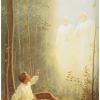
rongo Posted January 24, 2018 Posted January 24, 2018 (edited) 57 minutes ago, Hamba Tuhan said: Maybe you can demonstrate how that would work. You had a divine visitation last night. Provide us with 'concrete, empirical evidence' to prove that it was literal. Go! Forget about proving empirically. How about simply mentioning or referring to it, ever? That's the shift. While I agree that some things are too sacred to share, I don't think God's intent is for them never to be shared. There is a real aversion, bristling, and defensiveness among the Brethren when asked about this in good faith when they visit local areas. I find that Elder Roberts's observation about sectarian Christianity's downplaying of the supernatural applies to us as well. These are two slides from a community fireside I did on "Can Mormon Prophets Stand up to Scrutiny?" They contain paraphrases of B.H. Roberts quotes and pictures: Quote Many Christians insist that the age of miracles stopped after the fourth or fifth century. Others insist that miracles have remained, but the miracles they describe after the fourth and fifth centuries pale in comparison to those described in the Primitive Church. --- New Witnesses for God 1:99-101) Quote Insistence on the discontinuance of revelation comes from the realization that revelation is and has been absent. This explains the rise of explanations such as “these things are no longer needed,” or “these extraordinary things were needed as Christianity started, but are not needed now that it is well-established." --- New Witnesses for God: 1:136-137) The bar for revelation has been lowered over the years to where it is described as almost exclusively simply impressions. I know from my own experience that the ministering of angels and powerful revelation is a true principle and still present. I wish that the Brethren didn't react defensively and angrily when asked about it, and hide behind "too sacred to share." They didn't used to. I also freely acknowledge that seeing the Lord isn't a requirement for apostleship (being a special witness). I've had this discussion with CES Letter people who are troubled by this. I've shared with them direct statements from some Brethren that they have not seen the Lord (Orson Pratt and Heber C. Kimball). I think the Brethren are no different than we are in that blessings and privileges are what you look for, expect, and think is possible. I think we are in an era where many, including many leaders, feel that corporate revelation, "counseling with councils," and impression-driven revelation is sufficient. The keys are here, and the faithful will always have full access to all blessings, but we as a church (locally and globally) aren't always firing on all the cylinders that we could be if we desired it. A lot of this has to do with being self-conscious about being thought of as "weird" in an age that mocks anything supernatural. Edited January 24, 2018 by rongo 2
Gray Posted January 24, 2018 Posted January 24, 2018 17 minutes ago, rongo said: Forget about proving empirically. How about simply mentioning or referring to it, ever? That's the shift. While I agree that some things are too sacred to share, I don't think God's intent is for them never to be shared. There is a real aversion, bristling, and defensiveness among the Brethren when asked about this in good faith when they visit local areas. I find that Elder Roberts's observation about sectarian Christianity's downplaying of the supernatural applies to us as well. These are two slides from a community fireside I did on "Can Mormon Prophets Stand up to Scrutiny?" They contain paraphrases of B.H. Roberts quotes and pictures: The bar for revelation has been lowered over the years to where it is described as almost exclusively simply impressions. I know from my own experience that the ministering of angels and powerful revelation is a true principle and still present. I wish that the Brethren didn't react defensively and angrily when asked about it, and hide behind "too sacred to share." They didn't used to. I also freely acknowledge that seeing the Lord isn't a requirement for apostleship (being a special witness). I've had this discussion with CES Letter people who are troubled by this. I've shared with them direct statements from some Brethren that they have not seen the Lord (Orson Pratt and Heber C. Kimball). I think the Brethren are no different than we are in that blessings and privileges are what you look for, expect, and think is possible. I think we are in an era where many, including many leaders, feel that corporate revelation, "counseling with councils," and impression-driven revelation is sufficient. The keys are here, and the faithful will always have full access to all blessings, but we as a church (locally and globally) aren't always firing on all the cylinders that we could be if we desired it. A lot of this has to do with being self-conscious about being thought of as "weird" in an age that mocks anything supernatural. Do you think it has anything to do with the selection process? General Authorities are often come from high achieving corporate or professional backgrounds. I wonder if that's not quite the right personality type for visions and more dramatic expression of spirituality. These are really solid citizens with their feet on the ground. Someone like Joseph Smith, for instance, was wilder, more passionate, more emotional, even more erratic. 1
hope_for_things Posted January 24, 2018 Posted January 24, 2018 2 hours ago, The Nehor said: Actually it would be more correct to say that he said that witnessing of that event is not what it means to be a special witness. Ahh, so you're telling me there is a chance! :-)

Recommended Posts