


Pyreaux
-
Posts
2,071 -
Joined
-
Last visited
Everything posted by Pyreaux
-

Trademark infringement case against Open Stories Foundation
Pyreaux replied to Calm's topic in General Discussions
And the peer-reviewed academics at FAIR are just liars too I suppose? https://www.fairlatterdaysaints.org/answers/Question:_Why_were_"penalties"_removed_from_the_Endowment%3F Their contributors are often professional historians, archivists, and scholars who have direct access to the Official Church Archives, the 1877 Master Script when Brigham Young first had the temple ceremony written down and subsequent official revisions in 1927 and 1990 to confirm exactly when words changed. The Church did take them seriously, as covenants, not death threats. When you take a wedding vow "until death do us part" doesn't mean your spouse is then authorized to kill you if you leave them. That's stupid. I'm not saying the Church told people to not take them seriously. A personal pledge is not the same as agreeing to a literal execution. The fact that there are zero executions in 180 years in fact IS the Church's 'statement' that the vow had no teeth. History proves those words were removed decades before Romney was born. If you can't distinguish between the versions, you aren't doing the research, you're just repeating what a blog told you. Holland corrected the reporter’s wording because the reporter was wrong. Accuracy isn't a lie. Romney never said 'slit my throat.' (Fact) Holland admitted members used to say that but not Romney. There are no physical penalties and never have been (Facts) No one has ever been executed by the Church for telling secrets. (Fact) -
Trademark infringement case against Open Stories Foundation
Pyreaux replied to Calm's topic in General Discussions
CFR? You mean prove a negative? Here, in the 180+ year history of the Church, there isn't a single documented case of the Church executing someone for breaking a temple oath. That is my proof. If I'm wrong, wouldn't there be a paper trail from law enforcement? Instead, we find the exact opposite. Ex-members leaving, speaking out, and even publishing the rituals without any physical retaliation from the institution. Still alive. That is proof. Elder Holland can absolutely say "That's not true" when asked if Romney swore to have his throats slit, because he didn't say those words. To describe his life vow as a real threat is a distortion of the truth. You want me to find a very specific, unlikely-to-exist document with a transcript to validate the reality of a historical change that is already fairly well-documented, though unofficially? The penalties were neither "fake" or "real" in a legal sense, it's a ritual, a well-established ancient ritual, which is super awesome, by the way. As the Reddit comment noted, everyone involved including Holland knew exactly what Sweeney was asking. He was asking if Romney had ever stood in a room and promised to slit his throat as a penalty for revealing secrets. He did not say that, nor is that a real penalty anyone suffered. If I'm lying, CFR. You are just trying to shut down the conversation. -
Millennium I think. There could be preparatory work now and a full-scale operation during the Millennium. The "sealing" of these servants as mentioned in Revelation 7 is generally viewed by scholars as a protective and ordaining act that happens before the greatest destructions of the last days. I'm 120% with Joseph Smith's interpretation, the "seal in their foreheads" is most definitely the High Priest’s diadem or the High Priest's anointing with the sign of the name. The 144,000 are indeed priests. Whether they are all currently on earth now or yet to be called or if many are serving from the other side of the veil and will return, I don't know.
-
Trademark infringement case against Open Stories Foundation
Pyreaux replied to Calm's topic in General Discussions
Well, cross my heart and hope to die, there never was a real penalty. You are aware this wasn't a friendly chat, it was a confrontational interview described as an ambush. In that high-pressure environment, if someone asks you, "Do you have a policy of execution?", you get to say "No" and you are telling the truth. The "penalties" never existed in any legal or physical reality or time. If you really care about leading people to believe something that is not true, then you should care more about what Mormon Stories is getting sued for. -
Trademark infringement case against Open Stories Foundation
Pyreaux replied to Calm's topic in General Discussions
You admit Romney did not "say" that. You claim Holland misled Sweeney by not explaining it immediately, but he does explain 3 seconds later. You guess that Holland would say nothing if the interview had ended there. That isn't a logical argument. Argue what Holland actually did, not what you imagine he would have done. In any high-stakes interview, a subject waits for the full question. Naturally the reporter will followed up, "You used to?", because the reporter knew Holland was being accurate, and he didn't hesitate to say, "We used to." Holland didn't lie. He corrected a false quote, the 'slit throat' line Romney never said. He explicitly confirmed the line existed when asked. It's not Holland's job to do the reporter's job and answer follow-up questions he was not asked yet. -
Trademark infringement case against Open Stories Foundation
Pyreaux replied to Calm's topic in General Discussions
Sweeney was asking if Romney swore to literally 'slit his throat.' That’s like asking if a Catholic eats human flesh weekly. If a Priest says 'No,' is he lying? Also, it seems you lied. Swearing "to have my throat cut" ended in 1927. From 1927–1990 people swore, "I would suffer my life to be taken". You and Mitt Romney did not say you would slit your throat. Holland says, "That's not true," to the claim that Romney swore to "slit his throat," he is being factually accurate. "We used to" before 1927. -
Trademark infringement case against Open Stories Foundation
Pyreaux replied to Calm's topic in General Discussions
Wrong all day long. When Holland says, "We do not have penalties in the Temple," he used the present tense. Thus, Sweeney then asks, "You used to?" and Holland immediately replies, "We used to." Holland is being precise. The words describing the consequences were removed in 1990. Sweeney is trying to get Holland to admit that Mitt Romney is currently under a literal, physical death threat. Holland is refusing to validate that interpretation because such a "penalty" doesn't literally exist, your standard symbolic "blood oath" is just a sacrament. When Holland says "That's not true," he is rejecting Sweeney's characterization of the ritual as a "death threat" there are "no such penalties". There never were, he is 100% correct in a modern legal and literal sense. There is no hit squad and no one is being instructed to harm oneself. In Israel, you didn't delete yourself, you went to the Tabernacle and offered a substitute animal. Put that knife down Notatbm, just repent. -
Trademark infringement case against Open Stories Foundation
Pyreaux replied to Calm's topic in General Discussions
Critics are loaded with assumptions. Like, why do you assume Jesus isn't wishy washy? Why can’t Jesus have whimsy? It's an apostate human obsession to be so intolerant of new revelation, which is always, by definition, a change of some sort. Since when has revelation ever been static or predictable? Why can't Jesus decide that the term "Mormon" served a purpose in 2010 and be over it by 2018? Why do you assume its wishy washy at all? Looks like a long game from a legal and strategic standpoint. In trademark law, you often have to show that you are the primary user of a mark to defend it. By spending millions on the "I'm a Mormon" campaign and owning mormon.org, the Church effectively occupied that word. They flooded the zone, making the word "Mormon" legally and culturally synonymous with the Church. Once they established dominance over the term, they retire it. Now, when a critic makes use of it, the Church can claim trademark dilution or infringement, arguing that the public still associates that word with them. From now on, every time a headline bleeds "Mormon" or a show is named something like Secret Lives of Mormon Wives they will finally get sued for damages. Y'all going to be sad when your boy John goes bankrupt once he can't trick people anymore? Mormon Stories is predatory branding and the legal complaint is the "likelihood of confusion." The podcast is clearly designed to lead people to believe the podcast is an official Church resource. The top of search results for "Mormon" while using Church aesthetics effectively traps those looking for faithful resources. Their refusal to adopt a specific disclaimer is a primary reason the matter moved to federal court. He's going to lose. Open Stories Foundation was already hemorrhaging support before this. Now all their ill-gotten gain from exploiting a federal trademark is going to a defense, after he loses for deceptive branding to solicit will result in damages on top of losing all their built-in Search Engine Optimization. If "Mormon Stories" has to become "Open Stories Podcast," they vanish from the top of Google overnight. I'd think that alone will lead to insolvency. The Church has requested a trial by jury, which will likely focus on whether an "average consumer" would be tricked into thinking the podcast was an official product of the Church. They are going to win. RIP Mormon Stories -
The Girl Who Taught Joseph Smith To Use Magic
Pyreaux replied to TheTanakas's topic in General Discussions
The podcast implies that Joseph’s use of stones means his work was born out of magic rather than revelation. This narrative is a modern rhetorical reframing of history and displays blatant ignorance of Biblical divination and the assortment of physical tools used, like the Urim and Thummim in the Old Testament. The host claims that biblical objects like Aaron’s rod, that turned into a snake and bloomed while dead, was just a "stick," while Joseph’s stones were "enchanted." This is a distinction without a difference. When Moses strikes a rock with his staff to bring forth water or tells the Israelites to look at a bronze serpent on his staff to be healed, God is imbuing a physical object with power. Joseph explicitly taught that the stones were useless without the Spirit of God. When he lost his gift after losing the 116 pages, the stones didn't work anymore. This proves the power wasn't in the stones. While Joseph was aware of Sally Chase, the podcast portrays Joseph as her apprentice. There is no historical data, not even from the critics that describes any relationship between Joseph Smith and Sally Chase. The Chase family lived about 3 miles from the Smith farm. Records confirm Sally Chase was known in the neighborhood for her "green glass" around 1819–1820 when Joseph was approximately 14 years old. Later neighbors' affidavits collected by E.D. Howe in 1834 state Joseph was intrigued by her stone and once went to see it. Seeing it does not constitute an apprentice. The podcast cites a school friend saying Joseph "inquired of her where to dig." This is a hearsay account recorded decades after the fact. If Sally was his teacher in the use of seeing stones, one would expect their methods would be the same. Sally's primary method involved holding her green glass up to the sunlight to see "wonderful things." Joseph’s method involved placing a stone in a hat to exclude all light, the stone glowed, like the Urim and Thummim stones did. It produced a book. The historical record shows Joseph was often reluctant to participate in money digging, and Josiah Stowell coaxed him to do it. The podcast claims the Joseph Smith Papers prove Joseph was a money digger before Josiah Stowell hired him. For those in extreme poverty, "treasure seeking" was a common, desperate, pursuit for many. Even if that is the case, it misses the idea of any transformation of a young man, and that Joseph had to redirect his gifts. He mentions a failed attempt to sell the copyright in Canada as proof of a false spirit. A well-known story, as Joseph’s response was that some revelations are from God, some from man, and some from the devil. Joseph had to learn to distinguish his own thoughts from the promptings of the Spirit. It portrays the prophet is still growing rather than a perfect robot. The host uses Acts 19's burning magic books to say Joseph should have disposed of his childhood stones. It seems Joseph did move away from folk treasure hunts. He didn't ditch his stones because he viewed them as sacred instruments provided to him by God for a specific reason. By the time Joseph was an experienced Prophet in Nauvoo, he largely stopped using stones altogether, stating that he had learned to receive the spirit of revelation directly. The outcome matters most. A naturalistic theory that requires a magic stone doesn't come close to explain how he gets several other people to see angels, ancient prophets and golden plates. How magic trickery generates the literary complexity of the book or if its devilry, how it birthed a pro-Jesus book that exudes a positive spiritual witness millions feel when reading it? No amount of 'magic' produced the Book of Mormon. The podcast links September 22nd to folk magic. This is because it's the timing of the equinox. The equinox also coincides with the Jewish Feast of Tabernacles which is linked to the gathering of Israel. The claim September 22nd was chosen for its 'magical' properties ignores the biblical significance. -
There is a controversy over the Joseph Smith portrait at Morehouse College, an HBCU in Atlanta, GA escalated from campus grumbling to a national debate in March. On February 27, some "Morehouse Men" (clergy alumni) published a scathing open letter demanding the portrait be removed. They argued that Smith’s early defense of slavery and his practice of polygamy made him unfit to hang alongside civil rights icons like MLK Jr. The Dean of the Chapel, Lawrence Carter, continued to defend the move in March, calling Smith’s 1844 abolitionist platform morally ambitious. In a rare public clarification, the Church officially stated in March that the Church did not donate money for the portrait or for the induction, attempting to squash rumors by these alumni that the honor was "bought." Why Joseph Smith’s portrait at Morehouse is causing a stir – The most cited article. Opinion: Morehouse should not have honored a man who owned slaves Morehouse College Faces Community Pushback Over Joseph Smith Chapel Portrait Joseph Smith Inducted into Morehouse Hall of Honor – The Church's perspective. In these high-profile cultural debates, the public arguments often mask deeper, more personal biases. For many individuals, including clergy alumni at Morehouse, I believe are only doing this because of a pre-existing aversion to Mormonism. Confirmation Bias. They already believe a group is "wrong" or "other," so they will find the specific historical facts that confirm that belief while ignoring anything that challenges it. They are Chery-Picking remarks Joseph Smith made to avoid persecution in Missouri, completely ignoring the fact that he was the first U.S. presidential candidate to run on an abolitionist platform. He was also assassinated, in part, because of it. Joseph Smith’s Changed Stance on Slavery Joseph Smith had always lived in non-slave states, but in Missouri, a slave state, Smith and other leaders in 1836 wrote a letter defending the rights of Southern states from being told what to do by the Northern states, fearing that abolitionist rhetoric would lead to violence, particularly against themselves. The old settlers already believed the Mormons were inciting slave revolts. This neutrality ended at the time he ran for U.S. President, by which he fully shifted. His platform called for the total abolition of slavery by 1850. He proposed that the federal government sell public lands to buy the freedom of every enslaved person in America. For these Ideas, and for interfering with the election, Governor Ford and Warsaw Militia killed him. As if it's a bad thing if he had changed his mind. Abraham Lincoln, whose portrait hangs right next to Joseph Smith’s, started with prejudiced views and changed his mind, in part to political pressure. Lincoln explicitly stated: "I am not, nor ever have been, in favor of bringing about in any way the social and political equality of the white and black races." If Morehouse clergy alumni celebrate Lincoln's portrait despite his early rhetoric shows anti-Mormon bias. Joseph Smith Only became an Abolitionist for Votes? They argue Joseph Smith wasn't a real abolitionist. He only supported it to get votes during his presidential run. Sounds like a theory, but this ignores that in 1844, being an abolitionist didn't get you votes, it got you killed. The Illinois and Missouri neighbors hated abolitionists. By running on that platform, he wasn't "reaching" for votes, he was risking his life to stand for a moral principle that he believed would save the country from a Civil War. Furthermore, he proposed a practical solution, compensated emancipation, that Ralph Waldo Emerson would later be praised for suggesting a decade later. "Curse of Ham" Joseph Smith produced the Book of Abraham, which contains verses that were later used by his successors to justify, not slavey, but the priesthood ban. Alumni argue that Joseph Smith is at fault by bringing these "cursed lineage" ideas into modern scripture (they are presuming Joseph Smith is the author). Defenders, including the Dean of the Morehouse Chapel, argue it’s unfair to blame a founder for how later generations misinterpreted or weaponized his writings. This, dear exmos, is called an Anachronism (applying later ideas to the past). While Smith mentioned biblical lineages common in 19th-century thought, he never used them to bar Black men from the priesthood. In fact, he did the opposite. He ordained Elijah Abel and Walker Lewis. The priesthood ban was a policy started by Brigham Young after Smith’s death. This is guilt by association. Blaming Joseph for the ban because of the Book of Abraham is as daft as blaming James Madison for later Jim Crow laws because the US Constitution was used to justify those laws. Joseph Smith was never a "Slaveholder" Joseph Smith did not buy or sell human beings. The confusion often stems from Jane Manning James, a free Black convert who lived in the Smith home in Nauvoo. She was a domestic servant, not a slave. She was paid for her work and was free to leave. After Joseph Smith's death, Jane many times petitioned to be "sealed" to the Smith family. Church leaders in 1894 eventually performed a ceremony sealing her to Joseph Smith as an "eternal servant" rather than a wife or daughter. Its these notions modern critics claim to be offensive and cite this as evidence of a "slave-master" mindset. Bottom line A pattern seen, like this claim the Morehouse College image of Joseph Smith as a triggering symbol of exploitation, is just one of among many attempts by detractors to either beat LDS in courtrooms, usually failing, yet often getting to win in the court of public opinion by putting disputable and controversial history on blast. Just like many other historical figures are being re-litigated in the court of public opinion using modern standards and expectations. As many Courts often ruled in favor of the Church, like Huntsman v. LDS Church, success seems measured by how very often people get to accuse the church of exploitation, cover-ups, and complicity as facts. Even if dismissed, the news blast of negative buzzwords often leaves a permanent stain on the organization's public brand. The goal often looks like it isn't to win per se, but to win the narrative. I feel the clergy alumni are simply poisoned against the faith, they are bypassing historical nuances in favor of a simpler, more explosive headlines. While the Church may "win" by keeping the portrait hung, the blast of controversy cannot easily be smoothed over.
-
I can't read it. It looks like it starts by just accounting what happened, not a model for other people. No two lives are the same, it's a case-by-case basis. If it had told a story about a woman who felt the spirit tell her she should end her career to be a mom and having no regrets, is not condemning the next woman who didn't do that. But social media would probably blow up anyway. Women are the majority of physicians now, stories like this only going to be more relevant. We are a High Education culture, particularly for our women so they aren't dependent and have means to make it either way, despite ex-mo social media gaslighting that we aren't.
-
I'm going to lay out some proofs. Lunar Laser Ranging Retroreflector We can get visible confirmation of things left on the moon from earth. During the Apollo 11, 14, and 15 missions, astronauts placed small arrays of corner-cube reflectors (high-tech mirrors) on the lunar surface. Any scientist on Earth can aim a high-powered pulse of laser light at the exact coordinates of those reflectors. The mirrors are designed to reflect the light back exactly in the direction it came from. We can time exactly how long it takes for the light to travel to the Moon and back, 2.5 seconds, and we can calculate the distance between Earth and the Moon with incredible precision. They still do the experiment today, it has proven some pretty amazing things, like the fact that the Moon is slowly drifting away from Earth at a rate of about 3.8 centimeters per year. India went to the Moon In August 2023, India became the fourth country to successfully soft-land on the Moon with the Chandrayaan-3 mission. India would have no reason and every incentive not to follow along with a fake. India would be the first to call NASA out. It would be nearly impossible to keep a secret like that globally.
-
Gnosticism is often oversimplified. Gnostics were diverse groups that had different nuanced views. The sort of 'Gnosticism' found in texts like the Gospel of Philip isn't always the dualistic 'matter-hating' philosophy of other Gnostics we often hear about. The Gospel of Philip is quite unique and scholars often see Philip not as a finished book, but as a florilegium, a collection of excerpts or speaker notes. Because the paragraphs are often disconnected, we are likely missing the oral context that explained how these ideas fit together. It’s hard to claim he is being purely anti-material when we only have the 'bullet points.' The text says the Mount of Transfiguration was an Endowment Ritual. Philip suggests the resurrection was on the 'Mount.' Those eight initiatory days that ended on the 8th day, Sunday, was when Christ received his white robe, the Robes of Resurrection. He's seems to stress the importance of earthy ordinances (initiatory death rituals), like baptism (death), chrism (quickening) and endowment in white (resurrection) before you physically die. Philip says, 'Those who say they will die first and then rise are in error. If they do not first receive the resurrection while they live, when they die they will receive nothing.' This resurrection is a transformation or 'clothing' of the person in resurrection while they are still here. It is a common misconception that the Nag Hammadi library is a "Bible" In reality, it includes many different and sometimes conflicting worldviews. Gospel of Philip was discovered as part of the Nag Hammadi library, often categorized as Valentinian Gnosticism because it has all five sacraments. The Apocryphon of John belonged to Sethian Gnosticism and is more rebellious about the physical world. The Discourse on the Eighth and Ninth belong to the Hermetic tradition of Egypt, focusing on mystical ascent through knowledge of the stars and the divine mind. The library includes a poor translation of Plato’s Republic. The Sentences of Sextus is a collection of ethical proverbs that would have been perfectly acceptable to mainstream Christians of the time. The variety suggests that early Christians were reading a massive spectrum of thought before they were cracked down upon.
-
A Secular Theory of Where the BoM Came From
Pyreaux replied to Analytics's topic in General Discussions
Awesome, we have a potential suspect, the Sailor from Salem. The "Old Man" seen by the Whitmers. Mary Whitmer is unique because she describes a Moroni-like encounter as a very ordinary encounter. A pleasant old gentleman met her in the barn and showed her the plates to encourage her. The 3 Witnesses felt real metal because a real man was carrying a real bag of copper or brass plates. This man walks into the woods and once he isn't seen again, that is often all you need to say he must be an "Angel". Southern India is home to the Cochin Jews or Malabar Jews, who have a famous tradition of recording royal grants and community history on Copper Plates, Sasanas. Indian Sasanas Plates Theory? Plates of the Cochin Jews like the ones granted to Joseph Rabban around 1000 AD were high-quality copper or bronze, which, when polished or aged, has the heft and a metallic sheen described by the Eight Witnesses. A famous 1676 letter from Cochin leaders describes their records being "cut on a bronze tablet with an iron pen and diamond point". Thus the fine engravings mentioned in the Book of Mormon. These Indian copper plates are remarkably similar to the descriptions of the Gold Plates. They are thin, metallic, engraved with ancient Semitic-linked scripts, like Vatteluttu, and often bound with rings. If a sailor brought back a set of Cochin Jewish Copper Plates (maybe it even discusses a "Lost Tribe" and a migration... to India), someone could easily have presented them to Joseph as "American Indian" records. I remember you did a thing saying the Book of Mormon as an accurate geographical description of South Asia. South India, the land of the elephant. The path from Jerusalem through Nahom (Yemen) is the ancient maritime silk road. They sail the Arabian Peninsula to the Malabar Coast of India, a well-worn route for Jewish sailors since King Solomon. The Cochin Jewish community is famously divided into the Paradesi (White) Jews and the Malabari (Black) Jews. -
I barely recall Jordan Peterson’s "True-Myth" perspective, heavily influenced by Carl Jung, suggests that a story is "true" if it accurately models the human condition and provides a functional map for navigating the world. If a fiction describes the "meta-patterns" of human behavior (like the hero’s journey or the sacrifice of the ego), it is "truer than true." If acting as if the story is true results in a more meaningful, productive, and ethical life, then the story possesses "truth" in a pragmatic sense, regardless of whether the physical atoms in the story ever moved in that specific way. My only allowance for such ideas is that Christian narratives didn't emerge from a vacuum, but were literary a reemergence of the Ancient Near Eastern Royal Cult. In the Royal Cults, like in Babylon and Egypt, the King was not just a political ruler; he became God on earth. During their autumn kingmaking festivals, the King was often ritually humiliated, stripped of his regalia and forced to "descend" into a symbolic death or chaos. He would then be "raised up" and re-enthroned, he had atoned for the land to ensure the fertility of the land and rain and the stability of the state for another year. If you look at the Passion, it mirrors the schema of royal ritual almost perfectly. The Gospel isn't "news" in the modern sense; it's maybe the final, universalized performance of that old Royal Drama. In the old Royal Cult, only the King died and rose. Christianity’s "innovation" was to take that royal drama and apply it to everyone. Every person must die daily, "slay" their old, tyrannical self (the King who has become rigid) and be "resurrected" as a new, more integrated self. Everyone can receive the royal priesthood, we can follow Jesus through the veil and draw near unto God. There is a theory by scholars like Michael Goulder that the Gospels were structured to follow the Jewish liturgical calendar, effectively acting as "scripts" for communal worship. They aren't "lies"; they are theatrical scenes designed to evoke a specific psychological state in the audience. The Gospel of Philip In Gnostic thought, the physical world was often seen as a shadow or a mistake. Therefore, a "physical" resurrection after death was less important than a "spiritual" resurrection during life. "Those who say that the Lord died first and (then) rose up are in error, for he rose up first and (then) died. If one does not first attain the resurrection, he will not die." - Gospel of Philip It suggests the "Drama" was intended to be an initiatory experience. You "rise" (attain enlightenment/gnosis) during the ritual, which then allows you to face physical death without fear. Jesus could be an Archetypal Script, the New Testament a High Art version of ancient Royal Cult dramas. If this is a fictional account, it isn't "false". For a Gnostic, this account was "truer" because it captured the spiritual reality of their practice, even if it contradicted history.
-
How is LibreOffice? I use OpenOffice. OpenOffice has the basics Word and Excel and Powerpoint, it will open, edit and make new .Doc files so you switch between Microsoft Office. An optional patch of "Languages" I never used. It has a small spell checker dictionary, missing some proper nouns, but you can just click it to add it to the internal dictionary. Got any cheap security solutions? Once upon a time I used free Spybot. I'm having less trouble now days, today I just use a secure browser (any non-Explorer, like Firefox) set to not open links or new windows without permission or not automatically download things. I guess it's less needed. I guess I'm still troubled by the tracking cookies telling my streaming services about products I am thinking about.
-
I need to find an immediate home for two female cats
Pyreaux replied to rodheadlee's topic in Social Hall
Sounds like a good deal, I'm sure someone will accept if we can only get something on Facebook marketplace. I've never done it, but I've seen successful use of it by my siblings. -
Thank you. Happy Passover according to the Gregorian Calander! What traditions do you all do? What foods do you eat? Because of Passover, I know people try to do lamb. Lamb chops or for the picky, a cake with a lamb on it.
-
A Secular Theory of Where the BoM Came From
Pyreaux replied to Analytics's topic in General Discussions
My Secular Theory: Abyssinian Sensul Plates Theory Eight Witnesses claimed to have "hefted" and "handled" the plates. This is the hardest part for the hallucination theories. A major hurdle for the prop theory is that high-quality metal plates are expensive and difficult to manufacture. Joseph could not have made them, bought them, nor had he the ability to come up with the Book of Mormon, at least not alone. There could be a natural solution, I think sometimes critics (by nature) tend to lack the special imagination required to solve problems they come up with. They never entertain a secular idea that there was an ancient metallic artifact in 19th-century America, a genuine ancient object that was displaced or a misidentified historical relic. In this scenario, the plates are in America, aren't from ancient America, but are 16th- or 17th-century Ethiopic liturgical artifacts brought to the Americas by a traveler, a Jesuit, or a colonial-era collector. It's an Ethiopian "Sensul", a folding book, a metal-leaf manuscript would be remarkably similar to Joseph's description. There are metal ones made of copper, bronze or brass, sometimes gilded. They did use a D "ring" or "wire" binding through the edges of the metal sheets, exactly what the Three and Eight Witnesses described. Ge'ez is a Semitic script that looks incredibly exotic and ancient to an 1820s American. When Martin Harris took the "Anthon Transcript" to New York, Professor Anthon reportedly said the characters resembled Egyptian, Chaldaic, Assyrian, and Arabic. Ge'ez is a Semitic language like Arabic and Chaldaic but uses a unique syllabary. It is a cousin to the scripts Anthon would have recognized. If Joseph did copy actual characters from an Ethiopic metal artifact, Anthon’s reaction makes perfect sense: he saw script that was real and ancient, but he just couldn't quite place the specific dialect because Ge'ez was extremely rare in American academia in 1828. Historically, the Portuguese had a strong military and religious presence in Ethiopia in the 1500s. Maybe a Portuguese knight or Jesuit priest traveled from Ethiopia to the New World or if their collection was looted, it would explain the presence of a high-quality European steel sword alongside an Ethiopic metal book. Portuguese mariners used sophisticated brass nocturnals and astrolabes. If one of these was found with the Ethiopic plates, Joseph’s savant brain would naturally think the strange brass ball and sword were all somehow connected with the ancient records with them. Ethiopia has a rich tradition of Pseudepigrapha lost to the rest of the world. If a man calling himself "Moroni" provided Joseph with a set of stolen Ethiopic gilded texts and an English translation of it or an Ethiopic Grammer book, Joseph could have a translation with themes that perfectly match the Book of Mormon. A Judaism mixed with Christianity, and a history of lost tribe or a righteous remnant fleeing the wicked city of Jerusalem. Early Ethiopian Christians and the Beta Israel Jewish community claim to be Lost Tribes who fled Jerusalem. The Kebra Nagast ("The Glory of the Kings") is the national epic of Ethiopia. The Kebra Nagast deals heavily with the idea of a chosen lineage and a cursed one. The Kebra Nagast argues that the black skin of the Ethiopians is a sign of God's new favor. It contains a profound belief that the "Zion" (the Presence of God) moved from Jerusalem to Ethiopia. The biggest "anachronisms" in the text, are at home in Ethiopia. Horses, chariots, high-quality European/Islamic trade steel was common in Ethiopia by the 1500s. Ethiopia is a primary center for ancient barley and Teff (a cereal grain). One of the few places where elephants and honey bees have a deep, co-dependent history. "Beehive fences" keep elephants away from crops. The "Lehi Trail" is widely accepted to go through the Arabian Peninsula (specifically Nahom in Yemen). Maybe it did. Instead of a 10,000-mile trek across the Pacific, the original story was about the crossing of the Red Sea into Ethiopia. In the 1820s, the Church Missionary Society was active in Ethiopia. They were producing The Ethiopic Psalter. Printed versions of Ethiopic texts. Also, Grammars, the English guides on how to read Ge'ez. The English translations were based on the KJV-style English popular in British academia at the time. In the Ethiopian Orthodox tradition, wealthy patrons or royalty would commission a scribe to create a specific book for a specific monastery or for a family. Metal leaves (gilded copper or brass) were reserved for "Eternal Records", royal genealogies, land grants, or unique hagiographies (lives of saints). If a royal family's "House Record" was stolen or looted, there would be no other copy in existence. It was a physical object intended to be the only one of its kind. The "Great Looting" of Magdala (1868) occurred after Joseph’s time, but it illustrates what could happen. The British expedition to Abyssinia resulted in the seizure of over 1,000 unique manuscripts from the Emperor’s library. There was an earlier displacements during the Jesuit expulsion (1630s) and the wars with the Adal Sultanate. During these conflicts, entire libraries were burned, and a few metal books survived were often those carried away by fleeing individuals. If Joseph’s plates were an ancient 17th century Ethiopic-Jewish history from a Beta Israel family, it could have been a text that never made it. Joseph sincerely believes he has found the record of "Ancient Americans" because the artifact was physically real and he found it in America. The only lie maybe exactly where it came from. In the early 1800s, museums like the American Museum in New York were not the high-security vaults they are today. They were "cabinets of curiosities" that often held artifacts from Egypt, Rome, and the Near East brought back by sailors and early explorers. Sometimes an artifact is stolen by a disgruntled employee or a collector. The thief sells it, or loans it, or fearing getting caught, buries the object in a rural area (like Upstate New York) to "cool off." They die or are imprisoned, and the object is found decades later by a renown "treasure hunter." This would explain why an Egyptian-styled object, allegedly confirmed by Professor Anton, would be in a New York forest without requiring God or "ancient" trans-oceanic travel. It’s a displaced yet authentic object. I think they were high metal plates, a brass ball, a breastplate and a sword, maybe there was a pair of oversized, uniquely set spectacles (perhaps old navigational lenses or jeweler’s loupes). Maybe when Joseph puts them on it helped him read tiny writing. Maybe aside the plates, one day Joseph borrows a few other odds and ends from the man who plays Moroni. He shows the collection, though all mismatched, it all looked aged and mysterious to 1820s farmers. Alternatively in 1820, People were finding Native American Hopewell artifacts (hammered copper, gorgets, and stone tablets) in mounds. Because they didn't believe Native Americans were capable of such work, they "misidentified" them as Egyptian or Phoenician. A treasure hunter might find a hammered copper Hopewell plate and call it "Egyptian". If you were a treasure hunter in 1825 New York, you had a decent chance of finding copper or silver scraps left by Native Americans or early settlers. However, because of "Egyptomania" trend, you would just as likely have convinced yourself (and your neighbors) that a revolutionary-era brass object in good condition was an ancient gold relic, and the 'treasure hunter' simply saw what his cultural bias told him to see: an ancient book. If we position Joseph as an Idiot Savant, someone with a genius-level gifts combined with a naive or magical worldview. A man calling himself "Moroni" knows Joseph is a "glass-looker" with a local following. Secretly loans him objects for a time to support Joseph's reputation as a successful treasure finder. Joseph’s "Savant" quality is his hyper-associative memory. He sees these mismatched "props" provided by the thief and builds a world-class epic around the objects. If the plates were stolen from a museum, a Jesuit mission, or a private collection of "antiquities," the cost of production and the time is zero. Joseph indeed runs for his life through the woods with a sack with a heavy golden book, Josiah indeed saw it when he made it home, people were indeed chasing him, they indeed all believe he has a gold book. The problem is they are "hot." They are recognizable as stolen property. He finds witnesses to inspect them, not too long before needing to return them. The Lost 116 Pages of the "Book of Lehi" was a longer direct translation of a royal Ethiopic record, likely contained explicit references to the Red Sea, Axum, or the Nile. Or "Moroni" stole those pages, Joseph realized he could not or should not do another re-translation, but pivot to make a micro draft. Maybe this is where Joseph’s Hyper-Associative Memory kicks in, he takes the source material, or memory of it, and strips much of it away, "Americanizes" it on the fly, the Ethiopic themes become more American ones and a dash of the local Mound Builder mythology, the "anachronisms" aren't mistakes, they are what remains of geographical markers for the wrong continent. This took 3 days to write before clicking submit, I'm done for now. If there is no angel, just maybe an equally extraordinary thing happened. This seems to be just as plausible as anything else I've read. "When you have eliminated the impossible, whatever remains, however improbable, must be the truth."~ Sherlock Holmes It seems like the quote is real. I fed just the quote to 3 different, free but unprompted, AIs, all are saying the quote is by Huchet in 2010. I'm also getting from all 3 is broken links for what is supposed to be Huchet, J.-B. (2010). "Vestiges d’insectes et pratiques funéraires moche". Search engines aren't finding the quote at all.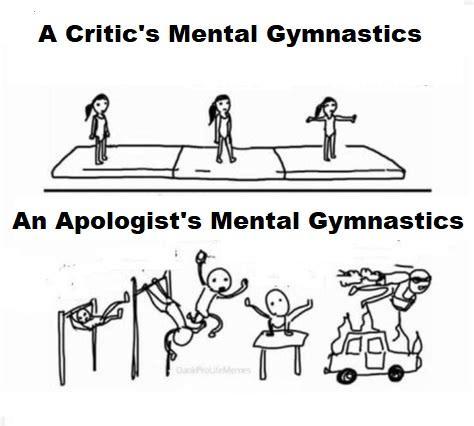
-
I looked into it once. They have these old "student" laptops on ebay. They are cheap because they have no space for anything. Windows machines are in the $50–$80 range, they have small 32GB or 64GB drives. Windows 7 or 10 takes up about 20–25GB. Once you add system updates, temp files, and a few basic apps, you are left with almost nothing. Sellers often refurbish old enterprise or school laptops (like the Dell Latitude or HP ProBook series) and put the cheapest possible drive in them just to get them to boot. ChromeOS is essentially just a web browser, the operating system is very tiny (usually under 10GB). Lenovo 100e or Dell Chromebook 11 for as low as $50 to $70. Google stops sending security updates to older models after a certain date. On eBay, very cheap $30–$40 Chromebooks are often past this date. For music, get a microSD card (if it has a slot) or a tiny USB drive can give you at least an extra 64GB–128GB of storage for about $15, which is enough for photos, documents, and mp3s. Never buy a used microSD card with "1TB" for cheap, they often be corrupted.
-
A Secular Theory of Where the BoM Came From
Pyreaux replied to Analytics's topic in General Discussions
I have a lot of special interests and crystalized knowledge. I'll save stuff or usually, like this time, what happens, I've read it before, then I bring it up off the top of my head, and then I have scramble to find it or anything like it again. I usually can, I remember the key words or phrases, I don't remember other things like the names, I have to find stuff I don't remember again in the search. I think I recalled this beetle from an old Book of Mormon Central page a long time ago. -
A Secular Theory of Where the BoM Came From
Pyreaux replied to Analytics's topic in General Discussions
Forensic entomologists like Dr. Jean-Bernard Huchet also know Taphonomy, how things decay and settle over time. The beetle remains were sealed under massive layers of adobe brick and sediment in subterranean chambers. The beetle remains were part of the materials Dr. Alana Cordy-Collins sent for the AMS (Accelerator Mass Spectrometry) dating. The AMS report for the "fly and beetle remains" returned a date consistent with the Moche period (500 AD). -
A Secular Theory of Where the BoM Came From
Pyreaux replied to Analytics's topic in General Discussions
Ah, okay, she simply found the beetles, AMS dating text doesn't list the species name because an AMS paper is about dating of the remains and just finding the beetles. They were supposedly sent to Dr. Jean-Bernard Huchet, the world's leading expert on identifying insects in mummies, and he identified them as Lasioderma serricorne. I'm saying "supposedly", the sources are all in French, and the bulk of work is published in French. I had to ask AI to find and translate Huchet. The Source: "Des Mouches, des Morts, des Offrandes : Archéoentomologie de tombes Mochica de la Pyramide de la Lune, Pérou" (Flies, Deaths, Offerings: Archaeoentomology of Mochica Tombs of the Pyramid of the Moon, Peru). Publication: Recherches amérindiennes au Québec, Volume 48, Number 2, 2018, pp. 33–44. Context: This research details the analysis of "bio-artifacts" (insect remains) found at Huaca de la Luna, a major Moche ceremonial site. Key Excerpt (French) "Parmi les coléoptères identifiés, la présence de Lasioderma serricorne (Fabricius) revêt un intérêt particulier. Ce petit anobiide, communément appelé « lasioderme du tabac », est un ravageur cosmopolite des denrées stockées. Sa présence au sein des dépôts funéraires mochicas, étroitement associée aux restes macrovégétaux (graines, piments, feuilles séchées), suggère qu'il a été introduit dans la tombe avec les offrandes végétales." English Translation "Among the identified beetles, the presence of Lasioderma serricorne (Fabricius) is of particular interest. This small anobiid, commonly known as the 'tobacco beetle,' is a cosmopolitan pest of stored products. Its presence within the Mochica funerary deposits, closely associated with macro-botanical remains (seeds, chili peppers, dried leaves), suggests that it was introduced into the tomb along with the plant offerings." Modern human-adapted TB, Lineage 4, had to evolved to thrive in lungs with high oxygen, the seal TB is genetically distinct. It lacks the specific RD1 deletion and other "modern" markers that allow the human strain to be so infectious. Human TB was refined in the dense cities like in Ancient Egypt and modern Europe, it made specific deletions in its genome that make it highly contagious between people. Even if the seal-strain TB spread human to human in Peru, it would still look like seal TB in its DNA. It wouldn't spontaneously transform into the Lineage 4 strain just by being passed around by humans. Peru mummies had "Human TB" from IS6110 markers found in 1994. Samorini’s claim that "other teams don't see cocaine" doesn't mean anything unless he shows they tested the same mummies that three people found cocaine in. Calling the results "trace," the concentrations in the Egyptian mummies were high enough that, in a modern forensic lab, they would be considered heavy users. Calling Balabanova's worka single "thin" paper. It spanned a decade of research, was published in The Lancet and Naturewissenschaften, and was confirmed by Parsche and Nerlich (independent researchers not connected with her). Samorini is gaslighting by portraying these as un-peer-reviewed notes. -
A Secular Theory of Where the BoM Came From
Pyreaux replied to Analytics's topic in General Discussions
The 2014 Nature study found pinniped (seal) strains of TB in 3 mummies that were on the coast, they used seal-bone tools, and ate seal meat and seals could be one source for weak TB, but it doesn't explain why the human-specific Mycobacterium tuberculosis is also present in other mummies. Identification of M. tuberculosis DNA in a pre-Columbian Peruvian mummy found IS6110, and Frontiers in Microbiology (2022) says IS6110 is the marker of "modern" human-adapted strains. Alana Cordy-Collins and the Tobacco Beetle (Lasioderma serricorne) in Peru data comes from the analysis of Skeleton H33 at the site of Dos Cabezas. In these high-status Moche tombs (dated to 450–550 AD), beetle remains were collected from within the skulls and funerary bundles in a sealed, primary context, inside the cranial cavity of a mummy that had been buried for 1,500 years. References to this is in "The Art and Archaeology of the Moche" (Edited by Steve Bourget and Kimberly L. Jones). The character attack on Balabanova is from Giorgio Samorini in 2024. Even if Balabanova were not a credible scholar (a subjective claim), her results were replicated. In 1995, Parsche and Nerlich conducted independent tests on the same mummies using GC-MS and found the same results. Notice how Samorini’s critique focuses on her methodology and lack of references, but he cannot explain away the presence of cotinine. If Balabanova was "unprofessional", did her machines suddenly become unprofessional too? Balabanova's character doesn't change the molecular weight of the Benzoylecgonine found in the samples. If her data is wrong, show me the study that re-tested those mummies and found zero alkaloids. They can't, because the alkaloids are there. He has nothing to say about that. -
A Secular Theory of Where the BoM Came From
Pyreaux replied to Analytics's topic in General Discussions
We don't need to find the specific shipwreck of an Egyptian Atlantic Vessel for it to be a strong possibility. We only need to show they had the seafaring capability, which we have seen. We have the Ra II experiment. Not only is it possible. We have the evidence of the cargo, that is the evidence of the vehicle. Not saying the Egyptians even need to be blue-water experts, the Egyptians just needed to be rich. We don't need to find a Polynesian ship or know how to prove they took the Sweet Potato from South America. What's more unlikely, is a ghost plant, that nature has to invent a 17-carbon alkaloid with a specific tropane ring twice, in two different hemispheres, and then have it go extinct on one hemisphere without a trace.