All Activity
- Past hour
-

General Conference talk on the understanding of the Godhead
MiserereNobis replied to GoCeltics's topic in General Discussions
Why do you always post about how happy you are going to be to see someone find out they are wrong? It’s really… gross. No room for metaphors and figurative language in your life, eh? -
General Conference talk on the understanding of the Godhead
MiserereNobis replied to GoCeltics's topic in General Discussions
You should hear the Grateful Dead talk about improvisation and the group mind, where they are simply observing the music play itself through them as one being. And don’t worry about Rush coming to your mind. The Grateful Dead comes to my mind in all sorts of threads 😁 -
 It's hard to know about change though, since his was a special VIP tour for him specifically and given by the managing director of Temple Square. Not a general, every day tour. The weird thing is I know something like 20/25 years ago they did talk about the other wives when I went. And I think (though I'm not sure) in later years when I went again they didn't, just like you experienced. So why they had it, but then didn't have it, I don't know.
 - Today
-

SCOTUS Decision: Ban on "Talk" Conversion Therapy is Unconstitutional
smac97 replied to smac97's topic in General Discussions
What transgender men/biological women? You don’t think they have difficulties using women’s restrooms, they won’t be harassed, recorded, threatened as well? (Maybe not physically threatened on that moment, but put at risk by being recorded, doxxed, etc)? I think I have addressed this at substantial length. "The discomfort that can arise in edge cases under a sex-based rule is real. I acknowledge that." "The awkwardness that can create for the individual woman who has chosen to present herself as being male (or vice versa) is real. So is the alternative of letting identity or presentation override sex, which creates a different and broader set of costs for the people the female (or male) category was created to protect, and it eliminates any stable limiting principle." "Highly masculinized females remain female under a sex-based criterion; they use the women’s facility. The awkwardness that can arise in those edge cases is real. It is still a different—and smaller—problem than admitting anyone into women's space on the basis of subjective identity or appearance (or not even based on that)." "The discomfort this creates for some individuals who present or identify differently is real, but it does not require us to redefine the category or surrender the boundary" "I acknowledge that rule will sometimes produce awkward situations for people whose appearance does not match their sex. That is a real cost. But then, the alternative rule (access according to self-identification) also produces costs: loss of privacy, safety concerns, and competitive unfairness for the group the spaces were created to protect." "In short, the policy requires people to use the facility that matches their sex. Residual social friction for a small number persons is a genuine downside worth managing with good complaint procedures and common sense. But I think it is not a reason to abandon the sex-based boundary that protects the group for whom the spaces were created: women and girls." "Sex-segregated spaces are created and maintained for the benefit of women and girls, or half the population. I think the Kansas legislature passed the law to benefit woman and girls. Sex-segregated spaces impose some difficulties on a statistically small - even tiny - number of men." "The awkwardness that can create for the individual woman who has chosen to present herself as being male (or vice versa) is real. So is the alternative of letting identity or presentation override sex, which creates a different and broader set of costs for the people the female (or male) category was created to protect, and it eliminates any stable limiting principle." "A consistent sex-based rule will sometimes create awkward or painful situations for people whose appearance or identity diverges from their sex. That is a genuine cost, and practical accommodations (single-occupancy options, etc.) can reduce it without erasing the boundary. But the alternative rule, access by self-identification, imposes a different set of costs on the far larger group for whom the spaces were created, and it removes any stable limiting principle. Once sex is no longer the criterion, there is no coherent basis for excluding any male." "On the specific example: a sex-based rule does mean that a female person who has taken steps to appear male still uses the women’s facility (or a single-occupancy option where available). That can be awkward for the individual. The alternative rule of letting identity or appearance control means male people who identify or present as female, and anyone else as well, gain access to women’s facilities. That creates a different set of costs, borne by the women the space was created to serve, and it removes any stable way to exclude males who might exploit the rule." "So as between the seemingly competing and incompatible interests and preferences of (A) biological women and girls and (B) biological males who, having taken cosmetic, medical and sartorial measures to deliberately appear and "identify" as women, which set of interests and preferences should prevail? In my view, I think the prevailing group should be the one for whom sex-segregated spaces were created: biological women and girls." It appears that we differ in a few things, but we both acknowledge that the Kansas law can have some adverse effects on men who "identify" as women and so want to enter women's bathrooms. Where we differ is whether the alternative approach has some adverse effects on women and girls (for whom sex-segregated facilities were intended to protect). Thanks, -Smac -

Did this General Authority lie in his Conference talk?
bluebell replied to Notatbm's topic in General Discussions
I don't think it was a lie for two reasons. The weakest reason is because an allowance isn't the same as being paid for time served or work being done. The (in my opinion) stronger reason it's not a lie is because it seems clear (to me at least) that he's speaking in generalities. In general those who serve in the church receive no compensation whatsoever. -
Very good to know. The last time I went through was probably around 2010 or 2011. It sounds like it has already gotten a lot better.
- Yesterday
-
 I think it would be pretty easy to determine sexual assault, but the others you mentioned (voyeurism, spying, exhibitionism). How would we prosecute them? I've been in locker rooms where if the same behavior was done outside of a locker room, it would be considered exhibitionism. Or how do we say that someone is spying. Say a person in a locker says that another is spying, then what? We don't have cameras in locker rooms. And if the person being accused is a trans person, wouldn't they see it as an attack on them and rightfully defend themselves? That's where I come from. Sex segregated places made it a bit easier to determine if someone was being nefarious. A person could accuse another person and if the accused happened to be the wrong gender, then it was a simple case. But that's no longer the situation. Now, it seems like we have to have actual assault before any prosecution can happen.
 -
 Beautiful message in those lyrics indeed, THANK YOU Navidad! Below is a link to a blog post by a near-death experiencer writing about love. He does not come from a religious background, but he ends up in a similar place to where Frederick Faber takes us in that inspired hymn. Here's a quick quote, as a preview: "Love everyone where they are. Not where you wish they would be." Love (jonathanashford.com)
 -

SCOTUS Decision: Ban on "Talk" Conversion Therapy is Unconstitutional
Calm replied to smac97's topic in General Discussions
What about transgender men/biological women? Di you think they may have difficulties using women’s restrooms, they might be harassed, recorded, threatened as well? (Maybe not hands on physically threatened in that moment though might be given some behaviour by offended women I have seen, but put at risk by being recorded, doxxed, etc)? -
 This is a law that Smac and its other defenders can't show a single instance of being needed. Can't show a single case where other laws have been inadequate to keep people safe. Personally I think the law passed is serving its exact and intended purpose. It's purpose is clearly to make transgendered individuals feel marginalized unsafe and unwelcome. To harass those (including cis gendered individuals) that don't fit into societies gender norms by deputizing citizens to harass people trying to pee. Hooray for loving christians!
 -
 On these legal issues, I'll give some background on Kansas. Under the Kansas state Constitution, women here still have a Constitutional right to abortions. The religious right has been fighting this furiously. The Kansas legislature had basically outlawed second-term abortions, and this was successfully challenged in court and ruled unconstitutional under the state Constitution. In Hodes & Nauser v. Schmidt (2019) the Kansas Supreme Court ruled 6–1 that this language protects a fundamental right of personal autonomy including bodily integrity, self-determination, and decisions concerning one's body, health and family life. The court concluded that deciding whether to continue a pregnancy falls within that protected sphere. This was reaffirmed in 2024. The religious right continues to fight against this by trying to change the Constitution and most recently by changing how supreme court judges are selected, but they continue to fail. Given how the citizens of Kansas enjoy an outsized fundamental right to personal autonomy, bodily integrity, self-determination, decisions about your own body, health, and family life, I'm guessing this will be a strict scrutiny case in Kansas, and that the big-government Christians will lose again. We'll see if their luck finally changes.
 -
SCOTUS Decision: Ban on "Talk" Conversion Therapy is Unconstitutional
smac97 replied to smac97's topic in General Discussions
These are value judgments about which reasonable minds can and do disagree. I don't recall saying you "{don't} care about the integrity of data." You cannot or will not define what a "woman" is. You conflate actual women with men who, having taken cosmetic, medical and sartorial measures to deliberately appear as a woman, "identify" as, and become, a woman. Your position requires society to radically re-define "woman." Again: I do not share that premise. I take “woman” to mean adult human female. On that understanding, a male who identifies as a woman remains male. Admitting him to women’s facilities is not an act of recognition, but instead is the abandonment of the sex-based boundary that justifies the facilities in the first place. The discomfort this creates for some individuals who present or identify differently is real, but it does not require us to redefine the category or surrender the boundary. And the alternative is to create problems and impositions on women and girls, for whom bathrooms and other sex-segregated spaces are intended. It was done by the Kansas State Legislature. I think we're mixing issues again. First, clinical care. Good doctors do rely on the full medical history, current anatomy, hormones, and relevant labs—not on the letter printed on a driver’s license. No serious argument says otherwise. The license marker is not a substitute for a chart. It is a basic administrative and identification field that is also used outside the exam room: for screening in sex-separated spaces, for records that feed population data, for matching to prior medical and legal history, and for ordinary verification. Saying “doctors should look at the whole history” does not answer whether the underlying sex marker itself should be accurate. Second, data. If the claim is that recording the person as “Female” does not enhance the data, that cuts against self-ID, not in favor of it. Actuarial, epidemiological, and clinical datasets are useful only to the extent the categories track the biological and physiological differences that actually drive risk, drug response, disease prevalence, and outcomes. Sex is one of those variables. Replacing it with an identity label that can diverge from sex introduces noise precisely where sex is the relevant covariate. An actuary who needs reliable sex-stratified data is not helped by a system that treats the marker as a self-reported preference. "Trust doctors to read the chart: is not a reason to make the official sex marker inaccurate, nor is it a reason to claim that calling a male “Female” improves the data. If anything, the actuarial point runs the other way—categories that no longer track sex make the data worse for the purposes for which sex is recorded. You being an actuary, I am curious. Here is my understanding: Actuaries price and reserve on the basis of factors that demonstrably correlate with claim costs. Sex is one of the strongest and most persistent of those factors in mortality, certain morbidity, and some casualty lines (especially young-driver auto). Male and female populations show different average life expectancy, different patterns of cardiovascular disease, cancer, disability, and (at younger ages) accident frequency/severity. Those differences are biological and behavioral in origin; and are therefore not created by the gender marker on a license. Are these substantively accurate statements? Continued: If a risk truly varies by biological sex, recording or pricing a biological male as “female” (or vice versa) does not improve the data—it introduces misclassification error. For example, hormone therapy and surgery change some risk factors (e.g., certain hormone-dependent conditions, thromboembolic risk) but do not rewrite the entire sex-based risk profile. Where the carrier has credible experience or medical evidence that a transitioned person’s residual risk now more closely resembles the identified sex, some will adjust. Where it does not, birth sex (or a substandard rating that reflects the actual medical history) remains the more accurate approach. Broadly speaking, actuaries do not treat “identifies as a woman” as automatically equivalent to “is female for risk purposes.” Practices differ by product, carrier, and jurisdiction. When sex is a material rating factor, the safer and more common actuarial default is still biological sex / sex at birth, supplemented by individual medical underwriting. Self-identified gender is used more often when required by law, by document-matching convenience, or when the carrier has decided the residual risk difference is small enough to absorb. I am really out of my field here, hence my request for your input. From the outside looking in, I would think that from a pure data-quality standpoint, if the risk varies by sex, labeling a person according to subjective "self-identity" rather than sex reduces, rather than enhances, the usefulness of the classification. How do you, in your professional capacity as an actuary, define "woman"? As you like. It is interesting to me that the two women I have spoken with about this topic in recent days - my wife and my sister - agree with me. Or is that perhaps a "faulty generalization"? I'm not sure we have good data. It seems like surveys/polls are carefully drafted to not address the presence or absence of limiting principles. For example, if the question were "Would you support a law that essentially eliminates sex-segregated bathrooms, changing rooms, etc.?", I think quite a few, perhaps the majority, would say no. Or "Would you support a law that allows anyone who looks or acts or subjective 'self-identifies' as a woman to enter into women's bathrooms, changing rooms, etc.?", I think there would be a lot of people opposing this. I would be interested in any data you have on this. For example, I found this report by YouGov, but it is about "gender neutral toilets," not "men in women's bathrooms." Moreover, the split seems to vacillate over time. Moreover, the methodology is questionable. YouGov uses an online opt-in panel rather than random telephone sampling. My understanding is that opt-in panels can skew results or attract insincere respondents on rapid-turnaround cultural topics. I agree. You may be wrong. A space in which any male for any reason can enter into women's spaces, with no limiting principles at all, is not "segregated" in any meaningful sense. Yes, I acknowledge we disagree. I am not in the Kansas State Legislature, nor did I have anything to do with its approach to sex-segregated bathrooms. I do agree with it, though, and find it reasonable. You do not. Such are the vicissitudes of living in a pluralistic society. I would prefer if you were refrain from personalizing this thread, as you have done many times now. But so far I think we've managed to stay on topic despite those efforts. I'm glad of that. I agree. Where we disagree is what sort of preemptive/prophylactic measures a jurisdiction can/should deploy to mitigate the risk of these things happening. We also disagree in that you appear to focus overwhelmingly on what one of several grounds I have cited. You haven't "established" anything either. This is just an informal discussion about public policy. And yet you oppose any "limiting principles" designed to keep such facilities "sex-distinct." I disagree with you on this point, as i think limiting principles are important. I also think biological sex is a very good, and perhaps the best (in terms of public policy and enforcement), limiting principle. I don't think they do. That a man may go to great lengths to pass as a woman does not make him one. And vice versa. So the general rule of biological sex is reasonable. I also think that some particularized exemptions/exceptions for people with DSDs would be reasonable. Where we disagree is whether the entirety of the male population should be able, for any reason or no reason at all (there being no coherent limiting principles under your preferred regime), be allowed by law to enter into women's bathrooms. Thanks, -Smac -
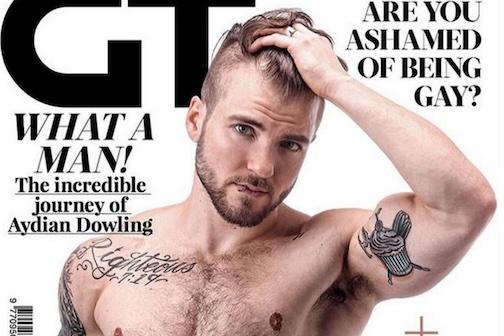
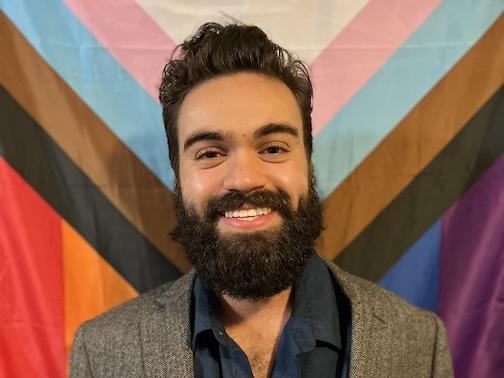
Requiring this person to use the women's restroom doesn't promote privacy and dignity. Requiring this person to use the women's restroom doesn't promote anybody's physical safety. Requiring this person to use the women's bathroom has nothing to do with fairness in sports. You had also said on Friday that as far as you could tell, I didn't care about the integrity of data. In fact I do. As you know, I'm an actuary, and sex is an important factor in mortality and morbidity. I'll simply note that it wasn't doctors, actuaries, and demographers who passed the Kansas legislation in a rushed, procedurally truncated process that bypassed the normal opportunity for public hearings and development of an evidentiary record. Rather, it was done by the religious right. I trust doctors to look at the full, nuanced medical history of their patients, which has nothing to do with whether a drivers license has an M or an F on it. And I can tell you as an actuary who makes decisions with money on the line regarding these things, calling the person pictured in this post a "Female" doesn't enhance the data. Furthermore, these issues have nothing to do with whether this person is legally required to use the women's restroom. Women's shelters and prisons should be allowed to make the best decisions possible on a case-by-case basis, and shouldn't be required to admit this person as a woman just because the birth certificate has an F on it: That has nothing to do with whether we should allow this person to use the male bathroom (as I want), or whether they should be required to use the female bathroom (as you want). Using common sense and good judgement on a case-by-case basis is neither arbitrary nor incoherent. I'd love to hear a professional psychologist explain why requiring this individual to use women's restroom would be psychologically beneficial to women and girls. It's interesting that the only woman participating in this conversation (and who also happens to be a psychologist) disagrees with you. Surveys show that most women agree with me on this issue. I may be wrong, but I really don't think most women and girls want this type of person to share their bathrooms and locker rooms with them: Actually, I'm fine with sex-segregated spaces. My problem is with your definition of how the line should be drawn and who makes the final decision in edge cases. To illustrate the problem, consider which of these two individuals you think is a woman and which you think is a man. Your definition indicates this is a woman: Your definition indicates this is a man: This is my proof about how defective your definition is. That doesn't mean woman and girls want to go to the bathroom in the same room as these people: And if you are a republican, you don't wait for anybody to put a litter box in a school bathroom before creating laws that outlaw it. Sexual assault, voyeurism, spying, exhibitionism, etc., are all awful and are prosecuted aggressively, as they should be. You haven't established how requiring people like this to use the woman's bathroom somehow causes malum in se crime to go down: Surely you aren't claiming those surveys say women and girls don't have a reduced willingness to use facilities if this person is there, because according to you, "she" is a woman and they are comfortable with women. Do sex-distinct facilities have value? Sure. Nobody is arguing against that. The question is whether your criteria for the "limiting principle" is the right one. The photographs I've shown here prove that you are drawing the line in the wrong place. When women say they would prefer to pee in women-only spaces, they are not saying they want to pee in places where the "women" I've shown here are required to pee, too. You are imposing your defective definition of "woman" on them. If you showed these two photographs to a woman and asked her which one she'd feel more comfortable with in the bathroom, how many are going to say, "I can't answer that based on their photos. I need to see their birth certificates!"















-
SCOTUS Decision: Ban on "Talk" Conversion Therapy is Unconstitutional
Calm replied to smac97's topic in General Discussions
Quite possibly, would need to think about it. I would assume it would be a list of behaviors that would be outlawed. I think for me the male/female appearance is a predictor of behaviour and I am uncomfortable with behaviours that are more typically performed by males (aggressiveness, intrusiveness, loudness). Therefore a more aggressive (violent graphic T-shirt, hair and jewelry reminiscent of bike gangs, etc) male appearance even in obvious women I think triggers alarms for me. OTOH, someone who has made an effort to be dressed in typical every day female apparel is going to read to me “they aren’t here to be noticed or make trouble” and so it’s likely I will feel safe around them. But given my mild face blindness, maybe I focus more on clothes and hair than others do. I would like to see studies on what signals “safe” to a variety of people to see how others think about safety. -
SCOTUS Decision: Ban on "Talk" Conversion Therapy is Unconstitutional
smac97 replied to smac97's topic in General Discussions
At this point, this is probably the closest to my actual position if you are interested in that, smac. It is not what I am currently exploring though. I also recognize that for many “appearance” counts as what someone “does”, so not sure how to achieve this. How do you imagine a state law would be drafted so as to allow everyone into women's bathrooms except those who enter the bathroom, do something "that is making people uncomfortable," and then have a legal process whereby a judge enters an order stating "they should not be allowed to use the {women's} facilities" in the future. From a public policy position, I don't think CB"s proposal works. Thanks, -Smac -

Did this General Authority lie in his Conference talk?
Pyreaux replied to Notatbm's topic in General Discussions
I stand corrected, living allowance is taxed. The only part of a minister’s living allowance that can be excluded from income tax is a designated parsonage (housing), the portion meant to cover food and transportation is taxable. But you are still wrong, taxability does not equal a corporate salary. Paying taxes does not turn a non-profit cost-of-living stipend into a commercial wage. The 'parsonage' designation exists exclusively for religious ministers receiving housing support. You are taking a sociological definition of 'paid clergy' and trying to judge it using corporate terminology. When scholars, historians, and leaders say the Church has 'no paid ministry,' they mean we do not have a professional clergy class, there is no leader hired to make a career out of preaching. 99.9% of all ministry in the Church is run by unpaid volunteers. The 0.1% that receive a living allowance do not receive a wage. In that sense, nobody in Church leadership receives financial compensation for their service. The allowance is sustenance, not pay, is fundamentally different from being paid. It aims for a zero-sum, break-even outcome rather than accumulation. -
SCOTUS Decision: Ban on "Talk" Conversion Therapy is Unconstitutional
smac97 replied to smac97's topic in General Discussions
Some points need separating: First, prevalence. You say the people you know who have transitioned “fall very close in line” with the highly masculinized photos and that this is “the vast majority.” That may reflect the circles you move in. It is not the general picture. Many people who identify as transgender have not undergone extensive testosterone use, surgery, and permanent masculinization of the kind shown in those images. Presentation varies widely. Even if a large share of the subset who medically transition do end up looking highly masculine, that still does not convert the policy question into an appearance test. The rule under discussion tracks sex, not how successfully someone has approximated the opposite sex’s appearance. Second, the purpose of the rule. A sex-based boundary is not a law “against a class of people simply because how they look is uncomfortable for some.” It is a rule about which sex uses which multi-occupancy facility in settings that involve undress and vulnerability. The interest it serves is the long-standing one that justified sex separation in the first place: privacy and safety patterns that track sex. Conduct rules against harassment, voyeurism, and assault remain necessary and should be enforced against anyone. They have never been treated as a complete substitute for the boundary itself. We do not eliminate sex-separated changing rooms, shelters, or restrooms on the theory that “only bad behavior matters.” You argue that a sex-based rule has “the opposite effect” of making women feel safe if highly masculinized females are directed to the women’s room. I am not persuaded that you are speaking on behalf of women and girls who want sex-segregated bathrooms. Moreover, I think your comment misstates the rule. Highly masculinized females remain female under a sex-based criterion; they use the women’s facility. The awkwardness that can arise in those edge cases is real. It is still a different—and smaller—problem than admitting anyone into women's space on the basis of subjective identity or appearance (or not even based on that). Replacing sex with either self-identification or a pure looks-based test does not eliminate discomfort or risk; it relocates and, for many women and girls, increases it. “There are way too many variables to simply judge by a birth certificate” is a reason some people prefer self-ID or case-by-case appearance judgments. It is not a demonstration that sex is an irrational or purely aesthetic criterion for these spaces. Sex is the characteristic the facilities were separated on. Edge cases (including people with DSDs and people whose appearance is ambiguous) can be handled with ordinary judgment and fair process. They do not require abandoning the category that organizes the rule for everyone else. Third, your comment here: "If in fact there is ANY person, male or female transitioned or cis is doing things in any restroom that is making people uncomfortable then they should not be allowed to use the facilities." That standard sounds reasonable until you try to operate a restroom under it. “Making people uncomfortable” is not a workable access rule. Discomfort is subjective, varies by person, and can be triggered by ordinary presence, appearance, disability, age, or nothing more than nervousness. A rule that turns on whether someone is “making people uncomfortable” gives no clear notice of what is prohibited, invites selective or viewpoint-based enforcement, and collapses into complaints about who “belongs” rather than about discrete misconduct. Sex-separated facilities already exist because the setting involves undress and vulnerability. The boundary is categorical: it reduces the occasions on which those privacy and safety interests are implicated. Conduct rules against harassment, voyeurism, loitering, recording, or assault remain necessary and should be enforced against anyone. They are not a substitute for the boundary itself. We do not eliminate sex separation in changing rooms, shelters, or multi-stall restrooms on the theory that we can simply eject whoever makes someone uncomfortable after the fact. If the proposal is that facilities should be open to all and that only proven bad acts justify exclusion, that is a policy choice—one that abandons sex as a criterion. It is not the same as saying the current design is irrational or that discomfort is the only legitimate concern. The disagreement is whether the category still matters. Treating every access dispute as a pure conduct case does not resolve that disagreement; it assumes one side of it. In short: the photos show that some females can look very male. That fact is not ignored. It simply does not establish that the proper response is to drop sex as the criterion and rely only on after-the-fact policing of “bad behavior.” The disagreement remains whether the category still matters. That is a substantive dispute, not a failure to notice that transition can change appearance. Thanks, -Smac -
Did this General Authority lie in his Conference talk?
Notatbm replied to Notatbm's topic in General Discussions
Exactly. I agree... Mormon church leaders have stated many times the GAs get a "living stipend," but any time they get up and talk about compensation for clergy they default to "no paid clergy" or some such verbiage. They themselves are paid so they cannot honestly state that. A more transparent approach would be to say; "while we as general authorities of the church are compensated financially for our work, the remaining balance of lay clergy and other volunteers in our church perform their duties for no monetary compensation." I'm sure there is a smart man somewhere in the COB (Id include women too, but we all know the the church makes all decisions independently of anything a woman might have to say) who can wordsmith this in such a way to make it very clear. Problem is, the GA leadership wants to keep the rank and file believing they don't get paid-IMHO. Here are some examples that lead to confusion: President Thomas S. Monson in 2006: Elder Boyd K. Packer in 1979: Elder Larry Y. Wilson in 2012: Ensign Article in 2013: Mormon Newsroom in 2009: Elder Derek A. Cuthbert in 1985: Carlfred B. Broderick in 1979: Dale M. Valentine in 2008: Preach My Gospel I have heard the definition of "Clergy" argued in the past that the General Authorities are not Clergy. Yea right they arent. -
SCOTUS Decision: Ban on "Talk" Conversion Therapy is Unconstitutional
Calm replied to smac97's topic in General Discussions
At this point, this is probably the closest to my actual position if you are interested in that, smac. It is not what I am currently exploring though. I also recognize that for many “appearance” counts as what someone “does”, so not sure how to achieve this. -
Did this General Authority lie in his Conference talk?
Calm replied to Notatbm's topic in General Discussions
Like I said I know people—and they aren’t mostly wealthy—that pay tithing on any money that comes to them, no matter how (not change back on the dollar kind of thing, but what they consider significant). This included in one case a scholarship. -
 it is think you is trying to legislate from the margins. The people I know and met that have transitioned do all they can to look the gender that they feel represents them. That is the vast majority of transgenders. And the ones I have met and know fall very close in line with what the photos Analytic has posted. That is the reality you are ignoring or passing off as not being that important. The whole reason why people transition is because they don't feel comfortable in their bodies they were born into. So they go though a very long expensive multi year process to change how they present to for the first time in their life, they feel comfortable with. The law you are championing has the opposite affect of exactly what you are presenting as the reason for the law if the point is to make women feel safe in a restroom. If in fact there is ANY person, male or female transitioned or cis is doing things in any restroom that is making people uncomfortable then they should not be allowed to use the facilities. THAT should be the intent of the legislation. How someone looks or identifies should not be a criteria of determining bad behavior. There are way too many variables to simply judge by a birth certificate. We don't pass laws against a class of people simply because how they look is uncomfortable for some.
 -
SCOTUS Decision: Ban on "Talk" Conversion Therapy is Unconstitutional
Calm replied to smac97's topic in General Discussions
Nope. At this point it seems to me any new law is going to screw it up given what I am seeing. I am not decided for anything at this point beyond I want people to be safe and feel safe (and when positions contradict, I would go for maximum benefit determined by number of individuals) and I would like that to be the purpose of the laws, but the laws themselves as well as how they are being enacted too quickly and too vaguely different do not seem to be heading in a safe direction to me. -
SCOTUS Decision: Ban on "Talk" Conversion Therapy is Unconstitutional
Calm replied to smac97's topic in General Discussions
Yes….if you mean my position for this discussion only. At this point I am avoiding ideological or morality arguments and am simply examining what law, if any, could maximize women’s sense of safety. Even if it’s a statistically small amount of transgender individuals that clearly pass as the sex they want to be, anticipation of a possible occurrence can drive up anxiety and the feeling of being threatened and cause someone to completely avoid a situation…and anticipation is not always connected to statistical reality. So dismissing something as not necessary to think about because it’s unlikely doesn’t apply when talking about sense of safety. For that sense of safety, seems to me it could be useful to create an exception biological females could apply for if they believe they would pass as male in a visual evaluation. If the evaluator agrees, they could be granted some sort of ID showing an exception…though with their appearance I don’t see any reason why someone would ever challenge them. And same thing for biological females who would clearly pass as male to avoid not only awkwardness and embarrassment of men using the facilities, but remove the likelihood of harassment and violence that someone who looks like a woman too often encounters if they go in men dominated spaces. This above is a discussion meant to help me understand what you see as the purpose of the law because for the life of me, I can’t understand how it improves safety or the sense of safety to require the cases where there would be overwhelming consensus someone is male to use the women’s restrooms or the reverse of someone who the vast majority of people would assume to be female using the men’s restrooms. -
Did this General Authority lie in his Conference talk?
Notatbm replied to Notatbm's topic in General Discussions
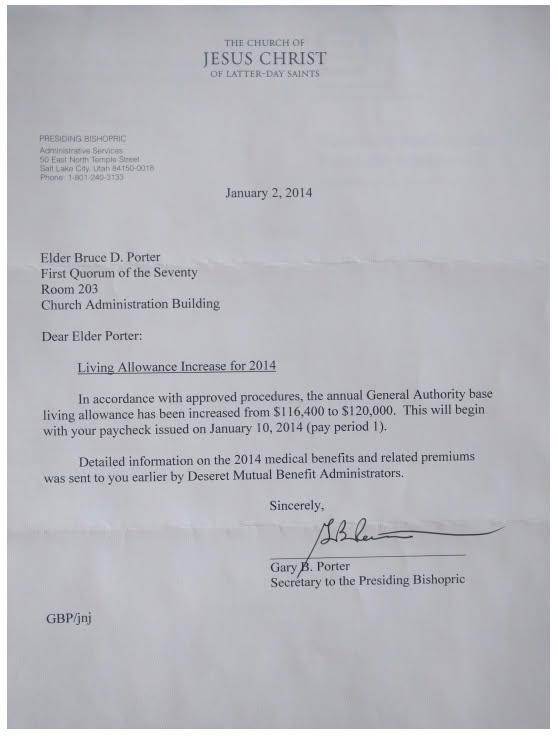
Here is the Eyering paystub along with the memo from the presiding bishopric that was leaked several years ago. Y'all can decide if this is financial compensation. It sure looks like it as it is taxed both federally and by the state of utah except for the "Parsonage." Pyreaux would likely agree it is "financial compensation" as he is the one who stated it is compensation if it is taxed....well looks like it is taxed and the Seventy is lying.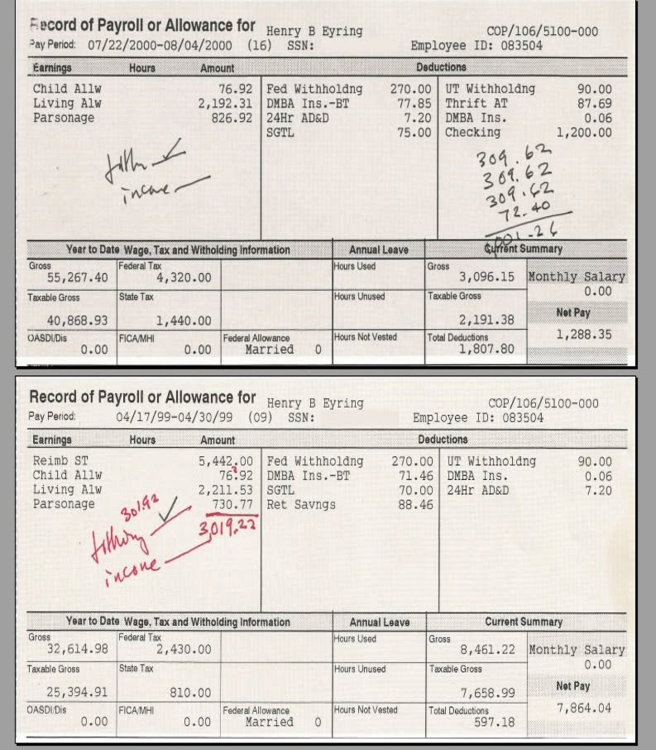
-
SCOTUS Decision: Ban on "Talk" Conversion Therapy is Unconstitutional
smac97 replied to smac97's topic in General Discussions
Neither of us is "trying to legislate anything." Both of us are commentating about the the Kansas legislature and other lawmaking bodies should do in relation to men in women's bathrooms. I appreciate your perspective. For my part, you have failed to make the case for why laws like the one in Kansas are unnecessary, or why they should not be enacted, etc. I am taking the position, which I also think is "extremely practical," which endorses biological sex as a limiting principle as pertaining to men going into women's bathrooms. Reasonable minds can disagree about such things. But it is arguing from the margins, so it amounts to the same thing. Sex-segregated spaces are created and maintained for the benefit of women and girls, or half the population. I think the Kansas legislature passed the law to benefit woman and girls. Sex-segregated spaces impose some difficulties on a statistically small - even tiny - number of men. I think it is reasonable for the Kansas legislature to do what it did. I'm okay with that. You haven't convinced me of the merits of your position either. Respectfully, I think this needs to be demonstrated, rather than assumed/demonstrated. From one of my posts on Friday: IIRC, you did not address these, and are now simply declaring that they don't exist at all ("doesn't hurt anyone"). I don't think you are situated to speak on behalf of women and girls. I think many, likely most, women and girls have reasonable expectations of privacy and dignity, and to not to share bathrooms, locker rooms, changing areas with the opposite sex. You decline to recognize violations of privacy and dignity as "harm." I think many, likely most, women and girls view males, as a group, as committing the large majority of sexual assaults, voyeurism, and exhibitionism, such that prophylactic measures - such as sex-segregated facilities - reduce opportunities for male-pattern offenses in spaces where women and girls are vulnerable. You decline to recognize the elimination of sex-segregated spaces as "harm." Women’s shelters, prisons, sports teams, and certain schools or organizations were created to serve females as a class. Allowing males to enter on the basis of identity undermines the purpose of those institutions and the ability of women to associate on the basis of sex. You are declining to recognize this as "harm." Loss of sex-separated spaces can increase anxiety, reduce participation (especially in sport and school activities), and signal that female boundaries are secondary to male identity claims. You are declining to recognize this as "harm." I think that description is incomplete. The primary practical function of a restroom is, of course, to allow people to relieve themselves. But the reason public restrooms in this country (and most of the world) have long been separated by sex is not that society was indifferent to who else was present. Sex separation exists precisely because these are spaces that involve partial undress, vulnerability, and physical proximity. The design choice reflects a judgment that privacy, safety, and comfort interests differ systematically by sex, especially for women and girls. If the only purpose were “a place to use the bathroom,” unisex multi-stall facilities would have been the historical default. They were not, and still are not. Single-sex multi-occupancy restrooms became the norm because people, particularly women, valued not having to share that intimate setting with the opposite sex. The “guarantee” of sex separation is not an accidental side effect; it is the point of the architectural and legal convention. You can argue that the privacy and safety interests are overstated, or that self-identification should now override them. Those are substantive claims worth debating. But it is not accurate to treat sex separation as irrelevant to the purpose of the facility. The purpose has always included both the functional need to relieve oneself and the conditions under which that occurs. The argument treats the only legally relevant question as discrete misconduct (harassment, voyeurism, assault). I think that is too narrow. Sex-separated restrooms exist because the setting itself involves undress, vulnerability, and enforced proximity. The boundary is not solely a back-end enforcement tool against bad actors. Instead, it is a front-end design choice that reduces the occasions on which those risks and privacy costs arise. We do not wait for a documented assault in every locker room before maintaining sex separation, any more than we wait for a documented assault before maintaining sex separation in shelters, prisons, or changing areas. The category is the point of the rule, not an irrelevant side issue. “Discomfort is not harm” understates what is at stake for many women and girls. The interest being protected includes the ability to use a multi-occupancy facility without the presence of men while in a state of partial undress. That interest has long been treated as legitimate in law and social practice. Calling it mere “discomfort” reframes a privacy and safety claim as mere subjective sensitivity so it can be dismissed. On evidence: the claim that there is “no actual problem” is contested. There are documented incidents of males accessing female facilities and committing offenses. I provided a list of reported instances, which I think you have not addressed at all: Judge Rules Loudoun County Teen Sexually Assaulted Female Student in Girls' Bathroom (2021) 6 Men Who Disguised Themselves as Women to Access Bathrooms (from 2016) Transgender woman arrested for voyeurism at Ammon Target (2016) Man Dressed as Woman Arrested for Spying Into Mall Bathroom Stall, Police Say (2015) Cross-Dressing Man Secretly Taped Women at Macy’s (2013) Sex offender posed as woman, went into women's locker room Man Undresses In Front Of Children In Walmart Restroom (2010) Purdue police investigate report of man taking photographs in women's restroom (2008) Sexual predator jailed after claiming to be ‘transgender’ to assault women in shelter (2014 in Canada) ‘Transgender’ man may continue using girls’ locker room, says college (2012) I don't know how you can reconcile these incidents with your "no harm" argument. There are also surveys and testimony from women and girls about reduced willingness to use facilities, sports changes, and shelters when men are present. One can debate the frequency and weight of those incidents. One cannot accurately say the policy concern is invented out of thin air or that the only permissible legal response is after-the-fact prosecution of discrete crimes. The framing “a transgender woman is simply going in to pee” assumes the conclusion that sex is irrelevant and only current identity and immediate intent matter. That is the policy dispute, not a foregone conclusion. A sex-based rule says biological sex remains the relevant criterion for these spaces precisely because the physical and privacy stakes track sex, not self-description. You can reject that criterion; you cannot treat its rejection as self-evident while demanding that the other side alone supply overwhelming proof. As we are concluding the discussion, I won't say anything else except to thank you for sharing your thoughts and perspective. Thanks, -Smac