mfbukowski Posted September 14, 2012 Posted September 14, 2012 My question was: Is it possible for a human to be sinless? I don't think you answered it directly, but the bolded part of your quote seems to imply no, since Christ's sacrifice is necessary for perfection and Christ's sacrifice was to redeem us from sin (and death).The entire purpose of life is to experience sin. That is precisely how we learn its consequencesWe come to earth to live by faith and to make mistakes which we could not make in pre-earth life, because we were already experiencing what Catholics would call the "Beatific Vision"- and we could not sin directly in front of GodBut on the other hand, our knowledge and hence our ability to merit rewards were limited. If God himself is looking over your shoulder- visibly and literally- who would sin? No one!That is why we see the Fall as a positive thing-2nd Nephi 2: 25 Adam fell that men might be; and men care, that they might have joy. 26 And the Messiah cometh in the fulness of time, that he may redeem the children of men from the fall. And because that they are redeemed from the fall they have become free forever, knowing good from evil; to act for themselves and not to be acted upon, save it be by the punishment of the law at the great and last day, according to the commandments which God hath given. 27 Wherefore, men are free according to the flesh; and call things are given them which are expedient unto man. And they are free to choose liberty and eternal life, through the great Mediator of all men, or to choose captivity and death, according to the captivity and power of the devil; for he seeketh that all men might be miserable like unto himself.And that fits with the problem of Mary's Fiat. If she was conceived without sin, she had no choice to sin or not sin, and so could not merit anything on her own. The decision was made that she would be sinless from the beginning, she had no freedom.It's the old free will vs determinism thing. If you are predestined you are not free to choose and you receive no merit.That's why people don't get the death penalty for killing someone accidentally. They did not choose to kill the person- they deserve neither praise nor blame because they were not accountable.
3DOP Posted September 14, 2012 Posted September 14, 2012 She is also called a "co-redemptrix" meaning that, in a sense I do not understand, she is also viewed as being partially a redeemer figure - I am sure I will get set straight on that one.To me this just proves the human need to have both male and female god figures- and gosh I wonder why that happens? Could it be that we are programmed to seek out the truth that God is a Father and that we also have a Mother?Stay tuned to the apostasy thread. I'm planning to go down that road (Mary as a redeemer figure) as time allows. Tomorrow I hope.
3DOP Posted September 14, 2012 Posted September 14, 2012 (edited) The entire purpose of life is to experience sin. That is precisely how we learn its consequencesWe come to earth to live by faith and to make mistakes which we could not make in pre-earth life, because we were already experiencing what Catholics would call the "Beatific Vision"- and we could not sin directly in front of GodBut on the other hand, our knowledge and hence our ability to merit rewards were limited. If God himself is looking over your shoulder- visibly and literally- who would sin? No one!That is why we see the Fall as a positive thing-2nd Nephi 2:And that fits with the problem of Mary's Fiat. If she was conceived without sin, she had no choice to sin or not sin, and so could not merit anything on her own. The decision was made that she would be sinless from the beginning, she had no freedom.It's the old free will vs determinism thing. If you are predestined you are not free to choose and you receive no merit.That's why people don't get the death penalty for killing someone accidentally. They did not choose to kill the person- they deserve neither praise nor blame because they were not accountable.I don't guess we think of free will in the same way. Just because Mary has enough faith and grace to find sin repulsive, does not mean that she lacks freedom. One might as easily argue that those who find sin attractive lack freedom too. According to the Gospel, true freedom means that one has the ability to always choose the good. Those who sin are slaves of sin...(St. Paul to the Romans), are not free in the sense you are speaking of either. Those who are servants of God enjoy the only freedom worth havIng. Is God not free because He has no inclination to do wrong? If it is a good definition of freedom that requires that the individual must have an inclination to do creepy or immoral options, it is an oppressive and I would venture to say, false freedom. Edited September 14, 2012 by 3DOP
zerinus Posted September 14, 2012 Posted September 14, 2012 That is correct. The difference is that the LDS believe that everyone is concieved without original sin whereas the Catholic belief is that *only* Mary (and Jesus but He's in His own category) was concieved without sin whereas all other mortals were concieved in original sin. Thus the argument that Mary is place too far up the holy pedastal in Roman Catholic theology.That is not true. It is not Mormon doctrine that we are not conceived with original sin. We just don't accept that we become guilty because of the original sin.
3DOP Posted September 14, 2012 Posted September 14, 2012 (edited) I am curious, do Catholics believe in hallowed ground for burial? My memory says that suicides are not allowed to be buried there, but I don't know the Catholic teaching about unbaptized babies.My husband's greatgrandmother joined the Church in part because of teaching on infants dying going to the CK. When a baby of theirs died unbaptized, they had to pay a minister (Protestant, not Catholic) to smuggle him into a hallowed cemetary for burial at night (so no one would see). When the missionaries came to the door, their opening line was "do you believe in infant baptism?", at which time she went to slam the door in their faces, but he yelled out as she was doing it "Neither do we!" and the rest is history.So far I can only find a claim that Lutherans believe unbaptized babies go to hell. OTOH, I found a Lutheran who said this was wrong.I found one Calvinist site that claims all infants who die must be of the elect so they will of course go to heaven, but I knew another Calvinist who said it was unknown, but a possibility that they went to hell.Consecrated ground is more difficult in an era when the churches lack their own graveyards. If anything, it increases the value of it in a laissez faire, economic sort of way. Of course we believe in and would wish to be buried in hallowed ground among friends. But theologically it can not be very important. What if you get blown up on a battle field and your parts are never even reassembled for burial? Are you in trouble for that? Of course not. However, ordinarily those who have died without having given indication of repentance for gravely scandalous behavior or who had never received the first Sacrament would be denied the privilege of occupying consecrated ground. Self-murder is taken pretty seriously. But to be buried in consecrated or unconsecrated ground does not determine the destination of the soul.The Cure of Ars once observed a grieving woman in his church who he did not know. God showed him that she was recently widowed, her faithless and mocking husband having jumped from a bridge, had deliberately ended his life. I say he was faithless not because of the act, but because he had often mocked his wife's faith and proclaimed himself to be an atheist. But God revealed to the Cure an interesting secret about the dead husband. It seems that his wife, like most of us Catholics, adorned the house with paintings and images depicting the life and death of Christ, and the Blessed Virgin His mother. In a moment of "weakness', unbeknownst to his wife or anyone not in heaven, this man had once paused before an image of the Virgin, and made a short prayer, a Hail Mary if I recollect, just in case.St Teresa of Avila appeared to one of her nuns after her death to say that although she was in heaven, she wished she still lived on earth, where one may merit graces for oneself and others, if only she could say one more Hail Mary. How many zillions of Hail Marys had she said anyway? And yet that was the message she brought to earth. It corresponds with the life of this poor soul, the suicide "atheist", who rather than saying zillions of them, said but one...in his entire life. The Cure informed the widow that he knew of all the particulars that she did, and that furthermore he had some news for her. Because of this one moment of the shallowest faith, God granted the gift of final perseverance to this suicide. The Cure was able to say to the grieving woman that between the time he leaped and the time he died, that God gave him the grace of perfect contrition, that he died in the friendship of God, and that though he needed her prayers because he was in purgatory, that he was saved.One may hope that any suicide concludes in similar fashion. But the best that one can say about their final decision, is that they were crazy and therefore inculpable. It is no small sin to take your own life. It is only a little less grievous than taking someone else's. I do not think it would have been appropriate to bury the widow's husband in ground that is reserved for those who die in the visible and public unity of the Holy Catholic Church. If hallowed ground is to be given over to suicides, why not homicides? Why not everybody however badly they died, and so then what meaning is there to it?It seems incredible to me that a Protestant minister would taken upon himself a task of satisfying some bizarre wish for a Catholic to violate their own religion by secretly putting someone who never even received baptism into ground reserved for those who died with the Sacraments, in peace and friendship with their faith. I don't know what is more strange, a faithful Catholic wanting to violate his own church's burial practise because of some misplaced value attached to the burial site, or the willingness of a Protestant minster to satisfy the fetish. Both seem equally weird. In Catholic teaching, the eternal destiny of the soul is not determined by anything that happens to the corpse after it is separated from the spirit.3DOP Edited September 14, 2012 by 3DOP
3DOP Posted September 14, 2012 Posted September 14, 2012 (edited) That is not true. It is not Mormon doctrine that we are not conceived with original sin. We just don't accept that we become guilty because of the original sin.This makes sense to me. My talk of immaculately conceived Mormons was at first a jest, but I also thought it was an ironic truth based on many discussions. Now I realize that it was a jest only. Edited September 14, 2012 by 3DOP
mfbukowski Posted September 14, 2012 Posted September 14, 2012 Stay tuned to the apostasy thread. I'm planning to go down that road (Mary as a redeemer figure) as time allows. Tomorrow I hope.I'm not even on it. Honestly I am not that interested in knowing about it, I was just admitting that I didn't understand it. I got tired of debating the apostasy at CAF and have not bothered with it since.As you probably realize, you either think it happened or you don't. All the hot air in the world won't change a single person's mind!
mfbukowski Posted September 14, 2012 Posted September 14, 2012 This makes sense to me. My talk of immaculately conceived Mormons was at first a jest, but I also thought it was an ironic truth based on many discussions. Now I realize that it was a jest only.We inherit the effects of his sin- ie: death, earning our living by the sweat of our brow, etc etc, but we do not inherit culpability for his sin.
Ahab Posted September 14, 2012 Posted September 14, 2012 (edited) That is not true. It is not Mormon doctrine that we are not conceived with original sin. We just don't accept that we become guilty because of the original sin.Actually, it is our doctrine that we are not conceived with original sin, although we all suffer the effects of the fall of Adam and Eve, and although we are all born into a sinful world here. The atonement paid the price for Adam and Eve's transgression, as a free gift to all of us, and now each of us is going to be judged according to our own works, retroactive all the way back to Adam and Eve.No sin of Adam and Eve is on our shoulders. Our nature is not all that it used to be, because of the "fall", but that doesn't mean we are conceived with Adam and Eve's sin upon us, or that we are charged with a sin from the first moment of our birth on this Earth even though we didn't commit any sin, ourselves. That original sin is Adam's and Eve's to deal with, and through the atonement Adam and Eve can be, if they haven't already been, forgiven for all of their sins, just as we can be, starting with the first sin we commit. Edited September 14, 2012 by Ahab
Ahab Posted September 14, 2012 Posted September 14, 2012 This makes sense to me. My talk of immaculately conceived Mormons was at first a jest, but I also thought it was an ironic truth based on many discussions. Now I realize that it was a jest only.A baby is born without any sin of his own, regardless of any sin that baby's parents may have committed. That's true for all of us, as well as Jesus, and if that's what you mean by an "immaculate" conception, we're all born that way. Not just Jesus. All of us.Our first sin is a result of something we do which we know is a sin, and if we don't know God's law on an issue, we are innocent by virtue of the fact that we didn't know that was a sin. To sin you have to know God's will and then refuse to follow it, anyway. Nobody sins in ignorance, because those things don't count as a sin.
Calm Posted September 14, 2012 Posted September 14, 2012 Stay tuned to the apostasy thread. I'm planning to go down that road.....You startled me so much I stopped reading, boy did that give me the wrong impression there for a minute. 1
Ahab Posted September 15, 2012 Posted September 15, 2012 You startled me so much I stopped reading, boy did that give me the wrong impression there for a minute.You're being funny, again, aren't you.I think I know enough about 3DOP to know he wouldn't do that, intentionally.
Calm Posted September 15, 2012 Posted September 15, 2012 (edited) It seems incredible to me that a Protestant minister would taken upon himself a task of satisfying some bizarre wish for a Catholic to violate their own religion by secretly putting someone who never even received baptism into ground reserved for those who died with the Sacraments, in peace and friendship with their faith. I don't know what is more strange, a faithful Catholic wanting to violate his own church's burial practise because of some misplaced value attached to the burial site, or the willingness of a Protestant minster to satisfy the fetish. Both seem equally weird. In Catholic teaching, the eternal destiny of the soul is not determined by anything that happens to the corpse after it is separated from the spirit.3DOPI don't think they were Catholic, but Protestants, probably Anglican in fact. They were English, in Australia by way of Burma. However, the minister who did finally bury their son was not their own pastor. He refused to do so. I know they asked a couple of other pastors to bury him and were refused before they found the one who would for a bribe. Don't know the sect of the one who agree at last. Might not share it anyway because just because there was one minister in that faith that was willing to compromise that principle for money (instead of for compassion), doesn't mean it was or is a common trait and I wouldn't want to give that impression. Sorry I gave the impression any Catholics were involved, didn't mean to, just that the story brought up my curiosity about how a Catholic might have responded. That would have been back in the 1930s probably, they were an educated family, the dad was a professor but he had come from a lower class family that had managed to educate him because he had a weak heart IIRC and couldn't work hard labour like the rest of his brothers.Thanks for the info to the rest, very interesting and uplifting. Edited September 15, 2012 by calmoriah
Calm Posted September 15, 2012 Posted September 15, 2012 You're being funny, again, aren't you.I think I know enough about 3DOP to know he wouldn't do that, intentionally.Just teasing him, we are good friends.
Darren10 Posted September 15, 2012 Posted September 15, 2012 (edited) That is not true. It is not Mormon doctrine that we are not conceived with original sin. We just don't accept that we become guilty because of the original sin.Thank you. That is much more accurate. However, since we were talking about "sin" I assumed the focus was on "guilt". But, like I said, your post does much better to show what the LDS believe regarding man's fallen state. Edited September 15, 2012 by Darren10
zerinus Posted September 15, 2012 Posted September 15, 2012 Consecrated ground is more difficult in an era when the churches lack their own graveyards. If anything, it increases the value of it in a laissez faire, economic sort of way. Of course we believe in and would wish to be buried in hallowed ground among friends. But theologically it can not be very important. What if you get blown up on a battle field and your parts are never even reassembled for burial? Are you in trouble for that? Of course not. However, ordinarily those who have died without having given indication of repentance for gravely scandalous behavior or who had never received the first Sacrament would be denied the privilege of occupying consecrated ground. Self-murder is taken pretty seriously. But to be buried in consecrated or unconsecrated ground does not determine the destination of the soul.The Cure of Ars once observed a grieving woman in his church who he did not know. God showed him that she was recently widowed, her faithless and mocking husband having jumped from a bridge, had deliberately ended his life. I say he was faithless not because of the act, but because he had often mocked his wife's faith and proclaimed himself to be an atheist. But God revealed to the Cure an interesting secret about the dead husband. It seems that his wife, like most of us Catholics, adorned the house with paintings and images depicting the life and death of Christ, and the Blessed Virgin His mother. In a moment of "weakness', unbeknownst to his wife or anyone not in heaven, this man had once paused before an image of the Virgin, and made a short prayer, a Hail Mary if I recollect, just in case.St Teresa of Avila appeared to one of her nuns after her death to say that although she was in heaven, she wished she still lived on earth, where one may merit graces for oneself and others, if only she could say one more Hail Mary. How many zillions of Hail Marys had she said anyway? And yet that was the message she brought to earth. It corresponds with the life of this poor soul, the suicide "atheist", who rather than saying zillions of them, said but one...in his entire life. The Cure informed the widow that he knew of all the particulars that she did, and that furthermore he had some news for her. Because of this one moment of the shallowest faith, God granted the gift of final perseverance to this suicide. The Cure was able to say to the grieving woman that between the time he leaped and the time he died, that God gave him the grace of perfect contrition, that he died in the friendship of God, and that though he needed her prayers because he was in purgatory, that he was saved.One may hope that any suicide concludes in similar fashion. But the best that one can say about their final decision, is that they were crazy and therefore inculpable. It is no small sin to take your own life. It is only a little less grievous than taking someone else's. I do not think it would have been appropriate to bury the widow's husband in ground that is reserved for those who die in the visible and public unity of the Holy Catholic Church. If hallowed ground is to be given over to suicides, why not homicides? Why not everybody however badly they died, and so then what meaning is there to it?It seems incredible to me that a Protestant minister would taken upon himself a task of satisfying some bizarre wish for a Catholic to violate their own religion by secretly putting someone who never even received baptism into ground reserved for those who died with the Sacraments, in peace and friendship with their faith. I don't know what is more strange, a faithful Catholic wanting to violate his own church's burial practise because of some misplaced value attached to the burial site, or the willingness of a Protestant minster to satisfy the fetish. Both seem equally weird. In Catholic teaching, the eternal destiny of the soul is not determined by anything that happens to the corpse after it is separated from the spirit.3DOPthat was a long winded way of not answering a simple question!
zerinus Posted September 15, 2012 Posted September 15, 2012 This makes sense to me. My talk of immaculately conceived Mormons was at first a jest, but I also thought it was an ironic truth based on many discussions. Now I realize that it was a jest only.It often happens that Mormons don't understand their own doctrine correctly, and even less other people's!
Calm Posted September 15, 2012 Posted September 15, 2012 that was a long winded way of not answering a simple question! It was clear to me.
Brother Ray Posted September 15, 2012 Posted September 15, 2012 I always thought the simple answer was Infants cannot sin,so the have no need for baptism.
mfbukowski Posted September 15, 2012 Posted September 15, 2012 I always thought the simple answer was Infants cannot sin,so the have no need for baptism.See now there you go getting it all complicated and all!
Brother Ray Posted September 15, 2012 Posted September 15, 2012 Forgot to add this to my last post. because we are judged for our own sins, and not for Adams transgressions..Never thought of it before. I guess that means we, as Mormons, do not believe in original sin.
zerinus Posted September 15, 2012 Posted September 15, 2012 (edited) Actually, it is our doctrine that we are not conceived with original sin, although we all suffer the effects of the fall of Adam and Eve, and although we are all born into a sinful world here. The atonement paid the price for Adam and Eve's transgression, as a free gift to all of us, and now each of us is going to be judged according to our own works, retroactive all the way back to Adam and Eve.No sin of Adam and Eve is on our shoulders. Our nature is not all that it used to be, because of the "fall", but that doesn't mean we are conceived with Adam and Eve's sin upon us, or that we are charged with a sin from the first moment of our birth on this Earth even though we didn't commit any sin, ourselves. That original sin is Adam's and Eve's to deal with, and through the atonement Adam and Eve can be, if they haven't already been, forgiven for all of their sins, just as we can be, starting with the first sin we commit.Are you trying to steal my patents or something? Can show me where I have argued otherwise than what you stated above? But to take it one stage further, we are indeed born with with the effects of the original sin sown in our flesh. We have become "carnal, sensual, and devilish" as a result of the original sin, and "inasmuch as they are conceived in sin shall conceive in their hearts ...". The "natural man is an enemy to God, and has been from the fall of Adam ...". So we are indeed born with the original sin, or effects of the original sin. It is not a matter of just being born into a sinful environment, as you are implying. The seeds of sin is sown in our flesh from birth, as a result of the original sin. We just do not become guilty because of the original sin (contrary to Catholic doctrine), but only when we start sinning ourselves. And "God having redeemed man from the fall, men became again, in their infant state, innocent before God" (D&C 93:38). But once they reach the age of accountability, they begin to become culpable for their previous sins as well as all future sins. Edited September 15, 2012 by zerinus
zerinus Posted September 15, 2012 Posted September 15, 2012 I always thought the simple answer was Infants cannot sin,so the have no need for baptism.Their answer is that infants "sin in Adam," meaning that they are guilty because of the sin of Adam, even though they haven't done anything wrong themselves.
zerinus Posted September 15, 2012 Posted September 15, 2012 Forgot to add this to my last post. because we are judged for our own sins, and not for Adams transgressions..Never thought of it before. I guess that means we, as Mormons, do not believe in original sin.We do, but not as the Catholics do. See my previous posts.
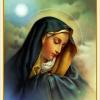
3DOP Posted September 15, 2012 Posted September 15, 2012 (edited) I'm not even on it. Honestly I am not that interested in knowing about it, I was just admitting that I didn't understand it. I got tired of debating the apostasy at CAF and have not bothered with it since.As you probably realize, you either think it happened or you don't. All the hot air in the world won't change a single person's mind!You are about the only LDS participant who is left, and now you abandon me? Alas, I shall have to carry on alone! If nothing else, the thread demonstrates how difficult and time consuming it is to effectively and exhaustively answer skeptical speculations that detractors to our faiths often raise. If we answer with a simple affirmative or negative, we are misunderstood. If we answer as I have done, we are boring to people.So I am aware that such "hot air" can't radically change anyone's mind. My aims are as usual, quite modest, at least to my way of thinking. I am not proposing that we are NOT apostate. I am only proposing that the evidences for apostasy given by Yep should be seen as debatable by reasonable minds on both sides. Tomorrow is another great feast in our Lady's honour, the Octave of Her Holy Name, the Feast of Her Seven Sorrows, and on Saturday to boot. I can think of no other day that could offer better hopes or heavenly helps for inaugurating an investigation into one of the reasons why Catholics think so highly of the Blessed Virgin Mary, even having the audacity, if you will, to proclaim her co-redemptrix, as you mentioned. As for any efforts I am able to make on the morrow along those lines, I suppose I would be greatly rewarded if only to discover some day that like the suicide I described earlier on this thread, one Mormon without my knowing it, was to recite one Hail Mary..."just in case."3DOP Edited September 15, 2012 by 3DOP

Recommended Posts