All Activity
- Past hour
-
The song we sung at my Firmung The movie with Sean Connery as a Monk The Chinese Jesus An orthodox video
-
I also have this... its about Jesus in China.

-
12.09. as in 12th of September... you Americans have this weird attitude of writing month before day...
-
Thank you for the warm welcome back. I do not remember my old username but that may have been it. I do not remember much of said discussion but hope it stayed constructive. Anyway I would like to stay on topic and yes please do create a thread/topic of its own so that I do not hijack this one. I have a fiancee and will mary her on the 12.09. "unofficially" and my mormon friends are all invited. The missionaries on the phone were overjoyed and gratulated me. I am blessed but times are still hard... and I a child born on christmas and with some curly red hair (like mohammed)... I am on a mission to unite every one of the 8 or so christian churches of Winterthur. Jesus would want 1 church for all of Christendom. And it pained me greatly that even catholicism had 3 schisms.
-
Dario, I have wondered how you were doing. I assume you are the same as the poster Dario_M. If you want to discuss them in the main forum, I or someone else can start a thread for you. Otherwise, welcome back!
-
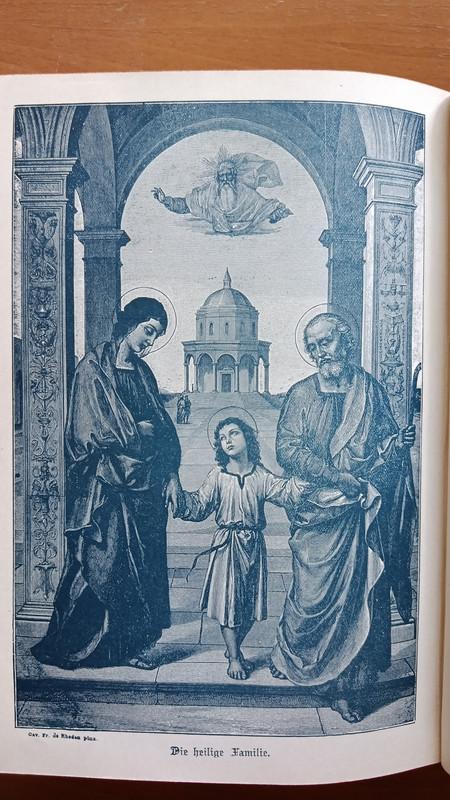
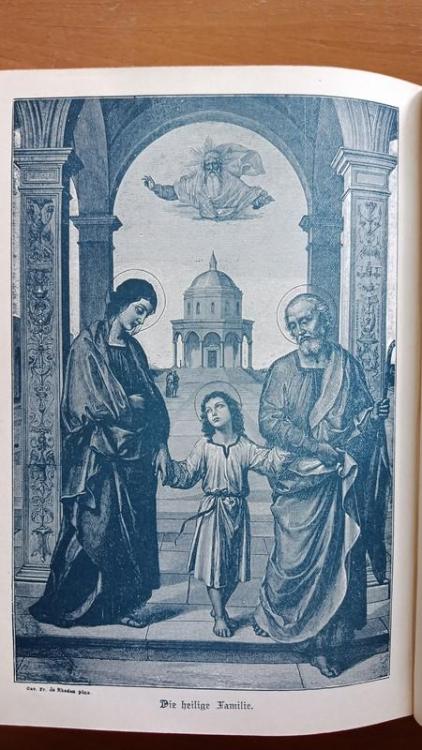
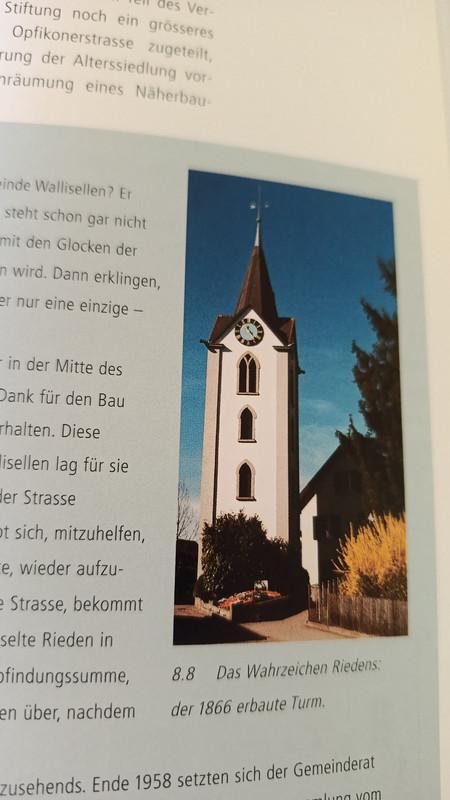
Hello, my name is my Username and I come in peace. I am a Roman Catholic who has the joy to visit Mormon gathering center in Switzerland Winterthur and call many Mormons my friends. I even gave testimony and was allowed to do prayer once (they forgot that I am not allowed to apparently but I made Jesus proud hopefully). Your food is delicious btw but I really come for the community. The reason I write here is that for some reason my browser or Windows 11 has a problem creating new threads. This is the most fitting one I found for my content that I want to share with you. A moderator may move it. Now I know the Roman Catholic church does not consider you christian and... its debatable. I see you as fantastic people who do their best to believe in Jesus so it is a pleasure knowing you. I will spare you my problems with your version of Christianity. Tbh I posted them in the past with another account that is deleted. The reason I post is I made pictures of old bible and old church and of the Catholic Katechismus (probably spelled wrong... I am german, it is our guidebook for the faith.) I believe that the more we share about our believes the better we can understand each other and overcome our differences. So I post these pictures not to shatter your faith or to convert you, but to strenghten your relationship with Jesus. The text will be in german but you can find many ways to translate. Sadly its photos not text so it would take some effort. Pictures are either from Wallisellen history book or Bible or old Bible or Katechismus... Didn't sort them so... Anyway here goes:

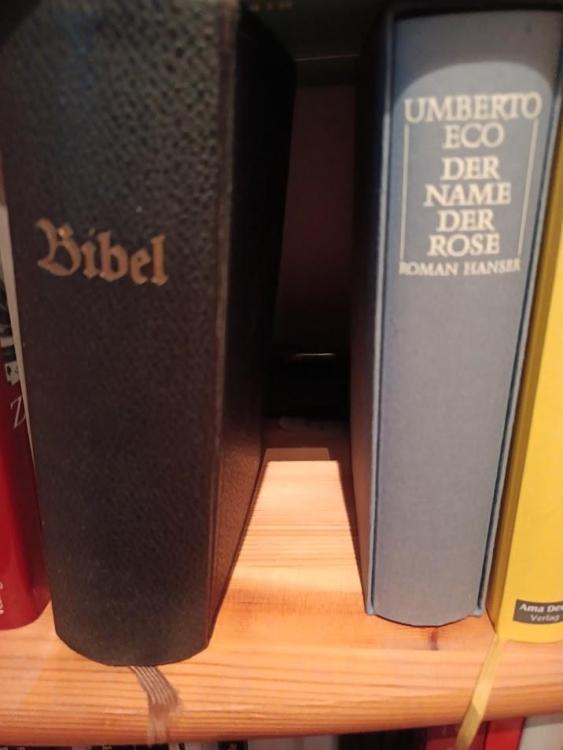


.thumb.jpg.d864799fd99cb7d8f5e8e87e4b04ce29.jpg)
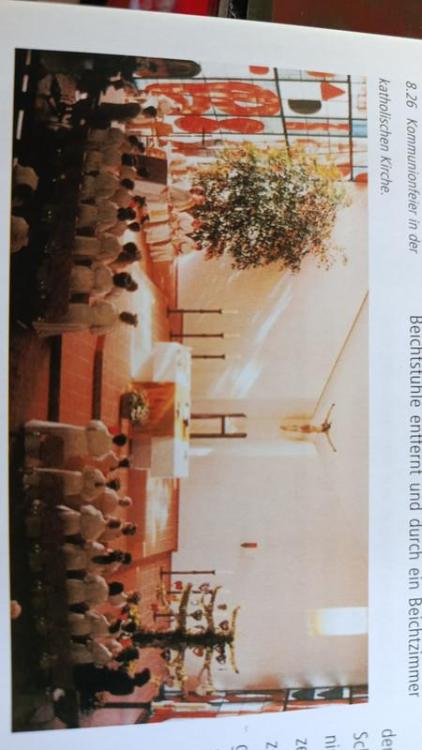

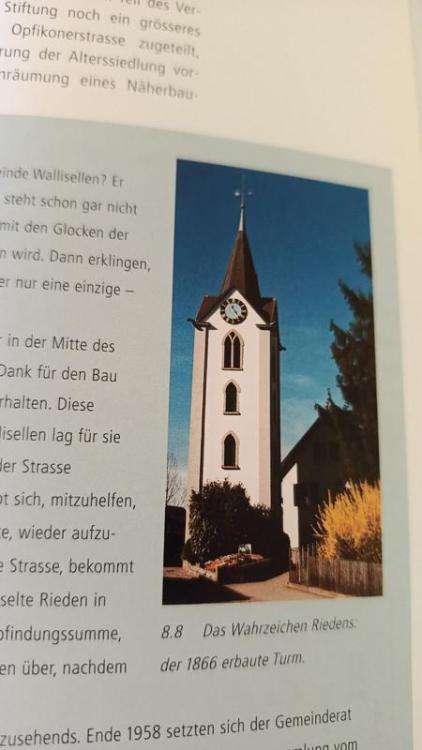

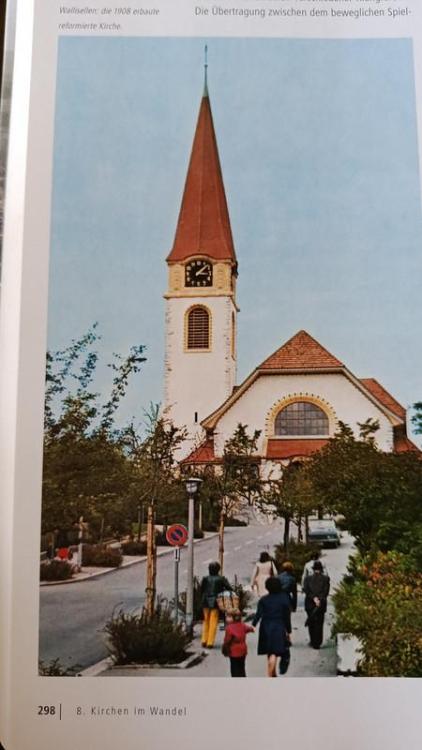


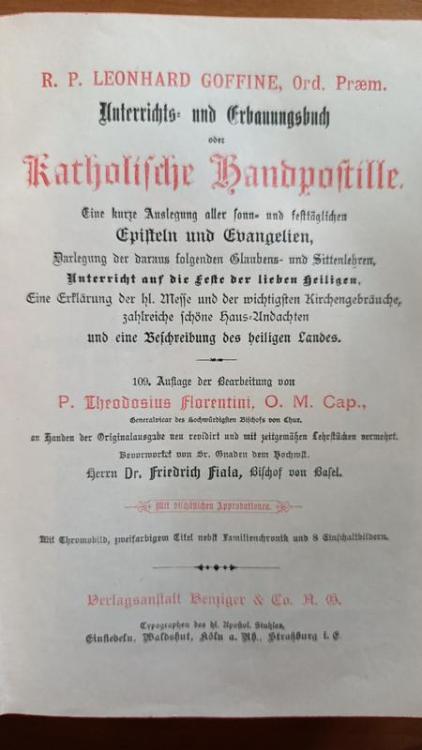

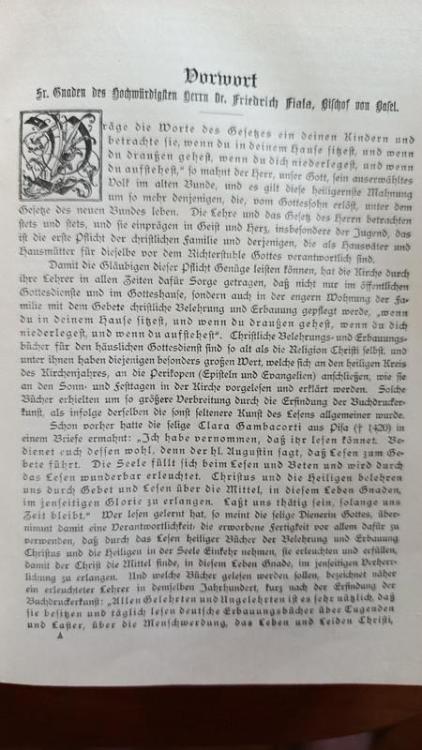


.thumb.jpg.69f5b7feff03ebb478f6b940343ab8d2.jpg)

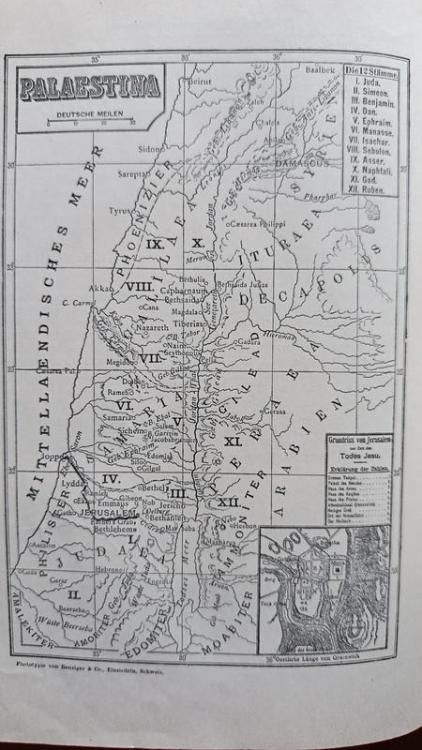
- Today
-

SCOTUS Decision: Ban on "Talk" Conversion Therapy is Unconstitutional
Calm replied to smac97's topic in General Discussions
Someone needs to show me solid documentation, not just anecdotes or worse, speculation that I will not only be safer, but feel safer when I see this man come into a restroom I am currently using, because I know how I will react when I see him walk in and am pretty confident how the vast majority of women will react as well (both in negative ‘what the hell is this guy doing in the restroom’ and positive ‘wow, he is gorgeous’ versions, which may happen at the same time). Because on the level I am interacting with him, he is a man no matter what his biology is. I will only be reacting to him as a man as I won’t have the time or inclination to have a discussion with him about his chromosomes when my purpose is to become more physically comfortable and then clean up and then leave the premises as fast as possible (the hard surfaces of a bathroom create a very uncomfortable environment for me, I don’t like even being in my home bathrooms for the same reasons). Now if I was participating in a discussion about the ideology, biology, politics or something else around transitioning, I likely would use “them” and “they” and “biological female” for accuracy to describe him, but during any casual interaction and perhaps brief verbal conversation, in my head and gut I am going straight to “him” and “man” without a second thought. And it is a guaranteed fact that I would either walk out feeling rather offended and fearful because this guy thought he had a right to ignore the social rules and intrude on my privacy and how screwed up he must be to do that, increasing my sense of vulnerability and exposure by his unjustified use of my space (because that’s how I have always felt when it happens, which it has only once or twice in my life without an explanation of intense need and an apology) or I would be walking out feeling very awkward and embarrassed that I had forced them to share with me their medical and social background I did not need to know out of their concern for my few minutes at most discomfort. And then I would be left uncomfortably wondering how often this was going to be happening in the future, someone who is a man in all ways that they interact with me being forced by law to awkwardly and unfortunately share secluded, but still public space with me based on a law that ignored practical realities…and knowing me, my use of public restrooms would drop way low not because I felt unsafe with them, but because I wouldn’t want them to feel unsafe with me and I know I am too old and too programmed at this point not to react with fear on my face and body language if I see someone who is obviously a man (as far as I can tell) walk into the restroom for some reason without a custodian uniform on. Seriously, looking at pictures like this I find it so hard to believe that biologically this person is female. My gut would never be convinced, my emotional reaction to them will always be “he’s male”.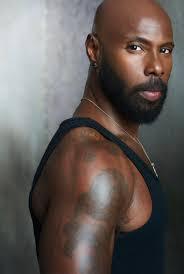
-

SCOTUS Decision: Ban on "Talk" Conversion Therapy is Unconstitutional
smac97 replied to smac97's topic in General Discussions
I'm not sure what Roger's point here is. What does "conspicuously out of place" mean? And isn't a big part of the problem that this hypothetical fellow is, under Roger's policy proposal (anyone uses any bathroom), legally entitled to enter into the women's bathroom. And because he is there legally, being seemingly "out of place" and "intense{ly} scrutin{ized}" does has no legal force or effect. The women and girls in the bathroom will just have to lump it. Because hallways are not segregated by sex. Because women and girls are not relieving themselves, or undressing themselves, or otherwise having any sort of expectation of privacy from males in a hallway. These seem axiomatic. Right. But under your proposal, they can't do anything about it. They can't tell him to leave. They can't call the police and report him. Instead, they must surrender the space which they were told would be segregated by sex. Men have attacked women in restrooms in the past not because they can walk in unquestioned by others when there are multiple women using it, but because they typically wait until there is one woman alone within. Thus any law barring any biological male from entering a women’s restroom will be highly unlikely to affect these types of attacks, imo. I think they would have some real effect. Under Roger's proposal, if a lone woman enters a bathroom and finds a man there, there is nothing she can do about it. She must do her business with him a few feet away from her. In contrast, under a sex-segregated policy, if a lone women enters a bathroom, she can immediately demand that he leave, and/or call the police, and/or scream, and/or immediately take defensive measures because his mere presence in the bathroom is a violation of the law. She does not need to wait until he manifests ill intent. Thanks, -Smac -
 StephanDarioAmmann joined the community
 -
SCOTUS Decision: Ban on "Talk" Conversion Therapy is Unconstitutional
Calm replied to smac97's topic in General Discussions
Men have attacked women in restrooms in the past not because they can walk in unquestioned by others when there are multiple women using it, but because they typically wait until there is one woman alone within. Thus any law barring any biological male from entering a women’s restroom will be highly unlikely to affect these types of attacks, imo. -
 If you are interested in such things I recommend the bool The Moral Landscape by Sam Harris. Moral standards can be determined by us based on what maximizes human well being and happiness. Yes it is not the simple and it is complicated. Question? Why should religion be the sole or best option for establishing moral values and rules? What does one do when various religions conflict. Certainly Sharia Law and Western Judeo Christian morals tend to conflict at time. Who's religious morals should prevail? One of the greatest inventions in political government was the US Constitution's 1st amendment. No religion should or could be bale to set up theocracy in the United States, though currently, it seems some Christian Nationalists are working hard at it.
 -
SCOTUS Decision: Ban on "Talk" Conversion Therapy is Unconstitutional
smac97 replied to smac97's topic in General Discussions
A number of these questions seem to be slanted/loaded, and reliant more on strawman caricatures of viewpoints which diverge from yours as compared to straightforward evaluation. Nevertheless, I'll give it a go: Q: What is the purpose of public bathrooms? A: To let people relieve themselves in public with a basic measure of privacy and safety. Where rooms are marked Men and Women, that purpose includes separating the two sexes. The fixtures are not the whole point. The separation is. Q: Which restroom should an individual choose when they need to use one? A: The one that matches their sex. If a single-occupancy, lockable room is available, anyone may use that without asking anyone else to share a communal space with the opposite sex. Q: Do we need a law that mandates which restroom people must use? A: Given recent changes in society, I think we do. We already had a convention, and in many places a rule, that the rooms are sex-separated. When that convention is treated as optional (as your proposal does), institutions need a written line. A law is one way to write it. It is not the only way. The question is still whether sex means something on the door, not whether every detail must be a statute. Q: Do we need a “limiting principle” governing which bathroom people may use? A: Yes, because otherwise there is no mechanism to maintain sex-segregated spaces. Previously, the operative limiting principles were often things less than laws, like social conventions and expectations. But those conventions and expectations are no longer being observed. Lia Thomas was a man competing with women in sports. Lily Tino is a man going into DisneyWorld bathrooms. And these are just high visibility/profile examples. With social conventions/expectations having been substantially disrupted, some jurisdictions feel it appropriate and necessary to resort to other limiting principles, namely, sex-segregated spaces governed by statute, with sex referring to adult human male or adult human female. Discomfort is real, but it is not a principle. Two people can be made uncomfortable by opposite choices. Sex is a public fact. Feeling is not. Q: But isn’t that functionally identical to giving people a license to use any restroom for any reason they want, or for no reason whatsoever? A: Yes. That is the foreseeable and anticipated result of your preferred policy. A sex-based rule, on the other hand, with sex as the limiting principle, is the opposite of an any-room rule. Harassment, voyeurism, and exhibitionism should remain crimes. Those crimes are not the only reason the rooms were separated (an important point I think you have never really addressed). Privacy and the ordinary fact of male-pattern strength and crime rates are reasons even when no one is committing a separate offense. Q: Who gets to decide which bathroom will minimize discomfort to themselves and to those around them? A: No one person “decides” the category. Sex is an observed fact, it is something that can be voted on or "assigned." The person who needs the toilet decides when to go. They do not decide what sex they are for purposes of a shared room. Q: But if we treat people like adults living in a free society and allow them to choose which restroom is most appropriate, won’t that lead to the eradication of sex-distinct restrooms? A: If “most appropriate” means “the one that matches how I see myself,” then sex-distinct rooms become courtesy signs. A courtesy sign is not a sex-distinct space. I would rather keep the rooms honest and add more single-occupancy spaces than keep the labels and empty them of meaning. Q: Do you have any evidence that it won’t? A: The old practice was not “choose the room that minimizes your discomfort.” It was “men here, women there,” with rare exceptions handled quietly and with forbearance. What is new is the claim that a male who identifies as a woman is a woman for the purpose of the room. That claim is, historically, very recent. I do not need to accuse anyone of bigotry to say that. People of good will disagree about what kindness requires. Kindness does not require us to say a male is female. Q: But somebody looking like a woman and feeling like a woman doesn’t override the underlying biology! The women’s restroom is for biological females and the men’s restroom is for biological males! It’s always been that way! A: I agree that feeling and appearance do not change sex (though given the sarcastic tone, I am not sure if you are saying that you think that looking/feeling "like a woman" does "override the underlying biology"). I also agree that no one historically stood at the door with a chromosome test. That is not the same as saying the room was never for females. We enforce many rules by ordinary recognition — adults and children, disabled parking, the men’s door — without labs and medical testing. When recognition and reality come apart, the honest course is to keep the category and handle the hard cases with single-occupancy rooms, not to redefine the category. Q: But those are extreme cases: exceptionally feminine-looking biological males and exceptionally masculine-looking biological females! A: Unusual appearance is a reason for tact. It is not a reason to treat sex as a costume. A feminine male is still male. A masculine female is still female. Policy written for the rare passing case becomes a general ticket for any male who says he belongs. Q: But what about cases where people suspect, or even know, that someone choosing the women’s restroom is biologically male? A: Those cases are the ones the rule is for. Social pressure does not stop everyone. “He used the toilet and left” is not a complete answer to a girl who did not agree to share that room with a male. Vigilance after the fact is not the same as a rule beforehand. A public restroom is not a sanctuary from every discomfort. It is also not a place where females must accept male presence as the price of being in public. Q: But what about locker rooms! And sports! And prisons! And drag shows! A: These are all interrelated concepts and topics of discussion relative to public policy. They all turn on the same question: does sex still name a class, or does "identity" replace it? Bathrooms are the smallest version of that question. Locker rooms add undress. Sports add fairness and safety. Prisons add captivity. It is fair to take them one at a time. It is not fair to say that because they are distinct in some ways, sex therefore suddenly stops mattering in the room with the toilets. As for exposing children to sexualized adult live performances, I can oppose them and still care about who is in a women’s room. Those concerns do not have to be hostility to a person. They can be a defense of a category and spaces that girls and women have been told are theirs. Thanks, -Smac -
 I’d like to summarize my thoughts on the issues we’ve been discussing. I’ll do so in Q&A format: Q: What is the purpose of public bathrooms? A: To provide a place for people to use the toilet and attend to ordinary sanitary needs while they are out in public. Q: Which restroom should an individual choose when they need to use one? A: The one that will minimize discomfort to themselves and to the people around them. Q: Do we need a law that mandates which restroom people must use? A: No. Society got along fine without such laws, and there is nothing happening now that demonstrates such a law is necessary, much less that it would do more good than harm. Q: Do we need a “limiting principle” governing which bathroom people may use? A: Yes. The limiting principle is that people should use the restroom that will minimize discomfort to themselves and to those around them. Q: But isn’t that functionally identical to giving people a license to use any restroom for any reason they want, or for no reason whatsoever? A: No. The ordinary purpose of a bathroom is to walk in, use the toilet, flush, wash your hands, and leave. If somebody is using a bathroom for some other purpose--harassment, loitering, intimidation, voyeurism, exhibitionism, solicitation, etc.--those acts can be, should be, and, where appropriate, already are illegal. The crime isn’t using the “wrong” restroom. The crime is the underlying conduct. Q: Who gets to decide which bathroom will minimize discomfort to themselves and to those around them? A: The person who needs to use the bathroom. Q: But if we treat people like adults living in a free society and allow them to choose which restroom is most appropriate, won’t that lead to the eradication of sex-distinct restrooms? A: No. Q: Do you have any evidence that it won’t? A: Yes. The evidence on this point is overwhelming. As an institution, sex-distinct restrooms in free societies have thrived for generations without laws assigning every person to a restroom according to biological sex. If allowing people to decide which toilet is most appropriate somehow caused the eradication of sex-distinct restrooms, they would have been eradicated long ago. If, despite that long and exceptionally clear history, somebody remains convinced that sex-distinct bathrooms are suddenly in mortal jeopardy without bathroom laws, I can’t help but wonder whether the real problem is them and involves something that rhymes with spigotry. Q: But somebody looking like a woman and feeling like a woman doesn’t override the underlying biology! The women’s restroom is for biological females and the men’s restroom is for biological males! It’s always been that way! A: That is manifestly false as a description of how public restrooms have actually operated. Public restrooms have never had gatekeepers examining chromosomes, gonads, reproductive anatomy, or developmental reproductive pathways before admitting people. In ordinary life, the social convention has overwhelmingly operated through appearance and ordinary social recognition. That is why most strangers would think nothing unusual about seeing biological males such as Valentina Sampaio, Carmen Carrera, Kim Petras, or Geena Rocero enter a women’s restroom, while biological females such as Aydian Dowling, Laith Ashley, Buck Angel, or Schuyler Bailar entering that same restroom would be far more likely to cause confusion or alarm. Q: But those are extreme cases: exceptionally feminine-looking biological males and exceptionally masculine-looking biological females! A: Exactly. They prove the point. Whatever abstract theory someone may now construct about the historical purpose of sex-distinct bathrooms, the system has never functioned by inspecting underlying reproductive biology. In practice, it has functioned through ordinary social perception. Q: But what about cases where people suspect, or even know, that someone choosing the women’s restroom is biologically male? A: First, such cases are rare. The social pressure against entering a restroom where you obviously are not wanted is enormous. Second, someone whose presence appears conspicuously out of place will already attract intense scrutiny. If an obviously male-presenting stranger walks down a hallway, nobody thinks much of it. If he walks into the women’s restroom, people immediately go on high alert. That makes the women’s restroom an extraordinarily poor place for a would-be criminal to operate unnoticed. If somebody behaves suspiciously, take whatever reasonable precautions are appropriate. But if somebody walks in, uses the toilet, washes their hands, and leaves, mind your own business. A public restroom is not a sanctuary in which you are guaranteed never to encounter anyone who makes you uncomfortable or whom you disapprove of. It is a place containing toilets. Go in, deal with the offensive sights, sounds, and smells that inevitably accompany public bathrooms, take care of your business, and get out. Q: But what about locker rooms! And sports! And prisons! And drag shows! A: Those are separate issues. If we want to analyze them rationally, we should treat them as separate issues. Whether there was an inappropriate children’s reading event in Houston in 2019 tells us precisely nothing about whether Kansas needed a bathroom law in 2026. If somebody insists on repeatedly conflating bathrooms, locker rooms, competitive athletics, prisons, drag shows, children’s events, and every other transgender-related controversy into one giant undifferentiated problem, I can’t help but wonder whether the common denominator they are actually objecting to is not any particular policy at all, but transgender people themselves.
 -

Idaho, Pocatello Stake Center Vandalized - August 14th, 2026
Amulek replied to Pyreaux's topic in In The News
In our building, there's one person from each ward who has been called to check the building at night to ensure it's locked up. They swing by around 10pm, make sure everything looks good, and then call it a night. If they see anything suspicious, they are not supposed to engage - just report the incident and leave it for the police to investigate. There are four units in the building, so it's only once every four months (not too bad). -
abudhabievisa joined the community
-
Idaho, Pocatello Stake Center Vandalized - August 14th, 2026
Notatbm replied to Pyreaux's topic in In The News
They are self insured. They do have a “Lloyd’s” type policy that covers major expenses I’m thinking in the millions. It’s what they try to pay off major child abuse lawsuits with although I think they will eventually get dropped for that category. Criminal damage, accidents etc once liability reaches a certain ceiling the Lloyd’s policy kicks in. I don’t think they are actually insured by Lloyd’s, but the policies would be similar. - Yesterday
-
SCOTUS Decision: Ban on "Talk" Conversion Therapy is Unconstitutional
smac97 replied to smac97's topic in General Discussions
A correction….They believe they experience life as a woman. Since they cannot perceive what the inner world of a woman is like and how we in general react to the world, much of what they believe is based on assumptions. Aye, there's the rub. "They believe they experience life as a woman," but they don't actually do that, nor are they actually women. We are living in interesting times when such axiomatic realities not only need to be stated, but are vigorously - and apparently sincerely - rejected and contested. Even if an individual man had some sort of proximate series of events over time, such that he could lay claim to appreciating - if not actually experiencing - things that many women have experienced in relation to being women (time of the month, feelings of vulnerability, etc.), those approximated events would still not transform him from a man into a woman. Norah Vincent went to great lengths to appear/pass as a man for 18 months. She acted like a man, and was generally treated like a man, and had experiences that "men" often have, but none of that actually made her a man. Nor did John Howard Griffin "become" a black man by taking steps to look/pass like one. The sine qua non of being a woman is biology, not feelings, not subjective "identity," not "lived experiences." That is an interesting perspective. For me, the "biological realities" comprises the bulk of the attributes of sex categories, and those biological realities play out in some substantial ways: body and health, reproduction and family, safety, sex-segregated facilities, sports and physical work, identity documents and data, Selective Service, and so on. These are all matters of sex as a class and as a biological reality, not "presentation" or "passing." There are no doubt a variety of circumstances and conditions and experiences that affect a man such that he comes to "identify" as a woman. None of those things, though, matter insofar as they do not and cannot affect biological reality. Thank you for sharing your thoughts. Thanks, -Smac -
I think you forgot to add “and are good people at heart” because someone can be poor and a **** and get money and still be a ****…I don’t see you liking them for their consistency, lol.
-
Idaho, Pocatello Stake Center Vandalized - August 14th, 2026
Calm replied to Pyreaux's topic in In The News
I thought the Church was self insured for such things, which is one reason they are strict on how the kitchen is used and the no fire, no candles, no hay at Halloween rules. -
SCOTUS Decision: Ban on "Talk" Conversion Therapy is Unconstitutional
Calm replied to smac97's topic in General Discussions
A correction….They believe they experience life as a woman. Since they cannot perceive what the inner world of a woman is like and how we in general react to the world, much of what they believe is based on assumptions. For example, I suspect they don’t approach life planning events and appointments around their monthly cycle only to be screwed up by it coming early or late. They may have fear due to being weaker and more vulnerable for a variety of reasons than most males, but they probably lack the cultural and social experIence that has come from eons of male dominance over females. I have some experience with trying to live in the pecking order that exists among girls, but I could easily see that was different than the social dominance structures my son got to deal with, so not saying males have no cultural experience with male dominance and hierarchy, just saying it’s very different than the female-male version even if we share the fundamental experience of fear and shame that too often it results in. Having said that, I have learned my assumptions of what it means to experience life as a woman can at times be dramatically different from another woman’s POV and my sense of what a woman needs to be includes so much less than a lot of others…for me, it’s a few biological realities and not much more. Even with those, variation can be massive. There are women whose lives merely add an additional minor monthly adjustment for cleanliness for a few days while others lose half a month or more of “normal life” to the beast that is their cycle. The fact that we as a biological sex are so varied makes it easier to understand why there may be those who do not experience those few biological realities, but still see themselves as women because they share other aspects of many women’s existence even if it frustrates me that we as a society are still so locked into gender roles that so many who are not biologically women still define themselves that way, which to me strengthens the box women in general are often forced into by their upbringing rather than destroying the boxes our culture has come up with to truly allow for recognition of individual expressions of being. (I am not sure if the preceding makes sense; I see it as similar to some women choosing to seek after being able to receive the same priesthood as men currently get, defining our potential by what men now have rather than expecting there may be something different waiting for us or that we already have we must learn to recognize.) -
I am not disagreeing with you that spiritual authority, all authority in my view, has the potential to be abused. Joseph Smith agrees to. D&C 121: However, to avoid being misunderstood in the future you might want to alter your use of intrinsic as that is commonly viewed as stronger than just saying something has potential, it is saying something is necessarily that way. The potential for abuse is intrinsic to authority, but it is not intrinsically abusive as that would mean it’s always abusive. https://www.merriam-webster.com/dictionary/intrinsic
-
Now you tell me! 😛
-
I agree. But I was not speaking of "potential for abuse," but of "spiritual authority as intrinsically oppressive." See here: There is no question (in my mind, at least) that some usages of spiritual authority can be intrinsically oppressive. And I would expand that to some usages of any kind of authority can be intrinsically oppressive. A police officer's legal authority to arrest someone is not "intrinsically" oppressive, but it is capable of becoming so based on the circumstances. Effectively all human relationships "have the intrinsic capacity to be abusive." But spiritual authority having the capacity to be "oppressive" is, in my view, distinct from being "intrinsically" oppressive altogether. Sounds like we agree on this point. And in mine as well. There is only one perfect person who has ever walked the earth. The rest of us can and do make mistakes. Could you elaborate here? I'm not sure I understand what you mean by "violence." By this formulation any doctrinal disagreement between Party A and Party B is "violence." Without more, doctrinal disagreement is not "violence," it's just disagreement. I'm not sure I see the symmetry here. "Latter-day Saints do not believe in priesthood authority outside of that administered in their faith" is a qualitatively different statement from "Latter-day Saints do not believe in the 'Jesus' described in the New Testament of the Bible." The former is a true characterization of and statement about our faith, the latter is factually incorrect and and unfair and inaccurate characterization. Still not sure what "symbolic violence" means. As a Latter-day Saint, I anticipate Christians in other faith traditions will disagree and/or deny that John the Baptist and Peter, James and John descended from heaven and restored the priesthood to and through Joseph Smith. I don't see that as "violence," symbolic or otherwise. It's just disagreement. For me and my lawyer brain, "violence" has specific reference to the use of physical force. However, I can see how "violence" can be legitimately used in purely metaphorical ways. They help. Thanks. -Smac
-
When the muse speaks, I listen. I'm not always the most creative person, but this one practically wrote itself. Glad you enjoyed it.
-
SCOTUS Decision: Ban on "Talk" Conversion Therapy is Unconstitutional
smac97 replied to smac97's topic in General Discussions
I entirely agree. I am grateful to have in my life influences that are both external to me and "above" me. That way I can follow codes of conduct that I have not created for myself. Had I been the author of my own moral code, I would become the arbiter of right and wrong, and I think I am not good and decent enough to accurately arbitrate in that way. I have made many decisions which I now value, and avoided many decisions and value that avoidance, and have made bade decisions and repented. I believe we also have access to guidance from God, who is perfect, who loves us, who has our best interests at heart, and so on. There are few certitudes in life. The sexual binary is one of them. Biological sex in humans remains binary because gamete production defines biological sex, because there are only two types of gamete, and because chromosomal, gonadal, and anatomical variations exist but do not create a third sex, and instead only create variations within the male-female binary. While our ability to diagnose/classify it can be imperfect/uncertain, that imperfection/uncertainty does not create a third sex category. The biological reality here is that no human has the design to produce anything other than sperm or eggs, that there are only these two types of gametes, and that these two are the basis of sex. DSDs do not introduce new gametes, and therefore, do not create a new sex. I recognize that we disagree about the sexual binary. Tomboy, femboy, butch, femme, androgynous, “alpha,” and “beta” are personality and presentation. They are how some males and some females dress and act. They are not sexes and they are not a spectrum of sexes. Sex stays the binary that those styles culturally attach to. If “gender” only means those styles, I think we should say that and stop using “gender” on IDs, in sports, and in medicine as if it were sex. If “gender” means sex, then it is not a social construct and the costume/larping list does not apply. Using the word both ways in the same argument is the problem, not a “complex structure.” Interestingly, asking people to treat a male as a woman because he is femme is enforcing the stereotype (femininity = woman), not escaping it. The reality of the sexual binary is not about what I “want.” I may not want the earth to be an oblate spheroid. But it is one. Donald Trump is the current POTUS even though plenty of people don't "want" him to be. Sex in humans is the same kind of claim: a description of how the world is, not a creed I am trying to protect. In sexually reproducing animals, sex is the binary of two gamete types — small and large. That is the definition used in biology. There are two sexes. Developmental disorders and atypical chromosomes are variations within that system. They are not a third sex, any more than a person born with one kidney refutes the fact that humans are a two-kidney species. Calling that a “religious tenet” seems to sidestep the issue. The religious move is the one that says an inner feeling can rewrite the class. That claim is not observed in anatomy, gametes, or genetics. It is asserted, then insulated from counterexample by changing the meaning of “woman,” “man,” and “sex” mid-argument, and by attacking ("Bigot!") anyone who rejects the ideologically-motivated rejection of the sexual binary. I agree with Richard Dawkins on this point: sex is one of the few genuine binaries in biology: Things that cannot be proved or disproved — gods, souls, “gender identity” as an unfalsifiable essence — sit in another pile. Sex does not. If you think there is a third sex in humans, I would ask you to name the third gamete. If you cannot, you are not describing nature. You are describing an ideological rule you want other people to obey. You can grant the feeling and still refuse the fact-claim. That is the whole distinction they are erasing. I am not denying that some males have a persistent feeling they describe as “experiencing life as a woman” (and vice versa for some women). I have no access to their inner life. What I can deny is the next sentence: that the feeling about "being" or "identifying as" a woman transmutes those men into women. “Lived experience” is evidence of how something seems to the speaker. It is not evidence that the speaker is the other sex. People also report experiencing themselves as Napoleon, as younger than they are, as having been abducted, as being two people. The report can be sincere. The conclusion can still be false. In Arsenic and Old Lace, Uncle Teddy is not lying when he “experiences life” as Theodore Roosevelt. The other characters can treat him gently. They cannot put him on Mount Rushmore. Kindness does not require them to agree that he served two terms and charged up San Juan Hill. Same here. I can accept that the distress is real and still say: this person is male. Woman means adult human female. A male’s account of his feelings does not change that, and asking everyone else to speak as if it did is not “respecting experience.” It is demanding that we falsify a public fact so that a private feeling will go unchallenged. The question is not “why denigrate their experience?” I am not. The question is whether other people must treat a false identity claim as if it were a discovery about sex. We should not. The issue is not a shortage of paperwork. It is that bathrooms, locker rooms, and shelters are separated by sex because males and females differ in strength, crime patterns, and privacy. A rule that lets some males in after hormones or a waiver does not stop being a male-access rule. It just adds a clinic. “Pretenders” are not the main load-bearing concern. A man who wants to expose himself or get into a girls’ locker room is not waiting on a letter from an endocrinologist. Your proposal's screen will catch some and miss others. Presentation is not a background check. “Expand and open access to gender-affirming care, then require it” also does the opposite of what you think it does. It turns a facilities rule into a demand that more people be put on drugs, including people who would have desisted. A waiver for those who will not or cannot take the drugs puts you back at self-ID with extra steps. So the proposal is either more medicalization or self-ID plus a form. Trans advocacy groups have already answered this. Gatekeeping by surgery or hormones is what they call “transmedicalism.” HRC, GLAAD, and similar organizations treat self-identification as sufficient for facilities. A “minor level of scrutiny” to exclude “riffraff” is, on their terms, a denial of identity. You will get pushback from that side and you will still have males in female spaces. That is not a compromise that solves both objections. It is a policy that satisfies neither. “Letting people pee where they want” is not a workable design. The design I propose, which is to segregate by sex, means that males do not use the room set aside for females. If we want unisex single-occupancy rooms, we can say that and build them. I don't think we can call a males-in-the-women’s-room rule “easy,” and do not treat disagreement as panic about toilets. The limiting principle is, or ought to be, sex. Once you replace sex with identity plus a prescription, you have no principle left except whoever holds the waiver stamp. You comment here is not an argument about bathrooms. It is a verdict on my character, plus a conclusion that assumes the thing in dispute. You treat “presents as a woman” as the ticket into a female space. That is the claim under review. It is not a fact I have to grant before we talk. A male who presents as a woman is still male. The room was not built for "presentation." It was built for the female sex — including girls who did not volunteer to share it with males, however they dress. My position does not “force men into women’s spaces and women into men’s.” It keeps males in the male room and females in the female room. If someone hates that pairing, the remedy is a single-occupancy lockable room, not a male in the communal women’s room. Your rule is the one that puts males in the space set aside for women. “You don’t care about women” is an ad hominem. Caring about women here means caring about the class those rooms were created for: females, not a costume category. Society built sex-separated spaces because of male-pattern crime, strength, and basic privacy. That is not a sacrament. It is why the door says Women. My religious principles are, subject to constitutional constraints, as relevant to public policy as your secular principles. And my argument is not a matter of religious faith. A man does not "become" a woman by "identifying" as one. That is a statement of fact, not belief. Thanks, -Smac -
 Greetings, my friend. Perhaps we define "intrinsically" differently. That is ok. For me, "intrinsically" means something has within it the capability, roots, or potential for." So, yes, I agree that all authority, including spiritual authority, has within in the potential for abuse. Many aspects of religion have the intrinsic capacity to be abusive, in all religious groups. In religions we sometimes manifest the "all but mine" syndrome. We may either deny, rationalize, or justify toxicity based on our doctrine or dogma. Once we take possession of the truth, especially sole possession, the doors for abuse swing wide open, yes, even in my faith. Religious authority is filled with the potential for symbolic violence a la Bourdieu. It is, of course, easier for me to see in the LDS Church than it is for me to see it in the Mennonite Church. The blind spot is a core quadrant in the Johari Window. For example, if the LDS Church held that I have no spiritual authority to baptize in the LDS Church, that would make perfect sense to me. But when the LDS Church claims that my father had no spiritual authority when he baptized me in our church, hence my baptism is invalid according to Christ. Or when it is said I had no spiritual authority when I baptized the 100 or so people that I baptized; therefore, they all need rebaptized by someone with "proper" authority (aka an LDS elder). That doctrine extends to a denial of my spiritual authority, the Gift of the Holy Spirit, etc. in a way that does me and my spiritual condition violence. "But it is our doctrine;" it is nothing personal," you say to me. Well, ditto for when a Fundamentalist or an Evangelical, or a Mainstreamer claims the LDS are not Christians "It is their doctrine; it is nothing personal" Well, it often becomes pretty personal for the LDS Christian pretty quickly, doesn't it? Symbolic violence is both personal and violent in a non-physical way (even if said with a kind smile). I am a project on a journey. I try not to allow my doctrine to become a sling to cast stones, nor to justify the slinging, especially when I know that even doctrinal stones hurt. I think spiritual authority is laden with latent potential for violence, both in interfaith and intrafaith situations. I don't know if any of this responds to your thoughtful comments. Best wishes.
 -
 I unfortunately do not have time to continue participation in this thread this week, so you will have to make do with a general response. The human experience is broad, complex and hard to know and understand. All we have access to is our own lived experience. Sex, while idealized as a binary, as expressed in real life is complex, based on interactions between chromosomes, allele expression, hormone levels and bio sensitivity to those hormones. Gender, further, is a social construct, with norms not determined strictly by sex chromosomes, but by the broader set of genes one has as well as biology's intersection with culture and people's lived experience. This complex structure makes gender anything but a binary. You have tomboy, femboy, alpha male, beta, butch, femme, androgynous just to name a few. You want to boil all this down strictly to a binary. Someone is either a boy or a girl period end of story. This isn't some reasoned stance based on first principals. It's a religious tenet of your faith that you accept and then go about searching for the best arguments to support like any good lawyer supporting their client. When someone tells me they experience life as a woman, even though they were assigned male at birth, that is a foreign experience to me. In talking with trans people though, this is not unique or particularly uncommon. It's the persistent lived experience of a small community. Why should I deny their lived experience? Or attempt to denigrate or undermine it? People like you act like the sky is falling because everyone knows we have to protect the women! Won't someone think of the bathrooms? I happen to think letting people pee where they want isn't going to cause any issues, but others disagree. So how to keep out the pretenders (people like you say)? CB proposes and I endorse with minor changes a proposal that creates some friction or barrier to entry. Specifically, first expand and open access to gender affirming care. Second require some amount of gender affirming care, or apply for and receive a waiver explaining why such care isn't an option. After proceeding through this minor level of scrutiny strictly in place to keep out the riffraff pretenders, we allow people to use the space that matches how they view themselves and present themselves to the world. Could this proposal receive pushback from trans activists? Maybe so. I'd certainly be happy to have a conversation with some, but I'm certainly not going to debate your version of AI about it (what is with people on this board and AI - seriously). This proposal shows that it would be easy to address your supposed concerns about limiting principles and keeping out the pretenders. What this concession has shown conclusively, however, is that you don't care about women or women's spaces. This proposal would protect women's private spaces to those who present as women. Your proposal would force men into women's spaces and women into men. You don't care. You want to force your religiously driven principals on everyone else, consequences be damned.




.jpg.1ff8a24ca437e36a18cf1c7793ff7e98.jpg)




.jpg.2df6b5f564144ae3f511a3d5bf3e63f6.jpg)