Urloony Posted January 13, 2012 Posted January 13, 2012 Last week I attended a Masonic lodge as a guest where a friend of mine from church was installed as the new master of the lodge. We have often chatted about Freemasonry in the past and he explained that he had completed the York Rite just shy of Knights Templar. He stated that he already had made an oath to defend Christianity and that he didn't feel it necessary to enter the Knights Templar order. Upon further personal research I came upon this requirement to become a Knights Templar as indicated by wiki:Membership is by invitation and candidates are required to be Master Masons, holders of the degree of the Holy Royal Arch and to sign a declaration that they profess the Doctrine of the Holy and Undivided Trinity.WikiI realize there could be many reasons why one may choose not to enter the Knights Templar, but as an LDS person, would this declaration disqualify you from enter the order?
Nominee Posted January 13, 2012 Posted January 13, 2012 Last week I attended a Masonic lodge as a guest where a friend of mine from church was installed as the new master of the lodge. We have often chatted about Freemasonry in the past and he explained that he had completed the York Rite just shy of Knights Templar. He stated that he already had made an oath to defend Christianity and that he didn't feel it necessary to enter the Knights Templar order. Upon further personal research I came upon this requirement to become a Knights Templar as indicated by wiki:I realize there could be many reasons why one may choose not to enter the Knights Templar, but as an LDS person, would this declaration disqualify you from enter the order?I would say yes. We do not believe in the Trinity as it is intended here. We believe they are three, not that three are one.
Kenngo1969 Posted January 13, 2012 Posted January 13, 2012 I'm not sure we're not social trinitarians, because, while we do not believe in a substantive trinity, we do believe that the Father, the Son, and the Holy Ghost are one in purpose. There is that pesky word undivided, but I wonder if the "one-in-purpose" response would be enough to satisfy it.
Jeff K. Posted January 13, 2012 Posted January 13, 2012 I do not believe the statement is a requirement given the Hindu Masons I have run across, and those of other religions
LeSellers Posted January 13, 2012 Posted January 13, 2012 I do not believe the statement is a requirement given the Hindu Masons I have run across, and those of other religionsThere seems to be a difference between "Free Masons" and "Knights Templar".Lehi
Jeff K. Posted January 13, 2012 Posted January 13, 2012 (edited) There are no knights templar. But speculation exists that they evolved into the free masons.I believe the knights templar would have to be a more recent enhancement within the order. Edited January 13, 2012 by Jeff K.
Urloony Posted January 14, 2012 Author Posted January 14, 2012 I do not believe the statement is a requirement given the Hindu Masons I have run across, and those of other religionsI guess I was hoping a Freemason who is also a member would reply. Hindus may not become Knights Templar, it is strictly for those of the Christian faith. I was wondering if the declaration mentioned in the OP would exclude Latter-Day Saints as we do not subscribe to the traditional definition of Trinity.
Urloony Posted January 14, 2012 Author Posted January 14, 2012 There seems to be a difference between "Free Masons" and "Knights Templar".LehiKnights Templar is the last order joined in the York Rite. Knights Templar are very much Freemasons.
frankenstein Posted January 14, 2012 Posted January 14, 2012 When I looked into KT one must be a mason first. I wanted to join the masons and the knights templar, but then I realized that as defenders of Christ or what the knights do, but being a member of the Priesthood I realized I already do what the Knights do. Several times I almost joined the masons but a voice inside has discouraged me each time.
frankenstein Posted January 14, 2012 Posted January 14, 2012 (edited) Derp, I like pamcakes. Edited January 14, 2012 by frankenstein
LeSellers Posted January 14, 2012 Posted January 14, 2012 Knights Templar is the last order joined in the York Rite. Knights Templar are very much Freemasons.It may very well be true that all Knights Templar are Masons, it is not true that all Masons are Knights.Lehi
Stargazer Posted January 14, 2012 Posted January 14, 2012 We used to have a couple of active posters who were Masons. I haven't seen them post in quite a while.
Stargazer Posted January 14, 2012 Posted January 14, 2012 There was a thread on this subject last year, and in it George Miller, a Mormon and a Mason, responded to it. Here is the link to his post in the thread.
Calm Posted January 14, 2012 Posted January 14, 2012 Stargazer, I don't see anything dealing with Knights Templar or the idea of the Holy and Undivided Trinity in that thread.
Urloony Posted January 14, 2012 Author Posted January 14, 2012 ...it is not true that all Masons are Knights.LehiAs soon as someone makes that claim, I will direct them to your post.
katherine the great Posted January 14, 2012 Posted January 14, 2012 I've seen several shows on the Masons and one constant is that a person does not have to subscribe to any specific religious belief--just a basic belief in God. This rule must only apply to their particular order and not the Masonic organization in general.
LeSellers Posted January 15, 2012 Posted January 15, 2012 (edited) As soon as someone makes that claim, I will direct them to your post.Since one must be a Mason prior to becoming a Knight Templar, and since not all Masons become Knights Templar, it stands to reason that all Knights are Masons but not all Masons are Knights. And thhus, there is a difference between them.Lehi Edited January 16, 2012 by LeSellers
George Miller Posted January 16, 2012 Posted January 16, 2012 (edited) Last week I attended a Masonic lodge as a guest where a friend of mine from church was installed as the new master of the lodge. We have often chatted about Freemasonry in the past and he explained that he had completed the York Rite just shy of Knights Templar. He stated that he already had made an oath to defend Christianity and that he didn't feel it necessary to enter the Knights Templar order. Upon further personal research I came upon this requirement to become a Knights Templar as indicated by wiki:I realize there could be many reasons why one may choose not to enter the Knights Templar, but as an LDS person, would this declaration disqualify you from enter the order?Urloony, this is an interesting question and I hope you enjoyed the installation of you friend as Worshipful Master of his lodge. FWIW this honor is not one that is given lightly, and it means that he has earned the respect of his fellow Brother Master Masons. Hopefully the men in charge were not too long winded, as the ceremony can get long at times with all its pomp and circumstance.You had mentioned that you were hoping that a Mormon-Mason might answer this question. I was raised to the sublime degree of Master Mason in Tennessee and I am currently serving as the Worshipful Master of my home lodge in Michigan. I belong to two bodies of Masonic research, the Michigan Lodge of Research No.1 and Scottish Rite Research Society (SMJ). Additionally, I am a 32nd degree Mason in the Scottish Rite. I am not a member of the York Rite, simply because I have chosen not to do so until after I have sat in the East as is the common tradition in Europe.Because there has been some seeming confusion here about nomenclature, let me try to shed some light. After becoming a Master Mason, Freemasons can continue their Masonic education by joining what are called appendant bodies. The Master Mason degree is the highest degree in Masonry, and anything after this is just auxiliary. There are two main paths of appendant bodies- the York Rite and the Scottish Rite. Both paths have degrees that are based on the legends Knights Templar. However, there is no historical connection between the Freemasons and the Knights Templar; and the legends of the Knights Templar (KT) were simply borrowed to create a setting for the degree. In both systems the KT degrees are towards the end of the degree system. There are other Knight Templar organization which are not related to Freemasonry, all of which IMHO have no historical connection to the Knights Templar.I should note that there are distinct differences from jurisdiction to jurisdiction as to the exact content of these degrees and the associated wording of the oath and obligation. In most American jurisdictions men of any faith are welcome to join Knight Templars (including Hindus), however, they are usually required to be willing to defend the Christian faith. I know many Jewish brothers who are Knight Templars, and they feel that they should defend everyone's faith. I also know a number of Mormon Knight Templar Masons.Now let us get down to the nitty gritty of your question. If a Mormon-Mason were to want to become a KT and was worried about what was mentioned on the wikipedia page, he should simply ask if that specific phrase was in the ritual in his jurisdiction. If it was, then he should ponder it out in his own mind and decide if he is willing or unwilling to state of his own free-will and accord and in the presence of almighty God the above wording.Now I would also point out that while Joseph Smith in the Nauvoo period specifically made it overtly known that he believed that Elohim, Christ and the Holy Ghost were three distinct personages, that he also believed that they had an indwelling relationship with each other. IOW while they were separate physical personages, they are also connected through the spirit thus making them "undivided". For more on this I would suggest reading Hyrum L. Andrus's book God, Man, and Universe which was republished a few years ago, and is currently offered through Deseret Book as an e-book. Based on his analysis of Joseph Smith's thoughts on the subject, I think a Mormon could easily and honestly say the above lines and become a Knight Templar. However, if a Mormon-Mason felt that making such a declaration would be disingenuous, then I would advise him not to be initiated into the KT degree. I think it unlikely that any American York Rite Knight Templar organization would choose to disqualify a worthy brother Mormon-Mason from admission as a Knight Templar based on Mormonism's rather complex view of the Trinity. Edited January 16, 2012 by George Miller 1
Stargazer Posted January 16, 2012 Posted January 16, 2012 Stargazer, I don't see anything dealing with Knights Templar or the idea of the Holy and Undivided Trinity in that thread.Well, the title dealt with it, and Mormon Master Mason George Miller was a respondent in the thread -- I thought that Urloony could perhaps benefit from knowing about one of our resident Masons who is also LDS.
Stargazer Posted January 16, 2012 Posted January 16, 2012 You had mentioned that you were hoping that a Mormon-Mason might answer this question. I was raised to the sublime degree of Master Mason in Tennessee and I am currently serving as the Worshipful Master of my home lodge in Michigan. I belong to two bodies of Masonic research, the Michigan Lodge of Research No.1 and Scottish Rite Research Society (SMJ). Additionally, I am a 32nd degree Mason in the Scottish Rite. I am not a member of the York Rite, simply because I have chosen not to do so until after I have sat in the East as is the common tradition in Europe.George I was curious about some Mason terminology that seems to suggest something that may in fact not be the case, but my late grandfather was a Mason, and he seemed to have a title, Past Master, which I never asked him about, but which I assumed meant he either used to be a Master Mason, but was no longer, or had gone past it to another, higher title, or else he used to be the master of his lodge.Could you please enlighten me on this?
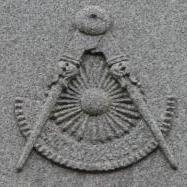
George Miller Posted January 16, 2012 Posted January 16, 2012 (edited) George I was curious about some Mason terminology that seems to suggest something that may in fact not be the case, but my late grandfather was a Mason, and he seemed to have a title, Past Master, which I never asked him about, but which I assumed meant he either used to be a Master Mason, but was no longer, or had gone past it to another, higher title, or else he used to be the master of his lodge.Could you please enlighten me on this?Happy to help you out with this little bit of Masonic terminology. One becomes a full Mason when one receives the degree of Master Mason. If you are an active Mason whom has gained the lodges respect, you will usually be asked to serve in some type of Masonic leadership position as an officer. Usually a person first becomes a steward, and then is promoted consecutively to the office of Junior Deacon (JD), Senior Deacon (SD), Junior Warden (JW), Senior Warden (SW) and finally one becomes the Worshipful Master (WM) of the lodge. Usually one serves one year in each position, but skipping positions is not uncommon due to moves or vacancies. Once one has served as Worshipful Master in the lodge one is considered a Past Master and when signing a Masonic document one will usually write (PM) after one's name.Some Masons serve in the east multiple times as WM, and continue to attend lodge where they act as secretary, treasurer, chaplain or numerous other roles after their year in the east. This is similar to what you see in Mormon wards where the Bishop later serves in the nursery or as the deacon's quorum teacher. The fact that your grandfather was a PM means that he most likely spent around six plus years in service to the lodge and that he was dedicated and active Mason.You mentioned that he passed away. If you had a chance to look through his belonging, and assuming he held onto any Masonic memorabilia, you may have seen the following symbol on some of his Masonic regalia. This is the Masonic symbol associated with a Past Master and as you can see it has the sign of the compass with a sun and a quadrant. The quadrant symbolizes the mastership of curves, complex geometry only learned on the journey as a leader of the craft, while the sun reflects the identity of God, and the light of knowledge now shining through to enlighten brothers still on the path. Hopefully through your years as his grandson you had a chance to feel these warm rays of his love, guidance, and personality in your life. [At least I hope he was the kind of grandfather he should have been.] Edited January 16, 2012 by George Miller

Recommended Posts