Jump to content
Seriously No Politics ×

The Demands of Justice


What demands the price of Justice?  

18 members have voted

  1. 1. When justice needs to be satisfied what is payment of the price satisfying?

    • Cosmological balance (natural law)
    • God's own laws/rules
    • Offense against God personally
    • Requirements for entry to the next level (Celestial)
    • Laws of our current situation
    • Something else entirely (comment below)


Recommended Posts

Posted
5 hours ago, CV75 said:

Regarding "certainty" as a psychological state, I love how President Hinckley describes it in terms of "certitude":

1995 (he describes certitude in terms of the faith-knowledge dynamo): https://www.churchofjesuschrist.org/study/ensign/1995/10/faith-the-essence-of-true-religion?lang=eng "Certitude is certainty. It is conviction. It is the power of faith that approaches knowledge—yes, that even becomes knowledge."

2007: (he uses "know" and "certitude" synonymously and reviews his "great certitudes") : https://www.churchofjesuschrist.org/study/general-conference/2007/04/the-things-of-which-i-know?lang=eng


Thanks for these quotes


Posted (edited)
2 hours ago, mfbukowski said:

Thanks for these quotes


Thank you for your persistence!

I think I can paraphrase your signature quotes to my understanding:

The truth is out there, but experiences of the truth are produced only by like things, and descriptions of the truth can only be produced by their language. The experiences are created internally by the mind and conveyed externally by language, both along a continuum from zero to perfect comprehension.

For example, take the blindfold off and you can experience more than the sun’s warmth (and how are we like the sun? – we are “star dust”). Unloose the tied hands and you can point to where the warmth and light are coming from (what language have we in common? -- energy: heat transfer for the sun, followed by subsequent energy transfer for one person to point and the other to look; for believers, a deeper commonality, the light of Christ).

This at least puts the believer and non-believer on equal ground in the conversation (language exchange), since their comprehension cannot be objectively measured.

How does an atheist experience and describe the sun? It is a process that began as an infant and wasn’t accomplished in a vacuum. The trick is enticing him to apply the same approach to recall or reacquaint his experience with God.

Edited by CV75
Posted
On 2/14/2021 at 1:09 PM, CV75 said:

Thank you for your persistence!

I think I can paraphrase your signature quotes to my understanding:

The truth is out there, but experiences of the truth are produced only by like things, and descriptions of the truth can only be produced by their language. The experiences are created internally by the mind and conveyed externally by language, both along a continuum from zero to perfect comprehension.

For example, take the blindfold off and you can experience more than the sun’s warmth (and how are we like the sun? – we are “star dust”). Unloose the tied hands and you can point to where the warmth and light are coming from (what language have we in common? -- energy: heat transfer for the sun, followed by subsequent energy transfer for one person to point and the other to look; for believers, a deeper commonality, the light of Christ).

This at least puts the believer and non-believer on equal ground in the conversation (language exchange), since their comprehension cannot be objectively measured.

How does an atheist experience and describe the sun? It is a process that began as an infant and wasn’t accomplished in a vacuum. The trick is enticing him to apply the same approach to recall or reacquaint his experience with God.

I am looking forward to getting into this, I have just been busy :)


Posted (edited)
7 hours ago, mfbukowski said:

I am looking forward to getting into this, I have just been busy :)


No problem, I've been working on some revisions!

The truth is out there, but experiences of the truth are produced only by like things, and descriptions of the truth can only be shared by their language. The experiences are created internally by the mind and expressed externally by language, both along a continuum of changing comprehension.

Edited by CV75
Posted
On 2/14/2021 at 1:09 PM, CV75 said:

Thank you for your persistence!

I think I can paraphrase your signature quotes to my understanding:

The truth is out there, but experiences of the truth are produced only by like things, and descriptions of the truth can only be produced by their language. The experiences are created internally by the mind and conveyed externally by language, both along a continuum from zero to perfect comprehension.

For example, take the blindfold off and you can experience more than the sun’s warmth (and how are we like the sun? – we are “star dust”). Unloose the tied hands and you can point to where the warmth and light are coming from (what language have we in common? -- energy: heat transfer for the sun, followed by subsequent energy transfer for one person to point and the other to look; for believers, a deeper commonality, the light of Christ).

This at least puts the believer and non-believer on equal ground in the conversation (language exchange), since their comprehension cannot be objectively measured.

How does an atheist experience and describe the sun? It is a process that began as an infant and wasn’t accomplished in a vacuum. The trick is enticing him to apply the same approach to recall or reacquaint his experience with God.

Now I will reword what you said to make what makes more sense to me:

Some of the truth is out there, and some of the truth is internal to each of us, personally.  Experiences of the truth are produced by whatever produces those experiences, and some experiences are like other experiences while other experiences  are completely different types of experiences.  Descriptions of truth can only be produced by language, including body language, and language can only be understood by those who know the meanings of the words/symbols used in that language. The descriptions are created internally by the mind and conveyed externally by language, both along a continuum from zero to perfect comprehension.

Posted
5 hours ago, CV75 said:

No problem, I've been working on some revisions!

The truth is out there, but experiences of the truth are produced only by like things, and descriptions of the truth can only be shared by their language. The experiences are created internally by the mind and expressed externally by language, both along a continuum of changing comprehension.

Almost exactly perfect except for one word!   

BUT it is a BIGGIE word!

"TRUTH"

Let's look back at my Rorty siggy.  Honestly it is all right here, that's why I quote it so much.

Don't make it complicated- it is clear as a bell, I guess one time you see it and take it all literally, straight up, as it is:

Quote


To say that the world is out there, that it is not our creation, is to say, with common sense, that most things in space and time are the effects of causes which do not include human mental states.  To say that truth is not out there is simply to say that where there are no sentences, there is no truth, that sentences are elements of human languages, and that human languages are human creations.

     Truth cannot be out there- cannot exist independently of the human mind- because sentences cannot so exist, or be out there.  The world is out there, but descriptions of the world are not.  Only descriptions of the world can be true or false.  The world on its own- unaided by the describing activities of human beings- cannot."   Richard Rorty- Contingency Irony and Solidarity, P 5.


So the first sentence

To say that the world is out there, that it is not our creation, is to say, with common sense, that most things in space and time are the effects of causes which do not include human mental states.  To say that truth is not out there is simply to say that where there are no sentences, there is no truth, that sentences are elements of human languages, and that human languages are human creations.

We are not talking here about some kind of "avatar" or brain in a vat scenario at all.   He says and means very clearly that THERE IS A WORLD OUT THERE THAT WE DID NOT make up!!

With common sense we say that most things in time and space- what does that mean?  It means chairs tables, cars, the sun, the blue sky, you, me etc- things in space and time- are NOT just "in our heads" - ie- they are not just ideas etc CAUSED by Human mental states.   No brains in a vat making up a dream world of objects.   For us not even God's mental states!  Yes we create PLANS for things, like an architect "thinks" of a design before it is on paper- God has a "plan" before there is a world etc- BUT ULTIMATE there IS a real world out there, assembled by what we call "matter" because we have no other word for it.

It is constructed of "stuff"! - Call it what you like!  Even spirit, WE know is made in some way of matter- it is some kind of "stuff".

We can bump into chairs in the dead of night, we can fall off cliffs because there is REAL STUFF out there in the world- NOT JUST mental states

I think you understand that portion of the paradigm perfectly from your last post where you say...

" ...descriptions of the truth can only be shared by their language. The experiences are created internally by the mind and expressed externally by language, both along a continuum of changing comprehension."...

YES I would agree and I like the way you put that!  I like the distinction between the experiences being ''CREATED" by the mind and then EXPRESSED/SHARED through language into a continuum of linguistic interpretation/comprehension for others.   So you have an experience, at first non-verbal, which is then identified by the mind when it needs to be shared verbally as "blue" and then expressed linguistically for others to hopefully comprehend.

Imagine witnessing an automobile accident.   The experience is "in your mind" waiting to be expressed.  The judge asks "What color was the car?"  The answer is "red".  Well there are a variety of experiences describable as "red".  There is fire engine red, red orange, red with blue in it, Burgundy, crimson etc.   If both cars were "red" but a different shade, say one was fire engine red/ orange and the other was burgundy, in the context of calling both cars "red" the ambiguity could make the description useless to the judge.   

So translating this into a spiritual context, there is first the PLAN (the car factory deciding the color),  the "organization of matter"- the car is "created" by organizing the steel and the paint, the rubber for tires, etc- the experience of the collision and its recollection, the verbal description, then the reconstruction in the mind of the judge, and the decision on what is a fair penalty.   

ANYWAY....  now back to the part that works less well...

You say:

Quote

The truth is out there, but experiences of the truth are produced only by like things, and descriptions of the truth can only be shared by their language

The problem is that "the truth" is NOT "out there"

CAUSES of perceptions are out there.   You step on a lego in the dark.  (Typical dad stuff!)   That dang lego is very much OUT THERE!!  it's not just "in your mind"

You don't know what caused the pain in your foot but the PAIN - the experience- is very real to you!   You hop to the light switch which makes it possible for your eyes to receive other perceptions of the situation.  Your eyes / brain tells you that the "object" you stepped on is familiar- the pain was caused by an object named in English, a "lego"

Now you woke up your wife!!  "What happened honey?" - verbal request for a description of your experience

"I stepped on a %&*# LEGO! (at least that would be my reply)   Wife asks "Are you sure? Was it something else?"    ''NO I CAN SEE IT_ IT IS THAT RED LEGO RIGHT THERE!"

So WHERE is the truth?

Is it out there on the floor?   Is the Lego "truth"?

What does Rorty say?

To say that truth is not out there is simply to say that where there are no sentences, there is no truth, that sentences are elements of human languages, and that human languages are human creations.

     Truth cannot be out there- cannot exist independently of the human mind- because sentences cannot so exist, or be out there.  The world is out there, but descriptions of the world are not.  Only descriptions of the world can be true or false.  The world on its own- unaided by the describing activities of human beings- cannot."

So is the truth out there in the Lego?   NO! 

The truth is in your verbal answer confirming that the "cause "of your painful experience was the red Lego on the floor.   The truth is in the sentence- it is a true sentence!

But there is another layer of ambiguity even here- we can't even technically say that "the lego" was the cause because to say that- you have already abstracted the cause of your pain into language.  Was the cause the atoms in what we call a "lego"?   Well is atomic theory "reality" or an expression of a scientific theory cobbled together by humans who do not even totally understand how these particles work?

No even saying it was caused "by atoms" is voicing a human theory/paradigm.

Truth is not out there in the world until it is in a sentence which someone pronounces to be "true".

Just as certitude is a mental state truth is as well!

It expresses agreement.   The more agreement we have seeing as sentence as "true"the more "objective" it becomes!

Perhaps there are only VERY few people who would disagree with the sentence "The earth is a sphere".

Truth cannot be out there- cannot exist independently of the human mind- because sentences cannot so exist, or be out there.  The world is out there, but descriptions of the world are not.  Only descriptions of the world can be true or false.  The world on its own- unaided by the describing activities of human beings- cannot."

This idea of the truth being out there is precisely the error of Cartesian dualism.  It erroneously claims that Truth consists of a statement which corresponds to what is "out there" while Neopragmatism wants to do away with the reality/ appearance distinction

Dualism:  appearances correspond to what is "out there"

Neopragmatism:  since we cannot know what is "out there" because all we can know is how it appears, it is useless to worry about any "reality" beyond experiences- AND we can only express appearances by making them even more abstract/ambiguous in language.

So really for us, words constitute reality - as we communicate it!   Think about how obvious that is- words- and personal experience constitute any individual's total knowledge of reality if the person is Hawking or a newborn baby!!  

Not sure what you meant by this;

Quote


but experiences of the truth are produced only by like things, and descriptions of the truth can only be shared by their language.


Not sure what you mean here- "like things"

Perhaps you meant that experiences are the same for like species?

That all bats have similar experiences which differ from the experiences of all humans?  < This I would agree with AND....   https://en.wikipedia.org/wiki/What_Is_It_Like_to_Be_a_Bat%3F

Life again intervenes

Posted
9 minutes ago, mfbukowski said:

Truth cannot be out there- cannot exist independently of the human mind- because sentences cannot so exist, or be out there.  The world is out there, but descriptions of the world are not.  Only descriptions of the world can be true or false.  The world on its own- unaided by the describing activities of human beings- cannot."

The problem I see with this statement is the very narrow definition Rorty has of what the truth is.  The truth can and does exist even without sentences specifying what the truth is.  Truth is often used as another word for reality, or what is. Rather than what is not.

The statement "there is a chair in that room" is a true statement only if there really is a chair in that room.  If there isn't a chair in that room then it would be a lie to say that there is.  Thus a chair or the absence of a chair would determine what the truth is.

I don't expect any rebuttal from you Mark because you don't like to argue with me but at least I'm getting my point out there for anyone to see, if they want to see it.

Posted
3 hours ago, mfbukowski said:

Almost exactly perfect except for one word!   

BUT it is a BIGGIE word!

"TRUTH"

Let's look back at my Rorty siggy.  Honestly it is all right here, that's why I quote it so much.

Don't make it complicated- it is clear as a bell, I guess one time you see it and take it all literally, straight up, as it is:

So the first sentence

To say that the world is out there, that it is not our creation, is to say, with common sense, that most things in space and time are the effects of causes which do not include human mental states.  To say that truth is not out there is simply to say that where there are no sentences, there is no truth, that sentences are elements of human languages, and that human languages are human creations.

We are not talking here about some kind of "avatar" or brain in a vat scenario at all.   He says and means very clearly that THERE IS A WORLD OUT THERE THAT WE DID NOT make up!!

With common sense we say that most things in time and space- what does that mean?  It means chairs tables, cars, the sun, the blue sky, you, me etc- things in space and time- are NOT just "in our heads" - ie- they are not just ideas etc CAUSED by Human mental states.   No brains in a vat making up a dream world of objects.   For us not even God's mental states!  Yes we create PLANS for things, like an architect "thinks" of a design before it is on paper- God has a "plan" before there is a world etc- BUT ULTIMATE there IS a real world out there, assembled by what we call "matter" because we have no other word for it.

It is constructed of "stuff"! - Call it what you like!  Even spirit, WE know is made in some way of matter- it is some kind of "stuff".

We can bump into chairs in the dead of night, we can fall off cliffs because there is REAL STUFF out there in the world- NOT JUST mental states

I think you understand that portion of the paradigm perfectly from your last post where you say...

" ...descriptions of the truth can only be shared by their language. The experiences are created internally by the mind and expressed externally by language, both along a continuum of changing comprehension."...

YES I would agree and I like the way you put that!  I like the distinction between the experiences being ''CREATED" by the mind and then EXPRESSED/SHARED through language into a continuum of linguistic interpretation/comprehension for others.   So you have an experience, at first non-verbal, which is then identified by the mind when it needs to be shared verbally as "blue" and then expressed linguistically for others to hopefully comprehend.

Imagine witnessing an automobile accident.   The experience is "in your mind" waiting to be expressed.  The judge asks "What color was the car?"  The answer is "red".  Well there are a variety of experiences describable as "red".  There is fire engine red, red orange, red with blue in it, Burgundy, crimson etc.   If both cars were "red" but a different shade, say one was fire engine red/ orange and the other was burgundy, in the context of calling both cars "red" the ambiguity could make the description useless to the judge.   

So translating this into a spiritual context, there is first the PLAN (the car factory deciding the color),  the "organization of matter"- the car is "created" by organizing the steel and the paint, the rubber for tires, etc- the experience of the collision and its recollection, the verbal description, then the reconstruction in the mind of the judge, and the decision on what is a fair penalty.   

ANYWAY....  now back to the part that works less well...

You say:

The problem is that "the truth" is NOT "out there"

CAUSES of perceptions are out there.   You step on a lego in the dark.  (Typical dad stuff!)   That dang lego is very much OUT THERE!!  it's not just "in your mind"

You don't know what caused the pain in your foot but the PAIN - the experience- is very real to you!   You hop to the light switch which makes it possible for your eyes to receive other perceptions of the situation.  Your eyes / brain tells you that the "object" you stepped on is familiar- the pain was caused by an object named in English, a "lego"

Now you woke up your wife!!  "What happened honey?" - verbal request for a description of your experience

"I stepped on a %&*# LEGO! (at least that would be my reply)   Wife asks "Are you sure? Was it something else?"    ''NO I CAN SEE IT_ IT IS THAT RED LEGO RIGHT THERE!"

So WHERE is the truth?

Is it out there on the floor?   Is the Lego "truth"?

What does Rorty say?

To say that truth is not out there is simply to say that where there are no sentences, there is no truth, that sentences are elements of human languages, and that human languages are human creations.

     Truth cannot be out there- cannot exist independently of the human mind- because sentences cannot so exist, or be out there.  The world is out there, but descriptions of the world are not.  Only descriptions of the world can be true or false.  The world on its own- unaided by the describing activities of human beings- cannot."

So is the truth out there in the Lego?   NO! 

The truth is in your verbal answer confirming that the "cause "of your painful experience was the red Lego on the floor.   The truth is in the sentence- it is a true sentence!

But there is another layer of ambiguity even here- we can't even technically say that "the lego" was the cause because to say that- you have already abstracted the cause of your pain into language.  Was the cause the atoms in what we call a "lego"?   Well is atomic theory "reality" or an expression of a scientific theory cobbled together by humans who do not even totally understand how these particles work?

No even saying it was caused "by atoms" is voicing a human theory/paradigm.

Truth is not out there in the world until it is in a sentence which someone pronounces to be "true".

Just as certitude is a mental state truth is as well!

It expresses agreement.   The more agreement we have seeing as sentence as "true"the more "objective" it becomes!

Perhaps there are only VERY few people who would disagree with the sentence "The earth is a sphere".

Truth cannot be out there- cannot exist independently of the human mind- because sentences cannot so exist, or be out there.  The world is out there, but descriptions of the world are not.  Only descriptions of the world can be true or false.  The world on its own- unaided by the describing activities of human beings- cannot."

This idea of the truth being out there is precisely the error of Cartesian dualism.  It erroneously claims that Truth consists of a statement which corresponds to what is "out there" while Neopragmatism wants to do away with the reality/ appearance distinction

Dualism:  appearances correspond to what is "out there"

Neopragmatism:  since we cannot know what is "out there" because all we can know is how it appears, it is useless to worry about any "reality" beyond experiences- AND we can only express appearances by making them even more abstract/ambiguous in language.

So really for us, words constitute reality - as we communicate it!   Think about how obvious that is- words- and personal experience constitute any individual's total knowledge of reality if the person is Hawking or a newborn baby!!  

Not sure what you meant by this;

Not sure what you mean here- "like things"

Perhaps you meant that experiences are the same for like species?

That all bats have similar experiences which differ from the experiences of all humans?  < This I would agree with AND....   https://en.wikipedia.org/wiki/What_Is_It_Like_to_Be_a_Bat%3F

Life again intervenes

To me, “universe”, “world”, “reality” and “truth” are the same thing, “out there” and which we did not make up*. I finally settled on “truth”, misremembering the siggy and thinking I might as well go back to it!

By “like things” I was thinking of things from the same universe (star dust, matter) that are organized such that they possess a mind with which to experience and describe.

* in other words, I conclude (perhaps after further investigation with the light on) that the Lego is truth, or a subset of the universe, or part of the world. Do people in general not consider them the same thing? “World” is certainly a less loaded term, nevertheless.

Posted
7 hours ago, Ahab said:

The statement "there is a chair in that room" is a true statement only if there really is a chair in that room. 

Of course. No argument there.

Posted
4 hours ago, CV75 said:

To me, “universe”, “world”, “reality” and “truth” are the same thing, “out there” and which we did not make up*. I finally settled on “truth”, misremembering the siggy and thinking I might as well go back to it!

By “like things” I was thinking of things from the same universe (star dust, matter) that are organized such that they possess a mind with which to experience and describe.

* in other words, I conclude (perhaps after further investigation with the light on) that the Lego is truth, or a subset of the universe, or part of the world. Do people in general not consider them the same thing? “World” is certainly a less loaded term, nevertheless.

How does the outside world get into your head?

Sounds painful to me. And then how do you get your outside world into someone else's head?

Sounds unsanitary AND painful


Posted
3 minutes ago, mfbukowski said:

How does the outside world get into your head?

Sounds painful to me. And then how do you get your outside world into someone else's head?

Sounds unsanitary AND painful


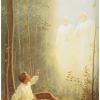
And where does  J Josephs vision hang out in the world? I want to go see it.

Posted (edited)
7 hours ago, CV75 said:

To me, “universe”, “world”, “reality” and “truth” are the same thing, “out there” and which we did not make up*. I finally settled on “truth”, misremembering the siggy and thinking I might as well go back to it!

By “like things” I was thinking of things from the same universe (star dust, matter) that are organized such that they possess a mind with which to experience and describe.

* in other words, I conclude (perhaps after further investigation with the light on) that the Lego is truth, or a subset of the universe, or part of the world. Do people in general not consider them the same thing? “World” is certainly a less loaded term, nevertheless.

People in general are stuck in Cartesian dualism which results in grave errors and makes belief in God irrational because he dwells in our hearts, not outside out in the world.

No testimonies are possible if they are not in our hearts. Remember the ridiule implied that a testimony is "heartburn"? It is based on truth and reality being outside in the world. Spiritual emotions are not "reason" they say.

Statements which cannot be scientifically verified are considered literally "nonsense" if they cannot be verified by being "in the world"

And to me to believe that is pure idiocy imo.

We CANNOT KNOW the world, only the experiences in our minds.

Neopragmatism is a philosophy that could kill atheism using their own logic and reductionism. That view makes reality meaningless, literally. Science cannot by it's own assumptions cannot show meaning and purpose in the world. THEY DON'T WANT TO.

That is the error!

Believe that, and a rational belief in God is impossible. Unless of course you have some pictures, like what that Russian cosmonaut joked about.

That joke is literally the position unknowingly taken by the belief that truth is only found scientifically, or that we magically can observe the world as it is, independent of our human perceptions

https://www.businessinsider.com/strange-connection-between-russian-astronauts-and-god-2014-7?amp

We are speaking about BELIEFS in God being True, not GOD being true. Is your house or car true? "God exists" is a true statement. "CV75 exists" is true But God is not truth, any more than YOU ARE truth.

I believe you exist without seeing you.

Why? You respond to me.

Same with God.


Edited by mfbukowski
Posted (edited)
9 hours ago, mfbukowski said:

How does the outside world get into your head?

Only metaphorically; I process my experience with it, or recreate my version of it, in my mind. It is not metaphorical in that the neurochemical and other processes that recreate my version of it are in my head.

9 hours ago, mfbukowski said:

And where does  J Josephs vision hang out in the world? I want to go see it.

Somewhere in the past. You can metaphorically go see it as you read/hear about it and envision it (or not metaphorically as described above).

6 hours ago, mfbukowski said:

We are speaking about BELIEFS in God being True, not GOD being true. Is your house or car true? "God exists" is a true statement. "CV75 exists" is true But God is not truth, any more than YOU ARE truth.

I know I keep going back to the metaphor (e.g. God is Truth). But D&C93:30 allows that truth cannot exist independently of the human mind: "All truth is independent in that sphere in which God has placed it, to act for itself, as all intelligence also; otherwise there is no existence." So there is a point where, if something exists, it is true -- even if that process occurs in our mind. Everything that exists is fundamentally the same stuff.

Edited by CV75
Posted
15 hours ago, CV75 said:

To me, “universe”, “world”, “reality” and “truth” are the same thing, “out there” and which we did not make up*. I finally settled on “truth”, misremembering the siggy and thinking I might as well go back to it!

By “like things” I was thinking of things from the same universe (star dust, matter) that are organized such that they possess a mind with which to experience and describe.

* in other words, I conclude (perhaps after further investigation with the light on) that the Lego is truth, or a subset of the universe, or part of the world. Do people in general not consider them the same thing? “World” is certainly a less loaded term, nevertheless.

I enjoyed your last post, but the one above really threw me for a loop!  It seemed as if our entire conversation had been a waste of time .

My attempt here has been to think logically and philosophically and express my views as they would be expressed to a secular audience.

Yes I believe as a religious belief that matter has intelligence, but that is not considered logical in secular philosophy, which is the language which must be used to convert secular people. It's like going to Germany on a mission and insisting on only speaking French.

 In philosophy the word truth cannot be defined. For 2000 years philosophers have tried to define truth. Everything has been tried.  No theory has ever stood up to the test of time 

 Yet philosophers and everyone else know what truth is. 

 It's like the judge who had to decide if a video was obscene,  back in the old days when that word actually had meaning., When he tried to define the term, He said'' Well I can't define 'obscene' but I know it when I see it ''

 That's kind of like the word truth.

The dualistic notion that has come into the culture, is that  A statement is true when it corresponds to reality.

 The problem is it could be said that we don't experience reality. We experience things as they  appear to us. Everything out of our mouths is a metaphor,  as you suggest yourself.  We don't even experience reality. So how can metaphors  Correspond to reality? Language then can not express reality. Ultimately all talk would be poetry then.

 So that is why the idea that speech corresponds to the world has been thrown out. 

 Besides that it is impossible to check reality itself against the alleged linguistic representation because  we do not perceive reality we perceive only our perceptions.!

 So along come the pragmatists and say forget about this distinction it doesn't help anything and it's not practical. Let's do away with the difference between appearance and reality and just call appearances "reality."

 What appears to us IS then reality.

 If we have a religious experience then that is real as anything. It is how reality appears to me. So if we actually believe and have experienced the notion of intelligent matter, then that is in our reality.

 We know what truth is we just can't define it. 

 In a court we swear to tell the truth. We know what that means and so we tell the truth. But we have no choice except to express as best we   can what we saw and interpret as being correct/true. 

 We might ask a child if they are telling the truth. That's perfectly reasonable and even a child can answer correctly.

 As Rorty says we know what the truth is we can use the term we just can't define it. I have thought this way all my adult life!

 So now I come across a statement that '"God is truth." 

 What does that mean? If I am in court and tell the truth does that mean that I am speaking of God?

 The whole concept sounds strange to me. Truth is a property of statements not of the supreme being. It's like saying that God Is pink. It seems like a category error to me.

Yes I hear people say a lot of things that  sound weird to me 

But this one of them, and when speaking to atheists I don't think that helps the conversation


Posted
3 hours ago, CV75 said:

But D&C93:30 allows that truth cannot exist independently of the human mind

Exactly!!!!

There IS no truth without a human mind!!!

It's Doctrine!

Posted
26 minutes ago, mfbukowski said:

Exactly!!!!

There IS no truth without a human mind!!!

It's Doctrine!

And yet we know the truth is not always to be taken or understood literally.

I appreciated seeing what you said about philosophers having a hard time defining what the truth is while also claiming to know what the truth is. 

"They" seem to want a strictly literal definition without allowing for figures of speech.  A perfect language, which everyone knows.  A language with only 1 definition for each of the words/symbols which convey everything about something that is, or was, or will be.  And perfect people, too, I suppose, who always use the perfect words to describe what they experience, or have experienced, or will experience in the future.  Probably always with perfect spelling, too.  

Posted
4 hours ago, CV75 said:

Only metaphorically; I process my experience with it, or recreate my version of it, in my mind. It is not metaphorical in that the neurochemical and other processes that recreate my version of it are in my head.

Somewhere in the past. You can metaphorically go see it as you read/hear about it and envision it (or not metaphorically as described above).

I know I keep going back to the metaphor (e.g. God is Truth). But D&C93:30 allows that truth cannot exist independently of the human mind: "All truth is independent in that sphere in which God has placed it, to act for itself, as all intelligence also; otherwise there is no existence." So there is a point where, if something exists, it is true -- even if that process occurs in our mind. Everything that exists is fundamentally the same stuff.

DC 93 31

"Behold, here is the agency of man, and here is the condemnation of man; because that which was from the beginning is plainly manifest unto them, and they receive not the light."

...Because of the confounding of language at the literal or metaphorical Babel!

The Restoration can fix that, and it does if we just see it.

It is an ongoing process 

Posted
37 minutes ago, Ahab said:

And yet we know the truth is not always to be taken or understood literally.

I appreciated seeing what you said about philosophers having a hard time defining what the truth is while also claiming to know what the truth is. 

"They" seem to want a strictly literal definition without allowing for figures of speech.  A perfect language, which everyone knows.  A language with only 1 definition for each of the words/symbols which convey everything about something that is, or was, or will be.  And perfect people, too, I suppose, who always use the perfect words to describe what they experience, or have experienced, or will experience in the future.  Probably always with perfect spelling, too.  

Uh no.

Show me one who believes those things.

Posted
4 hours ago, CV75 said:

...But D&C93:30 allows that truth cannot exist independently of the human mind: "All truth is independent in that sphere in which God has placed it, to act for itself, as all intelligence also; otherwise there is no existence." 

Actually D&C 93:30 says the opposite of what you are saying it says.  It says "All truth is independent..."  It doesn't say all truth is dependent on the human mind.

Posted
4 minutes ago, mfbukowski said:

Uh no.

Show me one who believes those things.

Show me a philosopher who can define what the truth is.  You portrayed them all as not able to do it.  And yet at least some of them still claim to know what the truth is.

Posted
22 minutes ago, Ahab said:

Show me a philosopher who can define what the truth is.  You portrayed them all as not able to do it.  And yet at least some of them still claim to know what the truth is.

Yes in the past there were

None of the definitions stood up to scrutiny. As I said, name one and I can show you why it does not work.

Posted
1 minute ago, mfbukowski said:

Yes in the past there were

None of the definitions stood up to scrutiny. As I said, name one and I can show you why it does not work.

Hmm.  Are you talking about a general agreement among all philosophers, then?  That while as a group they don't all agree on one definition of truth, as individuals there are some who can define it?

If that's what you're talking about that is how it is with just about everyone and everything.  As a collective, we don't all agree, and yet as individuals some of us know some truth that some others of us do not know, yet.

Posted
2 hours ago, mfbukowski said:

I enjoyed your last post, but the one above really threw me for a loop!  It seemed as if our entire conversation had been a waste of time .

My attempt here has been to think logically and philosophically and express my views as they would be expressed to a secular audience.

Yes I believe as a religious belief that matter has intelligence, but that is not considered logical in secular philosophy, which is the language which must be used to convert secular people. It's like going to Germany on a mission and insisting on only speaking French.

 In philosophy the word truth cannot be defined. For 2000 years philosophers have tried to define truth. Everything has been tried.  No theory has ever stood up to the test of time 

 Yet philosophers and everyone else know what truth is. 

 It's like the judge who had to decide if a video was obscene,  back in the old days when that word actually had meaning., When he tried to define the term, He said'' Well I can't define 'obscene' but I know it when I see it ''

 That's kind of like the word truth.

The dualistic notion that has come into the culture, is that  A statement is true when it corresponds to reality.

 The problem is it could be said that we don't experience reality. We experience things as they  appear to us. Everything out of our mouths is a metaphor,  as you suggest yourself.  We don't even experience reality. So how can metaphors  Correspond to reality? Language then can not express reality. Ultimately all talk would be poetry then.

 So that is why the idea that speech corresponds to the world has been thrown out. 

 Besides that it is impossible to check reality itself against the alleged linguistic representation because  we do not perceive reality we perceive only our perceptions.!

 So along come the pragmatists and say forget about this distinction it doesn't help anything and it's not practical. Let's do away with the difference between appearance and reality and just call appearances "reality."

 What appears to us IS then reality.

 If we have a religious experience then that is real as anything. It is how reality appears to me. So if we actually believe and have experienced the notion of intelligent matter, then that is in our reality.

 We know what truth is we just can't define it. 

 In a court we swear to tell the truth. We know what that means and so we tell the truth. But we have no choice except to express as best we   can what we saw and interpret as being correct/true. 

 We might ask a child if they are telling the truth. That's perfectly reasonable and even a child can answer correctly.

 As Rorty says we know what the truth is we can use the term we just can't define it. I have thought this way all my adult life!

 So now I come across a statement that '"God is truth." 

 What does that mean? If I am in court and tell the truth does that mean that I am speaking of God?

 The whole concept sounds strange to me. Truth is a property of statements not of the supreme being. It's like saying that God Is pink. It seems like a category error to me.

Yes I hear people say a lot of things that  sound weird to me 

But this one of them, and when speaking to atheists I don't think that helps the conversation

As long as I maintain that D&C 93:30 allows that truth cannot exist independently of the human mind, it comports well with your siggy, so no need for despair! 😊

I appreciate the aim to defend and teach the gospel in strictly secular terms using narrow, literal definitions without metaphor as individual needs require, and that this can be done without ever mentioning the word “truth.” In other settings, as you say, we pretty much know what we’re getting at (even with metaphors), and drill down as needed to maintain a good-faith dialog.

When I think of matter having intelligence, it is only when it is structured with an evidently working mind. I am comprised of matter (what else is there to be comprised of?), and I have the faculty to reason and emote.

Posted
27 minutes ago, Ahab said:

Actually D&C 93:30 says the opposite of what you are saying it says.  It says "All truth is independent..."  It doesn't say all truth is dependent on the human mind.

No, I believe it says truth is contextual to its sphere. WE are the intelligences to act for ourselves. How else could intelligence "act" ?

Without intelligences creating the world as we know it, nothing is definable as "existing"

Do undiscovered species "exist"? You can say nothing about them or know anything about them.

That is how Europeans said Columbus "discovered " America.

In the European sphere of intelligence, that continent didn't exist until it was "discovered " and became part of cultural, verbal community knowledge, the same way the church is "true" in the intelligence pool of members and no one else unless they convert, " acting for themselves".

I will not argue with you unless you make a substantial relevant comment 


Posted
1 hour ago, Ahab said:

Actually D&C 93:30 says the opposite of what you are saying it says.  It says "All truth is independent..."  It doesn't say all truth is dependent on the human mind.

But after the "..." it says that truth is dependent on God having placed it in a sphere with intelligence (presumably that's your head!).

Guest
This topic is now closed to further replies.
  • Recently Browsing   0 members

    • No registered users viewing this page.
×
×
  • Create New...