mfbukowski Posted February 17, 2013 Posted February 17, 2013 Apparently. That or you are being funny. They all became extinct in the Americas. Come up with a term for local extinction if there isn't one already, but that's what I'm referring to. If that's what you disagree with, state that you think those animals were here when the conquistadors arrived.History has shown that domesticable animals are incredibly valuable, unlike the dodo or other animals hunted to extinction. Not only that, these animals were already domesticated. So is the conclusion just that the Lamanites were so ignorant that they slaughtered them all? Literally, all of the most important species ever to live on the planet? That's possible, I'm just wondering if that's the only thing we have any evidence to believe.No I am not being funny. As far as I am concerned you have yet to articulate your position in a clear way.There are many possible reasons why these animals are mentioned in the Book of Mormon and yet allegedly there are few if any bones found in the Americas. What is the underlying question?If that is your point then why are you only looking at one dimension of this? And I am still wondering who it is that is allegedly looking for these bones in the first place? I still don't have a clue why you think these bones are important enough to start a discussion about them.You seem to be fixated on these bones, and not looking for other answers to whatever underlying question is motivating the thread in the first place.
ERayR Posted February 18, 2013 Posted February 18, 2013 In place of bones, they should be looking for evidences of the metallurgicalindustries that were used in the Book of Mormon to produce metal swords,breastplates, coinage, and other machinery (2 Nephi 5:15; Jarom 1:8; andMosiah 11:3,8]. Who knows - they may even find the chariots that were usedfor war and/or travel. Apparently the benefit of wheels was lost on the NativeAmerican Indians, who the church taught were the principal descendants ofthe Lamanites until recently.GailCertainly a lot of misconceptions in your post.Only one sword, that I know of, mentioned in the BoM was described as made out of metal - the sword of Laben.The breastplates mentioned does not say they were made out of metal.There is no coinage mentioned in the BoM. What you are referring to is probably the system of weights and measures.What other machinery?There is no mention of chariots used in war.
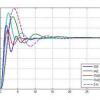
ERayR Posted February 18, 2013 Posted February 18, 2013 (edited) Yes! That's my point.That's a good point. I don't dispute that it is a possibility that these animals were hunted out of existence, just seems unlikely. I have a few things to consider.1: 10000 years ago nobody used domesticated animals in the Americas. (Except maybe dogs? Can't remember)Yep 10,000 years can certainly dim ones memories.2: Nephites and lamanites knew how to use domesticated animals.That they did.3: let's not get fixated on horses. Goats, sheep, cows and pigs are also exceptionally important domestic species. As soon as someone domesticates a wild picary, I guess we can check that off the list. Although, it may be arguable that pigs weren't domesticated in bom times? Would be an odd reference, but not impossible.3,500 BC: Agriculture becomes fully established as a food source in Central America, the Andes, and Amazonia. Having a constant source of food allows farmers in Central America and Amazonia to domesticate the white-lipped and collared peccaries, which like pigs were not creatures particularly well-suited to pastoralism. Their constant close contact with peccaries would produce lethal consequences for the hapless farmers in the jungles. http://www.alternatehistory.com/discussion/showthread.php?t=168776I think so. It's a comparison of PID tuning algorithms that I just snagged off the internet to illustrate that I'm a process control engineer. Edited February 18, 2013 by ERayR
bcuzbcuz Posted February 18, 2013 Posted February 18, 2013 (edited) There is no coinage mentioned in the BoM. What you are referring to is probably the system of weights and measures.Well... I beg to differ. If you read Alma 11, I don't know how you can come away from that and not say that they had coinage. That's verses 4-20. Verses 21 through 25 where metals are exchanged for value, that must fit any definition of coinage. Edited February 19, 2013 by bcuzbcuz
bcuzbcuz Posted February 18, 2013 Posted February 18, 2013 What about Lamas and the Jaguar?and tomatoes and potatoes and peppars, turkeys and tortillas.
webbles Posted February 18, 2013 Posted February 18, 2013 Well... I beg to differ. If you read Alma 4, I don't know how you can come away from that and not say that they had coinage. That's verses 4-20. Verses 21 through 25 where metals are exchanged for value, that must fit any definition of coinage.Alma 4 only goes to verse 20 and I don't see anything about coinage there. I'm assuming you mean Alma 11. Have a look at http://en.fairmormon.org/Book_of_Mormon/Anachronisms/Coins.
ERayR Posted February 18, 2013 Posted February 18, 2013 (edited) Well... I beg to differ. If you read Alma 4, I don't know how you can come away from that and not say that they had coinage. That's verses 4-20. Verses 21 through 25 where metals are exchanged for value, that must fit any definition of coinage.Nothing about coins. What is described is an exchange rate in weights and measures. Coinage is the minting of coins. what is described is the value of different metals and commodities in relation to each other. It would be better understood if you didn't project. Edited February 18, 2013 by ERayR 2
mfbukowski Posted February 19, 2013 Posted February 19, 2013 Well... I beg to differ. If you read Alma 4, I don't know how you can come away from that and not say that they had coinage. That's verses 4-20. Verses 21 through 25 where metals are exchanged for value, that must fit any definition of coinage.In fact, a brother in my ward from Guatemala brought in scoops of various sizes which are used even today in trade in the market place, which are used to measure powdered metals and other commodities in Guatemala. The sizes of the scoops- some small and some relatively large- were exactly in the proportions listed in those scriptures.Using gold dust and silver dust or other valuable items, is a common method of exchange in which coinage becomes unnecessary. Even foods like rice or other grains can be used for exchange and barter, but to do so, there has to be a generally accepted measuring system to establish the value of a given volume of the medium of exchange. That is precisely what is described here. 2
livy111us Posted February 19, 2013 Posted February 19, 2013 Alma 4 only goes to verse 20 and I don't see anything about coinage there. I'm assuming you mean Alma 11. Have a look at http://en.fairmormon...hronisms/Coins.That link doesn't work. Try this one http://en.fairmormon.org/Book_of_Mormon_anachronisms:Coins
ControlFreak Posted February 19, 2013 Author Posted February 19, 2013 In fact, a brother in my ward from Guatemala brought in scoops of various sizes which are used even today in trade in the market place, which are used to measure powdered metals and other commodities in Guatemala. The sizes of the scoops- some small and some relatively large- were exactly in the proportions listed in those scriptures.Using gold dust and silver dust or other valuable items, is a common method of exchange in which coinage becomes unnecessary. Even foods like rice or other grains can be used for exchange and barter, but to do so, there has to be a generally accepted measuring system to establish the value of a given volume of the medium of exchange. That is precisely what is described here.Does gold dust come in "pieces"? I'd say a "piece" of gold sure sounds like a coin to me... I guess that must have been a loose translation day.
webbles Posted February 19, 2013 Posted February 19, 2013 Does gold dust come in "pieces"? I'd say a "piece" of gold sure sounds like a coin to me... I guess that must have been a loose translation day.Read the link that livy11us gave. It gives examples where "piece of gold" is used and it doesn't mean coins.
sunstoned Posted February 19, 2013 Posted February 19, 2013 Certainly a lot of misconceptions in your post.Only one sword, that I know of, mentioned in the BoM was described as made out of metal - the sword of Laben.The breastplates mentioned does not say they were made out of metal.There is no coinage mentioned in the BoM. What you are referring to is probably the system of weights and measures.What other machinery?There is no mention of chariots used in war.There also seem to be some misconceptions in you post. There are many pain text references of metal swords in the Book of Mormon. Here are just a few:1 Nephi 4:9 9 And I beheld his sword and I drew it forth from the sheath thereof; and the hilt thereof was of pure gold, and the workmanship thereof was exceedingly fine, and I saw that the blade thereof was of the most precious steel.2 Nephi 5:14-1514 And I, Nephi, did take the sword of Laban, and after the manner of it did make many swords, lest by any means the people who were now called Lamanites should come upon us and destroy us; for I knew their hatred towards me and my children and those who were called my people. 15 And I did teach my people to build buildings, and to work in all manner of wood, and of iron, and of copper, and of brass, and of steel, and of gold, and of silver, and of precious ores, which were in great abundance.The verse in 1 Nephi is a description of Laban’s metal sword, latter Nephi (2 Nephi) makes many more just like it. Notice the references to the different metals, including iron and steel. Alma 44:12-13 12 And now when Moroni had said these words, Zerahemnah retained his sword, and he was angry with Moroni, and he rushed forward that he might slay Moroni; but as he raised his sword, behold, one of Moroni’s soldiers smote it even to the earth, and it broke by the hilt; and he also smote Zerahemnah that he took off his scalp and it fell to the earth. And Zerahemnah withdrew from before them into the midst of his soldiers. 13 And it came to pass that the soldier who stood by, who smote off the scalp of Zerahemnah, took up the scalp from off the ground by the hair, and laid it upon the point of his sword, and stretched it forth unto them, saying unto them with a loud voice:In Alma 44 we learn that the swords being used had hilts and a blade with a point. This is not description war clubs or Aztec “Macuahuitls” as some apologist would have us believe.Mosiah 8:11:And again, they have brought swords, the hilts thereof have perished, and the blades thereof were cankered with rustHere in Mosiah, they talk about swords that have hilts and have “rusted”. Metal rusts, wood doesn’t. Ether 7:99 Wherefore, he came to the hill Ephraim, and he did molten out of the hill, and made swords out of steel for those whom he had drawn away with him; and after he had armed them with swords he returned to the city Nehor, and gave battle unto his brother Corihor, by which means he obtained the kingdom and restored it unto his father Kib.Once again, we have plan reading of swords, with hilts being made out of steel that was molten out of the hill.
mfbukowski Posted February 19, 2013 Posted February 19, 2013 (edited) Does gold dust come in "pieces"? I'd say a "piece" of gold sure sounds like a coin to me... I guess that must have been a loose translation day.7 A senum of silver was equal to a senine of gold, and either for a measure of barley, and also for a measure of every kind of grain.I have never seen coins made of grain- have you?DUST is like sand- small fragments!Gold is not found in coin form naturally- it is in nuggets or fine sand-like fragments. When you pan for gold, you just get tiny pieces- you would put them into a thimble-sized measure or larger, and trade them for other things[media=] Edited February 19, 2013 by mfbukowski
bcuzbcuz Posted February 19, 2013 Posted February 19, 2013 Alma 4 only goes to verse 20 and I don't see anything about coinage there. I'm assuming you mean Alma 11. Have a look at http://en.fairmormon...hronisms/Coins.Yes I meant Alma 11 and have corrected the original post
bcuzbcuz Posted February 19, 2013 Posted February 19, 2013 In fact, a brother in my ward from Guatemala brought in scoops of various sizes which are used even today in trade in the market place, which are used to measure powdered metals and other commodities in Guatemala. The sizes of the scoops- some small and some relatively large- were exactly in the proportions listed in those scriptures.Using gold dust and silver dust or other valuable items, is a common method of exchange in which coinage becomes unnecessary. Even foods like rice or other grains can be used for exchange and barter, but to do so, there has to be a generally accepted measuring system to establish the value of a given volume of the medium of exchange. That is precisely what is described here.I've seen gold dust, so called because panned gold is usually in small grains or flakes, but never silver dust. Have you? Can you name any other metals that come in dust form?Panning for gold, just how would the Nephites have panned for gold. Can you think of any Aztec, Inca or native tribes of north America who had pans for panning?
Stargazer Posted February 19, 2013 Posted February 19, 2013 Read the link that livy11us gave. It gives examples where "piece of gold" is used and it doesn't mean coins.That this verse refers to coinage comes from an old chapter heading, not part of the BoM text itself. To people accustomed to coinage, what is described as "senums" and "ontis" might sound like coinage, but coins were not invented by the Nephites. They were invented by the Lydians, in the Old World. To insist upon coins is to insist upon something that the text itself does not actually describe. Just like the Renaissance painters did when they painted the clothing on the figures portraying middle easterners of Biblical times. They used European fashion to clothe them in many cases. Because that is what they knew.This is a 15th C. representation of Aristotle, who lived 4th C. BC. Note that the illustrator gave Aristotle 15th C. scholars clothing -- you're making the same assumptions that the artist here has made: you're projecting your culture onto a completely different one.
thesometimesaint Posted February 19, 2013 Posted February 19, 2013 In place of bones, they should be looking for evidences of the metallurgicalindustries that were used in the Book of Mormon to produce metal swords,breastplates, coinage, and other machinery (2 Nephi 5:15; Jarom 1:8; andMosiah 11:3,8]. Who knows - they may even find the chariots that were usedfor war and/or travel. Apparently the benefit of wheels was lost on the NativeAmerican Indians, who the church taught were the principal descendants ofthe Lamanites until recently.Gail1. Iron blades would decompose very quickly in BoM environments. Moreover Aztec swords while not made of metal where effective weapons.http://en.wikipedia.org/wiki/Macuahuitl2. Breastplates need not be made only of metal.https://www.google.com/search?q=aztec+breastplates&hl=en&client=firefox-beta&hs=mXC&rls=org.mozilla:en-US:official&tbm=isch&tbo=u&source=univ&sa=X&ei=v64jUeDfLLH4igKQt4CABw&ved=0CDAQsAQ&biw=1366&bih=5983. Coinage is not mentioned in the BoM. But a system of weights and measures is.http://en.fairmormon.org/Book_of_Mormon/Anachronisms/Coins4. You'll have to be more specific for me to address "other machinery".5. Wheels are very useful us, but not required for chariots. Wheels were known to the Aztec's but they for some reason didn't find then as useful as we do. https://www.google.com/search?q=Aztec+wheeled+toy&hl=en&client=firefox-beta&hs=mhC&rls=org.mozilla:en-US:official&tbm=isch&tbo=u&source=univ&sa=X&ei=K7EjUbr2L-TcigLwyIDYAg&ved=0CDQQsAQ&biw=1366&bih=5986. Last I looked the peoples of ancient Mesoamerica were in fact Native American's. Principle need not refer a set of genetics.
thesometimesaint Posted February 19, 2013 Posted February 19, 2013 I've seen gold dust, so called because panned gold is usually in small grains or flakes, but never silver dust. Have you? Can you name any other metals that come in dust form?Panning for gold, just how would the Nephites have panned for gold. Can you think of any Aztec, Inca or native tribes of north America who had pans for panning?http://www.save-on-crafts.com/silverdust.html
bcuzbcuz Posted February 19, 2013 Posted February 19, 2013 That this verse refers to coinage comes from an old chapter heading, not part of the BoM text itself. To people accustomed to coinage, what is described as "senums" and "ontis" might sound like coinage, but coins were not invented by the Nephites. They were invented by the Lydians, in the Old World. To insist upon coins is to insist upon something that the text itself does not actually describe. Just like the Renaissance painters did when they painted the clothing on the figures portraying middle easterners of Biblical times. They used European fashion to clothe them in many cases. Because that is what they knew.This is a 15th C. representation of Aristotle, who lived 4th C. BC. Note that the illustrator gave Aristotle 15th C. scholars clothing -- you're making the same assumptions that the artist here has made: you're projecting your culture onto a completely different one.I'd be happy if you could provide any reference found anywhere in the pre-Columbian Americas where gold or silver were used as valued pieces, either for trade or as gifts. Alma 11 is very specific that the pieces of silver and gold had names according to their value. The names either apply to their shape, size, markings or weight, which ever seems hardly relevant.The text in Alma specifically mentions wages and that people were employed. Do you have any evidence that the concept of employment existed anywhere in pre-Columbian America? Is there any reference in any of the Aztec, the Inca many finds that make any kind of a reference to wages?Money is also mentioned in verse 20. Are there any references to the concept of money in pre-Columbian America?The accumulation of silver and gold are not recorded anywhere as other than jewelry and adornment, even for royalty. Do you know of any reference where metals were accumulated for demonstrations of wealth? Feathers were considered more valuable than metals, were they not?Do you have any examples from any carving from pre-Columbian Americas where metals were used for barter or purchasing? Did any "common man" have metals for these purposes?
thesometimesaint Posted February 19, 2013 Posted February 19, 2013 http://www.jefflindsay.com/BMEvidences.shtml#weights
ERayR Posted February 19, 2013 Posted February 19, 2013 Does gold dust come in "pieces"? I'd say a "piece" of gold sure sounds like a coin to me... I guess that must have been a loose translation day.You are projecting again. A piece of gold is just that, a piece of gold. Did you never hear of gold nuggets. A lump of Gold or silver or .. is just that a lump of whatever.
mfbukowski Posted February 19, 2013 Posted February 19, 2013 I've seen gold dust, so called because panned gold is usually in small grains or flakes, but never silver dust. Have you? Can you name any other metals that come in dust form?Panning for gold, just how would the Nephites have panned for gold. Can you think of any Aztec, Inca or native tribes of north America who had pans for panning?Ok you got me.There was no gold or silver in the Americas and no way of weighing these commodities. So the whole thing is a lie. 1
bcuzbcuz Posted February 19, 2013 Posted February 19, 2013 http://www.save-on-c...silverdust.htmlOf course, I should have guessed it would be available on the internet. I read that silver dust is very popular for getting rid of vampires.
mfbukowski Posted February 19, 2013 Posted February 19, 2013 I'd be happy if you could provide any reference found anywhere in the pre-Columbian Americas where gold or silver were used as valued pieces, either for trade or as gifts.Right again. Nobody prized gold at all, and they usually just threw it away. There is so much gold stuff because it was cheaper than dirt and nobody cared about it. Instead of making things of clay they used gold instead and would never give it as a gift because it was just trash.Learn something new every day. 1

Recommended Posts