


Pyreaux
-
Posts
2,016 -
Joined
-
Last visited
Everything posted by Pyreaux
-
2nd Edition is best, 3rd is more complex with a ton of resources, 4th is dumbed down to appeal to World of Warcraft MMO players, the 5th is new and people are saying it's trying to appeal to LGBT people. Campaigns Forgotten Realms The main section of the Realms is intended to be a generic D&D world. It has many similarities to medieval Earth. It also has enormous cities, many countries with foreign flavors, hordes of NPC's, and more room to maneuver than you'll ever need. There are also wild magic and dead magic zones, where magic can surge in power (and unpredictability) or not work at all. There are also a lot of supplements out for the core Realms. The fan favorite must be Faerûn, very Tolken-like, they have the Underdark, with popular Legacy of the Drow novels. DragonLance The world of Krynn is fairly well-known, through the series of novels and modules which started it. Gold has little or no value there, as the world is on a steel standard. Clerics are relatively unheard of, as well, because the main focus for the world is the ongoing battle between the deities Takhesis and Paladine; other "normal" deities have been pretty much forgotten. In addition, as the name might suggest, dragons are more active here than elsewhere, as they are strongly polarized on the Takhesis-Paladine battle. There are also several time periods to adventure in; the time of the War of the Lance is only one. Spelljammer In a nutshell, Spelljammer is D&D in outer space, but in more of the swashbuckler pirate genre than a hard science fiction one. Many of the typical D&D races of characters and villains are present, but many behave very differently from any you may have met before. In addition, Spelljammer may include adventuring on many of the other published game worlds, as spelljammers visit almost all of them from time to time. Ravenloft Ravenloft is a world of gothic horror. It is located in the Demiplane of Dread, and fairly reeks of evil. Many who go there are corrupted and never return. Some new mechanics are fear and horror checks. A failed fear check involves running in abject terror. A failed horror check, well, lets just not talk about that right now. The mists of Ravenloft often gather up unwary travelers and take them to the demiplane, from whence half the fun is trying to find an exit which supposedly doesn't even exist. Dark Sun Athas is a metal-poor desert world, which by itself makes life quite a challenge. Add to that the fact that almost everyone on the planet has some degree of psionic ability, and you get a pretty lethal world. Also, clerics are different from usual, in that they are either templars who are granted spells by their sorcerer-kings or clerics who gain spells by worshipping the elements around them. Mages, too, are changed; all magic is powered directly by the life force of the world around them, which tends to be a detriment to the continued existence of any plants and animals in the area. Greyhawk Greyhawk was the first widely-known campaign world. Flip through the guides most of the named spells and magic items originated in Greyhawk. Originally, the world was essentially a general, multi- fantasy-genre world, similar in that way to the Forgotten Realms, but with its own very distinct flavor. Latter supplements, however, have turned the world into a war-torn pile of smoking rubble, where basic survival is much more difficult than before the wars. Most Greyhawk players set their campaigns long before the wars. Since most of the modules published before the arrival of Forgotten Realms and DragonLance are actually set in Greyhawk, there is a wealth of information out there for gaming purposes. Planescape This is basically the 2nd ed. revamp of the Manual of the Planes, but it is much more than that, as well. This setting is designed for entire campaigns run on the planes themselves, with all the interesting beings that may involve. Characters may belong to any of a number of factions, which interact in a similar way to secret societies in Paranoia. Adventures are typically set in Sigil, an enormous city in the neutral center of the planes, and involve visits to one or more of the other planes. It also comes with its own lingo, so if you hear the occasional "cutter" (someone in the know) or "berk" (someone not in the know) comments, you'll know where they're from.
-
Anyone can play. Only one person actually needs to know the rules, hopefully it's the Dungeon Master.
-
Appeal to Familiarity. Unless you are claiming personal revelation, you are relying on your feelings just because how vaguely familiar Ballard's claims are to scriptures instead of appealing to actual authority (like the leaders), to undermine the Church's authority (even if only the PR department). Which seems a bit inappropriate. Do you know the odds of a undetected criminal conspiracy involving Satanic ritual child murder, involving high-ranking LDS Church leaders, being known only to a single, recently disgraced person, who is currently gatekeeping the "world's greatest secret" is in reality? Well, they are extraordinarily low, approaching zero from an evidence-based and criminological perspective. Conducting something as abominable as ritual abuse and murders requires a massive logistical operation, deep cooperation and silence from dozens, if not hundreds, of participants. This is exceptionally difficult to maintain undetected for any length of time, even for very small groups, let alone public figures, and especially Church figures who are among the most publicly scrutinized figures. Their movements, finances, and associations are closely watched both internally and externally. The idea that multiple, elderly, high-profile figures could be maintaining a decades-long secret life of occult child murder is highly inconsistent with established criminal patterns and the realities of life. But let's say the Church PR department is powerful enough to beat those imposing odds, what are the odds Ballard truly held the only evidence? In any criminal enterprise, people fall out of favor, feel remorse, get arrested for unrelated crimes and seek plea bargains. The idea that a single person has the only evidence because no one else has come forward defies the known reality of criminal leaks and the human conscience. The notion that he is the only person who knows about the world's greatest secret murder plot and is holding that information until the "right time," is a classic feature of an unsubstantiated, not credible, conspiracy. There is no reason on earth to delay. If an individual possessed definitive, corroborated evidence of high-ranking religious leaders committing child murder, that information is, objectively, the most powerful political and religious weapon in the world. A credible individual with this evidence would have every incentive to release it immediately for his own safety, justice, and protection of others. Everyday Ballard's information is withheld, the alleged murder cult is free to continue abusing and killing children. To the point that waiting for the "right time" makes the "knower" morally complicit in every subsequent death.
-
Satanic Panic Technically, I'm talking about Tim Ballard still. But I thought a new post about this could be devoted to just one issue he promotes and we have not touched. It's an issue that is interesting on its own, and a bit seasonally timed. It was my first thought when it was suggested we were using our bias and his odd quirks to prejudge him, because perhaps he can prove his claims. We will all see. I do actually hate to see people's lives ruined even when it's their fault, but I'm judging what he's currently doing. So, one of my reasons I'm finding Ballard distasteful is that there are many red flags that he is inclined toward or promotes 'Satanic Panic'. I think that is highly relevant to his overall claims, as his rhetoric mirrors many themes from that phenomenon. Also, it's virtually impossible to verify his personal extraordinary claims about satanic rituals; however, perhaps we can look at the history of such claims themselves and assess the likelihood. Books by Evangelical or Fundamentalist Christian authors often promote a curious belief system about Satanism. To them Satanism is a secret, underground, highly organized evil group that is international in scope and under the control of Satan himself. They feel that Satanists are responsible for kidnapping, torturing, ritually killing and even eating infants and children. They look upon many diverse activities as performing a recruitment function for Satanists; these include astrology, fantasy role playing games, heavy metal rock music, even the "Care Bears" and "Smurfs" on children's TV, and other unrelated religions like Wicca is often portrayed as part of this recruitment campaign. In reality, none of the above is true. For instance, Satanism as a religion is unrelated to Wicca, and neither Satanists nor Wiccans recruit members. "The Occult" that Christians describe simply does not exist as an organized entity. The LDS Church and Satanism I feel Ballard's recent claims mostly align with classic "Satanic Panic" and new QAnon "Deep State" child abuse ring theories. Because of this, there seems to be a very unlikely chance he will be vindicated, the most plausible case would suggest his claims are a mixture of gullibility and calculated hyperbole (also called lying). It's the sweeping claims of these "satanic abuse" he's sees everywhere. It's that Operation Underground Railroad (O.U.R.), have been accused of promoting or legitimizing elements of the QAnon conspiracy theory. As a key component of QAnon involves the belief in a global "Deep State" network of Satan-worshipping elites who torture and abuse children. When Ballard says the LDS Church is somehow involved in "satanic child sex abuse" and there are members of the Church hierarchy that are "satanic child sacrificing losers" is very specific, inflammatory and a bit too far reaching to be saying without any evidence. For a member of the church, it all seems to be very tone-deaf. There is a noticeable parallel between the rhetoric used by Tim Ballard and the tactics of anti-Satanism and the anti-Mormon counter-cult movements, like Ed Decker during the height of the Satanic Panic in the 1980s and 90s. The God Makers alleged that the LDS Church had "ties into Satanism and the occult". Part of a vast, secret, and supernaturally-charged evil plot to take over the country. Both rely on no evidence, rather on a lone inside perspective, claiming to reveal a hidden, terrifying "truth" that the mainstream public is either unaware of or unwilling to confront. Decker, as an ex-Mormon, claimed to know about the LDS satanic rituals with skulls, snakes and 666 in blood, while Ballard, now a former LDS member, is uncovering a vast, global conspiracy that has, just now, revealed itself in the LDS church, that he and only he is capable of exposing. How very special. Eccentric Social Circles Ballard has made these claims on platforms like Julie Green Ministries, which is associated with QAnon and extreme Christian prophetic circles, like the "Spiritual Warfare" movement, and the latter most likely to view the LDS Church itself as being Satanic, drawn directly from the 1980s Satanic Panic. Also, all these groups frequently propagate unproven and often fantastical conspiracy theories involving satanic elite cabals that traffic and sacrifice children. Ballard's claims of the Church housing "satanic child sacrificing losers" seems to echo the often-discredited fears of these groups. There is no evidence for what he describes in the U.S., let alone Utah, or the Church. I'm getting the impression in the field of human trafficking, the term "satanic" is often used metaphorically or rhetorically to describe the profound depravity of the crime, not literal ritual Satanism. Ballard may have blurred the line between the rhetorical "satanic evil" of trafficking and the literal, sensational claims of organized ritual abuse that is believed among those susceptible to these narratives. It is highly probable that Tim Ballard's literal claims of "satanic ritual abuse" was a self promotional narrative, his claims the LDS Church is covering "satanic ritual abuse" is unfounded hyperbole used as a desperate attempt to regain control of his public image. This rhetoric is a strategic employment of "Satanic Panic" tropes to sensationalize something for which there is no publicly available credible evidence to support, his claims of satanic ritual abuse within the Church leadership. Even with no evidence, the people he associates with will still believe it, they likely did before Ballard's claims. Ballard's Other Satanic Claims Lack Verification Ballard also claimed in 2023, without evidence, to have recently raided a West African "baby factory" where children were sold for organ harvesting and Satanic ritual abuse. Sensational elements like satanic ritual abuse that has been widely associated with the QAnon conspiracy movement, raising serious questions about his credibility and intent. There is no independent, verifiable evidence in public reports to confirm Ballard's specific, highly sensationalized accounts of busting "satanic" trafficking networks involved in organ harvesting. However, the general crimes of ritual abuse and trafficking for organ removal do, tragically, exist in parts of Africa, but is often separate from the "satanic panic". There are so-called "witch doctors" who promise clients wealth or power, using kidnapped children, women, and particularly those with albinism, for various types of ritual abuse, but can include the removal of body parts in certain areas of Sub-Saharan Africa. This is distinct from trafficking in persons for the purpose of organ removal. It's one of the least reported forms of trafficking. Usually in North and West Africa. There are organized criminal networks that profit from desperate and impoverished communities, mostly giving up a kidney. Ballard's narrative strategy appears to be taking these documented, horrific crimes in Africa and applying the sensationalized, conspiracy-laden "Satanic Panic" rhetoric to them, a narrative that resonates with certain American audiences and his conservative base. While it is very possible he has come across those things, it is suggested these unverified claims of organize Satanism are a narrative for fundraising and self-promotion by multiple lawsuits and his history of sensationalizing claims. One plaintiff says these audio recordings below prove O.U.R. lied about 'sex slaves' to raise money. Both O.U.R. and Ballard have faced extensive media criticism and formal allegations of exaggerating, overstating, or fictionalizing their operations, often "sexing up" the accounts and portraying a dramatic "paramilitary" narrative that serves as a powerful fundraising and marketing tool. https://www.youtube.com/watch?v=EgHcg_ez_E0 LDS and Christian Fundamentalist Satanic Panic Crossover LDS culture was highly influential in giving the Satanic Panic a hold in Utah. During the 1980s and 1990s, LDS also feared satanic groups, role-playing games, and rock music. Satanism was widely discussed in Utah media and within community and Church groups. The Saints feared sinister outsiders were directly attacking LDS values of family, innocence, and moral purity. While the non-LDS Utahans felt the same, they were also hearing about secret LDS temple rituals were occultic or Satanic. Utah became known as a hotspot for Satanic Panic claims, leading to real-world consequences. People thought the Mark Hofmann forgeries in the mid-1980s had exposed dark secrets about the mystic origins of the LDS Church. Then the bombings created a climate of fear and conspiracy within the community that the Church was murdering people to cover it up. This general feeling of institutional and hidden evil made the Satanic Panic more credible to many. In 1990, the Pace Memorandum was written by LDS General Authority Glenn L. Pace, described reports from 60 members who claimed to have 'recovered' memories of satanic ritual assault at the hands of family members and other church members. The memo treated the claims as a reality (it compared the alleged abusers to "secret combinations"). This high-level attention solidified the panic's reach within the Church. In 1995, Utah conducted a 30-month investigation into SRA claims, including a review of the "Pace memorandum", that discussed claims of Satanic Ritual Abuse by Church members. The investigation concluded that there was no evidence to substantiate the testimony of alleged victims that would warrant a criminal prosecution. In her 2005 memoir, Leaving the Saints: How I Lost the Mormons and Found My Faith, Martha Beck wrote that she recovered memories in the 1990s (the end of the Satanic Panic era) of being sexually abused by her father. These claims have contributed to a genre of "Escaping from Mormonism" narratives, focused on ritual abuse or general trauma. Modernly, some research suggests that overall child abuse rates may be lower in Latter-day Saint communities compared to the national average. Research analyzing abuse cases within the Boy Scouts of America settlement, for example, found that while Latter-day Saint units comprised 20-30% of troops, they accounted for only 5.16% of abuse cases, indicating a significantly lower proportion of abuse than expected. https://publicsquaremag.org/sexuality-family/sexual-abuse/latter-day-saint-abuse-myths/ US Law Enforcement says Organized Satanic Ritual Abuse is a Myth Extensive, nationwide investigations by U.S. law enforcement and government agencies have repeatedly concluded that the claims of vast, organized Satanic ritual abuse rings are unsubstantiated. In 1992, FBI agent Kenneth Lanning, a respected authority on occult crime, released an exhaustive report concluding there was no evidence of large-scale, organized Satanic ritual abuse. He dismissed the idea of multiple secret satanic murders happening undetected. In 1994 the National Center on Child Abuse and Neglect conducted a comprehensive nationwide study found that out of more than 12,000 accusations of group cult sexual abuse, not a single one could be substantiated with physical evidence or corroborating facts. Any Systemic Satanism Today? Authorities still investigate cases and claims of ritual abuse and murder but does not find evidence of the vast, intergenerational, global conspiracy described by proponents of the theory. They only find isolated incidents of abuse where an individual or a small, dysfunctional group (often a family or very small cult group) incorporates ritualistic, occult, or religious elements (Satan, doomsday, or otherwise) to frighten, control, or intimidate victims, but do not indicate the existence of a widespread, interconnected conspiracy. The consensus among criminologists, sociologists, and law enforcement today is that the phenomenon, known as the "Satanic Panic" was a widespread societal fear, not a real criminal conspiracy. False memories and leading/coercive interview techniques were identified as sources of the allegations. The main problem is not just the lack evidence, but the fabrication of evidence. Children were subjected to coercive interviewing techniques, such as the use of leading questions and questionable methods (like anatomically correct dolls) by therapists and social workers that pressured children into creating false narratives. Adult were subject to "recovered" memories in therapy, often using hypnosis, these "recovered" memories of highly implausible ritual abuse that were not independently verifiable. There is no credible evidence of large, organized satanic rings engaged in ritual abuse, sacrifice, or widespread murder of children. So, as things stand right now, Ballard's is exploiting the faith and fears of both his LDS and Evangelical supporters and employees using a discredited conspiracy theory, using the language and targets of that old panic (the "elite," the "government," and sensational, grotesque acts) to create a narrative that serves his purposes, but which is so far unsupported by the evidence. ** I've been writing and tinkering with this for many days, I have been using free A.I. to help me find and check claims, events and dates of investigations, if the conditions changed in eras, connections. But the AI didn't put this together, the A.I. is very dumb, so I'll be asking it about "Ballard" several times, it one time it said, he's "an Apostle"... I feel like I've repeated certain things like "no evidence" way too many times. But I wanted to finish it before Halloween.
-
This reveals even more about what the Church thinks are the emerging and high-growth areas to place their 20,000 extra missionaries they got in 2 years. United States has 14 new missions, primarily in the Southwest and West areas, suggesting significant membership movement in Texas, California, and Arizona. Texas and Arizona have had substantial growth, while California's decline has stopped and is even growing a little and still remains the state with the second-highest overall number of Latter-day Saints after Utah. Africa has 16 new missions in the Central, South, and West areas. With the Congo, Ghana, Kenya, Mozambique, and Senegal, Africa is currently the fastest-growing region for the Church. Congo is experiencing annual growth rates of about 10% and is rapidly climbing the list of countries with the most Latter-day Saints. Philippines has 5 new missions. It is the hub of the Church in Asia. The fourth-largest population of Latter-day Saints of any country in the world. With huge pool of missionaries at the Philippines MTC trains a missionary force that is positioned to enter South Asia and is very close to China geographically. Pacific has 5 new missions. One of the Church's oldest and most established areas, with a very high percentage of Latter-day Saints in their population. The new missions in Papua New Guinea and the Solomon Islands signal a strategic expansion into Melanesia. The new missions is a response to actual, realized growth. At least the Church itself believes its own annual statistical report. This seems to contradict many ex-LDS ideas that the Church is simply in decline across the board. There are Issues with retention and member activity, but record removals are less than one-tenth of 1%. The rising "nones", those that have stopped self-identifying as Latter-day Saints, are coming from more secularized regions like the United States outside the "Mormon Corridor" and parts of Europe, which is where some areas, stakes and wards are consolidating. This increase in new missions is strong evidence that membership is growing, not shrinking, when using the Church's official count of total recorded members and new converts. However, it does not feel like we've disproven the ex-LDS point that the active membership rate and the Church's influence in its traditional heartland is still declining, not yet anyway. I should pray more for our missionaries and their burdens, by breaking up larger missions is also a hope the presence of missionaries near them is a source of support, stability and retention also.
-
It is possible the host was teasing that he is a prophet, such a grand narrative aligns with his claims of doing God's work, being wrongfully persecuted by the Church, and having divine revelation, he is positioning himself as the one with spiritual authority. Though really, I think he is unskillfully using hyperbole to refer to unmasking the "true (shadow) prophet". This figure, who he believes is running the attack against him, is likely a high-level administrator (like the Director of Media Relations or someone above him) who is effectively calling all the shots and controlling the organization's public image and policy, thus acting as the de facto prophet. He is saying the PR department, not the official leadership, excommunicated him, therefore they must be running the church. He insists M. Russell Ballard was "dying" and "knew nothing of the statement's contents," suggesting the PR director, the supposed "shadow prophet" or puppet masters used the Apostle's name without authorization. The administrative personnel, who he views as having "no tact no coup no morals", have seized functional control of the Church's power and voice. He throws the word "satanic" around to describe trafficking. His satanic claims are likely a massive overstatement intended to equate the administrative personnel who defamed him with the "satanic" trafficking networks he fights. A truth he holds which requires a five-hour explanation to comprehend will reveal a link between those who orchestrated his downfall and the continuation of trafficking. Because he couldn't possibly be a true PR problem; it can only be the PR department hates him because they must be connected with trafficking. The Watchmen on the Tower are the prophets and apostles, who of course are drunk and asleep on their watch.
-

The Church of England has Just Fallen Into Apostasy!
Pyreaux replied to Pyreaux's topic in In The News
They were not exceptions; they were the ideal. Moses' delegation of responsibilities separated prophet, priest, and king, but he himself was all those things. The divine ideal has always been the union of these roles in a single individual. A Melchizedek Priest encompasses all three functions. Melchizedek himself was "King" and "Priest". The covenant of Abraham was one of eternal kingship and priesthood. The ideal king was the anointed with the priestly oil and ideally became a prophet and performed priestly functions. Priesthood Authority is valid until transferred or revoked and then there is righteous direction which only a prophet can provide. When Jesus told the leper to go to the priests, He was recognizing that they still held the legal, institutional Priesthood authority to perform the ritual required under the Law of Moses. The authority was technically valid, even if the men holding it were wicked. Jesus recognized their legal authority but did not recognize their righteousness or correct doctrinal direction. His criticism of turning the temple into a "den of thieves" was a call to repentance against their unacceptable conduct, not a denial of their official standing. When James instructed Paul to submit to the Temple priests' cleansing ritual honored the continuing legal status of the Levitical priests. The entire prophetic history shows that a prophet is only outside the institution when the institution has ceased to be God's true institution. Your examples are not a rule but the consequence of institutional failure. A prophet only has to criticize the ruling classes when the ruling classes have lost the spirit of revelation. The prophet is the correction factor, a true Church is the one that keeps the Prophet at the head to break the cycle of apostasy. -
Tim is Making Demands Tim Ballard demands that the Church publicly retract its denouncement of him (the statement that alleged M. Russell Ballard disavowed him for "morally unacceptable behavior"), his excommunication and to acknowledge the devastating harm their statements inflicted on him, his family, colleagues, livelihood, and the work of rescuing trafficked women and children worldwide. The primary target is the Director of Media Relations, who allegedly used the "dying apostle's name without authorization" to release a statement that "was not protocol" and was a "coordinated attack". Attempting to start a social media movement with the hashtag #retract. If We Don't Comply He Will Expose Us If the Church does not comply with his demands, Tim Ballard's plan is to single-handedly bring down the Church. In a two plus hour ranting conspiracy theory, he will "fire nuclear missiles at everybody who's wronged him." His leverage for this action comes from what he claims are "new revelations about very sinister things that were happening in the Mormon church". He warns of consequences for the conspirators, stating "literally people in this conspiracy will be going to jail". He claims to have "only got like 10% of the story out" What Tim Plans to Expose (I Guess) Based on context and his stated leverage, Tim Ballard will likely try to expose a cover-up of: Satanism - He has already been quoted as publicly saying the Mormon church is involved in "satanic child sex abuse" and that it has members that are "satanic child sacrificing losers". This seems to be the core of the "revelation" he is using as a threat. The People Behind his Downfall - He apparently hinted at exposing who he believes is "the true prophet" and who is behind the actions against him, because he claims Elder Ballard was unaware of the denouncement. I say hinted, as he doesn't say it in the clips, rather the host of the video mentions Tim Ballard having a revelation about who the "prophet of the Mormon church" truly is, suggesting "It's not the first presidency."
-
The Church of England has Just Fallen Into Apostasy!
Pyreaux replied to Pyreaux's topic in In The News
The problem with the claim that prophets are often against the established institutions is it ignores they establish institutions. A prophet is not meant to be perpetually outside the central covenant structure; they were divinely appointed to lead it. The ideal Prophetic figures; Moses, Joshua, Samuel, and Nephi were all prophets who were also the leaders or primary religious authorities of their people. They were the institution. Christ organized His Church, He put Apostles and Prophets at the head as the central governing body of the Church. The need for a prophet to be the central leader is precisely to ensure the institution has a means of correction. Prophets like Jeremiah, Isaiah, and Abinadi were outside the current ruling establishment was because those establishments had already fallen into a state of apostasy. They weren't apostate for being institutions. The absurdity is not the requirement of a prophet, but the belief that a divine institution can function properly without one. The very concept of a Great Apostasy in LDS theology is rooted in the belief that when Apostles and Prophets ceased to exist among them, the institution lost its governing and correcting authority. Therefore, the absence of a prophet at the lead is the fundamental cause of all long-term doctrinal error and institutional decay. The requirement for a prophet is the safeguard against the very corruption you claim prophets are supposed to fight. Extremely open. I do not dismiss The Quran or The Diamond Sutra, especially if the Brethren were so inclined to add them. I am put off by some things. I think I despise the Book of Urantia. I too have my traditional sacred cows. Temples. I got to have them. I will resist an outside voice telling me there is only a heavenly temple or something like that. -
The Church of England has Just Fallen Into Apostasy!
Pyreaux replied to Pyreaux's topic in In The News
The primary sign of apostasy is the cessation of prophetic authority and direct revelation from God. These groups have entered a state of apostasy for the same reason everyone else has: they place a closed canon or a fixed tradition above the possibility of a new revelation or a contrary revelation. The Deuteronomists An Apostacy began because Deuteronomic editors and reformers place the covenant through the law above the living voice of a prophet. They'd kill any prophet that contradicted the law of Moses. They prioritized adherence to a written tradition over receiving an unwritten, fresh word from God, effectively setting a trajectory that would eventually resist and kill new prophets. The Pharisees The Pharisees built a dense body of oral and written tradition that became a barrier to accepting the new revelation of Jesus Christ that was contradicting the law. They rigidly adhered to the complex interpretations and traditions of the Torah rather than acknowledging the Savior's authority as a living Prophet. Their focus on the letter of the law blinded them to the new spiritual realities being offered. The Catholics The Dark Ages, was pure stagnation, where for centuries nothing improved nor declined. Yet evey thing was as they desired. The church was united, the afterlife was a certainty, all knowledge was already known, and nothing would ever change. Until the Black Plague swept over it, and the Reformation came forth. The Protestants But the Protestant Reformation failed to complete the restoration because it stopped short of re-establishing living prophets and continuous revelation. So now Protestants reject new revelations based on sola scriptura ("scripture alone"), effectively declaring the biblical canon closed. By asserting that divine authority and revelation ended with the original apostles. Nothing new can contradict it. The RLDS/FLDS They've rejected the revelation and changes as practiced by the main LDS Church in order to maintain a specific, frozen doctrine. The early RLDS Church formed specifically to "purify" the Restoration by returning to what they saw as the original, uncorrupted doctrines of the 1830s and early 1840s, right before Joseph Smith's death. The FLDS and other groups are a mirror image of the RLDS, they are just freezing a later point in the main Church's history. The failure to accept new revelation is the root of apostasy because it constitutes a rejection of God's continuing authority to direct His Church. They didn't reject the Brigham because he didn't have a solid claim to leadership, they rejected him because he's new revelations were unacceptable. It's not a good enough reason, you can't lock the gospel into stasis. -
The Church of England has Just Fallen Into Apostasy!
Pyreaux replied to Pyreaux's topic in In The News
It's not just the outrageous presumption the majority of the Quorum of the Twelve and Church apostatized that required a restoration of the restoration, often in such lackluster fashion, and wallowing in obscurity, maybe that was just how it had to be. My biggest objection is the precedent they set. That they did not want to the gospel to change by revelation that seemed to contradict earlier teachings. If there ever was really Divine Authority on earth, this intolerance to change, this unwillingness to submit to it no matter what it said... has been the root of all apostasy, every time I can recall. -
The Church of England has Just Fallen Into Apostasy!
Pyreaux replied to Pyreaux's topic in In The News
All members of the Quorum of the Twelve Apostles who were present in Nauvoo on August 8, 1844 sustained their quorum's role in leading the Church, which was then under the direction of their undisputed Quorum President, Brigham Young, whether or not he Transfigured. William Smith, John E. Page, Lyman Wight, were not there, away on missions. John E. Page thought it was James J. Strang, who claimed to have a letter of appointment from Joseph Smith. That choice was brief. William Smith first said he should lead because he was a Smith, then James J. Strang, briefly, then RLDS. Lyman Wight also thought it should be a Smith, became RLDS, but left fulfilling what he believed was Joseph Smith's explicit last order for him to lead a colony to Texas, but the Wightites dissolved when he died. So, clearly, every alternative to Brigham, I'm basing this on their exit from it, they would say was wrong at that time. -
The Church of England has Just Fallen Into Apostasy!
Pyreaux replied to Pyreaux's topic in In The News
Simple, the Post-Joseph Smith schisms all in their own way ultimately fail to follow the very principles I stated. They all rejected the already divinely established system and refused to accept new revelation that altered previous practices. That is a failure to follow the established line of divine authority. The church did not disband with the death of one man, they know Apostles still existed, and they were clearly led by Brigham Young. They clearly all chose to reject the succession just to freeze the Church at a certain historical point. This is the same error that the rest of Christianity already suffers from, and Mormonism is supposed to solve. The consistency is found in the need to follow a living gospel over the dead letter of the law. To me these groups demonstrate the natural process of apostasy and disorganization that occurs when people refuse to yield to the authority of new revelation. All of this is beside playing the card that the LDS Church was promised to be a continuation of the Lord's kingdom that will never again be taken from the earth. -
By that provocative title, I mean there is a "de facto" schism in the Anglican Communion, which is a decentralized fellowship. The Global Fellowship of Confessing Anglicans (GAFCON), a movement of conservative provinces, largely from the Global South (basically Africa, with some conservative groups in North America, South America and Australia), who oppose the more liberal stances adopted by some Western provinces. Namely the Church of England, due to its decision to allow blessings for same-sex couples, but also any others with alternative theological interpretations particularly regarding human sexuality, the ordination of women and same-sex marriage. GAFCON has gone DEFCON-4, that is it has effectively declared a break from the traditional structure of the Anglican Communion and rejection of the Archbishop of Canterbury and the Instruments of Communion. This is a major institutional fracture of the worldwide church. They have announced it no longer recognizes the authority of the Archbishop of Canterbury as the spiritual head (or "first among equals") for its provinces. GAFCON has stated it is "re-ordering" the Anglican Communion and refers to itself as the "Global Anglican Communion," with plans to elect its own new "first among equals." GAFCON asserts that they are the "true" Anglican Communion and that the liberal provinces are the ones who have departed from historic, orthodox faith. The worldwide Anglican Communion was estimated to have 85 to 110 million members across its autonomous national and regional churches (called provinces). GAFCON and its leadership claims to represent the majority of the world's Anglicans. While the provinces that remain in communion with the Archbishop of Canterbury includes the Church of England, The Episcopal Church (USA), and the Anglican Church of Canada represent the other portion. The overall population of Anglicans is shifting to the Global South, meaning the majority of the world's active Anglicans are in provinces aligned with the conservative GAFCON position. That means the schism involves tens of millions of people and numerous provinces (churches) worldwide, with the two sides disputing which one represents the true majority of active Anglicans. An Apostasy GAFCON leaders frequently use the terms "apostasy" and "heresy" to describe the theological shifts in Western provinces of The Episcopal Church, the Anglican Church of Canada, and the Church of England. It has condemned a motion by the Church of England as, quote, "dragging the Church into apostasy", a "false Gospel" or a "different gospel" that is "humanist, rather than theological." In GAFCON's view, the actions of the liberal provinces are not merely "secondary issues" or a matter of "good disagreement," but a betrayal of the foundation of the Christian faith, which puts them outside of orthodox Christianity. "We have not left the Anglican Communion; we are the Anglican Communion." They see themselves as the faithful remnant upholding the historic, biblical Anglican faith. While the "revisionists" (the liberal provinces) departed from the faith and doctrine that historically defined the Communion. The Great Apostasy Now before anyone take sides and gets caught up in their issues, as Latter-day Saints, whether GAFCON or the liberal provinces are "correct" on these specific issues is actually, secondary. Because the more profound issue is that the entire body lacks the foundation of a true divine authority, a living prophet, to receive God's current will. The ongoing apostasy within the Anglican Communion is neither new or surprising, but rather a symptom and continuation of the Great Apostasy long before this. Apostasy is evident in the inability of the various Anglican factions to reach a unified, authoritative decision. It is evident that none of the parties actually have the divine authority or continuous revelation necessary to settle problems. When you rely only on interpretations of the Bible, rather than revelation, conflict and division are inevitable. The debate itself over biblical literalism or the authority of church leaders are simply examples of the doctrinal confusion and apostasy that has characterized the post-Apostolic Christian world. A unifying head, a Prophet and continuous revelation is the most critical safeguard to apostasy. An entire Church body should be united under its leadership, one which is believed to be chosen and directed by God. Any dissenting group that forms a schism is, by definition, an apostate body because they have rejected the single, divinely authorized source of priesthood keys and continuous revelation, thereby it repeats the very error of the Great Apostasy. https://baptistnews.com/article/a-house-divided-the-anglican-communions-great-reset/ https://dailydeclaration.org.au/2025/10/17/gafcon-canterbury-split/ https://www.premierchristianity.com/news-analysis/explained-has-gafcon-just-split-from-the-anglican-communion/20292.article

-
New Teotihuacan Linguistic Study (Hansen & Helmke)
Pyreaux replied to Pyreaux's topic in General Discussions
It seems like a fine line, if something wasn't written by A.I. but none the less if you depended on A.I. for the information and so that some word choices used ultimately derived from the A.I, then did A.I. basically write it anyway? I don't want to rely on AI-assisted writing, though I am trying to use it effectively to find information. I don't assume everyone on the board has heard about people or references, like UK Tony. -
New Teotihuacan Linguistic Study (Hansen & Helmke)
Pyreaux replied to Pyreaux's topic in General Discussions
I've tried to. Its just free A.I., it never anticipates what I'm going for. It never gives the information I want, until the 5th time asking, by then it's just littered piecemeal throughout. It quicky forgets or tells me something doesn't exist when I know it does. However, format-wise it gives me a starting point, but I'll have to flush out, or abridge, or pick out information I get. I basically craft my own A.I. reply that I would have wanted in the first place, but it never actually made for me. I recall you asked once how I have all these verses ready and formatted on the fly. I get them from my personal prewritten notes I keep. Along with assorted paraphrased lines or facts usually from books, they are always ready to go. Even when I don't have them, I parrot it off the top of my head. That's usually when you'll CFR me. I usually produce something near verbatim to it. Its like I'm writing a book I would want to read but doesn't actually exist as single book. Then rewritten again into a post. In a way it is and yet isn't original. Not intentionally, but I was trying to give a caveat, just like A.I. does. I often note or glean such notes and disclaimers to myself, to anticipate objections. If a caveat line sounds purely like A.I. wrote it, it could have, because I do often save and use those lines. -
New Teotihuacan Linguistic Study (Hansen & Helmke)
Pyreaux replied to Pyreaux's topic in General Discussions
I find the news and information from A.I. searches, but I always have to check and entirely rewrite and reformat most everything it says. What you've noticed is while writing, I actively try to adopt A.I.'s format on purpose because it's something I already try to do. I always wrote and create subheadings for my posts on my own, long before A.I. existed, so I'd say A.I. copies me. I try to balance and space out paragraphs the same way it does. Notice how every post of mine is (edited)? Because it's not pasted, I'm always having to fix, rewrite, add to, and polish my posts. If you ever saw the original post, you'd see every error, and how the paragraph is actively being altered and polished. Though I do try to mimic or incorporate caveat lines like the A.I. makes. -
New Teotihuacan Linguistic Study (Hansen & Helmke)
Pyreaux replied to Pyreaux's topic in General Discussions
The Proto-Uto-Aztecan (PUA) language, which later split into languages like Hopi, Shoshoni, and Nahuatl, has indeed been spoken for thousands of years. The theory suggests the linguistic influence (the loanwords and grammatical patterns) survived through oral transmission as the PUA language and its descendants evolved over millennia, but the written system did not. If a writing system existed for an early Uto-Aztecan language, why didn't the Spanish find any trace of it that they could "piggy-back" on? The answer lies in the nature of the proposed ancient writings and the tumultuous history of the region. The new theory suggests the written Teotihuacan script, which they believe recorded an early UA language, did not survive into the 16th century largely due to the collapse of the Teotihuacan civilization itself. Teotihuacan's political power and influence collapsed around A.D. 550. Writing systems, especially complex logophonetic ones like the one proposed, are often the domain of an elite class (priests, scribes, rulers). When the city fell, the specific intellectual tradition associated with that script was likely disrupted, abandoned, or intentionally destroyed. The language (the early UA/Nahuatl) survived and spread, but the writing system became extinct, similar to how the Egyptian hieroglyphic script died out long before modern times, even though Coptic (a descendant from Ancient Egyptian) continued to be spoken. If we assume the Book of Mormon language (Hebrew in Reformed Egyptian) was used by the ancestral group that influenced Proto-Uto-Aztecan speakers, there are a few reasons the writing wouldn't survive into the 16th century: Location: The primary events and records described in the BOM are associated with areas that were likely further north and were completely abandoned by its purported end date (A.D. 421). Format: While the primary records were on metal plates or hidden in the earth. If other records existed on more perishable materials (parchment, wood, paper), they would have naturally decayed over a millennium. Integration: If Semitic/Egyptian speakers were a small group who integrated with a much larger local population (the ancestral Uto-Aztecans), their unique, foreign writing system would have been quickly swamped out by the local preference for oral tradition or other, simpler indigenous writing forms (like pictograms). In essence, oral language is much more resilient than a formal writing system. The language survived and evolved (Uto-Aztecan), but the complex, elite-driven writing systems did not. -
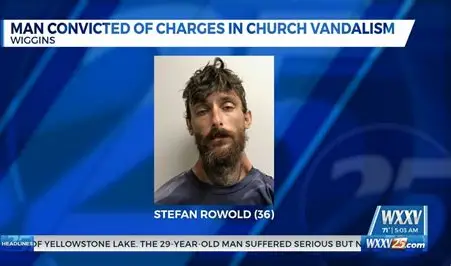
The arsons against The Church of Jesus Christ of Latter-day Saints meetinghouse in Wiggins, Mississippi, occurred on July 5, 2024, and again on July 7, 2024. Stefan Day Rowold (also referred to as Stefan Day or Stefan Pete Day Rowold), was found guilty by a federal jury in September 2025 on six counts, including federal arson and civil rights charges. Location: The Church of Jesus Christ of Latter-day Saints building in Wiggins, Mississippi. July 5, 2024: Rowold used a cinder block to smash through a back door, broke into the building, vandalized the interior walls with hateful messages. He also piled hymnals, copies of the Book of Mormon, and religious paintings in the multipurpose room and set them on fire. July 7, 2024: Rowold returned two days later to "finish the job" and set another fire, using cardboard and a piece of firewood. He had forgotten to bring a lighter, so he turned on a stove burner inside the church and used it to ignite paper. He then set a fire near a wall with cardboard and wood, using gasoline as an accelerant. The church was badly damaged. He was convicted of six federal counts, including arson, intentional damage to religious property (a civil rights violation), and using fire to commit a federal felony offense. Rowold's sentencing is set for January 14, 2026. He faces a minimum of five years and a maximum of twenty years in prison for each of the arson charges. Motive: Anti-Mormonism The Department of Justice explicitly stated that the evidence at trial showed Rowold targeted the Church of Jesus Christ of Latter-day Saints "because of his disagreement with what he believed to be their religious views." The full motive has not been publicly released, but the key to the prosecution's case was proving that the vandalism and arson were motivated by Rowold's animus toward their specific faith. The use of phrases in the graffiti described by officials as "hateful messages" (which led to the civil rights charges) were presented to the jury to demonstrate his specific intent to target that particular religion: making it an act of anti-Mormon bias. The civil rights charges were brought under 18 U.S. Code § 247 (Damage to Religious Property; obstruction of persons in the free exercise of religious beliefs). For a conviction under this section, the prosecution must prove the defendant acted because of the religious character of the property. In this case, Rowold's confessed motive of disagreement with their religious views proved the intent was specific to the LDS faith. Hypocrite Police testified during the trial that Rowold told investigators it “brought him joy” to cause the destruction, and that, when the building did not burn down the first time, he tried again. Testimony during the trial also showed Rowold told investigators he hated the LDS church and spray-painted slurs such as "Child Molesters," "Cowards," and "False Prophets" on the walls. This being 4 years after his own conviction for child molestation in Michigan in 2020 and has repeatedly failed to register in Mississippi and other states. Hateful, Inflammatory and Dehumanizing Rhetoric Though often handled quietly, LDS meetinghouses are regularly vandalized, often in concentrated bursts. The daily reality is there is a steady undercurrent of low-level property crime and vandalism affecting the Church of Jesus Christ of Latter-day Saints across the country. Meanwhile, some "anti-Mormon" sources use inflammatory language, demeaning caricatures, or accusations of harm. This kind of rhetoric can normalize hostility and contribute to a climate where an act of vandalism is seen as acceptable or even justifiable by a small number of people. When vandalism includes specific anti-LDS slogans suggests perpetrators are motivated by a narrative they have encountered, which could come from media or online communities dedicated to criticism of the Church. We stay quiet thinking if a single act of vandalism or a more severe attack (like an arson) is widely reported, it can inspire "copycats." The theory is publicity gives an individual who is already predisposed to hostility an idea, a method, and a target. However, I think this only undermines the valid claim "anti-Mormon" media can translate into physical acts. It deprives us of the examples to point to. The Flaw in the Copycat Protocol When vandalism is a rare, freak occurrence, there is a need to worry about copycats hearing about it. But when vandalism is constant (endemic), the use of the copycat protocol only prevents us from exposing the inciters to deserved shame. In an act like anti-Mormon vandalism, the perpetrator is not seeking unique fame (the crime isn't unique). The perpetrator is seeking validation and a sense of belonging within the hate group or ideology that constantly justifies such actions. Then, the media's continued use of the "don't give them fame" rule might not be protecting against new crime but protecting the hateful ecosystem itself. The anti-Mormon media may not care about the criminal's arrest or fame, but they do care about being connected to violence in the eyes of "decent people." If the crimes are only reported vaguely as just "another incident of religious vandalism," the original rhetoric that created the climate of hatred is never brought to trial in the court of public opinion. https://www.sunherald.com/news/local/crime/article312150089.html
-
New Teotihuacan Linguistic Study (Hansen & Helmke)
Pyreaux replied to Pyreaux's topic in General Discussions
Not yet, but I'm sure he will react. Dr. Stubbs addressed a critique of his own work that was published by Magnus Pharao Hansen in 2019 before this discovery. In 2020, Dr. Stubbs published a response titled "Answering the Critics in 44 Rebuttal Points," where he directly engaged with objections raised by Hansen regarding specific Nahuatl (an Aztecan/Uto-Aztecan language) word comparisons in Stubbs's work on Semitic/Egyptian-Uto-Aztecan connections. Though Hansen's initial critique was not about the Teotihuacan writing system, but specifically challenged the validity of 14 Nahuatl items that Stubbs had compared to Old World words in his work, Exploring the Explanatory Power of Semitic and Egyptian in Uto-Aztecan. In his published rebuttal, Stubbs demonstrated a gracious but firm defense of his methodology. He noted that he appreciated the dialogue, which led him to re-evaluate and, in some cases, strengthen his arguments. He specifically mentioned that Hansen's and another critic's investigations, "together eliminated one item, maybe two, leaving 1,526 matches," suggesting the overall body of evidence for his Semitic/Egyptian hypothesis remained largely intact. Dr. Stubbs likely hasn't had a chance to formally weigh in on the Teotihuacan writing theory itself, he has publicly and positively engaged with Magnus Pharao Hansen's specific critiques on the linguistic data relevant to his own research on the Uto-Aztecan language family. The fact that both scholars work heavily with Uto-Aztecan languages and Nahuatl, and have publicly interacted on technical linguistic points, suggests an ongoing scholarly conversation in this specialized field. -
There is some buzz over new archaeological details about the ancient city of Teotihuacan, and the work of Dr. Brian D. Stubbs in relation to the Book of Mormon narrative. Teotihuacan Linguistic Study A new archaeological study by Magnus Pharao Hansen and Christopher Helmke of the University of Copenhagen has deciphered the writing system in Teotihuacan murals, proposing it records an early form of the Uto-Aztecan language family. The researchers' study, "The Language of Teotihuacan Writing," published in the journal Current Anthropology in late 2025, proposes that the glyphs and symbols on Teotihuacan's murals and artifacts actually constitute a true writing system. They argue that this system uses a combination of logograms (representing entire words, like a depiction of a coyote for 'coyote') and the rebus principle (using the sound of a pictured object to represent a different word or sound). By reconstructing an earlier form of the Uto-Aztecan language (ancestral to Nahuatl—the language of the Aztecs—as well as Cora and Huichol), they have been able to align reconstructed ancient words with the visual symbols. https://archaeologymag.com/2025/10/teotihuacan-murals-reveal-uto-aztecan-language/ https://news.ku.dk/all_news/2025/10/researchers-on-the-verge-of-solving-mexican-mystery/ What Is the Significance? A Writing System Within the Book of Mormon Timeline If confirmed, this is a significant breakthrough in Mesoamerican studies. It would decipher a Writing System and establish that Teotihuacan, flourishing from approximately 100 BCE to 600 CE, had a true writing system, placing it alongside the Maya. It suggests that Uto-Aztecan speakers were present in the Valley of Mexico much earlier than previously thought, potentially making the builders of Teotihuacan the direct ancestors of the Aztecs, rather than the Aztecs being later migrants who arrived after the city's collapse. They correlate with Book of Mormon's Timeframe. A written, thriving period of a major Uto-Aztecan language with the timeline of the Book of Mormon (roughly 600 BCE–400 CE). Teotihuacan Language's Relationship with Semitic-Egyptian Latter-day Saints relying on the work of linguist Dr. Brian D. Stubbs propose connections between Uto-Aztecan and Old World languages. Dr. Stubbs, a specialist in Near Eastern and Native American languages, has published extensively on this topic, most notably in his book 'Exploring the Explanatory Power of Semitic and Egyptian in Uto-Aztecan'. His hypothesis posits that the Uto-Aztecan language family shows evidence of an ancient Semitic (specifically Hebrew/Aramaic) and Egyptian influence. Stubbs presents over 1,500 linguistic connections (cognates) between Semitic/Egyptian and Uto-Aztecan. Crucially, his work is claimed to move beyond mere word similarity by identifying systemic and consistent sound shifts (e.g., Semitic "b" sounds becoming "p" or "kw" in Uto-Aztecan) and morphological correspondences (grammatical structure) that meet or exceed the standards typically used by historical linguists to establish language relationships. While Stubbs's work is respected for its meticulous detail and vast scope among some scholars of the Book of Mormon, it is generally not accepted by the broader mainstream linguistic community. https://journal.interpreterfoundation.org/exploring-semitic-and-egyptian-in-uto-aztecan-languages/ https://scripturecentral.org/archive/periodicals/journal-article/was-there-hebrew-language-ancient-america-interview-brian-stubbs Its More Book of Mormon Mesoamerican Geography Evidence Latter-day Saints have been drawing a direct comparison between archaeological characteristics of Teotihuacan and descriptions of the "land northward" in the Book of Mormon, particularly the Book of Helaman (circa 50 BCE). There four specific parallels between the account in Helaman 3:3-11 and the archaeology of Teotihuacan. 1. Exceedingly Great Distance Northward: Teotihuacan is far north of the Mesoamerican regions often proposed for early Nephite civilization (like Southern Mexico/Guatemala). The city flourished around 100 BCE, consistent with the timeframe for the migration. 2. Large Bodies of Water and Many Rivers: The Valley of Mexico, where Teotihuacan is located, was historically a basin surrounded by a chain of large, interconnected lakes (e.g., Lake Texcoco). 3. Expert Working of Cement: The Book of Mormon mentions the people becoming "exceedingly expert in the working of cement." Teotihuacan is one of the earliest known cities in the Americas to use sophisticated, large-scale lime plaster and cement materials for structural construction, beginning around the first century BCE/CE. 4. Little Timber (Deforestation): Lime cement production requires vast amounts of wood to fire the limestone, which correlates with archaeological evidence suggesting Teotihuacan and the surrounding Valley of Mexico experienced significant deforestation during the city's rapid rise. This forced people to rely more on stone and cement as a building material, as the text describes. These correlations are frequently cited by proponents of a Mesoamerican geography model for the Book of Mormon as strong, specific, and unexpected archaeological evidence that aligns with the text's details.
-
D&C 115:6, 117:14, 118:2, 119:5-6 – is the reference to the land of Zion a reference to all of Missouri? No, it primarily refers to Jackson County, Missouri. In early revelation, Zion was specifically identified as the area centered in Independence, Jackson County, Missouri, where a temple was designated to be built (D&C 57:1-3). Stakes of Zion mentioned in D&C 115:6 are the surrounding areas and communities (such as Far West, Caldwell County, where this revelation was received) that would constitute the geographical, political, and spiritual structure of the larger cause of Zion. By the time of these revelations (1838-1839), the Saints had been expelled from Jackson County. Therefore, "the land of Zion" was both the specific, sacred location (Jackson County) and the broader ideal and goal of building up God's kingdom wherever the Saints gathered (the stakes). D&C 115:13 – Were these three [Joseph Smith, Sidney Rigdon, Hyrum Smith] the only ones restrained from entering into debt for that purpose? Not exactly, other Church leaders and members were also instructed to manage their affairs responsibly and to dedicate their means to building up Zion (D&C 117:5, 11-12), but the direct debt-restraint instruction for the temple was specifically aimed at the presiding leaders who had incurred the most significant financial liabilities in the previous efforts. D&C 115:13 restrains Joseph Smith, Sidney Rigdon, and Hyrum Smith from incurring further personal debt for the building of the designated house/temple. This specific command was addressed to them because they were the primary trustees or stewards managing the Church's financial affairs and the temple building effort at that time, and they had already accumulated significant personal debt in Kirtland for those purposes. This revelation was given in Far West in 1838, following the financial collapses and failures of the Kirtland period, which included great debt over the Kirtland Temple and associated ventures. The Lord was setting clear boundaries for the future work in Missouri. D&C 117:16 – Is the sin of moneychangers applied to individuals in Kirtland who corrupted sacred things by mixing spiritual leadership with greed, power-seeking, or financial manipulation involving church resources and the temple? Yes, this is the generally accepted interpretation. The term "moneychangers" clearly references the New Testament to describe financial corruption. In which many individuals, including some high-ranking Church leaders, had involved themselves in speculation, manipulation, and profiting off Church ventures or the temple's building efforts, ultimately leading to significant debt and loss of trust. Therefore, "overthrow the moneychangers" was a call for the faithful remaining in Kirtland to cleanse the Church of corruption caused by mixing sacred duties with unrighteous financial practices.
-
Yes, you are reciting the historical events surrounding the Salem trip, but still missing the crucial point about the nature and purpose of the revelation itself (Doctrine and Covenants 111). Yes, they were seeking money to pay temporal debts. (Confirmed by the Introduction and the Seminary Manual). Yes, they did not find the physical treasure. (Confirmed by Robinson’s account and the critic's conclusion). Yes, they returned to Kirtland. (Confirmed by the historical narrative). The revelation is not judged by whether or not they found a physical treasure. The revelation's purpose was to shift the focus of the leaders' immediate temporal need to the spiritual priority. Essentially a reproof and redirection from the Lord, turning the brethren's attention from a literal treasure hunt to the work of salvation. The successful fulfillment of this revelation is measured by a spiritual fulfillment, not the financial ones. "I have much treasure in this city for you" (v. 2), referring primarily to the souls of the people ("many people... whom I will gather out in due time"). "Concern not yourselves about your debts, for I will give you power to pay them" (v. 5). The Lord promises to solve the problem in His time and way. "Be diligent in declaring the word" and preach the gospel (v. 9). The brethren failed at their initial, self-directed goal. However, the revelation promises alternative treasure, the growth of the Church in that area and assures them that their temporal debts would eventually be paid through God's power and means, which, as discussed previously, did happen over time through the agency of faithful members. The revelation is not seen as a promise of a successful treasure hunt; hence the work Joseph Smith and his companions began through preaching during their time in Salem led to the establishment of important branches and provided key contacts for the Church's future missionary work in the eastern states and abroad.
-
Is the board really slow loading up for anyone else?
Pyreaux replied to Calm's topic in General Discussions
Before you mentioned it, I thought all day I just had too many windows up, because closing some usually helps and I thought I had a virus. I don't think the 170 Guests on the forum are human. Now it definitely sounds like the forum is still under a cyber attack, specifically involving bots. What Happened: There was a Spam Bot attack or a malicious campaign using botnets to quickly create fake accounts and distribute unwanted content. The mod having to stop new joiners was a necessary action to mitigate this immediate threat. Now Being Very Slow to Log In/Open a Reply Window: following the initial bot attack, strongly suggests a Distributed Denial of Service (DDoS) attack or an Application Layer Attack. DDoS: The forum's server is being overwhelmed by a flood of traffic, requests, or connection attempts, making it slow or unavailable for legitimate users (like you trying to log in or post). Even if the spamming has calmed, a continuous, lower-level flood can still cause severe performance degradation. Application Layer Attack (e.g., Slowloris/R.U.D.Y.): The bots could be opening connections (like when you try to log in or open a reply window) and keeping them open by sending data very slowly, or they could be submitting complex, resource-intensive requests that tie up the server's processing power. 170 Guests That Aren't Human: This is a near-certain sign of ongoing malicious bot traffic. These are likely the bots or automated scripts, possibly part of a botnet, that are constantly hitting the site. They might be DDoS/Stress Testing Bots: Simply making repeated requests to keep the server overloaded. Initial mass bot spamming followed by persistent, unexplained performance slowdowns and a high count of suspicious "guests" is highly consistent with a sustained bot-driven cyber attack, most likely a form of a Distributed Denial of Service (DDoS) attack targeting the forum's application or server resources. -
Double Incident: Mont-Dore, New Caledonia, Sunday evening, October 12, 2025. The same day that a fire significantly damaged an LDS meetinghouse in Te Hauke, New Zealand, Sunday morning. New Caledonia, New Zealand, and Australia are located in the Southwest Pacific Ocean, and while they are geographically connected in the broader context of Oceania. Though separated by a considerable distances of open water. New Zealand's Ministry of Foreign Affairs and Trade describes New Caledonia as its "closest geographic neighbour in the Pacific." The fire caused significant damage to the Church meetinghouse. No injuries were reported. The cause of the fire is under investigation by local authorities. Locally it is believed intentional because that this incident occurred amid a broader pattern of attacks against Catholic religious sites in New Caledonia. Since mid-July of 2024, there has been a documented trend of arson attacks against Catholic churches and missions in New Caledonia, including historic sites near Nouméa and on the Isle of Pines. These attacks have been highly symbolic, with fires ignited in multiple locations (e.g., the altar and entrance) and in some cases, walls have been tagged. These earlier incidents were reportedly linked to rioters and unrest, and were widely condemned by local leaders as "intolerable" and "criminal irresponsible acts." New Caledonia has experienced periods of civil unrest and violence, which have included buildings such as police stations and town halls being set ablaze. While the cause of the Mont-Dore LDS meetinghouse fire is officially unknown, the timing and the recent history of church burnings and civil unrest in New Caledonia will likely lead to rumors and strong suspicion within the community that the fire was criminally motivated (arson), possibly connected to either the ongoing local unrest or the recent fires targeting LDS churches globally (in New Zealand and Australia). https://news-pacific.churchofjesuschrist.org/article/fires-damage-church-meetinghouses-in-new-zealand-and-new-caledonia