All Activity
- Today
-
Church's Policy on Surrogacy - Looking for Input
california boy replied to smac97's topic in General Discussions
You are trying to define what you think marriage should be. But not only does the Supreme Court disagree with you, but by far the majority of Americans also agree, You are definitely an outliner trying to make a case that marriage is all about the plumbing and not the far more importance of establishing a strong legal foundation, committing to a life long relationship and providing a stable environment for raising children. To the majority of Americans, these are the things that bring value to marriage. Pretty ironic that you list polygamous households marriages as being somehow shameful and shouldn't be legalized either. Really? You don't view stable marriage relationships as an important foundation of American society? Well I guess we will have to disagree with that world view. Do you believe gay couples relationship and society in general is better off if they just living together? I am saying plumbing and whether a couple can reproduce are not the only criteria the majority of Americans judge the value of marriage to be. I really don't know many people that share your radical defining reasons for marriage. Maybe it is more of an Utah thing because of the Church's campaign against gay marriage among its members. Do you think there should be a questioner required to be signed stating each partner's sex and whether they will be able to reproduce? -
Does the returned city of Enoch in the future (Moses 7:63) suspend itself (hover) above the future New Jerusalem that will be built in Independence, Jackson County, Missouri prior to the Second Coming?
-

Church's Policy on Surrogacy - Looking for Input
Analytics replied to smac97's topic in General Discussions
Maybe I'm being unfair. You at least sometimes come across as being selective in your focus and outrage for these LGBTQ groups. It doesn't seem reasonable. It seems targeted. I might be wrong. Let's test this. From your last post, you said that you really, really, hate using genders that correspond to somebody's gender identity rather than their biological sex, because using those pronouns would be dishonest. You hate the idea of an employer compelling the use of pronouns you disagree with. Is this principle based, or are you being selective against a particular group? Let's test it with a hypothetical. Say there is a judge who you happen to know really isn't honorable. Are you morally outraged at court decorum requiring you to call a judge "your honor" when you know that particular judge isn't honorable? If so, how often to you go on the internet and complain about how awful this form of compelled speech is? You seem to be in favor of "free speech" laws that protect the use of "true" pronouns at work. Would you also be in favor of "free speech" laws that allow you to call a judge "your dishonor" if you really think he isn't honorable? I appreciate the effort you are making here. You aren't being precise here. The assertion isn't and never was about "a complete list of everything that can exist or act." The assertion is about whether unknown forces or particles can interact with normal matter with enough vigor to have any effect on our everyday lives. And in this context, this doesn't just mean bending spoons. It means subtly nudging an electrical impulse enough to change the probability that a neuron fires. In this context, "spirit matter" (as conceived by Mormonism), "revelation" and other such things are all in the broad category of "new particles or fields". The verdict is unambiguous: we’ve found all of the particles that our best current technology enables us to find. Crossing symmetry assures us that, if there were any particles lurking around us that interact with ordinary matter strongly enough to make a difference to the behavior of everyday stuff, those particles should have easily been produced in experiments. But there’s nothing there. There are probably more particles yet to be found. They just won’t be relevant to our everyday world. The fact that we haven’t yet found such particles tells us a great deal about what properties they must have; that’s the power of quantum field theory. Any particle that we haven’t yet detected must have one of the following features: It could be so very weakly interacting with ordinary matter that it is almost never produced; or— It could be extremely massive, so that it takes collisions at energies even higher than what our best accelerators can achieve in order to make it; or— It could be extremely short-lived, so that it gets made but then almost immediately decays away into other particles. If any particle we haven’t yet found lasted long enough and interacted with ordinary matter with sufficient strength that it could possibly affect the physics of everyday goings-on, we would have produced it in experiments by now. Carroll, Sean M. . The Big Picture: On the Origins of Life, Meaning, and the Universe Itself (pp. 182-183). (Function). Kindle Edition. In this context, "the physics of everyday goings-on" include having enough impact to even subtly affect your brain. He addresses at least part of your point directly: To imagine that the soul pushes around the electrons and protons and neutrons in our bodies in a way that we haven’t yet detected is certainly conceivable, but it implies that modern physics is profoundly wrong in a way that has so far eluded every controlled experiment ever performed. How should we modify the Core Theory equation (shown in the Appendix) to allow for the soul to influence the particles in our body? It’s a substantial hurdle to leap. Carroll, Sean M. . The Big Picture: On the Origins of Life, Meaning, and the Universe Itself (p. 212). (Function). Kindle Edition. Carroll published this 11 years ago, and unsurprisingly it still holds up. If your beliefs about spirit matter and revelation are true, then "modern physics is profoundly wrong in a way that has so far eluded every controlled experiment ever performed." Here's the thing. If you want to expose your beliefs to the baloney detection kit, you can do so. If you don't want to, you don't have to. But arguing with people on the internet isn't the same thing as rigorously examining your beliefs the way Sagan recommends. From my perspective, it seems really internally inconsistent to say that you accept science, but selectively reject its implications on philosophical grounds when it contradicts your religious beliefs, and to say that you are in favor of applying the baloney detection kit to the silly beliefs of others, but don't think it is applicable to your beliefs for philosophical reasons. -

Trademark infringement case against Open Stories Foundation
webbles replied to Calm's topic in General Discussions
The Lanham Act is only for trademarks. A trademark can be a registered trademark or an unregistered trademark. Which trademark of the church (either registered or unregistered) do you see in that image that is causing the confusion? If there isn't a trademark, then there is no Lanham Act case, no likelihood of confusion. Here's my analysis. 1) The church doesn't have a trademark that is related to "Missionaries Coming Soon", either registered or unregistered. The term "missionaries" is a very generic term that lots of religions and use. Unlike Mormon which is both a registered trademark (in geneology and educational services) and an unregistered trademark (the church has used the Mormon term in a lot of different contexts). 2) None of the photos are copyrighted or trademarked either. They all appear to be personal photos. None of them contain temples. None of them contain missionary badges. Only one of them contains a Book of Mormon and it is really fuzzy and not easy to tell. No trademark or trade dress. 3) The church doesn't have a trademark on a blue circle or block font, either registered or unregistered. I don't know why you keep thinking it does. Is there a trademark filing that I'm missing that shows the church owns those trademarks. That would be impressive. So, since the only possible trademark/tradedress is the Book of Mormon that is really fuzzy and hard to read, I don't see how this would trigger a Lanham Act violation. -
Church's Policy on Surrogacy - Looking for Input
Analytics replied to smac97's topic in General Discussions
It isn't telling me "what I want to hear." It is summarizing what I've already said in these conversations. I have limiting principles, but they are intentionally a little bit blurry so that people of good will have some discretion to make good decisions in complicated edge cases. You want not only bright lines but also cops, judges, fines, and jail time enforcing where we pee. I don't think those things are necessary. That doesn't mean I don't have limiting principles. It just means you've failed to convince me that these laws are necessary. If you want to know what I believe, let's start with what I've already said. I asked GPT the following: Prompt: Go back to the list of 20 propositions. Please steel man each one so that they accurately represent the person or organization quoted. Then search all of the threads on this topic, and see if I have commented on that topic. Then very briefly explain my actual position. Do that for all 20 points. If I haven’t said or implied something on one, say so and move to the next. GPT: I kept Smac’s numbering, but separated what the cited source actually maintains from the additional implications in his wording. I searched across the related threads and your available post history, including older discussions of medical treatment, pronouns, schools, biology, and sports. Some pages were inaccessible, so “not found” means I did not locate a stated or clearly implied position—not that you necessarily hold no opinion. Where an original source was inaccessible, I used its quotation reproduced in the thread. 1. The reality and authority of gender identity Source position — HRC: Gender identity is a person’s deeply felt internal understanding of themselves. That self-understanding should be respected when recognizing their gender. This does not, by itself, establish a particular scientific theory about how gender identity develops. Human Rights Campaign Your position: You use gender identity to mean someone’s internal sense of themselves, distinct from sex recorded at birth. I found no specific commitment to a theory of its innateness. SCOTUS Decision: Ban on "Talk" … 2. Recognition of transgender women as women and transgender men as men Source position — HRC’s Alphonso David: Transgender women genuinely belong to the category women, rather than merely receiving an honorary designation. He defines womanhood through an adult’s understanding of herself as female; that is not a claim that identifying differently changes chromosomes. Senate Judiciary Committee Your position: You recognize transgender people socially while distinguishing gender from biological sex. You explicitly reject making gender identity replace biological sex for every legal purpose. Mormon Dialogue & Discussion Board 3. Recognition without mandatory medical transition Source position — GLAAD: Being transgender does not depend on obtaining a diagnosis, hormones, or surgery. People should not lose recognition because they cannot or do not wish to undergo medical procedures. Mormon Dialogue & Discussion Board Your position: For ordinary restroom use, you favor individual judgment and sincere identity, not mandatory medical qualification. You exclude insincere claims made as a pretext. Mormon Dialogue & Discussion Board 4. Identity denial as a personal harm Source position — GLAAD: Deliberately invalidating someone’s gender identity can attack their dignity and social legitimacy, not merely dispute an abstract definition. GLAAD expressly connects targeted misgendering with denying who a person is and with broader stigmatization. GLAAD Brand Portal Your position: You advocate empathy and respectful treatment. I found no statement equating every disagreement about gender classification with denying that a person exists. Mormon Dialogue & Discussion Board 5. Biological sex and the limits of rigid classification Source position — HRC: Intersex variation and medical transition demonstrate that sex characteristics are not perfectly uniform or immutable. HRC therefore rejects describing sex through rigid, exceptionless categories. Human Rights Campaign Your position: You explicitly argue that sex results from biological processes rather than an immutable essence, and that a strict binary model does not fully describe all variations. You expressly say this need not imply a third sex. Mormon Dialogue & Discussion Board 6. The meaning of “sex assigned at birth” Source position — HRC/GLAAD: The phrase identifies the classification given to someone at birth, ordinarily based on observed anatomy, which may differ from their later gender identity. It does not inherently mean the classification was arbitrary. Human Rights Campaign Your position: You introduced definitions explicitly tying the recorded classification to observed genital anatomy, while recognizing that atypical development can require a more involved assignment process. You have not claimed doctors invent biological sex. SCOTUS Decision: Ban on "Talk" … 7. Names and pronouns Source position — HRC/GLAAD: Use people’s stated pronouns and current names, correct misgendering, and respect confidentiality concerning former names. These are expectations of respectful treatment, not merely optional linguistic preferences in the organizations’ accounts. Human Rights Campaign Your position: You say you try to use requested pronouns as a courtesy. I found no blanket claim from you that every mistake is equivalent to a slur. Mormon Dialogue & Discussion Board 8. Language that distinguishes sex without delegitimizing people Source position — HRC: Contrasting transgender people with supposedly “real” men or women treats transgender identities as inauthentic. Its objection is to that framing—not, in the quotation supplied, a comprehensive prohibition on describing anatomy or reproductive characteristics. Mormon Dialogue & Discussion Board Your position: You openly use biological-sex distinctions and have supplied definitions involving sperm, ovaries, chromosomes, and anatomy. You do not treat discussing those characteristics as inherently objectionable. SCOTUS Decision: Ban on "Talk" … 9. Affirmation, exploration, and conversion therapy Source position — distinguish the organizations: HRC condemns the model called gender exploratory therapy as conversion therapy. WPATH, however, explicitly recommends open exploration without favoring a particular identity and distinguishes that from efforts predetermined to make someone identify with their birth-assigned sex. These are not adequately summarized as opposition to all exploration. Human Rights Campaign Your position: No specific position found on affirmation versus exploratory therapy or watchful waiting. 10. Medical transition as healthcare Source position — HRC: Transition-related treatment can be medically necessary and lifesaving; access should not be categorically denied through legislation. That is a claim about access to indicated care, not proof that every requested intervention is appropriate. Human Rights Campaign Your position: In October 2024, you explicitly said other people’s treatment belongs between them and their doctors, and whether an intervention is advisable must be assessed case by case. You did not endorse every intervention indiscriminately. Mormon Dialogue & Discussion Board 11. Treatment and recognition of transgender minors Source position — WPATH: Some adolescents may appropriately receive transition-related treatment, subject to assessment of sustained gender incongruence, maturity, relevant mental-health concerns, and informed consent or assent. Parents ordinarily participate, with exceptions when involvement would be harmful or infeasible. NCBI Your position: You opposed government micromanagement of these decisions and expressly favored decision-making by parents and children, alongside your case-specific medical approach. No specific age thresholds or detailed eligibility protocol found. Mormon Dialogue & Discussion Board 12. Detransition, comorbidities, and social influence Source position — distinguish the organizations: GLAAD rejects “rapid-onset gender dysphoria” as a misleading explanatory framework. WPATH describes adult detransition as uncommon but acknowledges regret, uncertainty about youth trajectories, and the need to assess co-occurring mental-health concerns. That is not a recommendation to disregard those concerns. Mormon Dialogue & Discussion Board Your position: No specific position found on detransition rates, desistance, autism, trauma, or social-contagion hypotheses. 13. Restrooms, sports, prisons, and other facilities Source position — distinguish the settings: GLAAD supports gender-identity-consistent restroom access. NWLC explicitly supports transgender women’s participation in women’s sports. WPATH’s institutional-housing guidance considers identity, preference, and safety—not identity alone. These are substantive inclusion positions, but not one identical rule covering every setting. GLAAD Brand Portal Your position: You distinguish restroom discretion from sports eligibility and prison security. You favor leagues deciding sports rules and have explicitly objected to claims of an automatic right to women’s elite competition. Mormon Dialogue & Discussion Board 14. Distinguishing people by medical-transition status Source position — GLAAD: Someone who has not undergone medical transition is not therefore less genuinely transgender or less deserving of recognition. This does not itself establish that every treatment-related eligibility distinction in every setting is forbidden. Mormon Dialogue & Discussion Board Your position: Your restroom rule requires no medical test, but you allow context-specific eligibility rules elsewhere. No explicit position found on “transmedicalism” as a doctrine about who counts as transgender. Mormon Dialogue & Discussion Board 15. Personal experience and empirical evidence Source position — GLAAD: Reporting should accurately represent transgender people and avoid amplifying claims it regards as false or dehumanizing. The quotations do not establish a principle that personal experience overrides contrary data. Mormon Dialogue & Discussion Board Your position: You demand empirical evidence, attention to limitations, separation of findings from value judgments, and specification of evidence that could change a conclusion. You do not assign personal experience automatic priority over data. Mormon Dialogue & Discussion Board 16. Questions, debate, and harm Source position — GLAAD: Policy discussion can be legitimate, but GLAAD regards challenges to transgender people’s identities and legitimacy, and targeted misgendering, as potentially dehumanizing rather than neutral debate. It expressly distinguishes legitimate discourse from harassment. GLAAD Brand Portal Your position: You invite discussion of definitions and evidence. You explicitly oppose disciplining women merely for good-faith privacy concerns or accommodation requests. SCOTUS Decision: Ban on "Talk" … Mormon Dialogue & Discussion Board 17. Explaining opposition Source position — GLAAD: Prominent campaigns against transgender inclusion rely, in its account, on stigmatizing stereotypes and misinformation rather than the neutral concerns they profess. That is its characterization of those campaigns—not evidence that every possible disagreement has the same motive. GLAAD Brand Portal Your position: You have attributed opposition to manufactured fear and political motives, sometimes broadly. But you also recognize good-faith concerns and explicitly say accusations of bigotry require explanation rather than substituting for argument. Mormon Dialogue & Discussion Board 18. Expectations of allies Source position — GLAAD: Allyship should involve action: respectful language, challenging derogatory remarks, listening, and supporting inclusion. Its guidance nevertheless acknowledges that no single response fits every situation and that allies have limits. All Peoples UU Your position: You ground your views in empathy, limited government, and goodwill—not allegiance to an activist platform. No position found requiring allies to repeat slogans or endorse every organizational position. Mormon Dialogue & Discussion Board 19. Women’s rights, gay rights, and competing interests Source position — NWLC: Including transgender women is part of advancing women’s rights, and exclusionary policies can harm both transgender and cisgender women. The supplied quotations do not establish an obligation for gay people or lesbians to change their attractions or accept particular partners. National Women's Law Center Your position: You explicitly count biological women’s safety, privacy, dignity, and competitive interests, rather than dismissing them. No position found requiring anyone to alter their sexual attractions. Mormon Dialogue & Discussion Board 20. Nonbinary and other gender-diverse identities Source position — HRC: Nonbinary and gender-diverse people deserve recognition and respectful treatment alongside binary transgender people. That supports including those identities; it does not establish an obligation to expand classifications indefinitely or accept every conceivable identity claim. Human Rights Campaign Your position: Implied: Your general pronoun-courtesy principle is not restricted to binary identities. No specific position found on xenogenders, an exhaustive gender taxonomy, or mandatory continual expansion of recognized categories. Mormon Dialogue & Discussion Board -
Church's Policy on Surrogacy - Looking for Input
Analytics replied to smac97's topic in General Discussions
Do you like audio books? Most of the book is pretty conversational, so if that is a more accessible way for you to ingest information, you might want to consider listening to it. He says science is based upon "methodological empiricism", the idea that we can learn about reality by empirically observing it. He claims that if we carefully look at reality, a natural world is what we see. Naturalism is a result of the science, not a premise. Carroll talks about different "domains of applicability" of different theories, and "poetic naturalism" as the license to use things other than particle physics to examine more complex interactions, e.g. chemistry, biology, physiology, psychology, sociology, economics, etc., are all valid ways of looking at the world. It wouldn't be insightful to try to describe the economy in terms of a system of fermions and bosons. However, if you dive down deep enough,quantum mechanics is how the world works on a subatomic level. Throw in what we know about gravity, and we have the Core Theory. There could be and probably are crazy things going on at much tinier scales. And weird stuff we don't understand happens in, say, black holes. But on the scale of our lives, Quantum Field Theory explains reality very accurately. We can be confident that the Core Theory, accounting for the substances and processes we experience in our everyday life, is correct. A thousand years from now we will have learned a lot more about the fundamental nature of physics, but we will still use the Core Theory to talk about this particular layer of reality. From the perspective of poetic naturalism, there is one story of reality we can tell with confidence, in a well-defined domain of applicability. We can’t be metaphysically certain of this; it’s not something we can prove mathematically, since science never proves things. But in any good Bayesian accounting, it seems overwhelmingly likely to be true. The laws of physics underlying everyday life are completely known... The constraints provided by quantum mechanics and relativity make quantum field theory an extremely restrictive and unforgiving framework. We can use that rigidity to map out how well we’ve tested the Core Theory, the specific set of fields and interactions that governs our local environment. The answer is: really well. Enough to be convinced that we know what the relevant particles and fields are in this regime, and any new discoveries will involve phenomena that only manifest themselves elsewhere—at higher energies, shorter distances, more extreme conditions. But how do we know, even if we can’t directly see new particles or fields, that they can’t exert some subtle but important influence on the particles that we do see? Carroll, Sean M. . The Big Picture: On the Origins of Life, Meaning, and the Universe Itself (p. 186). (Function). Kindle Edition. That last question in bold is the one @smac97 doesn't understand. We do in fact "know" (Carroll's word) that any "new particles or fields" (which would include spiritual forces and spirit matter as imagined by Mormonism) "can't exert some subtle but important influences on the particles that we do see." This is a startling claim. "How do we know, even if we can’t directly see new particles or fields, that they can’t exert some subtle but important influence on the particles that we do see?" Carroll explains in detail how we "know" that. Sure. We can't "prove" that when we aren't looking, the toys don't jump to life and have eventful, dramatic lives, but then run back to where they were and pretend they are dead when we aren't looking. There is no way to prove that. All we have is the evidence based on the experiments. The Core Theory has been "spectacularly successful at accounting for every experiment ever performed in a laboratory here on Earth." (p. 176) -
Trademark infringement case against Open Stories Foundation
Notatbm replied to Calm's topic in General Discussions
You might be shocked, but an unsuspecting non member who just sees hundreds if not thousands of pictures of lds missionaries, books of Mormon and background shots of temples just may think the site is owned by the Mormon church. I mean everyone knows what Mormon missionaries look like. besides that blue circle and block font just screams “ Mormon church.” Doesn’t it? -
Trademark infringement case against Open Stories Foundation
webbles replied to Calm's topic in General Discussions
He doesn't qualify it that way. He kind of says this idea twice. One time, he is talking about the banner and basically says that it is obvious that the banner wasn't trying to deceive any one because it has his face and 10-15 of the most "well-known apostates". So, his picture and the other pictures are enough to know the podcast is critical of the church. The other time, he is talking about how the church is trying to protect the members from listening to him and how nobody would look at him with his beard and think it was run by the church. He says that any active faithful member of the church would only need 2 minutes to look at the title, thumbnail, or listen to the podcast to know it is critical of the church. -
Trademark infringement case against Open Stories Foundation
webbles replied to Calm's topic in General Discussions
Can you be more specific on how you feel that causes "Likelihood of Confusion"? Which trademarks of the church is being used or mimic'ed? What trade dress of the church is being used or mimic'ed? I'm having a hard time seeing anything that would trigger a likelihood of confusion. If that was an actual church owned page, I would be shocked. -

Trademark infringement case against Open Stories Foundation
Calm replied to Calm's topic in General Discussions
Very doubtful. Does he qualify that as “if they have heard of me, they know I am critical”? (Most won’t have heard of him, I bet.) Because that makes more sense to me and might even be right, though I suspect it’s more significant majority rather than absolute all. He had been used as a source by media and they don’t always present him as a critic or former member iirc, so it’s possible they don’t know that side of what he does. -
Trademark infringement case against Open Stories Foundation
Notatbm replied to Calm's topic in General Discussions
They would have trouble with this icon as well. Is it affiliated with the church? I dont see these guys getting sued and they are obviously playing the Mormon ooops I mean the church of Jesus Christ of latter day saints card with all the missionaries and their name tags.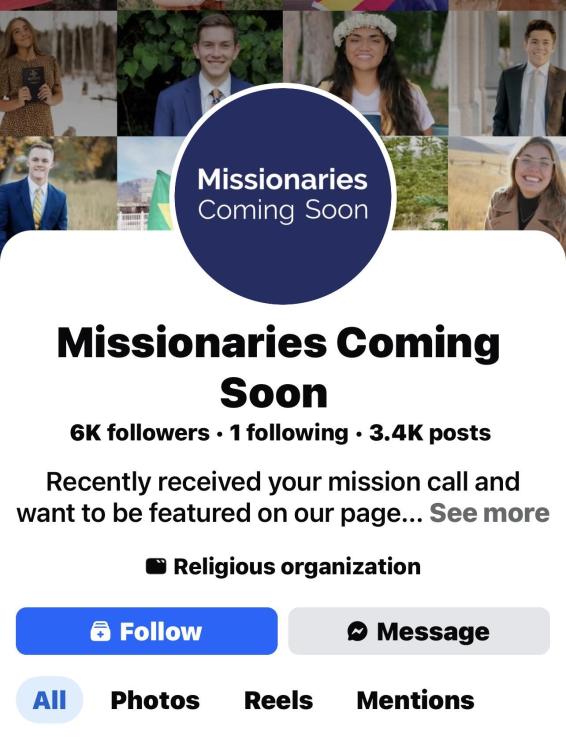
-
Trademark infringement case against Open Stories Foundation
webbles replied to Calm's topic in General Discussions
For the Lanham Act, it doesn't have to be 100% identical. The legal definition is "Likelihood of Confusion". And there are several factors that are at play. The fact that it is blue, has the word "Mormon", and has light rays that are angled similarly could cause confusion for consumers (both mormons and non-mormons). If you showed that list to a group of non-mormons and asked them to pick out the icon that is NOT affiliated with the church, do you think they would pick the "Mormon Stories" one? https://www.reuters.com/practical-law-the-journal/litigation/trademark-litigation-likelihood-confusion-2023-03-01/ seems to be a decent rundown on the mechanism. It isn't short but I think it explains the various angles that are involved. It is a bit complicated because they look at a whole bunch of things. -
Trademark infringement case against Open Stories Foundation
webbles replied to Calm's topic in General Discussions
There's a podcast from Dehlin about the podcast that had the church's lawyer. I spent the time to listen to it. It was interesting to hear his point of view. But I think there were several things that were confusing. He and the guest (Meggan) talk about how they think the church was acting in bad faith. That when they sent the first email, they were already planning on destroying him but didn't want to announce it. He says he complied with the first email and was surprised by the request to go to mediation because he had already done everything that was asked. And then the mediation surprised him by asking for more things. And then the lawsuit was filed. Each time, he was complying and just feels like the church never was going to accept his compliance. His evidence is that the verbal disclaimer wasn't asked for in the initial email and since that is what they are demanding now, it obviously shows that they were acting in bad faith. The problem, I see, with that reasoning is that the initial email talks about all the marks, which includes "Mormon". The email asked him to "remove and discontinue" all trademarks (which includes "Mormon") and make it so that visitors know it isn't affiliated with the church. So, from the very beginning, the church asked him to rename Mormon Stories and do things to reduce confusion. His initial response didn't reduce the confusion. He only did a few minor updates. So the church went to mediation (at their own expense) to figure out what could be done to reduce confusion. My guess is that Dehlin and Meggan just assume that Mormon can't be a trademark and so don't see that ask in the initial email. You can see the entire email chain at https://storage.courtlistener.com/recap/gov.uscourts.utd.163775/gov.uscourts.utd.163775.42.2.pdf and the final email after mediation https://storage.courtlistener.com/recap/gov.uscourts.utd.163775/gov.uscourts.utd.163775.42.3.pdf. He talks about he never intentionally tried to mimic the church's design. He instead hired some designers to make his logo and banner. And that could be 100% true but it doesn't have any impact on trademark infringement. No intent is needed. He also talks about the Christus image in his banner and thinks it might not even be the church's logo and so it isn't copyright infringement. But the church does own that image. It has 2 versions of it. One that is in the logo and one that is by itself (https://publicrecords.copyright.gov/detailed-record/siebel_VA002486714). Yes, the physical Christus statue doesn't have a copyright, but any pictures or drawings of it have their own separate copyright. He also thinks the banner is obviously not trademark infringement because: it contains the word "Mormon", it has his face, and the faces of some of the most high profile excommunicated members. How could "anybody who has a brain" think that the banner shows that the church was affiliated with the podcast. But he is missing the point. He knows these people because he is in that circle. If I asked my wife and other family members if they recognized those faces, I doubt less than 25% would know them. And these are all LDS. If I asked a non-member, I would expect the number to be less than 10%. The word "Mormon" means the church in the common sense. So, a non-member who sees something with the word Mormon, a doctor, and some nice faces has no way to realize that it isn't connected to the church. He thinks the church is trying to protect members by adding the disclaimer. But since all members already know he is critical of the church (doubtful but I'll concede that), then there is no confusion. Except the consumers aren't just members of the church but non-members. And they don't know him. Dehlin is so focused on how the confusion impacts members, he is missing the vast majority of people that would be confused. -
I believe this may be the droid your mother warned you about
- Yesterday
-
Trademark infringement case against Open Stories Foundation
Notatbm replied to Calm's topic in General Discussions
The church cant even decide which shade of blue to use. Here are a few samples (with MS included) from the lawsuit. I suppose another questions may be about the light rays. Does the church feel they own a right to uses of any light rays or just rays that look the same as what the church uses in some of its logos? If that is the case, the rays on the MS logo do not match the ones used by the church. https://www.deseret.com/faith/2026/04/19/church-of-jesus-christ-files-trademark-complaint-against-podcaster-for-alleged-imitation-of-brands/
-
Trademark infringement case against Open Stories Foundation
webbles replied to Calm's topic in General Discussions
When I look at the icons from the initial argument (page 2 of https://storage.courtlistener.com/recap/gov.uscourts.utd.163775/gov.uscourts.utd.163775.1.0.pdf), I don't think his color is that close to the church's logos. His is more blue compared to the others. But yeah, his color change after mediation does make it feel like the church felt the blue was important. I just don't think they have a trademarked blue and if he just had a blue logo that was identical color to one of the church's icons but said "Open Stories", I don't think the color would have triggered this response. -
Trademark infringement case against Open Stories Foundation
webbles replied to Calm's topic in General Discussions
I was being a little sarcastic since your hypothetical was really extreme. You mentioned people that do this and then brag about it. So those people would be known. But I really don't see this happening at all. One, I doubt Dehlin would want to ban temple endowed people from the jury since that would ban people like you who would probably vote for him. I suspect that most of those that are for Dehlin once went through the temple. So banning on that pretext is a really bad idea for him. And discussing religion (such as temple covenants) in jury selection is not allowed. The lawyer would ask other questions to tease out if a person is for or against Dehlin from the beginning and that would be a much better way than doing a blanket ban on temple endowed people. -
Trademark infringement case against Open Stories Foundation
Calm replied to Calm's topic in General Discussions
Dehlin did change it to orange iirc when he was working with the Church to settle. Just making that observation that it might have been mentioned by the Church in the negotiations. Would be interesting if they didn’t, but Dehlin changed it on hs own as that suggests o me he understood it as contributing to confusing. And given all the blues out there they could have chosen from, seems intentional. -
Trademark infringement case against Open Stories Foundation
webbles replied to Calm's topic in General Discussions
I tried to see if the church owns a blue trademark but I don't see any. And going through the lawsuit papers, I don't see any mention of a blue related trademark. Just the names, light rays, and images. They do talk about the blue logo and how it looks similar but no mention of a trademark specifically around a blue color. I do agree that there is a blue tone range but I don't think the church can prevent anyone from using it. -
Trademark infringement case against Open Stories Foundation
Notatbm replied to Calm's topic in General Discussions
How would anyone know why the juror voted the way they did? Unless they go around saying yea dehlin didn’t do anything wrong but I voted against him anyway fetch that guy I don’t see how a redo would be triggered. -
Trademark infringement case against Open Stories Foundation
Calm replied to Calm's topic in General Discussions
There is a particular blue tone range as well I call Mormon blue. This website uses it. So does FAIR. I know FAIR got a license to use the stuff similar to the official site, both verbal and visual. I know several other LDS members’ sites that had to as well. I assume this board did as well, but can’t remember if Nemesis reported this or not. -

Trademark infringement case against Open Stories Foundation
bluebell replied to Calm's topic in General Discussions
I think you are right. Agreeing with everything the church does is different than consecrating our efforts to the kingdom of God. -
Trademark infringement case against Open Stories Foundation
webbles replied to Calm's topic in General Discussions
I doubt the temple covenants would be brought up. But I would think Dehlin would prefer to have believing members on the jury. I think he would have a harder time convincing non affiliated people that he wasn't causing confusion. Also, if a voter did do what you say, it would just trigger a redo. And I really don't see why the temple covenants would be invoked. Because the worst that could happen to the church is that Mormon Stories continues as it is and the church pays lawyer fees. There's no protection needed for the church. Dehlin, on the other hand, could loose a lot. He needs more protection. -
Trademark infringement case against Open Stories Foundation
Notatbm replied to Calm's topic in General Discussions
If this whole mess goes to trial, is there a chance Dehlin will be able to get rid of jurors who profess to be active temple recommend holding members? Reason I ask is because part of the endowment specifically has a person covenanting to consecrate everything to the kingdom of God...to include their very lives. Certainly voting in favor of the church in this case would be protecting the kingdom of god whether the plaintiffs prove their case or not. I know I have family members who would vote like that and also brag about voting that way. Lying for the lord comes to mind. Jury selection certainly can be an interesting show if it happens. I bet that temple script gets trotted out in selection. -
Trademark infringement case against Open Stories Foundation
webbles replied to Calm's topic in General Discussions
I don't agree that the church would sue her if she had gotten a trademark. I don't really see why the church would sue her. Since the church filed an opposition to the USPTO, it is already trying to block the trademark. If the USPTO still granted that trademark, it gives her a really strong argument against the church. Any lawsuit they file afterwards is starting on weak footing. Anything that was already brought up at the USPTO would probably not be allowed in the lawsuit (https://en.wikipedia.org/wiki/B%26B_Hardware%2C_Inc._v._Hargis_Industries%2C_Inc. was a Supreme Court ruling that says issues argued in front of the USPTO are precluded from district court cases).