


Clear
-
Posts
36 -
Joined
-
Last visited


Clear's Achievements





-
I Just wanted to make a comment on the problem with adding personal context to the english translation. Telnetd said: “Right. But it's Paul, not Peter. That group is not his group. That is why he says, "Else what shall we they do which are baptized for the dead, if the dead rise not at all? why are we they then baptized for the dead?" It's reasonable to believe Paul's use of "they" instead of "we" meant that neither he or the Corinthians performed proxy baptisms.” This conclusion is far too tenuous to make for the data given since this comment is reading too much into the rendering of the underlying Greek. Let me explain: The verbs rendered “they” in 1 Cor 15:29, is simply a 3rd person form and is not indicative of any specific group. For example, “Τι ποιησουσιν” rendered “What [shall] they do” does not simply indicate any specific group, and thus, it is no more correct than the rendering: “what shall individuals do”, or “what shall those do”. It is not necessarily referring to any other group other than those who are “doing” a thing (though one can excuse the conclusion since the word "they" often does refer to a specific group). For example, in the second sentence, “ἐγείρονται” (3rd Person plural) does refer to the “νεκροὶ”, and refers specifically to those who were dead while “Βαπτιζονται” is non-specific and simply refers to those baptized. It does not indicate “They”, any more than “those” or the non-specific “individuals” (plural).
-
Mind blown, learning of women apostles for the first time.
Clear replied to Tacenda's topic in General Discussions
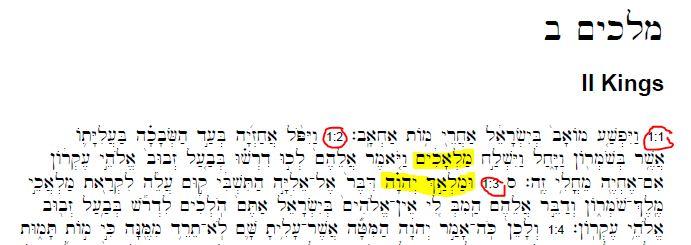
Calm said: “But the Bible is a religious, not a secular text, so shouldn’t religious context be assumed rather than a secular one unless more local context indicates a secular use? “ I think this is perfectly good logic. The problem is not in your logic, but lies in the ambiguity of language. 1) THERE IS AMBIGUITY INHERENT TO BIBLICAL GREEK (AND HEBREW AS WELL) Part of the problem is that religious histories are written, using secular language and language has ambiguity. Translation from source language increases ambiguity. (Let’s leave translator bias out of this for the moment…) Let me give you a simple example (that you ought to look up for yourself). If you look up the secular Koine Greek word for “message” is it ἀγγελία (angelia) and the koine for “messenger”, is ἄγγελος (angel). The words are similar since their roots are the same. (Just as a person who “runs” is a “runner”. The words “messenger” and “message” are secular words that religion makes use of and only the context can tell us if the messenger (angel) is a divine being, or a mortal boy, sent to give his father the message that “it is time for dinner”. The simple base word “messenger” (“αγγελοσ”) without additional context doesn’t distinguish between the two. Without context, the greek word αγγελοσ is ambiguous. 2) AN EXAMPLE OF BIBLICAL AMBIGUITY CLARIFIED BY ADDITIONAL CONTEXT Let me give you an example from the Greek Septuagint. In 2nd Kings 1:2-3, verse 2 text tells us Ahaziah “sent messengers” (ἀπέστειλεν ἀγγέλους / i.e. sent “angels”). These angels/αγγελους are simply mortal men. In verse 3 the text tells us the “angel of the Lord said to Elijah” (ἄγγελος Κυρίου ἐκάλεσεν Ἠλειοὺ). THIS angel/αγγελος is a divine messenger. We are using a single word to describe two different types of beings. The first angel/ανγελοσ is a mortal person who has a message while the Second angel/αγγελοσ is a divine messenger of Jehovah. IF you remove the context “of the Lord”, then one cannot distinguish the two types of beings. Thus, the base word “angel” simply means “messenger”. One MUST add additional context to know if it is a messenger/angel that is a man, or if it is a messenger/angel that is a divine being. Below is a picture of the text. The verses are circled in red and the two occurrences of the word Angels/messengers are highlighted in yellow: The same is true for the Hebrew word for messenger, “malak”. The base word Malak simply means messenger. One must add additional context if one means a divine being with a message, or one means a young boy sent to his father with the message that “dinner is ready”. For Hebrew readers, the same verses from Ben Chayim is pictured below; the verse numbers are circled in red and the two instances of angels/malachim are highlighted in yellow. Notice the SAME pattern for angel/malak in hebrew as for angel/αγγελοσ in Koine Greek . The Malakim in verse two are the mortal messengers sent from King Ahaziah and the second divine messenger is a Malak Jahweh (messenger/angel of Jehovah). IF you leave the word Malak, but REMOVE the additional context (“of Jehovah”) from the sentence, one cannot tell if the second messenger is divine, or if it refers to another mortal man. I hope this example is understandable and makes sense that sacred texts use secular words and one MUST add additional context to distinguish what certain words meant. 3) THE KOINE GREEK SECULAR WORD APOSTLE/αποστολοσ FOLLOWS THE SAME PATTERN The same principle applies to the Greek word for “apostle”. It is simply someone who is “sent” and the text MUST add context to tell if the person “sent” is a holder of divine priesthood or a person who is sent to help with chores.
-
Navidad, speaking to Calm said: “I am sorry my friend, but I have always found chapter 41 of the Gospel Principles a cacophony of confusion, especially related to the spirit prison side of it. It is defined in different ways, inclusive of hell. It also quotes the Book of Mormon to describe Spirit prison (one of the two states of the spirit world) as the place of the wicked.“ @Navidad: I liked your story of the young Catholic Priest and his wonderful and kind administrations to you and your wife. That was wonderful kindness. It underscores my belief that there are good and wonderful and sincere people in all religions. I understand Brigham Youngs comment when he wished that the protestants had taken more of such doctrines with them when they split from the Catholics. Regarding the concept of “spirit prison”, in Chapt 41 of Gospel Principles being confusing, I think the ancient Judeo-Christian literature offers multiple descriptions, that, as a historian, appeal to me in their simplicity (though they parallel Restorational doctrines). Some are strictly ancient Jewish, others ancient Christian, and other literature is syncretic (both) For example, the early Judeo-Christian description of the world of spirits is described somewhat differently than the later Roman Movements version of “purgatory” but more detailed and parallels Restorational theology. 1) VARIOUS TEXTS REFER TO THIS SPIRIT WORLD BY DIFFERENT NAMES Some confusion is caused by translation since, in describing the “intermediate” world between mortality and Final Judgment Both writers and translators of various early texts use many words somewhat arbitrarily in their translations, to refer to this place such as SHEOL - HADES - SPIRIT WORLD, PARADISE, PURGATORY, etc. (…sometimes "HELL" is used). The TERM “Purgatory” may be a later term, but the doctrine itself existed among the earliest Judeo-Christians. Because translators use so many different terms for the same place, Occasionally, it is only the context that removes confusion. 2) ALL WHO LIVE AND DIE GO TO THIS SPIRIT WORLD WHILE AWAITING RESURRECTION AND JUDGMENT In the earliest version of this doctrine, it is not merely the "bad" people who enter the world called hades, but rather ALL who leave mortality through death enter the place in the middle, i.e. Sheol, hades, spirit world, paradise, etc. Many ancient references refer to and describe the vast early Christian decensus literature as a genre. For examples. The “complainer” Ezra complains regarding the end of his life : “Bewail me, all holy and just ones, because I have entered the bowl of Hades.” (Apocalypse of Ezra7:1) The glorified Jesus reminds Ezra that he had been there as well : “Hear, Ezra, my beloved one. I, being immortal, received a cross, I tasted vinegar and gall, I was set down in a grave. And I raised up my elect ones and I summoned up Adam from Hades (The Greek Apocalypse of Ezra 6:26 & 7:1-4). In this ancient theology, all souls, including the Patriarchs, upon dying, have their spirits placed into this spirit world. : “do you not know that all those who (spring) from Adam and Eve die? And not one of the prophets escaped death and not one of those who reign has been immortal. Not one of the forefathers has escaped the mystery of death. All have died, all have departed into Hades, all have been gathered by the sickle of Death.” (TESTAMENT OF ABRAHAM (recension A) 8:9; 7) “ And Death said, “Hear, righteous Abraham, for seven ages I ravage the world and I lead everyone down into Hades – kings and rulers, rich and poor, slaves and free I send into the depth of Hades (T of Abr (rec A) 19:7) . “...the undefiled voice of the God and Father came speaking thus : ‘Take, then my friend Abraham into Paradise, where there are the tents of my righteous ones and (where) the mansions of my old ones, Isaac and Jacob, are in his bosom..”. (TESTAMENT OF ABRAHAM (recension A) 20:9,13-15) None of these references refer to the punishment of "Hell" that individuals may be sent to after the Judgment, but Hades was also a name for this "spirit world"; the "place in the middle". Another point of confusion regarding Hades is that the experience there is NOT the same for all individuals since individuals are divided according to their degree of righteousness. Thus the ancient texts describe it differently according to who is sent there (i.e the righteous vs the unrighteous). I think that the catholic version of this early doctrine took on a bit different character partly because in some contexts, this spirit world was a sort of bondage; a "prison" of sorts. I’ve liked the LDS version from a historical standpoint from the moment I discovered it. 3) CONDITIONS IN HADES VARY ACCORDING TO THE MORAL CHARACTER OF THE PERSON WHO INHABITS IT Another point of confusion regarding Hades in the earliest version of this doctrine, was that the experience there is NOT the same for all individuals since individuals are divided according to their degree of righteousness. For the righteous, it was pleasant, for those who were evil, it was a prison of sorts. This partly explains it's association with punishment.... Thus the ancient texts describe it differently according to who is sent there (i.e the righteous vs the unrighteous). Since the dead had looked upon the long absence of their spirits from their bodies as a bondage of sorts, was often referred to as a "prison" in early textual references. In describing Sheol, Enoch is shown in his vision that this place has separate “areas” for individuals to be “assigned to”. In his vision, the Prophet Enoch asks the angel : ”For what reason is one separated from the other? And he replied and said unto me, “These three have been made in order that the spirits of the dead might be separated. And in the manner in which the souls of the righteous are separated (by) this spring of water with light upon it, in like manner the sinners are set apart when they die and are buried in the earth and judgment has not been executed upon them in their lifetime,... until the great day of judgment...They will bind them there forever–even from the beginning of the world. ....Such has been made for the souls of the people who are not righteous, but sinners and perfect criminals; they shall be together with (other) criminals who are like them. (1 Enoch 22:9-13 - i.e. "Jewish Enoch") Since the righteous are with the righteous, they seem to adapt to a calm existence, the unrighteous, being grouped with others of their type and having increased awareness of the result of their moral choices become unhappy in their regrets and distress. And, Sheol itself also had a “middle place” according to this ancient model. In Abraham’s description of Hades, he asks the angel : “Is one who is unable to enter through the strait gate unable to enter into life?...4 And Michael answered...you will enter through it unhindered, as will all those who are like you.”...And when they went, they found an angel holding in his hand one soul of a woman from among the six myriads, because he found (her) sins evenly balanced with all her works, and they were neither in distress nor at rest, but in an intermediate place.. (TESTAMENT OF ABRAHAM (recension B) 9:1-10) The point is that for the righteous, this world of spirits was not particularly unpleasant but for the unrighteous it was a place of some distress. It is this variable nature of Hades which allows it to acquire multiple names such as "paradise" AND "prison". 4) SPIRITS ARE COGNIZANT AND CONTINUE TO BE ABLE TO MAKE MORAL CHOICES AND EXPRESS FREE WILL In this ancient doctrine, Hades was not simply a place where souls “sleep”, but they were cognizant and communicate and still had free will. Those spirits who had no idea nor concept of God’s plan for them are still allowed to learn and make moral choices just as those who had the gospel given to them while in mortality. They may make the same moral progress as any other individuals. For example : In Jewish Enoch, the prophet describes his vision of Hades/Sheol, teaching that there are those there who teach moral law saying: “Come and I will show you where the souls of the wicked stand, and where the souls of the intermediate stand; whither the souls of the intermediate descend, and whither the souls of the wicked descend. He said to me: The souls of the wicked are brought down to sheol by two angels of destruction, Az’api’el and Samki’el. Samki’el is in charge of the souls of the intermediate, to support them and purify them from sin, through the abundant mercies of the Omnipresent One. “ 3 Enoch 44:1-3; It is not merely Samki’el who teaches, but the spirits of mankind communicate and teach one another as I’ll point out later in the discussion of Christian texts of Christ’s descension into Sheol (hades, hell, paradise, etc, etc). However, the early Christian Saints also understood, that the spirits of individuals in Sheol (hades, paradise, etc) still possessed intelligent free will and could also accept the blessings of the Gospel as far as they were able. Being “bodiless”, these individuals could NOT be baptized, though they could make the change of heart associated with faith, humility, repentance, etc. From the testimony of the two sons of Symeon, we know that individual believers in the spirit world WERE teachers of others, just as those with bodies teach and testify of the gospel to others. Whether moral progress occurs to the spirit before mortality, or during mortality or after mortality, still, changes may occur as long as God allows the individual to chose. The ancient saying in this context of moral change occurring in men is that “God is a dyer. As the good dyes, which are called “true,” dissolve with the things dyed in them, so it is with those whom God has dyed. Since his dyes are immortal, they are immortal by means of his colors. Now God dips what he dips in water." (The gospel of Phillip) The early Christian Gospel of Nicodemus, text contains multiple testimonies of the living Jesus after his resurrection AND descriptions of Jesus actions in Hades when he visited the “spirits imprisoned” there. If you remember, Matt 27:52 relates: "The tombs also were opened. And many bodies of the saints who had fallen asleep were raised, and coming out of the tombs after his resurrection they went into the holy city and appeared to many." (ESV) IF something like this happened, one would expect diaries and literature that both reported and described it. And the early Christian literature does describe this. Not only does early Christian literature describes this resurrection of saints, but it describes conditions in hades as well. The doctrine of the descensus is foreign to many protestant churches holding to later religious theory, but anciently, the Judeo-Christians spoke of the descent of Christ into “the place in between” (sheol, hades, hell, etc.) after his death The descent of Christ into this spirit world after his death is described in multiple ancient accounts. One text is The Gospel of Bartholomew. In this account, the Apostle Bartholomew asks the risen Jesus : “Lord, when you went to be hanged on the cross, I followed you at a distance and saw how you were hanged on the cross and how the angels descended from heaven and worshiped you. And when darkness came, I looked and saw that you had vanished from the cross; only I heard your voice in the underworld,.....Tell me, Lord, where you went from the cross.” In this ancient Christian account, Jesus summarizes his descent into Hades saying : "I went to the underworld to bring up Adam and all the patriarchs, Abraham, Isaac and Jacob.... When I descended with my angels to the underworld ,in order to dash in pieces the iron bars and shatter the portals of the underworld”... “ I shattered the iron bars....And I brought out all the patriarchs and came again to the cross.... “I was hanged upon the cross for your sake and for the sake of your children.” (The Gospel of Bartholomew chapt one) Joseph of Arimathea observes to those discussing Jesus resurrection : “Why then do you marvel at the resurrection of Jesus? It is not this that is marvelous, but rather that he was not raised alone, but raised up many other dead men who appeared to many in Jerusalem. And if you do not know the others, yet Symeon, who took Jesus in his arms, [Luke 2:34] and his two sons, whom he raised up, you do know. For we buried them a little while ago. And now their sepulchers are to be seen opened and empty, but they themselves are alive and dwelling in Arimathaea”...Joseph said: “Let us go to Arimathaea and find them.” Then arose the chief priests Annas and Caiaphas, and Joseph and Nicodemus and Gamaliel and others with them, and went to Arimathaea and found the men of whom Joseph spoke.” (Gospel of Nicodemus Ch one) These men then speak with the resurrected sons of Symeon (who were NOT baptized Christians while they were alive). These two sons of Symeon (the rabbi) had died, and gone to the world of Spirits, converted to Christianity while in the spirit world, and had then been resurrected with many others at the resurrection of Christ and who were walking among and teaching others regarding Jesus. The brothers described what happened in this Spirit world (sheol, hades, etc). “We, then were in Hades with all who have died since the beginning of the world. And at the hour of midnight there rose upon the darkness there something like the light of the sun and shone, and light fell upon us all, and we saw one another, and immediately our father, Abraham, along with the patriarchs and the prophets, was filled the joy, and they said to one another: “This shining comes from a great light.” The prophet Isaiah, who was present there, said : “This shining comes from the Father and the Son and the Holy Spirit. This I prophesied when I was still living: The land of Zabulon and the land of Nephthalim, the people that sit in darkness saw a great light.” Then there came into the midst another, an anchorite from the wilderness. The patriarchs asked him: “Who are you?” He replied: “I am John, the last of the prophets, who made straight the ways of the Son of God, and preached repentance to the people for the forgiveness of sins.....And for this reason he sent me to you, to preach that the only begotten Son of God comes here, in order that whoever believes in him should be saved,....Therefore I say to you all: When you see him, all of you worship him. For now only have you opportunity for repentance because you worshiped idols in the vain world above and sinned. At another time it is impossible” (Gospel of Nicodemus Ch two) I might make the point here that, (like Samki’el earlier) it is not only John the Baptist’s spirit who is teaching the gospel, but the spirits of the other Patriarchs among the spirits of men are teaching the gospel to individuals such as the sons of Rabi Simeon, and many testified of gospel truths to the others in the spirit world. The story continues : “Now when John was thus teaching those who were in Hades, the first-created, the first father Adam heard, and said to his son Seth: My son, I wish you to tell the forefathers of the race of men and the prophets where I sent you when I fell into mortal sickness.” 5) GOSPEL PRINCIPLES ARE TAUGHT TO THOSE PRESENT Seth then teaches the others regarding the "oil of mercy" that Adam requested and that Seth was told “go and tell your father that after the completion of fifty-five hundred years from the creation of the world, the only-begotten son of God shall become man and shall descend below the earth. And he shall anoint him with that oil. And he shall arise and wash him and his descendants with water and the Holy spirit. And then he shall be healed of every disease....When the patriarchs and prophets heard this, they rejoiced greatly.” This same message was NOT merely for Patriarchs and Prophets, but for all souls there who would listen. In chapter four, Satan adjure Hades to prevent Jesus from coming if it is possible, “For I believe that he comes here to raise all the dead”....” and while Satan and Hades were speaking thus to one another, a loud voice like thunder sounded: “Lift up your gates, O rulers, and be lifted up, O everlasting doors, and the King of glory shall come in”...David said: “Do you not know, blind one, that when I lived in the world, I prophesied that word: ‘Lift up your gates, O rulers?’” (Ps 23:7). Isaiah, who is there with all other spirits of the dead said: “I foresaw this by the Holy Spirit and wrote: ‘The dead shall arise, and those who are in the tombs shall be raised up, and those who are under the earth shall rejoice (ps 26:19) O death, where is your sting? O Hades, where is your victory.’” .....the gates of brass were broken in pieces and the bars of iron were crushed and all the dead who were bound were loosed from their chains, and we with them. And the King of glory entered in like a man, and all the dark places of Hades were illumined.”. The sons of Symeon continue to relate that : Ch VIII ...the King of glory stretched out his right hand, and took hold of our forefather Adam and raised him up. Then he turned also to the rest and said: “Come with me, all you who have suffered death through the tree which this man touched. For behold, I raise you all up again through the tree of the cross. With that he put them all out. “ thus fulfilling the promise made to Adam in the Garden as described in ancient Christian literature. 6) SONS OF SYMEON BELIEVE, CONVERT AND BECOME WITNESSES OF GOSPEL PRINCIPLES Importantly, the sons of Symeon testify : "All this we saw and heard, we two brothers who also were sent by Michael the archangel and were appointed to preach the resurrection of the Lord, but first to go to the Jordan and be baptized. There also we went and were baptized with other dead who had risen again. Then we went to Jerusalem also and celebrated the passover of the resurrection. But now we depart, since we cannot remain here. And the love of God the Father and the grace of our Lord Jesus Christ and the fellowship of the Holy Spirit be with you all "(The Gospel of Nicodemus- Christ’s descent into hell ch XI) Even Symeons sons were authorized by Michael and sent to teach of the resurrection of Jesus. However FIRST, they were appointed by Michael to “first to go to the Jordan and be baptized.” “There also we went and were baptized with other dead who had risen again.” (Hence, the LDS continue baptizing for those dead who have not yet resurrected but deserve the choice.) 7) EARLY CHRISTIAN TEXTUAL TRADITIONS AND WITNESSES THAT THE CONDITION OF THE DEAD IS NOT STATIC There are other ancient Christian texts that also describe the ancient Christian faith in relation to their dead in this spirit world. For example, as someone who has some understanding of Catholicism, you will be familiar with the ancient text from the diary of the Christian convert Perpetua (The Passion of Perpetua and Felicity – approx 199 a.d.). The specific doctrines that this new convert was taught and believed in are quite poignant AND, descriptive terms. First, Perpetua relates : “my father, furious at the word ‘Christian,’ threw himself upon me as though to pluck out my eyes but he was satisfied with annoying me;...Then I thanked the Lord for being parted for a few days from my father, and was refreshed by his absence. During those few days we were baptized, and the Holy Spirit bade me make no other petition after the holy water save for bodily endurance. A few days after we were lodged in prison; and I was in great fear, because I had never known such darkness. What a day of horror! Terrible heat, thanks to the crowds! Rough handling by the soldiers! To crown all I was tormented there by anxiety for my baby. (The Passion of Perpetual and Felicity ch three) Perpetua, who understood the ancient doctrine that all saints were to receive revelation for themselves is asked by her brother to ask God whether they might expect deliverance or ultimately be martyred. “Then my brother said to me: ‘Lady sister, you are now in great honor, so great indeed that you may well pray for a vision and may well be shown whether suffering or release be in store for you.’ And I who new myself to have speech of the Lord, for whose sake I had gone through so much, gave confident promise in return, saying : ‘Tomorrow I will bring you word.’ Perpetua understands that she may ask God for revelation in a prayer and has every confidence that her prayer will be answered. She then made her request of God, and received a vision that confirmed they would be martyred and “...at once I told my brother, and we understood that we must suffer, and henceforward began to have no hope in this world.” Perpetua understood also that she could make specific and limited requests for those who were dead in the same way that she could ask for specific and limited requests for the living. If you remember the story of this wonderful Saint, Perpetua had another Brother Dinocrates who had died as a child, untaught and unbaptized and, who, she understood to be in the spirit world with all others who had died. Perpetua relates : “After a few days, while we were all praying, suddenly in the middle of the prayer I spoke, and uttered the name of Dinocrates...And I saw at once that I was entitled, and ought, to make request for him. And I began to pray much for him...At once on this very night this was shown me. I saw Dinocrates coming forth from a dark place, where there were many other dark places...and the wound which he had when he died was in his face still.... “For him then I had prayed; and there was a great gulf between me and him, so that neither of us could approach the other. There was besides in the very place where dinocrates was a font full of water, the rim of which was above the head of the child; and Dinocrates stood on tiptoe to drink. I grieved that the font should have water in it and that nevertheless he could not drink because of the height of the rim. And I woke and recognized that my brother was in trouble. But I trusted that I could relieve his trouble, and I prayed for him every day until we were transferred to the garrison prison, for we were to fight with the beasts at the garrison games on the Caesar Geta’s birthday. It is obvious that Perpetua could see both that Dinocrates’ ability to access salvific principles was limited, she “saw at once that I (she) was entitled, and ought to make request for him.”. He was thirsty, but could not drink of the living water. After making a completely appropriate request for Dinocrates to receive the Gospel she relates in Ch VIII that Quote: “During the daytime, while we stayed in the stocks, this was shown me. I was that same place which I had seen before, and Dinocrates clean in body, well-clothes and refreshed; and where there had been a wound, I saw a scar; and the font which I had seen before had its rim lowered to the child’s waist; and there poured water from it unceasingly; and on the rim a golden bowl full of water. And Dinocrates came forward and began to drink from it, and the bowl failed not. And when he had drunk enough of the water, be came forward being glad to play as children will. And I awoke. Then I knew that he had been released from punishment.” Dinocrates was given the chance to drink of living water of gospel knowledge to the extent he desired. Though Dinocrates never fully accessed the font of water, he did access the part of this living water he could access by virtue of the golden bowl of water. The story of Dinocrates is lost to history at this point. However, my point in offering such descriptions is NOT to say that a specific modern or ancient description of “purgatory” is completely correct per se, but to offer support to the specific point that the doctrine of a world between death and resurrection/judgement itself was believed by the early Judao-Christians; that it was orthodox; and that the early Christians who believed in such traditions would have interpreted scriptures inside this context of belief. IF ancient Judeo-Christian doctrines (and restorations of them) are correct, I would expect your wonderful hearted son is in a Good and pleasant place. I hope you find peace and faith that you may yet have him as your loving son in heaven. I would expect that, among all the faces you have become familiar with in this life, once you pass through the door into immortality, his face will be among the first you will look for. I hope you are able to find a faith-filled peace in your own spiritual journey Navidad. Good journey VW said: “If everyone in the Celestial Kingdom will be receiving a mansion, and Earth is going to become the Celestial Kingdom, then how many people could realistically fit? Calm said: “And remember the word translated as mansion might not actually mean that…” I think Calm made an important point. When Jesus says: “In my Fathers house are many rooms…” the greek word rendered “house” is correct while the word rendered “rooms” is not specific and simply means a places to stay (thus it's rendered differently in different bibles...). If Jewish talmudic and Mishnaic traditions (Chagigah 13b and Shabbat 881 and Midrash Tehillim (90:13) ) are correct, that God has created many, many worlds before this one (974 according to these texts), then God has been doing this same process for a long, long, time with other worlds and it seems to have worked out. (Someone may point out that the Jewish Kabbalah also teaches "many worlds", but it doesn't enumerate how many in that tradition...)
-
Mind blown, learning of women apostles for the first time.
Clear replied to Tacenda's topic in General Discussions
Hi @InCognitus InCognitus said: “Only the first two words listed above, apostolos, (g652) and apostole, (g651) are used in application to the apostles of Jesus Christ that were appointed offices in his church. And even though both words are derived from the third word, apostello (g649), the latter word doesn't convey the same meaning as the appointed church office. The latter word apostello (g649) merely means to set apart and send out, and it isn't special in the sense of having divine appointment, because it is used in verses like: Matthew 2:16 "Then Herod, when he saw that he was mocked of the wise men, was exceeding wroth, and sent forth [apostello (g649)], and slew all the children that were in Bethlehem". Matthew 14:35 "And when the men of that place had knowledge of him, they sent out [apostello (g649)] into all that country round about, and brought unto him all that were diseased". But the same word is also used by Jesus and religious leaders, like when it says he shall send forth [apostello (g649)] his angels (Matthew 13:41). “ I LIKE this contribution though it seems to come from a religious concordance, rather than a Greek lexicon and thus does not tell us what a word actually means, but instead tells us how a word was translated and used in the biblical text. 1) "APOSTLE" IS A GENERIC GREEK TERM REFERRING TO ANYONE (OR THING) THAT IS "SENT OUT" You contribution helps distinguish the versions and usage of forms of Greek αποστολος. For example, Herods apostles “slew all the children”, the “men of that place” sent out apostles “who were diseased”, and the apostolic messengers (angels) are sent forth. These examples refer to different types of apostles (Herods apostles, the diseased "sent" to Jesus, and Jesus' angels "sent" forth) Other examples from the ancient Koine literature BEFORE CHRISTIAN ADOPTION, display this same pattern that an apostle in normal context is simply anyone (or thing) that is “sent out”. For examples, In Papyrus Tebtunis (I 112:8 of 112 b.c.) a person is “sent” on a mission to Musaio (οφου εισ αποστολην Μουσαιωι). However, it need not be a person, but can be a letter or a thing “sent”. In The Oxyrynchus Papyri (IV 736:12 of I a.d.) Myrrh is “sent” to the burial of the daughter of Phnas. (Μυρου εισ αποστολην ταφησ Θυγατροσ Φνας) In the Sylloge Greek inscriptions (924:29 of iii b.c.) it speaks of the generic use of the term speaking of “the apostles of man” (ται αποστολαι του ανδρος) in parallel meaning to your example of Herods apostles sent to kill infants And, in the Sylloge Greek inscriptions (929:99 of 130 b.c.) it describes the gathering of dead bodies and “sending” them off (presumably to be buried) by saying : “Gather and send the dead.” (…συναγωγησ τε και αποστολης) There are multiple examples in ancient Koine Greek literature of how this word is used in everyday secular Greek long before the Christians used the term and thus, it did not originate in Christian religious use, but was borrowed from normal, everyday Greek. Once the Christians started using the term for a specific office (e.g. the “apostle” Peter), it did not suddenly become a “Christian religious term” to the non-christians, but it remained used in everyday Greek (just as it is used nowadays in Greek). So, the term is a generic term used for anyone or anything that is “sent”. IF one wants to use an unambiguous term in modern Greek for an apostle in a religious context, one can add a prefix ιερ (holy) to αποστολος resulting in (ιερ-αποστολος) which indicates the term is specifically meant for a religious apostle to remove confusion as to what sort of apostle is being referred to. Thank you InCognitus -
Mind blown, learning of women apostles for the first time.
Clear replied to Tacenda's topic in General Discussions
Hi @SeekingUnderstanding 1) UNAWARENESS OF GREEK RESULTS IN GREATER INACCURACY WHEN SPECULATING REGARDING GREEK SeekingUnderstanding said: I wasn’t aware that any biblical translations used the word “apostle” in any of these verses. I agree, you do not seem to be aware of minimal Greek nor it's usage in any of these verses. I DO think it is helpful to learn at least a minimal amount of Greek before arguing about Greek. 2) PERSONAL JIBES AND ATTACKS (I.E. AD HOMINEMS) ARE COUNTER-PRODUCTIVE TO EFFICIENT EDUCATION AND DISCUSSIONS Seeking Understanding : It’s been a while since I’ve conversed with someone so over confident in their own abilities. You tend to respond with jibes and personal attacks (“ad hominems”) rather than offering evidential data. I do not think this is an efficient way to support your theories. I will explain. When a personal speculation that one is unable to support is challenged, a reflexive response is, often, frustration and anger which is manifested by personal jibes and attacks. This tendency to anger is one of the faults Christians were admonished to overcome. For example, Hermas taught the ancient Christians “…if you are patient, the Holy Spirit who lives in you will be pure, uncontaminated by some other evil spirit, …for it is at peace with itself. But if an angry temper approaches, immediately the Holy spirit, which is very sensitive, is distressed because it does not have a clean place, and it seeks to leave the place…because it is polluted by the Angry Temper. For the Lord lives in patience, but the devil lives in an angry temper.” Hermas 33:2-3 Another problem with ad hominems is that emotional responses are, typically, devoid of evidential value and thus, rarely educate anyone and they often serve to justify rejection of new data that challenges ones worldviews. Another problem with ad hominems the that lashing out encourages discussants to view each other as enemies, rather than collaborators in our religious and moral education. Another problem with ad hominems is that they often serve to deflect a discussion from a evidence based discussion to an emotional argument. This is not beneficial for either for discussants nor for those reading an argument hoping to find evidence and data. For example, your last post doesn’t even provide evidence to support your speculations, nor does it educate anyone in either a moral or religious principle. Ad Hominems are simply a very inefficient way to communicate and support a religious theory. For example: Did ANY reader find ANY evidence supporting the speculation that Junian was an apostle with the same powers and authority as Peter, James, John, or Paul in Seeking Understandings' last post? Anyone? Seeking Understanding, IF you do not have any actual evidence to support your speculations, NOW would be a good time to admit this and simply alter your current speculation. Otherwise, consider offering readers actual evidence to evaluate and discuss. Seeking Understanding said: “The idea that a dictionary, google, and chat gpt gives puts one’s knowledge above people that have dedicated their lives to a subject field is beyond me. “ I very much agree with this point. Thus, I do NOT recommend you assume that a dictionary, google, and chat gpt regarding Greek gives you, as a non-greek reader, knowledge superior to people who read Koine Greek. However, readers who DO use tools available to them have an advantage over individuals who will not simply take the time to even look up definitions and usage of Greek words they speculate on. Seeking Understanding said: Good luck with that and good night! Thank you Seeking Understanding. I understand discomfort that occurs when two competing claims collide. I do NOT mean to embarrass you nor do I desire to damage any credibility you may have, NOR do I desire to discourage individuals from speculations or from creating religious models regarding religious history. I apologize if this seems to be personal for you (or anyone else). However, IF you are going to speculate and announce a historical theory, you must understand that your theories ought to have some sort of underlying evidence for individuals to examine for themselves and that your claims may be scrutinized. IN any case, I honestly hope your own spiritual journey becomes insightful, and wonderful, and full of knowledge and spiritual growth. -
Mind blown, learning of women apostles for the first time.
Clear replied to Tacenda's topic in General Discussions
Hi @Calm REGARDING WHETHER JUNIA WAS OF THE SAME TYPE OF APOSTLE AS THE APOSTLE PETER, JAMES, JOHN AND PAUL. Clear said: “The text simply does not give us the data necessary to make these assumptions.” Calm replied: “Sure, when you ignore the patterns of Paul’s comments elsewhere.” Clear asked: “if you think Andronicus and Junian were of the same type and qualifications as Peter, James, John and Paul, can you clarify the text where Paul indicates the apostle Junia or Andronicus were the same type of apostle as the 12 with the same qualifications, authority, and abilities?” Calm replied: “I provided you with a summary of the AI info. Is that not enough?” Of course not. Read what you wrote. Your responses lacked any textual ,confirming data to support your multiple speculations and they remain personal speculations. Let me give you examples: 1) DOES THE ACTUAL TEXT TELL US JUNIAN HAD THE SAME PRIESTHOOD AUTHORITY AS PETER, JAMES, JOHN OR PAUL? Calm said: “Since you told me to appeal to AI, here is what it told me: Calm claimed: “the term holds the nuance of being sent with delegated authority, the authority being of the sender…In the case of Junia as with the other apostles, that would be Christ. Where does the biblical text confirm your speculation that the resurrected Christ gave Julia priesthood authority of Peter, James, John or Paul? 2) DOES THE ACTUAL TEXT TELL US THEY WERE ALL MADE PRISONERS "FOR THE SAME REASON" Calm claimed: “And we have the context of Paul calling her and Andronicus his fellow prisoners (or captives together), meaning they are imprisoned for the same reason Paul is.” Where does the actual text confirm your speculation that Andronicus’ and Junian were imprisoned for the same reason Paul was imprisoned? Paul was in the roman prison for being accused of desecration of the Jewish temple in Jerusalem, resulting in a riot and, finally, appealing to Caesar. Where is the text that confirms your speculation that Junian was “imprisoned for the same reason Paul is.”? Calm claimed: “Paul calls Junia his fellow prisoner, indicating they are there in prison for the same reason.” Simply being in prison at the same time doesn’t mean they are “in prison for the same reason.” Any more than the fact that the baker and wine taster in prison with Joseph were imprisoned for the same reason as Joseph. Where is the biblical textual support for this unusual, but specific, speculation? 3) DOES THE ORDER OF CONVERSION INDICATE APOSTOLIC LEVEL PRIESTHOOD AUTHORITY OR POSITION SUCH AS PETER, JAMES, JOHN OR PAUL POSSESSED? Calm said: “He even mentions they were in Christ before him, underlining the context and that their position is a religious one.” Many Christians believed in Christ before Paul did. Where is the text that confirms your speculation that this order of conversion meant Junian possessed equal or greater priesthood authority than Peter, James, John, OR Paul? 4) DOES THE IMPRISONMENT OF THOUSANDS OF IMPRISONED CHRISTIANS MEAN THEY HAD THE AUTHORITY OF PETER, JAMES, JOHN, OR PAUL? Calm said: “Paul also refers to imprisonment in other places as evidence of a credential, authorized ministry.” If this principle is correct, than all imprisonments of all Christians would mean they had a credentialed (whatever that means), authorized ministry. History doesn’t bear this out at all. For example, the diary of the Newly converted Perpetua, did not indicate her Christian groups' imprisonment because of their religion meant they had any priesthood authorized ministry. Why speculate this and where is the biblical text that supports this specific speculation you made? So, the answer is NO, your prior, speculations are historically and textually unsupported by the biblical text. My historical question to you remains unanswered: “if you think Andronicus and Junian were of the same type and qualifications as Peter, James, John and Paul, can you clarify the text where Paul indicates the apostle Junia or Andronicus were the same type of apostle as the 12 with the same qualifications, authority, and abilities?” -
Mind blown, learning of women apostles for the first time.
Clear replied to Tacenda's topic in General Discussions
REGARDING WHETHER JUNIA WAS OF THE SAME TYPE OF APOSTLE AS THE APOSTLE PETER, JAMES, JOHN AND PAUL. Clear said: “The text simply does not give us the data necessary to make these assumptions.” Calm replied: “Sure, when you ignore the patterns of Paul’s comments elsewhere.” Hi Calm, If you think Andronicus and Junian were of the same type and qualifications as Peter, James, John and Paul, can you clarify the text where Paul indicates the apostle Junia or Andronicus were the same type of apostle as the 12 with the same qualifications, authority, and abilities? -
Mind blown, learning of women apostles for the first time.
Clear replied to Tacenda's topic in General Discussions
1) ASKING SEEKINGUNDERSTANDING FOR CLARIFICATION ON HIS CLAIMS Seeking understanding said: “I mean Paul called Junia as a prominent “Apostle” in the same sense that Paul calls himself an “Apostle.” Clear replied: "You're making three specific claims I've not seen, can you clarify them? 1) you claim "Paul CALLED Junia". 2) You claim she was a “PROMINENT Apostle” 3)You claim she was an apostle IN THE SAME SENSE THE PAUL CALLS HIMSELF AN APOSTLE 2) THE BASE MEANING OF THE WORD APOSTLE Seeking Understanding said: “Look. No one in this thread is unaware of the etymological root of the word apostle. Sent one. Emissary. That is indeed what it means and meant. “ Very good! We agree that one who is Sent (for any reason), is the base meaning of the Koine Greek word “αποστολος” (apostle). 3) THE RELIGIOUS APPLICATION OF THE WORD APOSTLE ADDS RELIGIOUS CONNOTATIONS Seeking Understanding said: “What you refuse to acknowledge, is that it was coopted by the early church leaders as a title.” You are confused and making yet another strange assumption. Early Christianity DID use the word "αποστολοσ" as a title just as it did επισκοποσ and many other common terms were adopted and made use of by the early Church. The base word Apostle is anyone who is “sent” for any reason whether in or out of the Church. However, One must ADD additional context in order to determine what KIND of "apostle" one is referring to. When the scriptures say King Ahaziah “sent” apostles to Elijah this is not the same type of apostle as Peter was. When Cornelius, the Roman centurion Cornelius sent apostles to find Peter, they were not the same type of apostles as Peter (or Paul) was. If Barnabas sends out a 10 year of apostle for the purpose of buying food, that youth is not the same type of apostle as Peter, or Paul were. Even in the scriptures, the base noun or verb itself does not tell what type of "apostle" one is unless the context or the text tells us. Even in modern greek, the base word "αποστολοσ" doesn't specify what SORT of apostle one is. Thus one can specify that they mean an apostle of religion by using the term ιεραπόστολος (i.e. "holy" apostle) 4) REGARDING THE WORD APOSTLE AS “ONE SENT” Seeking Understanding said: “That is why every single bible translation renders it as such. “ Clear replied: "Of course. And they are CORRECT to use this word for anyone who is “sent” for any reason, not simply an ordained man who is sent out by Christ as his witnesses. 5) THE REASON I REFERRED SEEKING UNDERSTANDING AND OTHER NON-GREEK READERS TO GOOGLE OR GREEK LEXICONS OR GREEK DICTIONARIES Seeking Understanding: “You know by the people that actually know first century greek and don't have to go ask Chat GPT. “ I agree with this. I assumed that, since you did not know Greek, you would need a convenient source to look up the meanings of Greek words. You do not have to use Chat GPT, but you certainly could use a lexicon. I just didn’t know if you had access to a Greek lexicon so you could look up the meaning of the Greek word “apostle” and it’s usage since you did not seem to be aware of it when we first started this discussion. 6) IF JUNIAN WAS AN APOSTLE, THEN WHAT TYPE OF APOSTLE WAS JUNIAN? WHAT WERE HER QUALIFICATIONS AND CHARACTERISTICS AND HER PURPOSE Clear asked Seeking Understanding: "Can you clarify what you mean by Paul “called” Junia. What do you mean by "call". Simply "asking", a formal calling or ordination or some sort of religious rite of some sort? It is important that you clarify what you mean by this claim. SeekingUnderstanding replied: Paul referred to Junia and Andronicus as Apostles (called them apostles) in the same sense of the word as when he called himself an apostle. “ Yes, you said this before. What, specifically did you MEAN by this claim that Junian was an apostle in the same way Paul was an apostle? THAT was the question you were supposed to answer. Clear asked Seeking Understanding: Can you then clarify what you mean by your additional claim that she was a “prominent apostle”. What MAKES her a "prominent apostle" in your mind? Seeking Understanding said: “Dude, I'm saying Paul called her prominent. Because he did. He said "Junia is prominent among the apostles". You are confused. I am not doubting Paul called her “prominent”. I asked specifically what you think MADE her “Prominent”. Was she Rich? Famous? Did she do anything unusual? We agree Paul called her prominent. The question concerned WHAT made her prominent to Paul? SeekingUnderstanding said: “Um, I’m saying Paul calling them “of note” or “prominent” makes them prominent.” Clear replied: “OOOookay. She was mentioned by Paul as being “of note” and thus “received” (επισημοι) by or among those who were “sent out”. Is there ANYTHING ELSE that makes her “prominent”? Seeking Understanding replied: “Not that I am aware” If I understand you correctly, you are saying you not know anything about Junian that made her “prominent” or “recognized” among individuals “sent out” other than Paul mentioned her? Nothing? You don't know if she had priesthood? You don't know if she was ordained? You don't know if she was a "special witness"? You simply know that she was "one sent" (i.e. an apostle) Seeking Understanding said: “So what makes her Apostleship different than Paul for example here in Corinthians: ""And last of all He appeared to me also, as to one untimely born. For I am the least of the apostles and do not even deserve to be called an apostle, because I persecuted the church of God" Is Paul an Apostle? Yes? Then Junia is as well.” Yes, we agree that Junian was “sent out”. Paul was sent out by Jesus himself. Who does the actual text tell us WHO Junian was “sent out” by? What she was sent for? etc. The difference is NOT that apostles such as Peter, James, John and Paul are “sent” and junian was not “sent”. The difference lies in their qualifications, ordination, abilities, capabilities, experiences, and WHO specifically and personally “sent” them. There is a difference between the apostle Peter and the apostles of the pharisees they sent to Jesus in Matt 22:16 “And they SENT (αποστελλουσιν) to him their disciples…” Seeking Understanding said: “You have no background in Greek or biblical translation. You contradict those that do (such as the translators of the KJV the NIV the NRSV etc). As I’ve mentioned. Ad hominems are not particularly helpful in efficient discussion. Still, you could be correct or simply making another assumption without basing it on data. This is not a good habit to come to conclusions without sufficient data. Can you give readers a single example of contradictions you claim I have made? SeekingUnderstanding said: “Maybe spend sometime pondering why not a single biblical translation renders the term ‘sent’ in this specific verse? Clear replied: “The English word “apostle” IS the correct word that best correlates with the Greek word “αποστολος”. “The one sent” is a description of the meaning of the word apostle just as a dictionary describes the meaning of a base word. The proper word IS “apostle”. Seeking Understanding said: “You'll have to point me to where I denied it.” Again, you are confused. I do not think you denied it is the proper word at all. Is there some motive why you want to argue about an agreement? I think you and I have already AGREED that apostle IS the correct word for αποστολος for a person who is “sent”. Seeking Understanding said: “f you point to the New Testament to determine that Paul was an Apostle, then you also have to accept the New Testament when it says Junia is an Apostle.” I agree. If Junian is “one sent” then she certainly IS an apostle as I've always maintained. Thank you for agreeing this this point. Seeking Understanding said: “Paul says Junia is an Apostle. Paul says Paul was an Apostle. You are the one that wants to assign one meaning in one place and another in the other place.” You are confused. ANYONE who is “sent” is an apostle, including Junian or including a boy sent to take out the trash IF he is "sent". That has always been clear. What I am asking for is simply your data by which you claim Junian is the same TYPE of apostle, with the same QUALIFICATIONS as Peter, James, John and Paul. You have spent a LOT of time arguing this point. IF you are willing to admit that Junian was NOT of the same type and did not have the same qualifications as Peter, James, John, and Paul, then we can agree. If you can show that the actual biblical text allows you to claim Junian WAS ordained and sent out with the same qualifications as Peter, james, John and Paul, then THAT sort of data can help make your theory coherent. Do you actually HAVE any textual data from the bible that tells readers that Junian was the same type of apostle as Peter, James, John, or Paul? If you do not. This would be a wonderful time to admit it and to cease trying to find something to argue about. -
Hi @Navidad Navidad said: From your opening, it appears you belonged to a Restrictivist branch of Protestantism. Might I ask to which group of Protestant belief you belonged? When I was young, my family was Methodist. As I entered late teens, I attended a Baptist Church which characterized itself as "non-denominational" Christianity. My sister became a pastor for that Church (before she adopted LDS restorational theology) Navidad said: “We were never certain about very much, because much of theology was beyond our certainty. There was no "moral dilemma," just a quiet confidence in God's goodness and mercy.” I also experienced “theology lite” in my churches. I think this was partly because there was a mixture of beliefs in the congregation I attended. Some believed baptism was necessary, others did not and some believed in a form of eucharist, and others did not. We were a mix. Our pastor would occasionally announce a weekend where “those who wanted to be baptized, could. And those who didn’t want it, did not need to be baptized.” I think it was difficult for our pastor to come up with sermons that didn’t offend the various groups having different beliefs (we were Baptists in the main, but “non-denominational” in theory.) The ”Moral dilemma” was that all agreed that a person needed to accept Jesus in order to enter heaven. The problem was that we also recognized there were and had been people who did not know anything about Jesus during their lives through no fault of their own. We believed they couldn’t go to heaven since they had not accepted Jesus, but where then did they go? Hell was the only other alternative in our theology. Yet, we felt uncomfortable with this view as well since it indicated God placed individuals into circumstances where they could not avoid punishment due to circumstances God placed them in. It was not, for the most part, that we felt these individuals deserved hell. The dilemma was that our theology had no other firm biblical options. Navidad asked: “You use the rarely used (In my experience) non-LDS term "Heaven." Where will he be if he is in heaven.” I assume you are asking about your son? Nothing more can be expected of an individual than to live according to the best moral knowledge they have. Those all end up in heaven. For example, the ancient Jewish text 2 Enoch describes a just judgment thusly : “…on the day of the great judgment. Every weight and every measure and every set of scales will be just as they are in the market. That is to say, each will be weighed in the balance, and each will stand in the market, and each will find out his own measure and in accordance with that measurement each shall receive his own reward.” (44:5) Thus, in this ancient model (which the LDS claim to be a restoration of) Just as a scale has a varying measure, so also individuals have different levels of good and evil in them. Irenaeus (a disciple of Polycarp who was a disciple of the apostle John) explained “As the elders say, then will those who have been deemed worthy of an abode in heaven go there, while others will enjoy the delight of Paradise, and still others will possess the brightness of the city; for in every place the Savior will be seen, to the degree that those who see him are worthy. They say, moreover, that this is the distinction between the dwelling of those who bring forth an hundredfold, and those who bring forth sixtyfold, and those who bring forth thirtyfold : the first will be taken up into the heavens, and second will dwell in Paradise, and the third will inhabit the city. For this reason, therefore, our Lord has said, “In my Father’s house there are many rooms”; for all things are of God, who gives to all their appropriate dwelling…” (Irenaeus, Against Heresies #5) The Jewish Dead Sea Scrolls (1QS, 4Q255-264 Col 4) summarize the principle of moral diversity and justice in judgment, saying : “All people walk in both wisdom and foolishness. As is a person’s endowment of truth and righteousness, so shall he hate perversity; conversely, in proportion to bequest in the lot of evil, one will act wickedly and abominate truth. God has appointed these spirits as equals until the time of decree and renewal. He foreknows the outworking of their deeds for all the ages of eternity. He has granted them dominion over humanity, so imparting knowledge of good and evil, deciding the fate of every living being by the measure of which spirit predominates in him, until the day of the appointed visitation.” In my protestant congregation, we simply did not have such ancient principles taught to us. It was not our pastors fault that he was unable to teach what he did not know and thus, could not relieve us of the discomfort of the doctrine that all who did not accept christ in this life would go to a torturous hell. Navidad said: “You also state "regardless of his religion" - Would you include faith and faithfulness in your use of the word "religion?" Yes, of course. I fully expect to meet the catholic mother Teresa, and the protestant John Tyndale, the Hindu Mahatma Ghandi, and other great and faithful individuals who were of other religions in this life, that will honored above many LDS when we enter heaven. There are extraordinary and great and moral individuals in many religions. Navidad said: “Is it not fair that most LDS folks will tell you that while there is no pressure in the after life to accept the ordinance, there is an assumption that just about everyone will, because it will be obvious at that point that the LDS were/are correct.” I do not think the LDS have “all truth” (else the restoration would not be an on-going process that Joseph merely laid the foundation for…), and I think the LDS (myself included) have errors in our individual assumptions. However, IF whatever the truth is, will become more clear in the world of spirits, I also think most will accept it and will continue the process of learning to live principles of Happiness and unity and joy that will prepare them to ultimately live in a social heaven in Joy and unity. I suspect that we LDS will come to unexpected realizations, just like all other individuals. This is partly why condemnation of others cannot be accurate and is to be avoided. I honestly do NOT know how many will refuse truth once they recognize it. Navidad said: It has never seemed to me to be evident that there is much thought given to the destiny of those who do not accept. The assumption (perhaps not a good word) is that the vast majority will - perhaps not universalism, but close to it, especially for those who are not sons of perdition. As an LDS convert, I love the ancient Judeo-Christian literature and teachings since they parallel their modern Restorational version. Given Origens’ description of “evil” as “the refusal to progress”, the ancient Judeo-Christian literature describes the spirits of who refused to progress. For example, Jewish 4th Ezra (1st century) describes the self-realization of those spirits who refused moral progression thusly: 79 And if it is one of those who have shown scorn and have not kept the way of the Most High, and who have despised his Law, and who have hated those who fear God – 80 such spirits shall not enter into habitations, but shall immediately wander about in torments, ever grieving and sad, in seven ways. 81 The first way, because they have scorned the Law of the Most High. The second way, because they cannot now make a good repentance that they may live. The third way, they shall see the reward laid up for those who have trusted the covenants of the Most High. The forth way, they shall consider the torment laid up for themselves in the last days. The fifth way, they shall see how the habitations of the others are guarded by angels in profound quiet. The sixth way, they shall see how some of them will pass over into torments. The seventh way, which is worse than all the ways that have been mentioned, because they shall utterly waste away in confusion and be consumed with shame…” Fourth Book of Ezra 7; 75-87. The ancient descriptions are not so much a physical torture as self-induced shame and loss of opportunity by what they could have learned and done, but refused. On the other hand, Jewish Ezra describes similar measured rewards for those who learn to live moral principles God is trying to teach his children, saying: ”Now this is the order of those who have kept the ways of the Most High, when they shall be separated from their mortal body.....First of all, they shall see with great joy the glory of him who receives them, for they shall have rest in seven orders. The first order, because they have striven with great effort to overcome the evil thought which was formed with them, that it might not lead them astray from life into death. The second order, because they see the perplexity in which the souls of the ungodly wander, and the punishment that waits them. The third order, they see the witness which he who formed them bears concerning them, that while they were alive they kept the Law which was given them in trust. The fourth order, they understand the rest which they now enjoy, being gathered into their chambers and guarded by angels in profound quiet, and the glory which awaits them in the last days. The fifth order, they rejoice that they have now escaped what is mortal, and shall inherit what is to come; and besides they see the straits and toil from which they have been delivered, and the spacious liberty which they are to receive and enjoy in immortality. The sixth order, when it is shown to them how their face is to shine like the sun, and how they are to be made like the light of the stars, being incorruptible from then on . The seventh order, which is greater than all that have been mentioned, because they shall rejoice with boldness, and shall be confident without confusion, and shall be glad without fear, for they hasten to behold the face of him whom they served in life and from whom they are to receive their reward when glorified.. (Fourth Book of Ezra 7:88-99) Other ancient Judeo-Christian texts written by Jews and Christians themselves, describing their own ancient beliefs in their own words provide many descriptions of the heavenly abode. Another example from Jewish Haggadah describing those who are morally progressing, relates: “Several heavens were created, seven in fact, each to serve a purpose of it own. ...”...the fourth contains the celestial Jerusalem together with the Temple, in which Michael ministers as high priest, and offers the souls of the pious as sacrifices. ....The seventh heaven, on the other hand, contains naught but what is good and beautiful: right, justice, and mercy, the storehouses of life, peace, and blessing, the souls of the pious, the souls and spirits of unborn generations, the dew with which God will revive the dead on the resurrection day” The point is that a return to the early Judeo-Christian doctrines, (or a restoration of those doctrines) solves many of the theological dilemmas and ambiguity created by the adoption of different theology in the many, many, later, Christian movements. There are, obviously, other dilemmas that we faced, but this doctrine of a light-switch heaven for the "somewhat good" people and a torturous hell for the "somewhat bad" as well as those who were never given the chance to even know about the gospel was the specific one I was referring to. In any case Navidad, I hope your own spiritual Journey is wonderful and full of reassuring insights and the knowledge that God is just and would never abandon a wonderful and good spirit that your son seemed to be. I fully expect to see people like him (and you) in heaven. Good luck in your journey.
-
Mind blown, learning of women apostles for the first time.
Clear replied to Tacenda's topic in General Discussions
Hi Calm - I think there are specific areas of agreement and specific areas of disagreement between us. 1) THE AREA OF AGREEMENT REGARDING THE GREEK WORD “ΑΠΟΣΤΟΛΟΣ” Calm said: “…the term holds the nuance of being sent with delegated authority, the authority being of the sender (AI is so helpful). “ I AGREE with this. Whoever (or whatever) is being “sent” has an errand and authority to accomplish that errand. If I send my daughter to our mailbox she is an apostle with authority to get the mail. 2 King 1:2 - The evil King Ahaziah sends his apostles with delegated authority to inquire of the false God Baal. 2 Sam 11:6 - Joabs apostle Uriah is sent to David but the text does not describe what authority Uriah has (other than to go see David). 1 Sam 19:14 - Saul sends apostles with delegated authority to David so that Saul is can try to kill David. Acts 10:8 - The Roman centurian sends his apostles to Joppa with delegated authority to contact the Christian apostle, Peter. The underlying principle of an apostle of any time, whether a 9 year old female apostle, sent to the mailbox, or an apostle of an evil king sent to inquire of a false God, or a pagan Centurions apostles sent to an apostle of Jesus is that they are all “sent” on an errand (and, they have delegated authority to accomplish the errand). There are many types of apostles with different errands and different type of authority. 2) THE ASSUMPTIONS REGARDING JUNIA AND WHAT SHE WAS SENT TO DO IS AN AREA OF DISAGREEMENT The text of Romans 16:7 reads: “Greet Andronicus and Junian, my kinsman and fellow prisoners who are of not among the apostles and who were in Christ before me.” As with all types of apostles, Junian was “sent” to do “something”. However, the text does not tell us what she was “sent” to do. If Junian was sent to help clean and cook, this is different than being ordained to the priesthood. If Junian was simply invited to offer her witness of her belief, this is also different and an ordination to the priesthood is unnecessary for this purpose of witnessing. Where does the text give us the right to claim Junian had the authority of Peter or Paul? 3) THE MANY TENUOUS ASSUMPTIONS THAT THE TEXT DOES NOT AUTHORIZE US TO MAKE We disagree that the text provides evidence supporting your assumption that Junian had apostolic priesthood authority such as Peter, James, John (or Paul) had. You assumed the source of Junians apostolic or priesthood authority was Christ. “In the case of Junia as with the other apostles, that would be Christ.” Where does the text tell us that Christ gave Junia, priesthood authority? You assume that because “Paul calling her and Andronicus his fellow prisoners” means “they are imprisoned for the same reason Paul is, having been sent by Christ on an apostolic mission” Where does the text tell us Junian was imprisoned “for the same reason” as Paul? Where does the text EVEN tell us why Junian was in prison? Where does the text tell us Junian was sent by Christ on a mission, having the priesthood authority given to the 12 apostles? You mentioned that “they were in Christ before him”. There were many Christians before Paul became a Christian. Why does the fact that Junian believed in Jesus before Paul did, mean she had priesthood authority? Where in the text does it allow us to make such an assumption? You mentioned that “Paul also refers to imprisonment in other places as evidence of a credential, authorized ministry.” There have been a lot of people in prison. For example, the newly converted Perpetua and her servant Felicity were imprisoned and died for their faith. Neither claims to be a "credentialed, authorized minister" (though their Bishop who died with them was...) Why is mere imprisonment itself evidence of a “credential, authorized ministry”. Where does the text give you evidence that simply being a prisoner means one is part of a “credential, authorized ministry”? You claimed that his use of “in Christ before me” likely refers to an apostolic commission”. Why does the fact that Junian was a Christian before Paul became a Christian mean Junian was given an apostolic commission in the Priesthood? The fact that my wife was LDS before me does not give her priesthood. You claimed that the phrase “notable among the apostles” at the same time links their imprisonment to the apostolic commission.” If Junian was noticed (επισημοι) by other apostles who were "sent out", how does this specific observation mean she has the same “apostolic commission” that Peter, James, and John have? Where does the text actually give you the data to make this specific assumption? You claimed: “As far as “among the apostles”, apparently Paul has the habit of clarifying when he doesn’t mean one of the outstanding apostles and only means ‘well known to the apostles’. “ Επισημοι in this sentence does not necessarily mean “WELL” known, but simply known. For examples, in Papyri Petr 3, 73:9, επισημοι it refers to the address of a shop that is "known" (number 50), or in BGU VI, 1132:10 it refers to the designation of a district that is known (district number 6), or επισηοι can simply be the acknowledgement that one has received payment (such as in Papyrus Ryl 2, 160,) or it can be a specific request in a will (which other are to note or "notice"), that a thing be done after death such as in Papyrus Ryl 2, 153:5. Why assume “"men of note” means having a “priesthood commission”? Where does the actual text give us the right to make this assumption? In summary, I very much agree with you that an apostle applies to a person (or message such as a letter) that is “sent out” and that the person or letter sent represents the will and authority of the person sending it/them. However, this generic greek term applied to anyone sent by anyone else anciently, whether one is an apostle of Christ or an apostle of an King, or an apostle of Satan, or a 6 year old apostle sent out to get the mail. I disagree that one can automatically assume that Andronicus and Junian were both given the same priesthood authority and commission as Peter, James, John or Paul. The text simply does not give us the data necessary to make these assumptions. The assumptions that Andronicus and Junian have the same apostolic powers, priesthood and commission as the 12 apostles, seem (to me) to be driven by ideology, and very tenuous speculations. -
Mind blown, learning of women apostles for the first time.
Clear replied to Tacenda's topic in General Discussions
1) REGARDING THE ANCIENT DEFINITION AND USAGE OF THE BASE GREEK WORD "APOSTLE" - ΑΠΟΣΤΟΛΟΣ Calm said: "Google AI is unlikely to understand the nuances of Biblical Greek and other ancient languages. It has enough of an issue with modern language (there is a massive reason why AI should never be used for therapy and that is because it misses nuances like sarcasm, downplaying, dismissiveness, etc and also accepts biases/stigma as standards)." I agree that A.I. is frequently NOT particularly accurate (especially when it comes to specific historical literature). HOWEVER, the simple definition of the base word "Apostolos" is not a "nuance". The words has been standard greek for over a millennia and the definition even in modern greek is the same. Is there some reason you believe all greek lexicons are incorrect? 2) WHAT IS THE MOTIVE TO ARGUE AGAINST A FACT THAT ANYONE CAN CONFIRM IN 30 SECONDS WITH A STANDARD GREEK LEXICON I do not understand the motive for arguing against the obvious and simple definition of the greek word αποστολοσ, especially since one can simply look up the definition in any greek lectionary. Why argue against fact and logic and multiple examples of usage when you or ANYONE else can simply look the word up for yourself in 30 seconds? What will happen to ones credibility when they argue against a fact that ANYONE can confirm with ANY greek dictionary or lexicon? What is worth losing one's credibility, or what do you get out of such an argument when it means loss of credibility? 3) ANYONE CAN QUICKLY LOOK UP THE BASE MEANING OF THE GREEK WORD "APOSTLE" AND SEE WHETHER YOUR ARGUMENT HAS ANY CREDIBILILITY. Calm - simply look up the definition of the greek word apostolos or ask ANY lexicon what the greek word is for "one who is sent". Then ask Google A.I. and see if the answer is the same. Tell readers both your source and what the word means. If you do not have an actual greek lexicon (I assume this since you do not have seemed to have looked up the base definition) You can not only try A.I. or Google (or either one), You can seek the Bill Mounce dictionary (he's a famous instructor of biblical greek) You can check the "free bible commentary" for the definition. You can check strongs commentary. You can check Thayers lexicon. You can check wikipedias defintion you can check the Greek λογειον lexicon. You could have checked ANY modern Greek lexicon. I don't understand why you've argued against the definition without looking up the base meaning in any lexicon or dictionary so far. 4) IF YOU TOOK THE TIME TO CHECK THE DEFINITION OF APOSTLE, WHAT WAS THE MOTIVATION TO ARGUE AGAINST IT'S MEANING? -
Mind blown, learning of women apostles for the first time.
Clear replied to Tacenda's topic in General Discussions
1) IN KOINE, ANYONE WHO IS SENT ON ANY SORT OF ERRAND IS AN "APOSTLE", IT IS NOT SPECIFICALLY, A "RELIGIOUS WORD". CV75 said: “Using the old-fashioned/testament meaning, women are given an apostleship when they are sent out as missionaries.” Exactly! If you simply google “What is the Greek word for “missionary”, Google A.I. will return the following: The Greek word most closely related to "missionary" is apostolos (ἀπόστολος), meaning "one who is sent" or "messenger," from the verb apostello (to send). While "missionary" comes from Latin (missio), the concept in the New Testament is captured by apostolos, referring to people sent on a divine mission…” Google A.I. also points out that a religious missionary/apostle is called “ier-apostolos (ιερ-απόστολος) (which refers to a “holy” messenger to distinguish their errand from say, an errand boy (or girl) who is an “apostle” by virtue of being sent to the store by their mom. As I pointed out, to distinguish a religious apostle from any other type of apostle, one must add more context (as I and Google A.I. have pointed out multiple times). 2) THE LITERARY DISCUSSION IS SIMPLE, HISTORICAL, AND CLEAR. THE IDEOLOGICALLY DRIVEN DISCUSSION IS, WELL, IDEOLOGICAL, SINCE IT IS NOT PARTICULARLY HISTORICAL NOR LINGUISTIC CV75 said: “As far as I can tell, her exact status continues to be debated in scholarly discussion (whether she had the conferral of priesthood keys, or was simply well-regarded by those who did). I don't see the best discussion on this point as ideological at all. If, the discussion is simply based on the ancient use of the base word αποστολος, then, the usage is clear, it is simply someone who is “sent”. If the discussion is based on conjecture and speculation (unless SOMEONE want to actually offer supporting data), then the value of such a theory has little value without supporting historical or linguistic data and remains in the realm of speculation. 3) THE OVERZEALOUS IDEOLOGICAL DISCUSSION VERSUS THE LOGICAL DATA DRIVEN LINGUISTIC DISCUSSION CV75: “Some few of these scholars certainly look overly zealous (cray-cray?) and sound disappointingly ideological, though.” I agree. While the Meaning of the Greek word is easily confirmed, the wild interpretation and bizarre re-definition and usage of the greek term seems to be completely ideological without rational data (so far). The Strange, data-less, assumptions to support this theory is (so far) not merely “cray-cray”, but it is “coo coo bananas”. Since it is not based on actual historical data, but a series of multiple assumptions, I assume (currently) that some other motivation underlies the desire to create controversy (youtube clicks?). 4) OUR RELIGIOUS BIAS AFFECTS AND ADDS CONTEXTUAL MEANING TO WHAT WE READ The Nehor said: “The scholars are not discussing whether Junia had Priesthood Keys. That is an LDS concept that doesn’t appear in the New Testament or the early Christian Church in any equivalent sense.” I agree that personal and religious concepts / ideology that is deficient in its knowledge of Greek usage of the word “αποστολος” seem to be coloring this discussion. It is perfectly fine for Junia or anyone else who is “sent” to be properly called an “apostle” in Greek. I am not sure why there is an ideological driven reason to misuse this simple Greek word. I don’t understand what value, REAL value, is there in trying to create a non-existent controversy? 5) Nehor said: “If it was a clear-cut case on Junia just being a regular messenger then why did those who transcribed the Bible butcher her name to be masculine? The Nehor clarified: “The name was altered to make it masculine in the Medieval Period despite a long history of the name being feminine.” Nehor, thank you so much for the clarification. While I am unaware of any significant Greek manuscript variant that does this, my present tentative is that translator bias was involved. 6) ASKING SEEKINGUNDERSTANDING FOR CLARIFICATION ON HIS CLAIMS Seeking understanding said: “I mean Paul called Junia as a prominent “Apostle” in the same sense that Paul calls himself an “Apostle.” Clear replied: "You're making three specific claims I've not seen, can you clarify them? 1) you claim "Paul CALLED Junia". Can you clarify what you mean by Paul “called” Junia. What do you mean by "call". Simply "asking", a formal calling or ordination or some sort of religious rite of some sort? It is important that you clarify what you mean by this claim. “SeekingUnderstanding replied: Paul referred to Junia and Andronicus as Apostles (called them apostles) in the same sense of the word as when he called himself an apostle. “ Yes, you said this before. What, specifically did you MEAN by this claim was the question you were supposed to answer. 7) ANSWERING A QUESTION IS BETTER THAN DEFLECTION IN EFFICIENT COMMUNICATION Clear asked Seeking Understanding: 2) You claim she was called "as a PROMINENT "Apostle"' Can you then clarify what you mean by your additional claim that she was a “prominent apostle”. What MAKES her a "prominent apostle" in your mind? Are you saying Paul simply mentioning Junia makes her "prominent" or are you referring to something she did to make her "prominent"? SeekingUnderstanding replied:” This is the wrong question. And yet, that is the actual question you were asked. Are you willing to respond with clarification? REGARDING SEEKINGUNDERSTANDINGS CLAIM THAT JUNIAN WAS A "PROMINENT" APOSTLE SeekingUnderstanding said: “Um, I’m saying Paul calling them “of note” or “prominent” makes them prominent.” OOOookay. She was mentioned by Paul as being “of note” and thus “received” (επισημοι) by or among those who were “sent out”. Is there ANYTHING ELSE that makes her “prominent”? 9) REGARDING THE CLAIM THAT JUNIAN WAS AN APOSTLE "IN THE SAME SENSE THAT PAUL CALLS HIMSELF AN "APOSTLE" Clear asked SeekingUnderstanding: "When you say she was an apostle "in the same sense that Paul called himself an "Apostle", what do you mean by this claim? Was she simply asked by Paul “to go with them”, or are you saying Junia had a “vision” as Paul did and was “sent” by Jesus in this way, or what do you mean that Paul “called” Junia? If you mean Paul actually “called” Junia, where does the text give you a description of this? Can you find a translation of the Bible that distinguishes the kind of apostle Paul was and the kind of Apostle Junia was? SeekingUnderstanding replied: Can you find a translation of the Bible that distinguishes the kind of apostle Paul was and the kind of Apostle Junia was? No, I cannot think of a single biblical source text that supports your claim. Not a single one. That is why I asked YOU why YOU think she was called an apostle “IN THE SAME SENSE THAT PAUL CALLS HIMSELF AN APOSTLE”. IF, you now admit that you are not basing your claim on a biblical text, what actual data are you basing your claim on? 10) Clear said: “7) THERE IS NO NEED TO BECOME ANGRY OR DEMANDING. WE ARE SIMPLY TALKING ABOUT THE ANCIENT KOINE GREEK USAGE OF A SINGLE WORD THE LDS PARADIGM AND ANCIENT PARADIGM DOESN'T CHANGE WHETHER THE WORD IS USED ON A FEMALE OR A MAN OR A 9 YEAR OLD "APOSTLE" IF WE ARE USING ANCIENT KOINE GREEK Seekingunderstanding said: regarding Greek: “Please educate me! “ Clear responded: Seeking, try to be at peace… World peace does not depend on whether this theory of yours is correct or incorrect. We are simply talking about the Usage of a single word, αποστολος and it’s very simple and very basic meaning to the ancient greeks who used the term.” SeekingUnderstanding replied: “So you have no training in the understanding of 1st century CE Greek. Who could have guessed?” Ad hominems are not helpful nor are they a replacement for actual, reasoned, data or logic. It makes no logical sense (to me) for you to keep coming to conclusions without adequate data. I don’t understand what motive you have to come to logical conclusions without sufficient data? 11) THE OBVIOIUS REASON ENGLISH RENDERS GREEK "APOSTLOS" AS "APOSTLE" IN ENGLISH SeekingUnderstanding said: “Maybe spend sometime pondering why not a single biblical translation renders the term ‘sent’ in this specific verse? The English word “apostle” IS the correct word that best correlates with the Greek word “αποστολος”. “The one sent” is a description of the meaning of the word apostle just as a dictionary describes the meaning of a base word. The proper word IS “apostle”. IF you do not trust google A.I. as I suggested readers try, perhaps you can find someone you trust who reads Greek to help you with this principle? You don’t seem this dense or unintelligent SeekingUnderstanding. Can you describe what your motive is to deny the meaning of this simple Greek word? Why dispute data that other readers (and you) can so easily obtain regarding the meaning and usage of this simple and single, Greek, word? 12) THE SEX OR AGE IS IRRELEVANT TO THE PRINCIPLE OF BEING "SENT". ANYONE CAN BE "SENT" SeekingUnderstanding said: “…ask yourself if you would be disputing any of this if it was Junias instead of Junia. “ This is yet another bizarre and illogical assumption. It is irrelevant whether a person "sent" is male or female, adult or child, theist or atheist. Anyone, regardless of sex, can be “sent” for an errand. Such persons, are, in Greek, an “apostle” since the word simply indicates a person who is sent. Thus, there is no literary argument at all. The claim you offer seems (to me) to be ideological rather than logical or linguistic. The problem is that this ideology doesn’t work given the text we have, unless one changes the meaning of the Greek word αποστολοσ. Ideology, not linguistics, seems to underlie your claim that Junian Ιουνιαν was “called” an apostle “IN THE SAME SENSE THAT PAUL CALLS HIMSELF AN "APOSTLE" as per your claim (which, I remind you, you still have not clarified…) If you don’t actually have any data that supports your theory, I think you should give it up or seek for actual DATA to support it. What is the value and motive for starting a non-existent controversy? 13) THE MEANING OF THE GREEK WORD IS NOT IDEOLOGICAL. THE ATTEMPT TO RE-DEFININE AND ADD CHARACTERISTICS TO THE GREEK WORD IS IDEOLOGICALLY DRIVEN. CV75 said: “I still don't see the best discussion on this point as ideological at all (and some scholars do discuss whether she had keys https://people.brandeis.edu/~brooten/Articles/Junia_Outstanding_among_Apostles.pdf )” Thank you, the link points to Bernadette Brootens three page presentation where she claims: “we must assume that Paul recognized others as apostles only when he was convinced that their own apostolic charge had come from the risen Lord (cf. 1 Cor 15:7: the risen Lord was seen by all the apostles).” But Bernadettes claim rests on the assumption that Junian “must have seen the risen Lord”. Where do we find support for this claim in the actual biblical text or early Judeo-Christian historical literature?. Where is there biblical or early textual evidence that Junian saw the risen Lord and was the type of apostle that the 12 apostles were? Bernadetter further tells us what we “can assume”, saying “…from Pauls description of his own apostolic work in his letters, we can assume that the apostles Junia and Andronicus were persons of great authority…” Again, where is the actual data to support this additional and unusual assumption that they were not only “Prominent” (per SeekingUnderstanding), but "of great authority”? Where does the text tell us they had "great authority"? HAS ANY READER SEEN ACTUAL SUPPORTING DATA UNDERLYING THIS ASSUMPTION? Bernadette tells us we can assume “…that they were probably missionaries and founders of churches”. While it is not difficult to imagine them as missionaries, one must ask, what actual data gives us the right to assume additionally that they were “founders of churches”? What churches? Where does any evidence exist for these additional “assumptions”? Bernadette tells us further, that we may assume “…that, just as with Paul, their apostleship had begun with a vision of the risen Lord and the charge to become apostles of Christ.” As with all other unusual “assumptions”, where is the actual data to support the assumption that Christ appeared to Junian? Bernadette is making many, many assumptions Bernadette and telling us we can make the same assumptions, but where is the actual data that allows us to make so many non-historical assumptions? I think that these unusual assumptions can exist in the theoretical and dogmatic worlds, they die immediately in the world of actual religious history. In any case CV75, The Nehor, and Seeking Understanding, I hope your own spiritual journeys are wonderful and enlighterning. I would be interested to know if any of you find any actual historical DATA to support this historical claim. -
Mind blown, learning of women apostles for the first time.
Clear replied to Tacenda's topic in General Discussions
The final line of my above post says: Do you have an opinion as to what the base term αποστολοσ meant in שמבןקמא everyday Koine speech that differs what I have said? The hebrew in black was an accidental keybord change to hebrew characters (I think). Its jibberish. -
Mind blown, learning of women apostles for the first time.
Clear replied to Tacenda's topic in General Discussions
1) THE ANCIENT MEANING AND USAGE OF APOSTLE AS ONE WHO IS SENT. ANY ADDITIONAL MEANING MUST BE CREATED BY VARYING CONTEXT. Calm said: “If apostles were primarily defined as “special witnesses of Christ” “sent out” from the Church to witness of Christ…” “Sent out” to “witness for Christ” adds additional meaning to the base word “apostle”. The Greek word “apostle” simply means one who is “sent” (or metaphorically one can “send” a message…). However, additional meaning must be added to a text in order distinguish whether the one being sent (the apostle), is a “special witness of Christ” or they are simply a boy sent on an errand by his mother. BOTH are individuals who are “sent”. The religious person (like many of us) tends to add context to words that say, an atheist, using the same base term does not. I might say the word “heaven” (thinking of a life after death) while the atheist astronomer is thinking about the night sky. Both of us think of the same word, but take away different meanings because of our paradigms. The same is true of the Greek word “apostle” (αποστολος). The writers of sacred literature did not create a special word for sending or the one sent, they simply used the common Koine word, “Apostolos” (a thing or person that is “sent”). Αποστολος (apostle) started out as a nautical term for ships, laden with cargo, “sent out” to all the ancient world. This is why a merchant “ship” was called an “αποστολος / apostle” in ancient Koine literature for a time. 2) A SIMPLE, BUT OBJECTIVE DEMONSTRATION OF THE TERM “APOSTOLOS’s USAGE FOR “SENDER” Readers, take 20 seconds and simply ask google: “HOW DO YOU WRITE “SENDER” IN GREEK? It will tell you the word αποστολεας, is the word they use for “sender”. Now take 20 more seconds and simply ask google”: “HOW DO YOU SAY “SENDER” IN GREEK?”, Again, Google A.I. will objectively tell us that when a greek wants to place the word: “The Sender” on a package, the Sender writes: “Ο αποστολεας” meaning “The Sender” on the package. The A.I. will explain that Αποστολη (Apostole) is the act of Sending or mission. This should be simple. Google is perfectly simple and correct regarding the base meanings and usage of this word in its various base forms. 3) IT IS ADDITIONAL CONTEXT THAT DETERMINES THE NATURE OF THE ONE BEING SENT Hence, Consider a Greek 9 year old who is sent to a store on the mission to by bread is an apostle. A 30ish year old Peter is sent out on the mission to be a special witness is also an apostle. Though both are apostles in Koine Greek, their missions and qualifications are vastly different. It is the CONTEXT that reveals to us what type of individuals are being “sent” and what their missions and qualifications are. 4) EXAMPLES FROM ANCIENT GREEK BIBLICAL TEXT 2 Sam 10:2, The text says David SENDS servants “ και απεστειλε Δαωιδ ...δουλων αυτου” / “David SENT…his servants…” The Greek verb indicates davids messengers are “apostles”. 2 Sam 11:1 – This time David send Joab: “απεστειλε Δαωιδ τον Ιωαβ..” / “David SENT Joab…” Again, the verb refers to Joab as an apostle, sent by David. Whether the Greek word "Junian" was the shortened male ιυλιανυς as the Greek linguist Milligan believed or if it is female (as Moulton, his partner) believed, it doesn’t matter. It only matters that If the sentence refers to a female, she be “sent” on some errand to be referred to as an “apostle” (αποστολος). The word does not tell us if she is sent as a “witness“, or as a “special witness” like the 12 were, or she was simply sent as help for a dozen other reasons. She was “sent” and so she is an “apostle” (one who is sent). One has to add more context if one wants to describe her other characteristics. If one is making specific theories, one must ask, where is the additional context in the biblical text? IF this additional context is not in the text, then where did it come from? We need to be careful in our claims. 5) Nehor said: “If it was a clear-cut case on Junia just being a regular messenger then why did those who transcribed the Bible butcher her name to be masculine? I am not sure what you are asking since the specific word "ιουνιαν" seems to be female both in the Greek and in English (Julia). Perhaps you are referring to the phrase “fellow servants” (kinsmen in some translations) as a masculine (referring to julia)? If so, I don’t think the transcribers/translators of the bible “butchered” her name or the text. There are other considerations. For example, Greek is like Spanish, if you are describing a group of three individuals who are ONLY women, then you describe them as “they”, using a feminine term. BUT, if there is a single man in group of three, then “they” is a masculine term, “ellos”. Since Andronicus (male) was with Junia(n), the term for "they" is masculine and the translator did not "butcher" the text. Also, if one assumes they were speaking hebrew the it is important to know that not only is Greek this way, but Hebrew is as well. If neither of these offer insight, then I am simply confused regarding what you mean by claiming a possible “butching her name to be masculine. 6) Seeking understanding said: “I mean Paul called Junia as a prominent “Apostle” in the same sense that Paul calls himself an “Apostle.” You're making three specific claims I've not seen, can you clarify them? 1) you claim "Paul CALLED Junia". Can you clarify what you mean by Paul “called” Junia. What do you mean by "call". Simply "asking", a formal calling or ordination or some sort of religious rite of some sort? It is important that you clarify what you mean by this claim. 2) You claim she was called "as a PROMINENT "Apostle"' Can you then clarify what you mean by your additional claim that she was a “prominent apostle”. What MAKES her a "prominent apostle" in your mind? Are you saying Paul simply mentioning Junia makes her "prominent" or are you referring to something she did to make her "prominent"? 3) You claim she was a prominent Apostle "IN THE SAME SENSE THAT PAUL CALLS HIMSELF AN "APOSTLE" When you say she was an apostle "in the same sense that Paul called himself an "Apostle", what do you mean by this claim? “to go with them”, or are you saying Junia had a “vision” as Paul did and was “sent” by Jesus in this way, or what do you mean that Paul “called” Junia? If you mean Paul actually “called” Junia, where does the text give you a description of this? 7) THERE IS NO NEED TO BECOME ANGRY OR DEMANDING. WE ARE SIMPLY TALKING ABOUT THE ANCIENT KOINE GREEK USAGE OF A SINGLE WORD THE LDS PARADIGM AND ANCIENT PARADIGM DOESN'T CHANGE WHETHER THE WORD IS USED ON A FEMALE OR A MAN OR A 9 YEAR OLD "APOSTLE" IF WE ARE USING ANCIENT KOINE GREEK Seekingunderstanding said: regarding Greek: “Please educate me! “ Seeking, try to be at peace… World peace does not depend on whether this theory of yours is correct or incorrect. We are simply talking about the Usage of a single word, αποστολος and it’s very simple and very basic meaning to the ancient greeks who used the term. Do you have an opinion as to what the base term αποστολοσ meant in שמבןקמא everyday Koine speech that differs what I have said? -
Mind blown, learning of women apostles for the first time.
Clear replied to Tacenda's topic in General Discussions
Tacenda said: "Well, maybe this makes it a closed case, when tying in with the Priesthood. Or maybe not, maybe the church would be able to give women apostleship without the Priesthood. All I really hope for is for the Bible to be redacted, IOW, show where it wasn't black and white correct. " If the Koine word apostle applied to ANYONE (male OR female) who was sent by another for ANY reason, why does this mean to you that the bible needs to be “redacted”? Can you clarify why you think the bible needs to be "redacted" in this specific case? SeekingUnderstanding said: “The only people arguing otherwise are people with an ideological ax to grind.” Hi SeekingUnderstanding: To claim a Koine Greek speaker pointing out correct meaning and usage of koine Greek has “an ideological axe to grind” seems bizarre. It is perfectly fine for a female to be sent by anyone for any reason to be called an “apostle”. This is not ideological, but it is simply common sense correct use of language. There must be an underlying motive to make this sort of claim. It seems to me that correct use of koine Greek doesn’t require any religious ideology since even an atheist Greek might point out correct usage of their language while the leap to conclude a female apostle was ordained to be an apostle, ordained of Jesus Christ or one of the original twelve apostles requires some sort of religous (i.e. ideological) motive. Is this a case of a kettle trying to call other utensils "black"? While the aberrant motive may simply be a desire for “clicks” or "sensationalism" to attract viewers for a youtube influencer, this strange motive seems to be more ideological than the motive for a a Greek speaker to point out correct usage of their language. Why is correct usage of language "ideological" in your judgment?