
All Activity
- Past hour
-

New meeting house renovations with the idea of focusing on Christ.
Calm replied to Tacenda's topic in General Discussions
Any remote chance you know or knew the Lundquists (Molens were the in-laws they were living with)? Uncle who lived near that church, I think my cousin lives there now, but ever since my mom and uncle died, contact has been minimal….which is too bad, because that was the family I was closest to). I can’t remember what church building they were assigned to when I hung out a lot over there (college years). One of my cousins was my son’s age. They were so cute together as wee ones. -

New meeting house renovations with the idea of focusing on Christ.
smac97 replied to Tacenda's topic in General Discussions
Yes, it's a lovely setting. But still, this is hIgh praise from someone living near the Lake District! My wife is a huge fan of Beatrix Potter, and would really like to visit there. She watches "Miss Potter" at least twice a year, and reads the books. We have a photo of Beatrix in her writing corner in our basement (alongside photos of Helen Keller and Laura Ingalls). Not sure if the work will be "repairs" or retrofitting/upgrade/modification sorts of things. Thanks, -Smac -
-
-
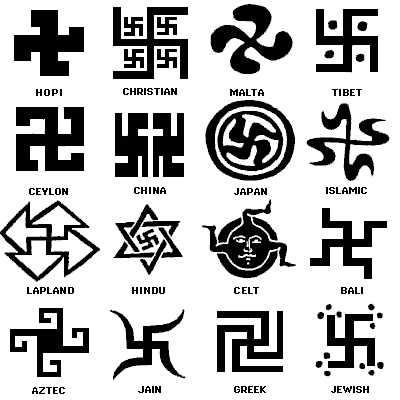
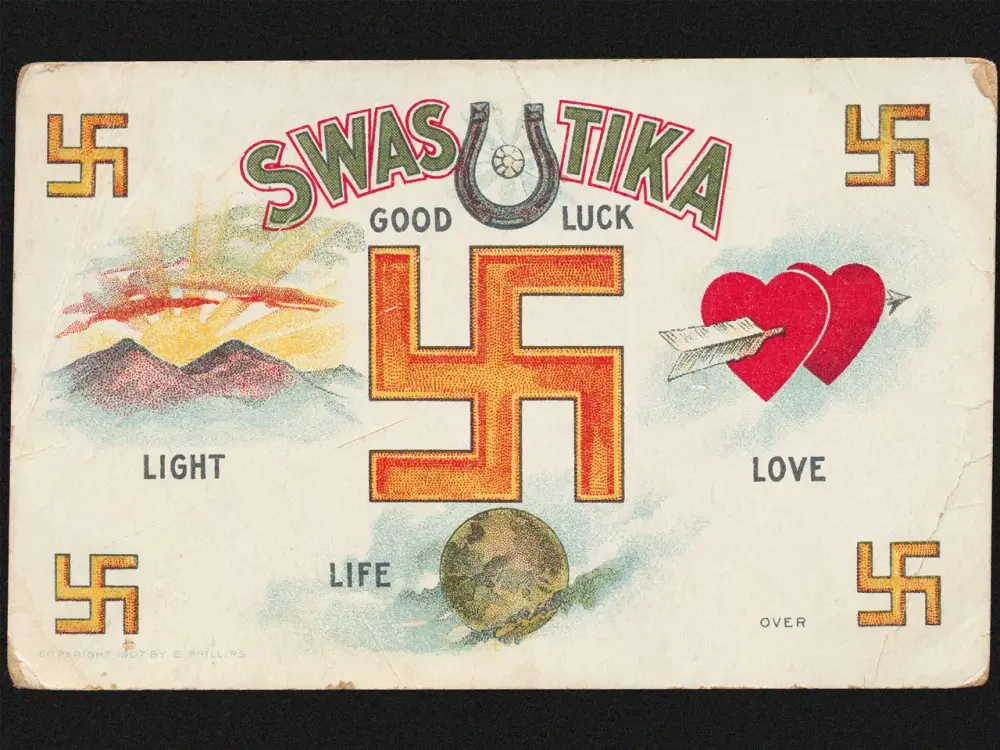
Admiral Byrd learned the hard way 卐


-
Real Ancient Roman Scutum (tower shield) 卐卐卐

-
Sieg Heil 卐 12'000 years of history
-

New meeting house renovations with the idea of focusing on Christ.
Tony uk replied to Tacenda's topic in General Discussions
The building, and area looks a very peaceful place. Have to admit I am almost envious. Hope the repairs needed are resolved. -
New meeting house renovations with the idea of focusing on Christ.
smac97 replied to Tacenda's topic in General Discussions
Our bishop announced last week that our building (in Provo) is shutting down in 2027 for substantial modification. Apart from the boiler, which acts up now and then, the building is apparently in good repair, so a major shutdown to fix something may be less likely. So I wonder if our building is one of the 17 to be retrofitted (assuming this report is accurate). Our building hosts a multi-stake genealogy center (not really used much these days, I think), but otherwise it is a fairly standard late-60s/early-70s building. One interesting note: The old-timers in the ward said that the building was built using, at least in part, funds raised by the ward. The ward members collectively purchased three lots just down the street, purchased materials and built three houses, and then sold them. The proceeds went to the construction of the building. Here's the building: https://local.churchofjesuschrist.org/en/us/ut/provo/1120-n-850-w-st Also, see this part of the above website for this building: "Christian Church in Provo." Kinda odd that a church with "Jesus Christ" in its name nevertheless feels obligated to identify itself as a "Christian Church." Thanks, -Smac - Today
-
SCOTUS Decision: Ban on "Talk" Conversion Therapy is Unconstitutional
smac97 replied to smac97's topic in General Discussions
This video makes some good points about "preferred pronouns," particularly the guy at the 1:56 mark: Personal pronouns, "trans women," "cisgender" and so on are not, in my view, the evolution of language, but rather the ideologically-driven imposition of it. And the imposition has worked to some extent, but not perfectly. Thanks, -Smac -
SCOTUS Decision: Ban on "Talk" Conversion Therapy is Unconstitutional
smac97 replied to smac97's topic in General Discussions
Yes, I acknowledge that this view exists. I've discussed it many times on this board. I've never challenged its existence, but rather its coherence and factual accuracy. Disagreement about a fact is not evidence that there is no fact. People argued for centuries about the shape of the earth and the causes of disease. The length of the argument did not make both sides right. It meant at least one side was wrong, or they were talking about different things. Twenty-one pages here prove that we are dug in. They do not prove that sex is a spectrum. Language is fluid, sure. But sex is not. You can use “woman” for an adult human female, or for anyone who claims the word. Those are two definitions. Only one of them names a reproductive class that exists whether or not we like the vocabulary. People with differing backgrounds and perspectives can and do disagree about whether "woman" should be defined in a way that includes men. That is sociology of which sentence people will say. It is not a finding that both sentences are equally true of the body. “No one has the power to control the definition” is true of English in the street. It is false as a claim about biology, law and other important contexts. Biologists did not invent two gamete types by committee. Midwives did not invent male and female by “life experience.” We can fight over which word to put on a form, but we cannot vote ovaries into being a "social construct." So who is right? If the question is “which meaning will win in HR and media,” that is politics, and you are right that no single poster owns the language. If the question is “how many sexes are there, and is a male a woman,” that is not a lifestyle preference. You are certainly free to use “woman” to refer to men socially. I will not agree that the existence of two opinions makes the two definitions equally valid descriptions of reality. The useful split is still the one we already have. Perhaps we should say which definition we are each using, than then argue the policy. I think we should not treat a stalemate about words as proof that the underlying distinction is optional. I think it is beyond dispute that sex-segregated spaces have, until fairly recently, segregated by sex, not by subjective "self-identity." Radically re-defining "woman" to include men within it reminds me of Abraham Lincoln. Lincoln asked: “How many legs does a dog have if you call the tail a leg?” He answered: “Four. Calling a tail a leg doesn't make it a leg.” Variants of this story sometimes attribute the quote to a calf's tail instead of a dog's tail. The lesson means that words alone cannot alter reality. If someone asks "How many subcategories of 'woman' are there?", the answer, I think would be: "There are no subcategories. There's just "woman." Fabricating neologisms like "cis woman" and "trans woman" to as to facilitate the re-definition of "woman" to include men, doesn't make these men women. Words alone cannot alter reality. Thanks, -Smac -
SCOTUS Decision: Ban on "Talk" Conversion Therapy is Unconstitutional
smac97 replied to smac97's topic in General Discussions
"Christian" is, in terms of religious taxonomy, a category in which "Latter-day Saint" is a subcategory (along with Catholic, Baptist, etc.). "Woman" is, in terms of biological sex taxonomy, a category that ends, with no subcategories underneath it. Activists, apparently understanding the lack of any subcategories have sought to fabricate one. This is, I think how we ended up with "cis woman," above which is "woman" and besides which is "trans woman." "Cis woman" and "trans women" have therefore been presented as new subcategories of "woman." This is an ideological and sociological effort, not really a medical/biological one (though some inroads have been made). This is what creates rhetorical cover for stuff like "trans women are women" (that is, "trans women" are a subcategory of "women"). I think the rhetorical innovation of the "cis" label is worth discussing, if for no other reason than to evaluate its legitimacy in a given context. See, for example, this video: The guy is clearly trolling this woman to make a point, and she is letting herself be trolled, but the point is nevertheless made: I think we all know, in the end, that "trans women" are not really women. The only way we get there is if we radically re-define "women" to include men in it. I think that redefinition is on par to redefining "dog" to include "cat," "planet" to include "comet," "Joseph Smith" to include "Tim Curry," and so on. Dogs and cats have some similarities (both four-legged mammals with fur, etc.), but the differences matter enough that conflating them doesn't work. I would therefore resist ideological efforts to redefine "dog" to include "cat." Planets and comets have some similarities (both are in space, both move, both are visible, orbit the sun, formed at the same time, etc.), but the differences matter enough that conflating them doesn't work. I would therefore resist ideological efforts to redefine "planet" to include "comet." Joseph Smith and Tim Curry have some similarities (both are male humans, known of by millions of people, etc.), but the differences matter enough that conflating them doesn't work. I would therefore resist ideological efforts to redefine "Joseph Smith" to include "Tim Currey." Men and women have some similarities (same species, bipedal, etc.), but the differences matter enough that conflating them doesn't work. I would therefore resist ideological efforts to redefine "woman" to include men. And the movement to an exclusionary definition is ideological, not rational. I am fine if "Mormon" is excluded from "Protestantism" or "Catholicism" or "Baptist." It would be inaccurate and dishonest to conflate the two. Same goes, I think, for excluding "man" from "woman." Conflating the two is dishonest and inaccurate. I am fine with a good deal of this. Male and female are real. Traits can fail to line up. Medicine is not a cocktail party. “Trans women are women” does not mean the karyotype changed. Courtesy is not the same as a sports rule. If the ask is only “define terms and argue the interest at stake,” I am already there. Again, the Mormon/Christian comparison is useful, up to a point. Switching the boundary of “Christian” does not change what Latter-day Saints believe. Switching the boundary of “woman” does not change who produces which gamete. We agree on that. However, the next sentence is the one that matters: Some boundaries are conventional titles, and some name a natural class. “Elder” for an 18-year-old is an office. “Woman” for an adult human female is not. You can ostensibly add a second, social use of the word. But you cannot then treat people who keep the first use as if they had refused to hear you, or that they are "bigots," etc. That is where the analogy fails. When evangelicals say “Mormons aren’t Christians,” they are usually saying “not Nicene.” When I say a male is not a woman, I am not inventing a creed. I am keeping the sexed meaning of the word that still does the work in medicine, sport, and single-sex spaces. You say those are “separate policy questions.” In the institutions that actually write the rules, they are often not treated as separate. “Trans women are women” is used as the reason the bathroom, the prison wing, and the category are already settled. If you personally do not mean that, say so plainly. Many of the groups using the sentence do mean that. On the biology, nobody I know who says “sex is binary” is attempting to convey the idea that thinks every sex-related trait is a two-valued switch. Shared developmental machinery, DSDs, and clownfish sequential hermaphroditism are all real. Clownfish changing reproductive role is still a change from one sex to the other, not evidence that sex is a smear. Nor is it evidence that homo sapiens can change from one sex to the other. There is no substantive comparison between A) a clownfish undergoing actual biologica/physiological changes to go from one sex to the other, and B) a man who has taken cosmetic, medical and sartorial measures to deliberately appear and "identify" as a woman (and also, since there are no boundaries for being "trans" apart from the subjective sel-identity, men who have not undergone these measures, and who therefore still look like men in ever material respect). Atypical alignment is how we describe a disorder or a species with a different life history. It is not a third human sex, and it is not a warrant for “the idea of two sexes is overly simplistic” as a conclusion about how many sexes there are. Magazine essays that grant ovaries and testes, then deny the binary, are doing the split-definition move we already walked through. On “assigned at birth”: in a delivery-room chart it means the clinician recorded the observed sex, almost always from genitalia. That is mundane. The phrase is also used, repeatedly, to recast that observation as a "guess" or arbitrary choice that a person's later subjective "identity" may correct. I did not invent that second use. It is why the wording was adopted in advocacy and then in forms. I can use the medical sense when that is all that is meant. I will not pretend the political sense is a hallucination. On ordinary social life: I can call someone by a requested name without agreeing that they are a woman. We all know that "Eminem" was not born with that name, and we also know that he is not a piece of candy-covered chocolate. He's an adult male named Marshall Mathers. I wouldn't insist on calling him that because social conventions generally aren't worth the fuss. So going along with them is courtesy, but also a refusal to let the social use swallow the sexed one. When relating to another human being, identity and presentation matter more than gonads” is, as you noted a choice of "emphasis." It is coherent as etiquette and avoiding a fuss. It becomes the disputed tenet the moment it is treated as the definition that must govern every use of “woman,” or as proof that keeping the sexed definition is uncharitable or bigoted, or that biologically inaccurate pronouns are inaccurate, or that men should be legally entitled into women's spaces. So I will define terms: Sex = reproductive class (two). Gender identity = self-description / inner sense. "Woman," in the sense I will not give up = adult human female. You may use woman for a social role. We can then argue bathrooms, sports, and prisons as separate questions. What I will not do is accept that because those questions are separate, “trans women are women” is only a harmless social definition, or that noticing how the slogan is used in policy is a failure of good faith. We've hashed and re-hashed the point regarding the definition of "woman." I reject the notion that "woman" can our should be radically redefined so as to sever it from its sexed meaning by including men in its meaning. That simply does not work when we are speaking of a biological binary. You nevertheless accept that notion. I find that notion to be a departure from "empirical reality," you do not. "Trans woman" is a rhetorical shortcut for "a man who claims to be a a woman because he subjectively 'identifies' as one." I'm not sufficiently vested in the argument over whether "trans women" can be further subdivided into Blanchard's typology ("homosexual transsexuals" who are attracted exclusively to men and are feminine in both behavior and appearance, and "autogynephilic transsexuals" who experience sexual arousal at the idea of having a female body (autogynephilia)) or not. My understanding is that this typology is fairly controversial in the trans community for a variety of reasons (pathologization, inconsistent with "lived experience," rhetorical usage by ideological opponents, etc.). I am curious whether "trans women" would object to being labeled a "homosexual transsexual" or a "autogynephile." I suspect many would. Thanks, -Smac -
I am sure a dollar store version of Hitler like yourself can easily tell. A handy tool for letting sane people know they should avoid you at first glance. Thank you for doing that.
-
SCOTUS Decision: Ban on "Talk" Conversion Therapy is Unconstitutional
Calm replied to smac97's topic in General Discussions
In certain contexts I believe it is important for language to be very consistent (science, legal, and medical), but even these areas can allow for variation as long as definitions are given. There may be other cases where language needs to be more rigid, but I love the fluidness of language. Makes writing and speaking much more fun. Currently I am trying to see every now and then if I can stump AI by using reasonable, but not typical and often as far as I am aware novel phrasing (though it’s likely that someone somewhere has created ‘new’ words in the same fashion or created a ‘new’ idiom using much the same wording). Something another human would get even if it took a second. Pretty impressed with its predictive ability, but then with the sheer mass of variety of human language data it has to pull from makes it less surprising that it’s capable of matching my snide remarks with some of its own. -
ah yes deny it all... you a jew? Let's find out! I have WWG1WGA as a Tattoo on the center of my chest and beneath the initials a christian cross.
-
 Would you agree that not all people view sex as binary and not as clear cut as you want it to be? Who is correct on what that definition of sex is? Could it be that there is no right or wrong answer, just differences in opinion on what the definition of what a woman is and what a man is may differ with different people's life experiences? It is way more likely that a true blue Mormon would narrowly define sex as you have and a person with a more liberal background would have a more broad definition. Who's right and who's wrong? Given completely different point of views, I would say there are no hard answers to who is right. As proof of this truth, I offer you 21 pages of disagreement. Neither side is willing to change their opinion because language is fluid. Each side feels like they have a right to control that definition when in fact, no one has that power.
 -
 Exactly. Fixed it.
 -
SCOTUS Decision: Ban on "Talk" Conversion Therapy is Unconstitutional
Calm replied to smac97's topic in General Discussions
Is this missing a phrase? As in “when a person says a trans woman is a woman”? -
I’ve been considering whether these are two of the most boring questions in the history of this board: Are trans women women? Are Mormons Christian? They are boring because, standing alone, they are arguments about definitions masquerading as arguments about reality. If Christian means someone whose religion centers on Jesus Christ, then Mormons are obviously Christians. If Christian means someone who accepts the historic creeds and orthodox doctrines of traditional Christianity, then Mormons are not Christians. Nothing about Mormonism changed when we switched definitions. We simply moved the boundary around the category Christian. The same problem infects the question, “What is a woman?” That question has become a political gotcha. If an educated person hesitates before answering it, some people take the hesitation as proof that higher education has rendered the person incapable of recognizing something a five-year-old understands. Either that, or the person has joined an ideological conspiracy to redefine woman and subvert Western civilization. There is a more mundane explanation: modern biology is considerably more complicated than the elementary-school model of male and female. Male and female are real and extraordinarily useful biological categories. Of course. But biological sex is manifested through a collection of characteristics: chromosomes, sex-determining genes, gonads, internal and external reproductive anatomy, hormones, secondary sex characteristics, and reproductive function. These characteristics cluster overwhelmingly into two patterns. Of course. But it is also true that they do not line up perfectly in every human being. That is why Nature publishes articles like “Sex Redefined: The Idea of 2 Sexes Is Overly Simplistic,” and Scientific American publishes things like “Beyond XX and XY: The Extraordinary Complexity of Sex Determination,” and “Here’s Why Human Sex Is Not Binary.” Nobody involved has forgotten that ovaries and testes exist. They are describing the actual biology of sexual development. Human males and females are, at the genetic level, overwhelmingly alike. The dramatic differences between typical male and female bodies arise because a relatively small set of genetic signals initiates developmental cascades with enormous downstream consequences. Early in development, the embryonic gonad can develop along either an ovarian or testicular pathway. Signals within the sex-development network push development predominantly down one pathway or the other, after which genes, hormones, receptors, and other developmental processes produce the familiar primary and secondary sex characteristics of male and female bodies. That is a useful consciousness-raiser. Male and female bodies are not two unrelated biological designs. They are variations produced from overwhelmingly shared developmental machinery. Other vertebrates give us even stranger examples. Clownfish can change reproductive sex as adults. When the dominant female of a group disappears, a male can undergo coordinated changes in hormones, gonads, and reproductive function and literally becomes female. Biology is under no obligation to conform to the categories that seem intuitively obvious to us. Then human beings add another layer. We have elaborate psychological and social concepts of men and women: how people dress and wear their hair, how they speak and move, whether boys are encouraged to be tough and girls nurturing, which interests and occupations are coded masculine or feminine, how people present themselves to others, how others perceive them, and their own internal sense of themselves as men or women. Some of these patterns have biological influences. Some are cultural. Most probably involve both. All of them are real features of human psychology and social life. For most people, these dimensions line up so neatly that we never have to think about them separately. A person develops along the typical female reproductive pathway, develops female secondary sex characteristics, grows up thinking of herself as a girl and then a woman, presents herself as a woman, and is perceived and treated by everyone else as a woman. Everything points in the same direction. Intersex people and transgender people are both consciousness-raising for the same reason: they force us to notice that these dimensions are separable. And that is where the interesting questions begin. In a doctor’s office, chromosomes, anatomy, hormone exposure, reproductive history, and every other aspect of biological reality may matter enormously. In competitive sports, particular physiological characteristics may matter. In prisons, bathrooms, driver’s licenses, workplaces, marriages, cocktail parties, and ordinary conversation, we are dealing with different purposes, different interests, and different facts. There is no reason to expect one definition of woman to draw the optimal bright line across every one of these situations. When a person says “a trans-woman is a woman" they are not claiming that a trans woman has ovaries, produces ova, has XX chromosomes, or somehow rewrote her embryological history. Nor are they claiming that this creates an inalienable right to enter every women’s space, compete in every women’s sport, be housed in every women’s prison, or override whatever interests led society to create female-only categories in the first place. Those are separate policy questions, and each has to be argued on its own merits. Rather, they are using woman as a gender and social category rather than exclusively as a synonym for adult human biological female. They are saying that, for the ordinary purposes of relating to another human being, a person’s persistent identity, presentation, social role, and way of living matter more than the developmental history of their gonads. There is nothing scientifically incoherent about that. It is simply the judgment that, in ordinary social life, a person’s gender identity and gender expression are more relevant to how they understand themselves and relate to others than the biology of their gonads. It is a choice about which characteristics should define a psychological and social category when the purpose itself is psychological or social. You can find that definition unhelpful and choose not to use the word that way. You can believe biological sex should control medicine, sports, prisons, bathrooms, or any other context you can justify. You can make exceptions for people whose bodies do not fit the typical male or female pattern because of variations in sex development while refusing to make similar accommodations based on gender identity. Those are coherent positions. We can debate them. But when you refuse to make a serious effort to understand what other people are saying, insist on importing your own definitions into their conceptual framework, and repeatedly interpret their language in the least charitable way—for example, treating “assigned at birth” as carrying some subversive ideological implication rather than its well-defined medical definition—it becomes difficult to see any path toward a productive, good-faith conversation. Which brings us back to Mormons and Christians. We can spend another 200 pages arguing about which definition is the real one. Or we can define our terms, identify the actual interests at stake, look at the evidence, and argue about something interesting.
-
SCOTUS Decision: Ban on "Talk" Conversion Therapy is Unconstitutional
smac97 replied to smac97's topic in General Discussions
If the two sentences describe the same property at the same level, then yes: they cannot both be true, any more than a circle can be square. You are right about the logic if we split the word “sex” to refer to both A) biological sex (there are only two) and B) sex-related traits (there are more than two, and each trait can vary). “Humans are organized around two reproductive sexes” and “many sex-related traits vary in degree, and sometimes they do not all line up” can both be true. That is the view I have been defending. DSDs show that development can be atypical, but they do not show a third reproductive sex. Two gamete types, two sexes: a binary, not a spectrum of sexes. The AI answer changes the question. It stops asking whether sex can be both binary and a spectrum, and asks instead whether there can be two sexes and variable sex-related traits. Of course there can. That is not a contradiction. The original pairing is incompatible when both sentences use “sex” for the same thing. If “sex is a spectrum” means “there are not two sexes, or the two sexes are only a rough sketch we may discard,” then it negates “sex is binary” in the reproductive-class sense. And vice-versa. One statement necessarily negates the other. The "sex is a spectrum" slogan is usually both rhetorically and logically utilized when discussing public policy: not as a tangential note about hormone curves, but as a fundamental differentiation of biological sex into more than "male" and "female" (thus ostensibly allowing the speaker to rhetorically characterize these two categories as “naïve”). Age is actually a pretty good contrasting comparison because it is a spectrum. Age is continuous. Nobody says “age is binary” because the law sometimes divides that spectrum into a binary (adult/child, adult/minor). In many ways, though, the "spectrum" is maintained in the law. My son is 17, and so can get a driver's license. His cousin in Georgia is 13 and cannot. Both are legally classified as "children," but they are still differentiated from each other in some ways. When I was 17 I joined the Army National Guard. At the time I had a niece who was an infant. Both I and my niece were legally classified as "children," but I could serve in the military and my niece could not. And so on. This all goes away, though, when we set aside the legal adult/child "binary" in which there is a spectrum of ages, and speak of the biological sex male/female binary, in which there is not a spectrum of sexes. Just the two. My youngest son is 17. Neighbors: a 2-year-old girl; a 12-year-old girl and 9-year-old boy; a 14-year-old boy, 12-year-old boy, and 9-year-old girl. All of those people can be classed as children, and age within that class is a spectrum: 2, 9, 12, 14, 17. If we ask sex, each is male or female. That is all. We do not slice “male” and “female” into further biological sexes. IOW, we can describe trait variation as spectral and still have two sexes. We cannot treat that variation as if it replaced the two sexes or created a spectrum of more than two. Thanks, -Smac -
It doesn’t require courage or daring. It is pretty easy. And accurate. Kind of fun too. Ah, the QAnon slogan. How very unsurprising that you buy into a white supremacist conspiracy theory formed in support of a terrible political campaign. A conspiracy theory that was basically a massive trolling operation. And learned nothing from them? I am sure your letters are read aloud by them. When everyone is on break. So everyone can have a good laugh. The bonkers claim that 255,000 white girls were raped by “grooming gangs” is another conspiracy theory that is completely unsubstantiated and based on a very bad estimate attempting to generalize from individual cases of abuse. So no, that never happened. Get help.
-
(1).thumb.jpg.b9aaf1dd33d100b6409d1956b7fc0fc5.jpg) Seth is very pro-LDS. He does do quite a bit of reading between the lines though.
Seth is very pro-LDS. He does do quite a bit of reading between the lines though. -
-
https://www.youtube.com/watch?v=ChXlPd0H1MU&list=RDChXlPd0H1MU&start_radio=1
-
https://www.youtube.com/watch?v=ChXlPd0H1MU&list=RDChXlPd0H1MU&start_radio=1


