


the narrator
-
Posts
1,229 -
Joined
-
Last visited
Everything posted by the narrator
-
Yeah, they would still require staffing, but when I heard these plans Nelson's building plans made a lot more sense to me.
-
Fair enough.
-
I cannot; or, rather, will not. Sorry. Don't want to cause any trouble for anyone.
-
Assuming that this isn't another Fiend of Dreams, where buildings were built with faith that they would be filled, there is another reason for the increased temple building that won't necessarily mean expected growth. Part of Nelson's larger temple-focused project was to have rooms in temples with a large TV screen and tablets for group studies of the endowment. The idea is that a elders quorum, ward relief society, or family group could reserve a room and then be able to watch, rewind, pause, skip, etc the endowment video, as well as the tablets having accompanying notes with scriptures, GA quotes, and explanations for each line of the endowment. Essentially, in these rooms people would be able to study the endowment as a group just as they would the scriptures. This is one of the main reasons why the Salt Lake Temple was gutted rather than just the seismic and electrical updates they initially announced, as it is supposed to now have multiple rooms for this purpose. I suspect this is the same reason that Nelson was announcing so many temples: it wasn't necessarily to meet new expected demands but rather to make it easier for members to more regularly study the endowment. I'm assuming this will still happen, but I know that other updates he wanted to the endowment were squashed.
-
Where did the Book of Mormon Take Place?
the narrator replied to Analytics's topic in General Discussions
This is precisely what a paracosm is. It's the world created in which the stories take place, and the very sort of thing that my daughter was actively engaged in until she wasn't (as I discussed above). That Joseph didn't produce more from his paracosm simply means he moved on (as happens with most paracosms). Paracosms primarily develop in adolescence and rarely continue beyond them. Tolkein's, Lewis's, and others are unique in that they continued far into adulthood, and that is partly due to them having a motivation and interest in continuing it, and it seems the case that once someone has moved past theirs they typically don't recover it. (Cameron's Pandora paracosm may be an exception where he returned to his childhood paracosm, though he seems to have also kept it in play behind the scenes.) I would argue that one reason that Joseph moved past his Nephites paracosm is that his interests had moved from the origins of the Native Americans and into a border global history of human existence and religion (as we see in his translation of the Old Testament in the Book of Moses) and then into a cosmic history of not just humana but of the cosmos and the gods that inhabit it. -
Where did the Book of Mormon Take Place?
the narrator replied to Analytics's topic in General Discussions
Simply comparing it to other writings is missing the point. The Book of Mormon was intentionally presented as a religious text, and so it would need to be compared with other religious writings, texts, and letters by Joseph--and that is precisely where they can be found. -
Where did the Book of Mormon Take Place?
the narrator replied to Analytics's topic in General Discussions
There is no reason to assume it "should have." However, those things should be more likely to show up in other religious writings and dictations by Joseph, which they frequently do. -
Where did the Book of Mormon Take Place?
the narrator replied to Analytics's topic in General Discussions
But for some reason, the examples the Carmack offers seem to show up in other writings and transcriptions of Joseph and his colleagues, and for some reason they show up even more in revelations, sermons, and epistles that use KJV-inspired religious language. -
Where did the Book of Mormon Take Place?
the narrator replied to Analytics's topic in General Discussions
I agree with this statement. However, Carmack needs to explain what he means by "it reads like a written text in various ways." Without making clear what he means by that, it just becomes a useless claim. When editing Brant Gardner's recent study edition it really struck me how much the dictation did present itself as not just a written text--but a printed page of the Bible, complete with book title, book summaries, and sometimes even chapter summaries. For me, this confirmed my long suspicion that Joseph had strong hyperphantasia, as this is similar to experiences others have with hyperphantasia. (It's really impressive how much some of these seems identical to how it was described Joseph reading a text.) I have only scanned Carmack's recent essay, but it, again, has the same issues his papers always have. Take this for example: If only Carmack had looked to see how much Joseph Smith himself used the noun cause to conveys a archaic meaning of purpose in his letters and revelations. They don't "uniformly escape the textual record." 3. Your whole claim here implies some uniformity of usage in the Book of Mormon , which is simply not the case. They do show up. However, we should expect bad grammar to show up less than the Book of Mormon that other published writings because the BofM was intentionally published as the unedited spoken text whereas most other published text would be edited to a degree. I have yet to find an example that isn't present in late 18th or early 19th century texts They don't need to have complete explanatory power. There merely shows that such usage can readily occur in the Book of Mormon without requiring this EModE thesis. But one can very easily point out that they don't have the significance that Carmack wants to claim they have. "If they are correct"-- Again, the issue isn't whether EModE (or language that seem like EModE) appears in the Book of Mormon. I agree with them that both are true. It's their next step in claiming or implying that these could not appear without some supernatural means that does not hold up. "and it is highly implausible that Smith dictated the Book of Mormon using his own natural ability" -- what do you mean by "and"? Are you simply throwing in a premise here? Is it bad grammar? Or are you channeling archaic usage through supernatural means? "then that obviously strengthens the claim that he produced the text via supernatural means." -- no it doesn't. No. When the whole point of Carmack's thesis is to argue that the Book of Mormon was brought about by supernatural means, the question isn't second order but central to it. This is where Ockham's Razor comes in, because the supernatural explanation complicates things further whereas the natural explanation does not add any such complications. Over the years, I've noticed a lot of "its a great argument" claims, when it comes to the research of Skousen/Carmack. But I find it quite telling that their apologists rarely deal with the actual data and arguments themselves. Edit: Skimming through Carmack's response to Davis something has become clear that is typical of BofM apologetics. As critics of Carmack's thesis have shown examples of other EModE in 19th century writings, he has shifted to goal posts from the supposed EModE no beign in contemporary wriitngs to it's more statistically prevalent in the BofM than contemporary writings. That is quite the shift, and his statistical claims do not have the weight he thinks they do. Edit 2: I just read Davis's Dialogue article that Carmack responds to, as well as Carmack's response. You should really read Davis's if you haven't, as he more than adequately explains things (while Carmack does the typical apologetic move of pointing to more and saying "well what about this," which would just turn into same cycle of every "How could Joseph have...?" type of apologetics. And the two articles perfectly display the vast quality and responsibility differences between David and Carmack. While Davis looks at the supposed EModE and attempts to explain how they could appear alongaide obvious 19th century aspects with Joseph as a translator, Carmack (in typical apologetic fashion) throws his hands in the air and declares the supernatural and makes no attempt to explain the mix of supposed EModE and 19th century content. If you haven't read Davis's article, you really should. -
Where did the Book of Mormon Take Place?
the narrator replied to Analytics's topic in General Discussions
It can quite easily be refuted by the fact that 1. the English BofM was spoken and not written, 2. that local regional dialects often retain archaic syntax, 3. that many of the supposed examples of EModE can simply be poorly spoken English (for example, just listen to my wife's extended family in Louisiana speak--and I assure you they aren't from the 17th century, despite what it might seem), 4. that ALL of the examples offered can be found in 19th century books, letters, etc.--including some in writings by Joseph and his colleagues. But more importantly, its a stupid argument because it simply unnecessarily complicates things when the above is the simplest explanation. If the BofM was entirely in EModE, then it would have more traction. But it is a very simple fact that the language of the Book of Mormon is predominantly English contemporary to Joseph with KJV-language mimicry that was common in religious writing and speaking at the time, and the supposed examples of EModE are the outliers. Here is where Okkham's Razor would be valuable. What makes more sense--the English BofM having dual 17th and 19th authorship? Or the English BofM translation having a 19th century translator who spoke a rural New England English and mimick KJV English to provide it with a more religious feel? -
Where did the Book of Mormon Take Place?
the narrator replied to Analytics's topic in General Discussions
Nobody should talk about that because it's stupid--easily one of the worst apologetic arguments made. -
Where did the Book of Mormon Take Place?
the narrator replied to Analytics's topic in General Discussions
Yeah, it seems lifting from each other was a common aspect of sermon culture. -
Where did the Book of Mormon Take Place?
the narrator replied to Analytics's topic in General Discussions
Nice find -
Where did the Book of Mormon Take Place?
the narrator replied to Analytics's topic in General Discussions
Also, I'm not 100% certain, but I believe that Jonathon Edwards coined the phrase "plan of salvation" or at least popularized it -
Where did the Book of Mormon Take Place?
the narrator replied to Analytics's topic in General Discussions
It is in a collection of writings by John Wesley, and so I assume he coined it. -
Where did the Book of Mormon Take Place?
the narrator replied to Analytics's topic in General Discussions
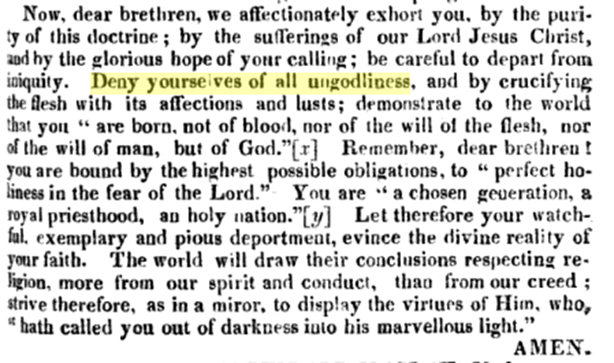
A few years back I was looking up passages that Tad Callister, in his awful BofM apologetics book, claimed were evidence of its historicity, and I found these. (this one is especially interesting, given that it both shares a similar theme as Moroni's final words and is also used as closing remarks These are just a few I found when looking up the quotes Callister provided as evidence of ancient historicity. I am certain more and longer ones could probably be found.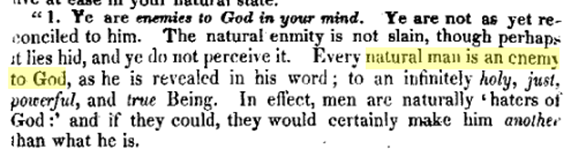

-
Where did the Book of Mormon Take Place?
the narrator replied to Analytics's topic in General Discussions
I have not looked into them, nor have the skills to easily recognize them like Nick Frederick does. However, we have a whole slew of revelations from Joseph that do that same and which, according to Grant Underwood and other JSPP editors, Joseph definitely had a role in the language. This is all really besides the point, though. The seamless integration of biblical passages in Joseph's letters, revelations, and the Bible are all similar and mirror the same in the revivals sermons that Joseph was attending and apparently paying close attention to. Furthermore, the BofM directly quotes published sermons from Joseph's time. That is indisputable. That does not preclude it from being a translation, but it does demand that the English language translation originate in the 19th century. And a simple application of Occam's Razor points to Joseph being the one quoting KJV passages in each. -
Where did the Book of Mormon Take Place?
the narrator replied to Analytics's topic in General Discussions
And besides books, Joseph had access to newspapers that republished stories from across the country and were a wealth of information. -
Where did the Book of Mormon Take Place?
the narrator replied to Analytics's topic in General Discussions
It's simple. Either Lucy was wrong or she was lying. Besides Lucy also reporting an even younger Joseph saying: "But I will take my Bible and go out into the woods and learn more in two hours than you could if you were to go to meeting two years," it is VERY clear that by the time he was speaking the Book of Mormon he could seamlessly interweave passages from all over the Bible into he sermons and writings. Now, it could be the case that Lucy was only saying that Joseph had never read the Bible from beginning to end, and that may very well be true, though unlikely. It is far more likely that she, like Emma, was concerned with defending Joseph's legacy and deliberately overplayed the idea of Joseph being the village idiot. -
Where did the Book of Mormon Take Place?
the narrator replied to Analytics's topic in General Discussions
As far as I'm aware it was all in her head. I did record a couple of her story-tellings and had them auto transcribed, but I don't think I have them anymore. I don't know how much she could even recall from that now, but it was quite impressive when she was still playing it with her friends. -
Where did the Book of Mormon Take Place?
the narrator replied to Analytics's topic in General Discussions
I did this a few times with her, and each time her voice would change into a story-telling mode with a different cadence and tone until she was finished. -
Where did the Book of Mormon Take Place?
the narrator replied to Analytics's topic in General Discussions
Between her 4th and 7th grades, my (even more than me) autistic daughter and her little group of neurodiverse friends would spend every lunch recess playing a story-telling game they called "Realm." It basically involved telling stories within a fantastical land, Realm. My daughter had created an entire culture in Realm, with its own religion, myths, histories, clothing, and several dozens of names. She's incredibly gifted and an endless force of creativity. (Her room is FILLED with drawings, puppets, costumes, and other sorts of crafted arts.) One day as we were driving together I asked her to imagine that she found an ancient history of Realm in our backyard written by an ancient Realm historian and to read it to me. She began, "The History of Realm, by So-And-So, and then without pausing proceeded to immediately just tell an improved 20 minute "reading" until we reached our destination. Like most childhood paracosms though, hers suddenly faded when she became a teen. Thankfully, people like Tolkein, CS Lewis, and James Cameron kept their paracosms going into adulthood to bring us the various stories they tell within theirs. -
Where did the Book of Mormon Take Place?
the narrator replied to Analytics's topic in General Discussions
Other: Joseph's paracosm -
New names for Young Women’s age groups.
the narrator replied to bsjkki's topic in General Discussions
Aren't these subtitles in a YA fantasy series? -
Please explain how this responded to anything I asked.