
All Activity
- Past hour
-
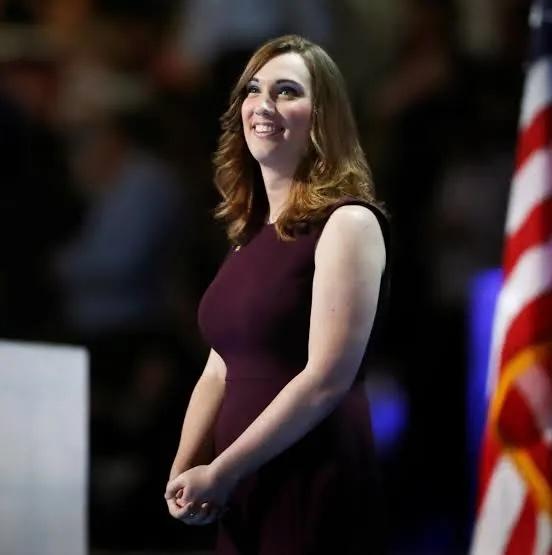
 The way I see things, for the purposes of using the restroom, the following individuals should choose the women's restroom. @smac97 doesn't believe these people should be allowed to use the women's restroom because to him, they "are" men, and as such, when they go to sex-distinct spaces they should go to the men's room. No exceptions. Full stop. The Kansas law that Smac supports has a bounty provision. Now, going to the bathroom isn't merely about going to pee. It's also about an opportunity to make some money; if you go to the bathroom and you suspect somebody's birth certificate doesn't match the sign on the bathroom door, you can sue them for $1,000. What an amazing victory for privacy, dignity, and safety!



-

SCOTUS Decision: Ban on "Talk" Conversion Therapy is Unconstitutional
smac97 replied to smac97's topic in General Discussions
I think there are a lot of women and girls who do not want males in women spaces. Again: Sex-separated bathrooms, locker rooms, shelters, and prison units exist because of persistent differences in strength, patterns of sexual offense, and the reasonable expectation of privacy from the opposite sex. These are not arbitrary preferences. They are responses to material realities that affect safety, fairness, and dignity at scale. Do you think these are legitimate concerns, or not? Thanks, -Smac -
SCOTUS Decision: Ban on "Talk" Conversion Therapy is Unconstitutional
smac97 replied to smac97's topic in General Discussions
I understand that is your perspective. I think that the Kansas law affects a lot of people, including women and girls who do not want males to be present in bathrooms. Could you elaborate on how the law does not affect these people? Thanks, -Smac -
 I do agree that we can assess and determine morals and ethics on our own, without an absolute external standard (e.g. God). But what do those assessments and determinants really mean? How valid are they, all in all? To one for whom there is no absolute external standard, Western Civilization is just as valid as Sharia, the former Japanese Bushido, Sparta's warrior state, and the ancient Mongol tribal society. This means that, ultimately, where there is no absolute standard, a society which permits polygamy is just as valid as one which doesn't. Which seems to torpedo a moralistic and ethical resentment over polygamy as a standard. You can't have your cake and eat it, too, to employ a cliché. And just because you don't like it, too bad, so sad, get over yourself. It's laissez-faire all the way. Full speed ahead and damn the torpedos!
 -
Do these alleged women and girls really want the following people in women spaces? Why?





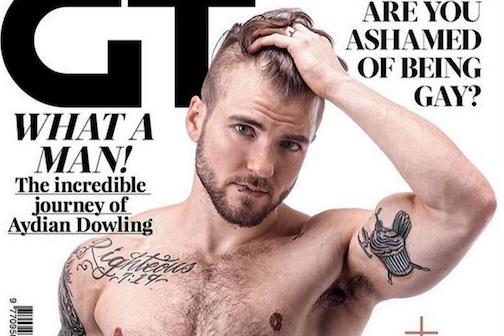
-
Nobody needs to compete in the 500-yard freestyle. But everybody needs to pee. The Kansas Law only effects the edge cases. If we really care about privacy, dignity, safety, etc., having a law that requires Kaleb Hobson-Garcia (photo below) to use the lady's room would be the opposite of what we need. But that is exactly what you support. As Calm said above, "I find the law that requires apparently fully transitioned individuals to use the restrooms of their biological sex insane."

-
SCOTUS Decision: Ban on "Talk" Conversion Therapy is Unconstitutional
smac97 replied to smac97's topic in General Discussions
The only people affected by the new law are the "awkward edge cases." I don't think we can say that. Women and girls who do not want males in women's spaces have also been affected by the new law. Thanks, -Smac -
 And yet sometimes they are. I know myself, my daughter (who cannot now hold a job or even finish high school) and likely thousands of others who now have severe RLS because doctors refuse to listen and gave antidepressants, the worst possible drug, rather than dealing with the actual symptom of sleep deprivation.
 -
SCOTUS Decision: Ban on "Talk" Conversion Therapy is Unconstitutional
smac97 replied to smac97's topic in General Discussions
Does this preference apply to males other than "trans women"? I assume, then, that you are on board with an alternative approach. Could you elaborate on that that alternative is, and how it would differentiate "trans women" (who would seemingly be allowed into women's bathrooms) and other biological males (who would not be allowed)? Thanks, -Smac -
You haven't been able to provide a single example of somebody in Kansas merely alleging that a person claimed a "right to entry" into a women's-only space for an improper purpose. Not one. You've provided zero evidence--not even a single mere anecdote--that it was anything less that perfectly adequate. The only people affected by the new law are the "awkward edge cases."
-
SCOTUS Decision: Ban on "Talk" Conversion Therapy is Unconstitutional
Calm replied to smac97's topic in General Discussions
Seriously as a woman I do not want anyone who could so easily look way too intimidating in a space where we might be alone, especially if I am unclothed. I find the law that requires apparently fully transitioned individuals to use the restrooms of their biological sex insane. I think putting a transwoman in danger by having her use men only restrooms equally insane as forcing me and other women to use the restrooms in the presence of an apparent male (even if they aren’t actually biologically male). That is the same in my view as requiring me to use the men’s room in terms of danger. Why would I be willing to put someone else in that kind of danger when I wouldn’t accept it for myself. More examples of when it comes to law, common sense ain’t that common. -
SCOTUS Decision: Ban on "Talk" Conversion Therapy is Unconstitutional
smac97 replied to smac97's topic in General Discussions
Thank you for sharing this perspective. I would like to better understand it. I assume you would not say that you "have very little sympathy for people {situated} like {Marquise Vilsón}" who are "insisting they have some sort of Constitutional right to {use women's bathrooms}." "Constitutional" hyperbole aside, you seem to disregard sex-based restrictions on biological males competing in women's sports, yet you seem quite exercised about sex-based restrictions on biological males entering into women's bathrooms. Could you elaborate on how you differentiate between these issues? Are there any other grounds to find what Lia Thomas did problematic? There have been a few arguments in favor of differentiating biological men - including "trans women" - in different contexts: Privacy and dignity: Intimate spaces (bathrooms, locker rooms, changing areas) involve undressing and bodily functions. Many people reasonably expect not to share those spaces with the opposite sex. This interest is grounded in modesty and personal boundaries, not merely fear of crime. Physical safety / risk patterns: Males, as a group, commit the large majority of sexual assaults, voyeurism, and exhibitionism. Sex separation is a prophylactic measure that reduces opportunities for male-pattern offenses in spaces where women and girls are vulnerable. The argument does not require every male to be dangerous; it relies on base rates and the difficulty of screening intent. Fairness in sports: Male physiology (testosterone-driven muscle mass, bone density, lung capacity, strength, speed) confers large average performance advantages that are not eliminated by testosterone suppression. Sex-separated sport exists to give females a fair chance to compete and win. Medical and data integrity: Sex is a binary biological variable relevant to diagnosis, drug dosing, disease risk, and research. Recording or treating people according to identity rather than sex can distort clinical care and population data. Single-sex institutions and associational rights: Women’s shelters, prisons, sports teams, and certain schools or organizations were created to serve females as a class. Allowing males to enter on the basis of identity undermines the purpose of those institutions and the ability of women to associate on the basis of sex. Child safeguarding: In schools and youth settings, sex separation reduces risks related to exposure, boundary violations, and the introduction of secondary-sex characteristics or adult male patterns into female spaces. Limiting-principle / coherence argument: Once self-identification overrides sex, there is no non-arbitrary way to exclude any male who claims a female identity. Appearance-based or “common-sense” standards are unstable and easily contested. Sex remains the only clear, objective criterion that preserves the category. Social and psychological effects on women and girls: Loss of sex-separated spaces can increase anxiety, reduce participation (especially in sport and school activities), and signal that female boundaries are secondary to male identity claims. You seem to agree with #3 ("Fairness in sport"), but disagree with or reject most or all of the others. Is this a fair characterization of your perspective? Thanks, -Smac - Today
-
Some are pleased that people are leaving the church, as it confirms their prejudices. I'm very familiar with this, because once in a while my wife finds out that I am right about some fact that she didn't initially believe. I sometimes get a smug feeling out of being right in these cases. It happens less often than I would prefer. As for what the church says, I don't really know. I think it varies greatly by region, too. I don't have any stats on it. The only retention rate I really care about is the rate of my own retention (which is pretty good right now), and that of those whom I love and care about (which isn't as good as I would like).
-
SCOTUS Decision: Ban on "Talk" Conversion Therapy is Unconstitutional
smac97 replied to smac97's topic in General Discussions
So non-stakeholders can nevertheless opine about such matters. Seems like we agree about that. You comment on the Church all the time. Thousands of posts. Over many years. And you are quite at liberty to do so. I encourage you to keep doing so. I was responding to what I thought was a gatekeeping comment by you: "Should leages be legally required to exclude trans athletes, even if they aren't breaking the curve? I don't know, but if you aren't a stakeholder, it really isn't something to worry about." To clarify: Are you saying that the only times you have commented about the Church are when you are "a stakeholder" in the topics/issues under discussion? Thanks, -Smac -
(Local Russian) Church Leader Detained For "Financing Terrorism"
Stargazer replied to smac97's topic in General Discussions
In German-speaking areas, full-time missionaries don't use the German word for Elder, which is Ältere, likely because it is more strictly an age-thing. The word which they would use, due to its New Testament use, is Älteste (see 1 Peter 5:1), which is literally "eldest". Instead, the male FTM use "Bruder." I was given the impression that the reason "Elder" isn't used is because the Germans are very title-conscious, and "Älteste" seems to confer a larger rank than the position merits. -
SCOTUS Decision: Ban on "Talk" Conversion Therapy is Unconstitutional
smac97 replied to smac97's topic in General Discussions
That description reframes the historical practice. Sex-separated bathrooms were understood to be separated by sex, not by self-identified gender or preferred presentation. Informal tolerance for occasional edge cases is not the same thing as a rule that identity or appearance governs access. Ordinary criminal laws against assault, voyeurism, and indecent exposure remain necessary under any regime. They are not a substitute for the boundary itself. Those laws address misconduct after it occurs; the sex-based rule is a prophylactic measure that keeps males out of female intimate spaces in the first place. Demanding a single, perfectly documented Kansas case in which police said “we are powerless without SB 244” sets an artificially high bar. We do not require a headline incident in one state before recognizing why women’s prisons, shelters, and locker rooms are separated by sex. Also, the absence of a specific law prohibiting males from entering into women's bathrooms means it may not have been a chargeable offense. And if it was, it was likely a misdemeanor (SB 244 designates violation of the new law a Class B misdemeanor). There is, I think, going to be little publicly-available information about incidents along these lines. A rule that admits any male who identifies or presents as female has no coherent stopping point. That is the limiting-principle problem. Maintaining sex as the criterion preserves the purpose of the spaces; replacing it with identity or presentation does not. You seem to be treating the presence or absence of a single, perfectly documented Kansas “creep exploits self-ID” case as decisive, while treating any post-enactment inconvenience to transgender-identified people as proof the law fails. That is not a balanced standard of evidence. Sex-separated bathrooms were not originally created in response to a statistical crisis unique to Kansas. They exist because of enduring differences between the sexes: strength, patterns of sexual offense and voyeurism, and the ordinary expectation of privacy when undressing or using the toilet. Those reasons are not refuted by the lack of a headline incident in one state that meets an extremely narrow search criterion. We do not require a recent, well-publicized assault in Topeka before recognizing why women’s prisons, shelters, and locker rooms are separated by sex. The “laissez-faire / use whatever makes sense” approach only functions while the shared understanding remains that these spaces are separated by sex. Once identity or presentation is treated as the governing criterion, that shared understanding is replaced. At that point any male who claims a female identity has a right of access, and ordinary criminal laws become after-the-fact remedies rather than a substitute for the boundary itself. The relevant comparison is not “zero qualifying Kansas crimes under the old informal norm” versus “some enforcement friction under the new statute.” It is whether a clear sex-based rule better preserves the privacy and safety purposes of the spaces than a rule that severs access from sex. The first has a limiting principle, the second does not. Demanding a single idealized case study before allowing the first rule to exist sets a bar we do not apply to other sex-separated facilities. Thanks to the law you support, the issue in Kansas is whether every person whose appearance is ambiguous or atypical must be aggressively policed at the bathroom door. Read the NYT article. I guess we'll need to agree to disagree about this. Perhaps the "boundary" worked previously because there were very few males trying to enter into women's bathrooms. The social taboo/stigma was sufficient. And perhaps in recent years there have been increasing incidents of males entering into women's bathrooms. Put another way, “it worked” (which you assert, but do not demonstrate) only describes the period in which the operative social and legal understanding was still that these spaces were separated by sex. Informal tolerance for occasional edge cases is not the same thing as a formal rule that identity or presentation governs access. Once the rule becomes self-identification (and as the likelihood of males who "identify" as women, but also any other males as well) see the boundary breaking down, the boundary is no longer the one that previously “worked.” Any male who asserts a female identity - and any other male, for that matter - then has a claim to enter, and the prior informal norm no longer constrains him. That is a change in the rule, not a continuation of the old arrangement. The absence of a large, well-documented set of Kansas incidents under the old understanding does not prove that dissolving the sex-based boundary will preserve the same outcomes. It only shows that a sex-based expectation, backed by ordinary social enforcement and criminal law, was largely adequate. Replacing that expectation with an identity-based entitlement is a different regime. The burden is not solely to prove the old system was in crisis; it is to justify why the category should be redefined so that sex no longer controls access to a space created on the basis of sex. I adamantly disagree with your framing here. One standard is based on common sense and allows for the good-faith judgment of the individuals it affects. You are labeling your preferred "standard" as "common sense." I am framing it as "replac{ing} that {sex-differentiating} boundary with a subjective or appearance-based claim." Of the two, I think my framing is more accurate and clinical. The historical practice was not an open-ended “use whatever matches your identity or presentation” rule. It rested on the shared understanding that the facilities were separated by sex. Within that understanding, people exercised ordinary judgment about awkward edge cases. That is not the same thing as a formal standard that makes identity or appearance the criterion of access. Once identity is treated as decisive and discretionary (left to the individual), the old informal norm no longer governs. Any male who asserts a female identity then has a claim to enter (as does any other male, as you have yet to articulate any legally coherent mechanism to differentiate the two categories), and “common sense” becomes optional for anyone who chooses not to follow it. That is a redefinition of the boundary, not a continuation of the prior arrangement. A sex-based rule will sometimes create discomfort for people whose presentation diverges from their sex. That cost is real. I think I have acknowledged this a few times now. The cost of the alternative is also real: the loss of a coherent sex-based boundary for everyone else who uses the space. I think you have yet to acknowledge this. I think women's bathrooms and other sex-segregated spaces have always been intended to be fore the use and benefit of women and girls. I think the law should support that intended purpose, even if doing so comes at the expense of some males who - for any reason or no reason at all - may want to enter into those spaces. Calling the first cost “real-world” and the second “hypothetical” simply privileges one set of interests. Both are concrete. The question is which set of costs is more consistent with the purpose of sex-separated facilities. IMO, keeping the boundary tied to sex remains the more coherent answer. I think our disagreement is ultimately rooted in conflicting philosophical presuppositions. You appear to hold that at least some biological males who "identify" as women thereby become women in the relevant sense, or that “woman” should be defined in a way that is no longer anchored to sex and instead means, in effect, “anyone who identifies as a woman.” On that premise, excluding such a person from women’s facilities is treating a woman as if she were a man, which understandably looks unjust to you. I do not share that premise. I take “woman” to mean adult human female. On that understanding, a male who identifies as a woman remains male. Admitting him to women’s facilities is not an act of recognition, but instead is the abandonment of the sex-based boundary that justifies the facilities in the first place. The discomfort this creates for some individuals who present or identify differently is real, but it does not require us to redefine the category or surrender the boundary. And the alternative is to create problems and impositions on women and girls, for whom bathrooms and other sex-segregated spaces are intended. So the practical dispute about restrooms is downstream of a prior disagreement about what the words mean and whether sex remains a legitimate basis for the distinction. If sex is real and relevant, a sex-based rule is coherent. If "identity" overrides sex, then the sex-based rule will always look like injustice. That is the deeper conflict. The restroom arguments are mostly a working-out of those incompatible starting points. Thanks, -Smac -
I'm not sure. I don't think issues like this energize the liberal base like they do for conservatives. For my part, I have very little sympathy for people like Laurel Hubbard or Lia Thomas insisting they have some sort of Constitutional right to compete as women in elite sporting events. If they want to present themselves to the world as women, then go for it. And if they swim or lift weights, then swim or lift weights. But don't try to compete at an elite level--that is like a grown man playing basketball with ten-year olds. Not cool. I don't think I'm out of the mainstream on this.
-
I'm not a stakeholder in the church, and I don't care what it does. Just as I don't care about the rules governing the WNBA, I don't care about the rules in the church. I don't complain about women not getting the priesthood, how long church services are, whether garments have sleeves, how old you are when you go on a mission, whether missionaries should be allowed to wear blue ties and call home every day, etc. I really don't care, and I don't recall commenting on such things. I have commented on issues such as the size of reserve funds and whether the church ought to be tax exempt. I have particular expertise on those topics, and since taxpayers are subsidizing the church, I am a stakeholder on those issues. Otherwise, I may have commented on the Church's truth claims and the evidence that allegedly supports it, but that is about whether individuals should believe it, not what the church itself should do. Objection. Assumes facts not in evidence.
-
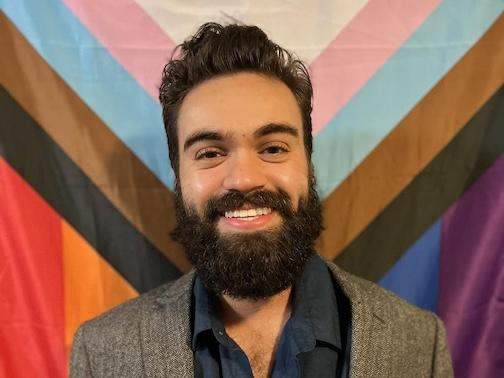
I would suggest that until now, the limiting principle in Kansas has always been, "use the facility that best corresponds to your presentation and identity, and let laws against voyeurism, exposure, harassment, and assault continue to apply." Such a limiting principle would meet the purposes of sex-segregated spaces better than ones you support which require Brian Michael Smith (photo below) to use the women's restroom. In the entire history of the state of Kansas, can you give me a single example of creep using the woman's restroom and who deserved to be punished but wasn't because SB 244 wasn't on the books? If there was a real rather than hypothetical need for this law, there should be entire case studies of cops saying, "we wish we could kick him out of the restroom and arrest him, but what he's doing is legal and there's nothing we can do." Or women complaining, "The lady's room has a creep loitering there and he makes me feel unsafe there!" When has that happened? Beyond your theorizing, please provide me some real-world examples of the problems this is intended to solve. Or one. Just one case study. Within the state of Kansas, where is the evidence that the laissez-faire approach wasn't working? Where is the real-world evidence that we needed a new “limiting principle” beyond letting people use ordinary judgment about which restroom made the most sense? There may be something on the order of 75,000 publicly accessible restrooms in Kansas, and they have been used tens of billions of times over the last few decades. Can you show me one Kansas case in which a man—however you choose to define that term—claimed a right to use the women's restroom and then used that access to engage in creepy behavior that was illegal or should have been illegal? That's the part of your argument I don't understand. You keep saying we need a limiting principle, but you haven't demonstrated the problem that this particular limiting principle solves. So what evidence is there that this was causing an actual problem in Kansas? The relevant question is whether the rule improves the outcomes it was supposedly designed to improve. So far, I haven't seen evidence that Kansas had a meaningful restroom-access problem before S.B. 244, while we already have concrete examples of the new law causing real-world problems after its enactment. If you have evidence showing otherwise, I'd genuinely like to see it. Thanks to the law you support, the issue in Kansas is whether every person whose appearance is ambiguous or atypical must be aggressively policed at the bathroom door. Read the NYT article. The boundary Kansas had before this new law was workable. We know that because it worked. If it wasn't working, give me actual empirical evidence it wasn't working. I adamantly disagree with your framing here. One standard is based on common sense and allows for the good-faith judgment of the individuals it affects. That is the standard we've always had, and that is the standard that was working perfectly fine. Now social warriors want to replace that common-sense boundary that had always been working with a rigid one that makes it a crime for people like Marquise Vilsón (image below) to use the men's room and requires them to use the women's restroom. The laws you support are creating real-world problems to solve a hypothetical problem. The tradeoff isn't worth it.


-
SCOTUS Decision: Ban on "Talk" Conversion Therapy is Unconstitutional
Calm replied to smac97's topic in General Discussions
What if stats were to show women are more likely to be attacked by other biological women than trans women? For me perception of safety matters. Even if someone is physically safe, there is emotional safety that should be considered in places where one is most vulnerable making emotional costs especially high I suspect. -
 Isn't this the same for the other side? Those who are pushing for transgender people to be in sports but don't know anything about sports are probably being manipulated by somebody for political purposes?
 -
Sports leagues have governing bodies who make the rules, and processes to update such rules with input from stakeholders. The process involves organizations such as the National Association of High School Sports, the Kansas State High School Activities Association, the Wrestling Rules Committees of those organizations, and the people who are elected to run those organizations. As a specific example, those people decided that if you weigh more than 285 pounds, then due to safety and fairness issues, you aren't eligible to wrestle. While I care about safety in an abstract way, I'm not into wrestling and these nuances, and I'm quite happy to allow them to draw the line where they see fit. It shouldn't be a political issue, and in general I trust these guys to make the decisions that are best for their sports, including whether transgender people should be excluded in the same way that people heavier than 285 pounds are excluded. On the other hand, if somebody's never been to a collegiate swim meet in their entire life and doesn't even know how many underwater butterfly kicks you get in the breaststroke after each turn, but suddenly becomes extraordinarily concerned that the NCAA rules are unfair over a transgender issue, then I'd suggest that person look in the mirror and consider whether they are being manipulated by somebody for political purposes.
-
SCOTUS Decision: Ban on "Talk" Conversion Therapy is Unconstitutional
smac97 replied to smac97's topic in General Discussions
You are no longer a member of the Church, yet you have spent years racking up thousands of posts commentating about the Church. I assume that you feel you are a "stakeholder," and thus entitled to publicly speak about these matters because of your former affiliation, your acquaintance with Latter-day Saints, because the Church is part of society and has an impact on it, because we live in America and enjoy Free Speech and Association, and so on. Could you therefore elaborate on your "if you aren't a stakeholder, it really isn't something to worry about" reasoning? You have frequently weighed in on, and endorsed, governmental oversight on the Church's actions. So how does this "They aren't stakeholders" rationale apply to that? Thanks, -Smac -
SCOTUS Decision: Ban on "Talk" Conversion Therapy is Unconstitutional
smac97 replied to smac97's topic in General Discussions
Yes. Sex-segregated bathrooms have been around for a long time, as have their intended purposes, which purposes are reasonable and legitimate. However, I am open to hearing alternative approaches, hence my various inquiries, over the space of years, about "limiting principles." I think we differ in our perspectives and approaches in a variety of ways and for a variety of reasons, one of which is that you seem to approach public policy questions from the (extreme?) margins, hence your gallery of pictures featuring biological women who "identify" as men. I tend to conceptualize public policy questions from a "how does this play out when deployed over a large area/population" kind of way. A laissez faire, let-everyone-do-whatever-they-want approach is, in my view, untenable because it has no limiting principles. There are, no doubt, plenty of transgender folks who want to use the bathroom congruent with their "gender identity" for normal, benign reasons. I acknowledge that. But there are safety and privacy issues that need to be addressed, and I don't think you are doing that. See, e.g., here (a comment from Nehor responding to me) : And most of them were done by cishet men who never claimed to be transgender so what would change to make them stop. "What would change" would be . . . laws that prohibit men from entering into women's spaces. If there is/are "limiting principle(s)" by which laws could differentiate between A) "transgender" men and B) other men with nefarious reasons for entering into women's bathrooms, and also which could preserve women's and girls' interest in privacy and safety, I would really like to hear about it. Your comments here presuppose a lot of things that I think need to be demonstrated rather than asserted. "Common sense," in my view, states that women's bathrooms should only be patronized by women, and that our society was working fine with that provision in place. Same goes for "civilized." I think the "civilized" thing to do is preserve women's spaces for women and girls. Sex-separated bathrooms, locker rooms, shelters, and prison units exist because of persistent differences in strength, patterns of sexual offense, and the reasonable expectation of privacy from the opposite sex. These are not arbitrary preferences. They are responses to material realities that affect safety, fairness, and dignity at scale. I think that you are shifting the question. The issue is not whether every person whose appearance is ambiguous or atypical must be aggressively policed at the bathroom door. Most people already navigate ordinary social situations with a degree of practical judgment. The issue is what the rule is when someone asserts a right of access. Hence my various inquiries re: limiting principles. If the rule is biological sex, then a male does not have a right to enter a women’s facility, regardless of clothing, hormones, or surgery. That rule is clear, predictable, and matches the reason the spaces were separated in the first place: physical sex and the privacy/safety expectations that track it. Alternatively, if the rule is self-identification (or “whatever makes the most sense” based on appearance), then any male who claims to be a woman, or who presents sufficiently feminine, or who can feign these things (which, effectively, means all males) gains a legal claim to enter. There is no coherent way to admit the well-intentioned or highly “passable” cases while reliably excluding the opportunistic or predatory ones, because the criterion is no longer objective. That is the limiting-principle problem, and I do not think you are addressing it. Indeed, it seems you are not even acknowledging a need for such principles, or are even denying that there is a need for them. Am I correct here? You say society used to handle this with common sense. I agree. Where we may disagree is whether this "common sense" rested on the shared understanding that these spaces were separated by sex. Once that understanding is formally replaced by identity or appearance, the informal norm loses its foundation. “Just be civilized and use the one that makes sense” works only while everyone roughly agrees on what the categories mean. When the categories themselves are redefined, the informal approach no longer resolves the conflict, and instead simply privileges the identity claim. Requiring accurate sex on identification documents, or maintaining sex-based rules for intimate facilities, does not mean society must interrogate every person who walks through a door. It means the underlying standard remains sex, not self-declaration. That standard is what makes the spaces coherent. Replacing it with an unbounded subjective criterion is what creates the need for new rules and the conflicts that follow. The discomfort that can arise in edge cases under a sex-based rule is real. I acknowledge that. The loss of a workable boundary under a self-ID rule is also real, and it affects the entire category, not just the edge cases. I don't think you are acknowledging or addressing that. No. The question isn't about what people "are". The question is when an individual needs to use the restroom, which one should they use, and who gets to make that decision. Not only to you want the government to make that decision, you support laws that require people like Buck Angel (picture below) to use the women's restroom! You seem to be trying to separate the practical question from the definitional one, but they are connected. Which restroom someone should use depends on what the restrooms are for. Women’s restrooms exist as a sex-separated space. If “woman” is defined by sex, then a female person uses the women’s room and a male person uses the men’s room. If “woman” is re-defined to be determined by "identity" or appearance, then access follows the claim or the presentation instead. Access becomes a de facto free-for-all. You say the question is not about what people “are.” But every access rule rests on some definition of the category. A sex-based rule uses biological sex. A self-identification rule uses the person’s declared identity. An appearance-based rule uses how they look that day. There is no neutral, definition-free option. On the specific example: a sex-based rule does mean that a female person who has taken steps to appear male still uses the women’s facility (or a single-occupancy option where available). That can be awkward for the individual. The alternative rule of letting identity or appearance control means male people who identify or present as female, and anyone else as well, gain access to women’s facilities. That creates a different set of costs, borne by the women the space was created to serve, and it removes any stable way to exclude males who might exploit the rule. The choice is not between “government coercion” and pure individual freedom. It is between two different standards for a shared, sex-separated facility. One standard keeps the boundary tied to sex. The other replaces that boundary with a subjective or appearance-based claim. Preferring the first does not require obsessing over every person’s body; it requires declining to redefine the category itself. The issue isn't about whether somebody "is" a "man". That is semantics. The question I am talking about is when somebody needs to use the restroom, which should they use, and who gets to decide? I think individuals should decide, and I think common sense should be the guide. In contrast, you don't think individuals can be trusted to choose the correct public restroom and want laws that dictate which they use. And you support laws that say people like Laith Ashley (photograph below) must use the women's restroom and if they dare step into the men's room, they should be subject to penalties up to a $1,000 fine and six months in jail. Calling biological sex “just semantics” does not make the underlying question go away. Every rule about who may enter a sex-separated space rests on some definition of the category. You can prefer a standard based on individual choice and “common sense,” but that still requires an answer to what the space is for and what criterion governs access when people disagree. If the criterion is biological sex, then a female person uses the women’s room and a male person uses the men’s room. That rule is clear and matches the reason the facilities were separated. It will sometimes feel awkward for people whose appearance diverges from their sex. That is a real cost. Alternatively, if the criterion is self-identification or individual preference, then any male who identifies as a woman (or decides the women’s room “makes more sense,” or decides to enter for any other reason or no reason at all) gains a claim to enter. At that point there is no stable basis for excluding males who might exploit the rule. “Common sense” and personal discretion only work reliably while the shared understanding of the categories remains intact. Once identity is treated as decisive, the informal norm no longer constrains anyone who chooses not to follow it. You frame sex-based rules as the government refusing to trust individuals and threatening fines or jail, and that this is a new and alarming and unreasonable thing. In reality, sex-separated facilities have long been maintained by a mix of social expectation, facility policy, and, where necessary, law. The current dispute exists because some now demand that the sex-based standard be replaced by an identity-based one. Preferring to keep the sex-based standard is not an obsession with forcing people into the “wrong” room; it is a refusal to dissolve the boundary that makes the rooms coherent in the first place. The choice is between two different rules for shared intimate spaces. One keeps the boundary tied to sex. The other replaces it with a subjective claim. The first has a limiting principle. The second does not. How is thinking individuals should be free to choose the restroom that makes the most sense in their particular situation "denying reality"? By "denial of reality" I was referring to the people in the photos you keep posting being women. The “choose the restroom that makes the most sense” framing still depends on an unspoken definition of the categories. If “makes the most sense” is guided by biological sex, then we are largely back to a sex-based rule. If “makes the most sense” is guided by the individual’s identity or preferred presentation, then the practical rule becomes self-identification. In that case, a male who decides the women’s room makes more sense for him is treated as entitled to use it. That only works if we accept that sex is no longer the operative criterion, that is, that a male can, for these purposes, be treated as a woman on the basis of identity or appearance. That is the redefinition. It is not required by ordinary politeness or case-by-case judgment. It is required once identity is allowed to override sex as the basis for access to sex-separated spaces. At that point we are no longer simply letting individuals exercise discretion within stable categories; we are changing what the categories mean. The "denial of reality" is not the impulse to be flexible or kind in awkward situations, in instead is the claim - implicit or explicit - that a woman can "become" a man by "identifying" as one, or vice versa, and that sex itself is irrelevant to the purpose of the space once someone asserts a different identity. That claim does require treating a male as a woman for purposes of access, which is a redefinition of the ordinary meaning of the words. If the objective is really things like safety and fairness, then common-sense exceptions to the rules should be permissible when making those exceptions promotes safety and fairness. But you are against common-sense exceptions that support safety and fairness. You think that since people like Schuyler Bailar (picture below) "are" "women", they should be legally required to use the women's locker room at the pool. “Common-sense exceptions” still require a standard that tells us when an exception is warranted and when it is not. If the underlying rule is biological sex, then limited, practical accommodations (single-occupancy options, case-by-case discretion in low-stakes settings, etc.) can be discussed without abandoning the category. The boundary itself remains intact. However, if the underlying rule is self-identification or appearance, then the “exception” ceases to be one, it becomes the new rule. At that point any male who identifies as a woman, or who presents sufficiently feminine, has a claim to enter, and there is no coherent basis for excluding others who make the same claim. That is not a narrow, safety-enhancing adjustment. It is the replacement of the sex-based boundary with a different criterion. On the specific example: a sex-based rule does mean that a female person, however she presents or identifies, is not male and therefore does not belong in the male category. Treating her as male for purposes of locker rooms or sports would itself be the redefinition. The awkwardness that can create for the individual woman who has chosen to present herself as being male (or vice versa) is real. So is the alternative of letting identity or presentation override sex, which creates a different and broader set of costs for the people the female (or male) category was created to protect, and it eliminates any stable limiting principle. Wanting the category to rest on sex is not a refusal of all practical judgment. It is a refusal to let the category be redefined so that sex no longer governs access. Safety and fairness are better served by keeping the boundary coherent than by dissolving it in the name of case-by-case common sense. The problems addressed by sex-based boundaries are not hypothetical. Sex-separated spaces exist because of persistent, well-documented differences in strength, patterns of sexual offense, and the reasonable expectation of privacy from the opposite sex. Those realities do not disappear because some individuals identify or present differently, or because some do not believe they constitute "harm" (mostly to women and girls). You characterize the costs of a sex-based rule as “real-world harm” and the costs of removing that rule as merely speculative. That framing is one-sided. The discomfort, loss of privacy, and safety concerns reported by women and girls when males are admitted to their intimate facilities are also real. So is the competitive unfairness in sports. Treating only one set of costs as legitimate does not make the other set vanish. A consistent sex-based rule will sometimes create awkward or painful situations for people whose appearance or identity diverges from their sex. That is a genuine cost, and practical accommodations (single-occupancy options, etc.) can reduce it without erasing the boundary. But the alternative rule, access by self-identification, imposes a different set of costs on the far larger group for whom the spaces were created, and it removes any stable limiting principle. Once sex is no longer the criterion, there is no coherent basis for excluding any male. The question is not whether any policy is cost-free. It is which policy better preserves the purpose of the spaces while remaining workable. Maintaining sex as the criterion does that. Replacing it with identity does not. Pointing to difficulties experienced by some under a sex-based rule does not prove that dissolving the rule produces a net gain in safety, privacy, or fairness. The two prompts are not parallel, which is perhaps why the answers look so different. The first prompt asks only for harm caused by transgender-identified people in Kansas under a self-ID regime, and only counts assault, voyeurism, groping, filming, or indecent exposure. That is an extremely narrow filter. It ignores: The actual purpose of sex-separated spaces, which is to exclude males (not merely people who identify as transgender); Privacy and dignity harms that do not rise to criminal victimization; Incidents that may be under-reported, handled quietly, or never framed in media as “transgender restroom cases.” A null result under that narrow search does not prove the underlying boundary is unnecessary. We do not require a recent, perfectly documented violent crime in one state before recognizing why women’s prisons, shelters, and locker rooms are separated by sex. The second prompt asks for any measurable negative consequence to transgender-identified people after a sex-based law took effect (job friction, disciplinary action, inconvenience, or decisions to relocate). Those are real costs to the individuals involved. But they are a different category of claim. Pointing to enforcement friction or social conflict under a sex-based rule does not establish that the rule fails on its own terms (privacy, safety, and the integrity of sex-separated spaces). It shows that some people are burdened by a clear sex-based boundary. That has always been true of sex-separated facilities. So the comparison is structured to find “no qualifying crimes by transgender people” on one side and “various burdens on transgender people” on the other, then treat that as proof that sex-based rules do more harm than good. That framing stacks the deck. A more fair and reasonable assessment, IMO, would be to ask whether admitting males into female intimate spaces on the basis of identity better or worse serves the reasons those spaces exist, and whether the costs of maintaining a sex-based rule are justified by the protection it provides. Here are my thoughts: Sex-separated intimate spaces exist to protect privacy, dignity, and safety in situations involving undressing, bodily functions, and vulnerability. Those interests track biological sex because of average physical differences and well-documented patterns of male-pattern sexual offense and voyeurism. A sex-based rule directly serves the foregoing purpose. It excludes males. It imposes real costs on a small number of people whose identity or appearance diverges from their sex (awkwardness, the need to seek single-occupancy options, social friction). Those costs are not trivial, but they are limited in scope. Meanwhile, the legitimate concerns of women and girls - pertaining to privacy, dignity and safety - are preserved. An identity-based rule severs access from sex. Any male who "identifies" as a woman gains a claim to enter. So can any other male, simply by claiming the identity, and/or because the sex-based rule has been eliminated. That undermines the privacy and safety rationale for the entire category, shifts the burden onto women and girls, and provides no coherent way to exclude opportunistic or predatory males who make the same claim. The costs are broader and fall on the group the spaces were created to protect. Based on the foregoing, and given the purpose these facilities are intended to actually serve, the sex-based rule is the better fit. The costs it imposes on edge cases do not justify replacing it with a standard that dissolves the boundary itself. That's how I see it, anyway. I appreciate your thoughts and am open to listening to whatever further you have to say about this matter. Thanks, -Smac -

SCOTUS Decision: Ban on "Talk" Conversion Therapy is Unconstitutional
Amulek replied to smac97's topic in General Discussions
I know we have a “no politics” policy here, so I won’t wander too far down that road. But speaking as a longtime Libertarian, you certainly don’t have to work very hard to persuade me that government interventions can have unintended consequences. 🙂