


Calm
-
Posts
92,300 -
Joined
Everything posted by Calm
-
Some of us recognize we wouldn’t have the mental and physical endurance (we need to operate on our own routines for health reasons) for a full two years or there are significant financial reasons (burden on parents, wanting to stay out of debt as a student as much as possible as counseled by the Church and possibly losing a scholarship if gone over a certain amount of time, needing to meet other certain requirements for academic programs that if not met means one loses an opportunity of a lifetime, an opportunity the Spirit tells one is a good thing for you, etc…and yet one would be fully committed while there on the mission, so I don’t think planning an early release is an automatic sign of lack of commitment or one’s heart not fully in.
-
Yeah, it’s bizarre to me. Sure, try and talk them out if it, though preferably avoid threads of losing celestial brownie points or variations on that theme. Threatening damnation, loss of faith, kids going wayward should be left up to God if he cares to do it. Because it is sure going to increase someone’s faith if their mission president/bishop/whatever church leader tries to hold them hostage. I have heard horror stories of mission presidents holding on to passports for safety (not a bad thing in some cases)/control of missionaries (just wrong). Is that actually possible? I would be very nervous with some young men and women keeping their papers safe, so I don’t have an automatic issue with that, but it’s just wrong not to treat the passports as their property and hand them over on request. The only reason I can think of is if there was an extreme mental health issue involved and holding on to it kept the missionary in safe company as they were sent back home with someone going with them, at which time they are turned over to parents to care for. Curious if there is any info on this from anyone here as I trust most here will not make up sensational stories.
-
Was this among those claiming the Church would see homosexuality as worse or among those claiming to be faithful members expressing their own opinion?
-
Rather than saying no, as I don’t see it as appropriate for the Mission President to be acting like a warden, I hope that if he is so inspired that it is a good thing for the young men to stay, that he use persuasion to change their minds. They are not children anymore meant to have someone else making their decisions for them. And perhaps that is what you meant.
-
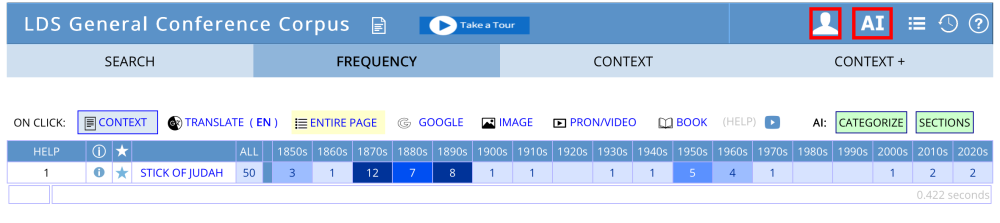
Oops…should have done “stick”. https://www.churchofjesuschrist.org/study/general-conference/2007/10/scriptural-witnesses?lang=eng I knew I had heard it more recently than my son’s first year….
-
Assuming I didn’t miss a reference (I searched on “sticks”) it appears these verses were last referred to in 1982 by Boyd K Packer. Could have sworn it was more popular than that. https://www.churchofjesuschrist.org/study/general-conference/1982/10/scriptures?lang=eng

-
Just want to mention I do not have an automatic problem with the publication of alleged abuse cases. I have had concerns in the past about Floodlit including less credible or documented cases without disclaimers, such as for repressed memory cases*** (I remember Satanic Panic cases being on it, but am less sure after reading Smac’s post) and of course I am concerned with it contributing to making it appear abuse is more common in the Church, is likely to be covered up by leaders, or whatever. I haven’t looked at it lately to see if it’s better at reporting credibility issues. Two years ago, someone from Floodlit came on the board and some potential and actual (iirc, haven’t reread the full conversation yet) issues were discussed. starts a little earlier, but here they were responding to concerns: https://www.mormondialogue.org/topic/75009-4th-update-on-arizona-abuse-case/page/2/#findComment-1210129651 They included enough accusations at the time that were problematic in my view that we do need to exercise caution. I don’t believe they vet those claiming to be sources, including accepting anonymous claims, but could be wrong on that. They do make a solid effort, imo, to dig out court documents, but not having them won’t stop a posting unless it’s changed. Smac, unsurprisingly, goes into a detailed analysis a few posts later than the link. The Floodlit person defending their including those exonerated or simply accused without evidence and other concerns… Someone noted that cases of exmembers who were accused of abuse after they had ceased to be members were still included, not just LDS. How that relates to church accountability in these cases is a mystery. ***there is no mention on the website where it quotes articles in the one well known case that it involved alleged recovered memories and the therapist got her license pulled because of improper methods (leading the kids etc), that investigators found no physical evidence, etc; nothing except it was dismissed because of statute of limitations. Looks like some of my concerns are still valid. added: there is no mention on the Joseph Bishop case of the massive credibility issues of Denson. I don’t see how this type of database holds the Church to account in any accurate way. It does make it easier to perform research, but I wonder how easy it is to weed out the less credible and/or focused on the more credible, relevant to church accountability issues cases.
-
Given the number of victims Floodlit mentions as well as commentary elsewhere I am not going to link to (which may be false reports as they are mostly anonymous…though some claim to be from the same ward during the time period and are connecting up apparently), it does not appear if this is true that it was limited to family. The question is then were non family victims known at the time (assuming if true he abused family). It’s a fed investigation. He is currently living in Ohio, but turned himself in at Salt Lake. Unsurprisingly there is speculation as to why and they are thinking conspiracy, LDS hoping to apply pressure, etc …which is why it’s not in the news as well. I suspect the Trib at least will have something to say if the booking does not turn out to be someone else with the same name, which seems unlikely….and I will be surprised if KSL and DN do not if anyone else reports it even if they won’t be first.
-
From what I understand we are in the minority to even consider the sticks meant to be hinged tablets or scrolls. Anyone seen contrary evidence? NonLDS treating the sticks as likely meant to imply writing more that a few symbols for the names?
-
Seminary manual allows for two interpretations, but feels pretty rigid about the interpretation, so I am thinking the “can” above refers to it being one of two existing interpretations rather than being open to the possibility the Bible and Book of Mormon option was not originally meant and instead is an adaptation of modern revelation. https://www.churchofjesuschrist.org/study/manual/old-testament-study-guide-for-home-study-seminary-students-2015/introduction-to-ezekiel/unit-29-day-2-ezekiel-37?lang=eng Same here: https://www.churchofjesuschrist.org/study/manual/old-testament-seminary-teacher-material-2018/leviticus/lesson-61?lang=eng It looks like the tribes interpretation was focused on more as a primary interpretation in the 2018 version (I may be overthinking how this wrote this though, that having the tribes interpretation first in the second paragraph was just less awkward writing and not intended to suggest anything), but just as one of two meanings in 2014. Repeating it does seem to indicate they want students to be sure and be aware of both interpretations…which is important imo for missionary work and interfaith discussion since nonLDS won’t be reading the BoM into the symbolism and are more likely to be dismissive imo if members reject the scholarly/traditional interpretation. 2018 https://www.churchofjesuschrist.org/study/manual/old-testament-seminary-teacher-material-2018/ezekiel/lesson-144?lang=eng 2014: https://www.churchofjesuschrist.org/study/manual/old-testament-seminary-teacher-manual/introduction-to-the-book-of-ezekiel/lesson-142-ezekiel-37?lang=eng
-
In the past when this symbol was taught, it was conveyed to me it was for certain the Bible and the Book of Mormon. Next year’s Come Follow Me seems more flexible. My bolding. I haven’t been paying close enough attention to notice when the greater flexibility showed up, maybe will go check back a few manuals if they are still available or conference talks if they are mentioned. Am wondering how this section has been talked about in your experiences, especially more recent. Have you seen a change over the years? Added: 2022 is written the same way
-
What is leading you to think this is likely? Not seeing the implication in the FL info
-
They would not be the first or the last. And statistically it is less likely, but not nonexistent.
-
Google says annotation of records for sexual abuse started in 1995. Hotline started then too, could have sworn it was earlier. My bad. This raises the possibility even if the excommunication occurred shortly after those were instituted, the bishop still might have thought it was up to his discretion since training wasn’t as much as now…and even now I am guessing there are men who think they know better than the Church and might not have records annotated. Hopefully very few. I am wondering how if the excommunication was for that reason, why it didn’t get flagged by SL when he applied for rebaptism. I wonder if the dates are wrong and it was a year or two earlier or if it was just disfellowship.
-
Pretty sure it was before the 90s. (Added: I was wrong here and it was mid 90s for the hotline) They started the bishop hotline in the early 90s iirc, so they were keeping centralized records to my understanding. Doesn’t ensure the bishop followed correct procedure, but if he was excommunicated for abuse of any sort, isn’t that record sent to SL and filed to be on record for rebaptism? And they track that as rebaptisms are limited to a certain number iirc. I am pretty sure I heard of annotations of records for homosexual behaviour preventing any calling working with youth even if such behaviour was with adults prior to the 90s, but will try and doublecheck. They have not allowed anyone who stole money from the Church to get a calling dealing with church finances for a long time iirc, so again, the record option seems to have been there. I would need to know what the victims wanted at that time to know if I need to consider the lack of legal reporting as I mostly accept their right to decide unless there is obvious danger to others. Mandatory reporting was not yet in place and we don’t know if the alleged excommunication was solely from confession or not, do we? My issue with the Church would be putting anyone in any leadership or calling that conveys authority or requires contact with children if there was knowledge of prior abuse of children even if there was certainty of repentance….especially after 2000 because of greater knowledge of sexual abuse (there are many who only abuse within their own family or during one time period or even just once, but multiple victims significantly raises the likelihood of reoffending as would outside the family iirc).
-
It feels odd that no news outlet is on it yet. I guess Floodlit didn’t do a press release, which is wise, imo, unless they did it for each case.
-
This complicates things if church leadership knew about it (assuming for this part of the discussion it is true). The disfellowship/excommunication could be for something else.
-
Can you imagine Pres Nelson negotiating with God that instead of finding the usual number of required members (let’s say 100,000 members as someone claimed used to be the requirement) before opening a temple in Russia, why not go for 90,000 and then when the Lord agreed, said “well, how about 80,000? Surely 80,000 good members deserve a temple they can get to easily.” And of course it continues with 70,000 on down until it gets to 20,000, at which point Pres Nelson rested because he knows there’s about that many on record and God didn’t specify they had to be active. Only it’s dropped to 18,000ish now….
-
The not involved until her son agreed and—being reluctant that he do so prior to his acceptance—is my memory as well. I wonder now if the JS III’s reluctance idea was pushed to downplay his position as prophet for the RLDS.
-
You were not the only one.
-
Thanks for the article. It confirmed my impression a mission was supposed to be a Plan B prior to college: The author summarizes in part a 1971 comment with The above with the “no immediate marriage prospects” is from ‘75. I hit BYU in the summer of ‘76. Early 80s, this feels like a definite change as in planning for a mission from the beginning is okay.
-
Probably mostly about expectations, they have a plan in their head and it feels wrong to change it. Simple inertia, resistance to change.
-
What decade are you if you don’t mind sharing? It is quite hard for me not to see a push for women to be married and concern that she would be less likely to if she went on a mission among leadership in my youth, but that may be due to how local leaders interpreted general leaders. I was born late 50s, so talking about the 60s and 70s. We in general given the jokes and references I heard at BYU were still assuming sister missionaries were sweet spirits destined not to get married when I hit college age, but as I said before the attitude towards missions was changing among women by then as some were making them Plan A and not Plan B (if I am not married, engaged or at least seriously dating by 21, I will go on a mission). My memory is there was active discouragement as in ‘you don’t want to go on a mission because by the time you get back all the good men will be taken’ or variations on that theme. I should research this some. I grew up in California where there were less members than Utah, but still a decent population (there were about 7 girls and 5 boys my age in my ward iirc, not quite as many for my older sister and brother, but still the stake had a good size youth program, region felt massive).
-
I prefer to think of it as helping the woman get her degree before she started popping out babies, but I never heard it taught that way. It was much more conveyed imo when younger that spiritual teaching was not the natural domain of women, especially since most women I had heard of as a teen were going on service, not teaching missions. For a time, I was under the impression they could only do service and weren’t allowed to teach, it was so emphasized. When I hit college, I had roommates and others who I knew were anxious to get out and proselyte, but the wait till 21 often got in the way as it meant they would have to interrupt their studies when they were getting into the more complicated material where it was more useful not to have interruptions between semesters and definitely many unexpectedly got involved romantically, though it didn’t stop all of them. I was already dealing with my sleep disorder and knew I would never be able to manage the rigid early to bed, early to rise as I couldn’t get to sleep before 1 AM most of the time plus tracking seemed my version of hell, so I never considered it myself. There was the you don’t want to go on a mission because then it wouldn’t be your husband taking you through the veil the first time! crowd as well.
-
Have they moved away from teaching young men and women no thought of romance should enter their heads when on a mission as that would be a distraction from the Lord’s work, that’s it’s okay to get to know each other on missions in order to consider some as candidates for later relationships? (That no romantic thought should enter your head when looking at sisters/elders was the mantra of my youth, it seemed to me, perhaps it was more my bias or a local thing, but the later age for women was described typically as a discouragement for both romance between elders and sisters and for women to go on missions rather than choosing to get married earlier and start having babies.)


